

Joint pain can make even the simplest activities feel difficult. Climbing stairs, getting out of bed, walking to the market, or sleeping comfortably may become daily struggles. When you experience knee pain, stiffness, or early signs of arthritis, you may want to consider joint supplements for getting relief.
You find a variety of joint supplements, such as glucosamine, chondroitin, calcium, collagen, curcumin, and more, occupying the shelves in a medical store. All claim to improve joint health, reduce pain, and protect cartilage. But how much of this is indeed true? Can joint supplements really help improve knee conditions, or is it just a marketing gimmick?
In this blog, we are going to shed light on these questions to help you make informed decisions about your joint health.
| Arthritis is a group of conditions with symptoms like joint inflammation, pain, stiffness, and degeneration. Common forms of arthritis include: – Osteoarthritis (OA) – Rheumatoid arthritis (RA) – Psoriatic arthritis (PsA) |
What Are Joint Supplements?
Joint supplements are dietary products containing nutrients or other ingredients meant to support bones, cartilage, and joint function. They are commonly used by people with osteoarthritis, age-related joint discomfort, and stiffness.
What are the main goals of joint supplements?
- Control inflammation in the joint(s)
- Slow down cartilage degeneration
- Improve health of connective tissue
- Enhance joint mobility
A lot of people take supplements to manage nutrient deficiencies, as an add-on to medical treatment, or to reduce dependence on pain medications.
| Arthritis is treated in a variety of ways, depending on your stage and symptoms. Common treatment options include physiotherapy, injections, stem cell therapy, arthroscopy, and joint replacement. Joint supplements are generally used as supportive therapies. |
What are Some Popular Joint Supplement Options?
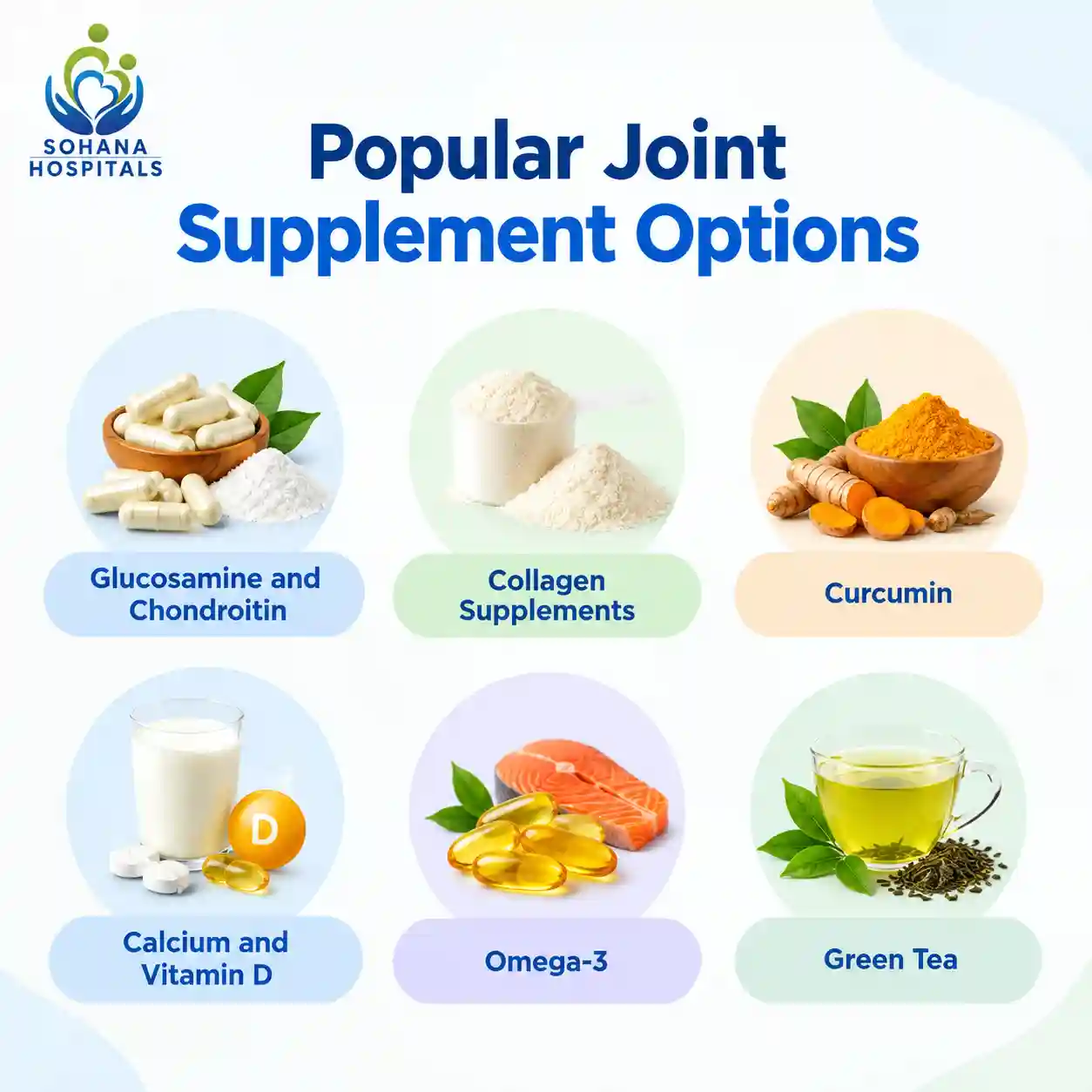
Glucosamine and Chondroitin
- Among the most widely used supplements for osteoarthritis, especially knee osteoarthritis
- Naturally present in healthy cartilage
- Believed to nourish cartilage and delay cartilage breakdown
- Improve lubrication in joints
- Slow down joint damage
- Help with osteoarthritis pain
- Improve mobility
- Advised for early-stage osteoarthritis
When it comes to how effective they are, research exhibits mixed results. While some studies indicate these are not very beneficial for arthritis pain, others found they can help provide relief to people with moderate to severe pain.
It would be advisable to take these supplements with your doctor’s advice.
| Medications commonly used for arthritis treatment include NSAIDs, DMARDs, corticosteroids, and biologics. |
Collagen Supplements
- Main structural protein in cartilage
- Undenatured type II collagen is beneficial for joints
- May reduce joint pain and stiffness in osteoarthritis patients
- May be helpful for age-related degeneration of joints, osteoarthritis, and sports-related joint stress
- Collagen peptides have been found to reduce joint discomfort, especially in active individuals
- Evidence varies based on the formulation, dosage, and study design
Curcumin
- Extracted from turmeric, a spice traditionally known and utilised for its anti-inflammatory properties
- Can inhibit pathways like COX-2 and NF-kB
- Can provide relief comparable to NSAID medications
- Best for inflammatory arthritis
- May aid in relieving symptoms of osteoarthritis and rheumatoid arthritis
Calcium and Vitamin D
- Play essential roles in maintaining bone strength
- Calcium helps strengthen bones, and vitamin D helps your body absorb calcium
- Research reveals that vitamin D also helps fight inflammation
- Deficiency can contribute to bone-health problems
- Appropriate supplementation may be useful in certain individuals
- Do not directly reverse osteoarthritis or restore degenerated cartilage
- Taking excessive calcium or vitamin D may be harmful
*Note: Do not take any supplements without consulting your doctor. They will guide you after confirming your existing calcium and vitamin D levels, your diet, and risk factors.
| What is it that your doctor must know while discussing any joint supplements? Do not hide any of the following health issues: – Diabetes – Heart issues – Liver ailments – Kidney problem – Stomach or intestinal issues – Any allergies – Pregnant or considering having a baby – Lactating |
Omega-3
- Found naturally in fish oils, etc.
- Aid your body in the production of chemicals that help lower inflammation
- Research favours the use of Omega-3 fatty acids as treatment for joint stiffness and arthritis pain
- May help reduce the inflammatory symptoms in rheumatoid arthritis patients
- EPA and DHA bring down inflammation, swelling, and joint stiffness
- Best for those with rheumatoid arthritis, lupus, and psoriatic arthritis
- May take some time to show results
Green Tea
- A great source of powerful antioxidant EGCG (Epigallocatechin Gallate)
- EGCG may support joint and skeletal muscle health
- EGCG can safeguard bone and cartilage
- May lower the risk of osteoarthritis as well as rheumatoid arthritis
- High-dose green tea extracts have been linked to liver injury
*Note: Natural does not always mean safe. Some supplements can cause side effects, interfere with prescribed medicines, or do not contain ingredients in amounts stated on the label. It is always good to discuss any supplement with your doctor before you start taking it.
| EGCG is believed to be 100X more potent than vitamin C and vitamin E |
What Works Better for Long-Term Joint Health?
Supplements can go along with the regular treatment for better results. However, it is important to understand that supplements should not take the place of treatments, which are supported by stronger evidence.
If you are dealing with osteoarthritis (the most common form of arthritis), make appropriate changes to your lifestyle.
Here are some practical tips for managing osteoarthritis:
| Proactive Tip | Explanation |
| Stay physically active | Walking, swimming and other suitable low-impact activities can help maintain mobility |
| Strengthen the muscles around your joints | A physiotherapist can recommend exercises that support the knees, hips and other affected joints |
| Maintain a healthy weight | If you are overweight, losing even a few kgs can reduce pressure on weight-bearing joints, especially your knees |
| Follow a balanced diet | Include adequate protein, vegetables, fruits and sources of essential nutrients |
| Seek appropriate medical care | Persistent joint pain may require thorough assessment from an experienced specialist, followed by physiotherapy, medication, or other treatment depending on the cause and severity |
These measures can help manage symptoms and maintain function in osteoarthritis patients.
Are Joint Supplements Safe for Everyone?
Not necessarily. Some supplements can cause digestive discomfort, nausea, allergic reactions, or interactions with medicines. For example, glucosamine and chondroitin may interact with warfarin, a blood-thinning medicine. Glucosamine may also affect blood glucose in some people. (via WebMD)
| Why do you need to be cautious about joint supplements?Turmeric (Curcumin) and Omega-3s may elevate bleeding risk.Glucosamine is often derived from shellfish and may result in allergies.Side effects of some supplements may include nausea, bloating, heartburn, headaches, etc.Pregnant and lactating women should avoid joint supplements unless advised by their doctor. |
Research is still ongoing to check the safety and efficacy of natural supplements. Some supplements are backed by research, while others lack evidence. Do not stop prescribed treatment on your own just because you decide to take supplements. As the name suggests, supplements are meant to add on to your treatment, not replace it.
Before buying a supplement, check its composition, and avoid products promising a permanent cure. Also, tell your doctor about any medicines or other supplements you take. Keep track of your symptoms and inflammation markers such as ESR and CRP to assess the effectiveness of joint supplements. Maintain patience since benefits may take several weeks to show results.
Apart from this, you should also seek medical assessment if joint pain is persistent, worsens, or starts affecting your daily life.
Conclusion
So, are joint supplements really effective? Some may provide relief in some patients and under specific circumstances, but most of the popular joint supplements have shown mixed results in studies for osteoarthritis.
The best approach is to understand what is causing your joint pain and choose treatment accordingly. You can get an appropriate orthopaedic assessment at Sohana Hospital, a super-speciality hospital with experienced arthritis doctors in Mohali.
Our doctors prepare a personalised treatment plan for you according to your condition, stage, overall health, and other important factors. We aim to improve your mobility while managing pain effectively, and in the shortest possible time.
Good joint health begins with informed decisions
Consult your doctor before you start taking any joint supplement