
We’ve all heard the term ADHD thrown around in casual parent-teacher conferences. But how do you actually diagnose the condition? Contrary to popular belief, ADHD is not just a general lack of concentration or interest in studies. It is a neurodevelopmental disorder that may affect all aspects of a child’s life, including social, academic, and interpersonal performance and behaviours.
Most children tend to be full of energy, impulsive, and a little inattentive at times. These qualities don’t necessarily mean they have ADHD. However, persistent and more blatant symptoms may point to a need for a proper check-up. In this blog, we will discuss some early signs of the disorder that can help you identify it early.
What is ADHD?
Also known as attention deficit hyperactivity disorder, the condition is among the most commonly found neurodevelopmental disorders in children. Diagnosed in childhood for most, ADHD continues to hamper everyday functioning well into adulthood if not managed properly through behavioural therapy and medications (if needed).
*Note: ADHD severity and impact vary from person to person.
ADHD Symptoms All Parents Should Know
Some common telltale signs of attention deficit hyperactivity disorder in kids include:
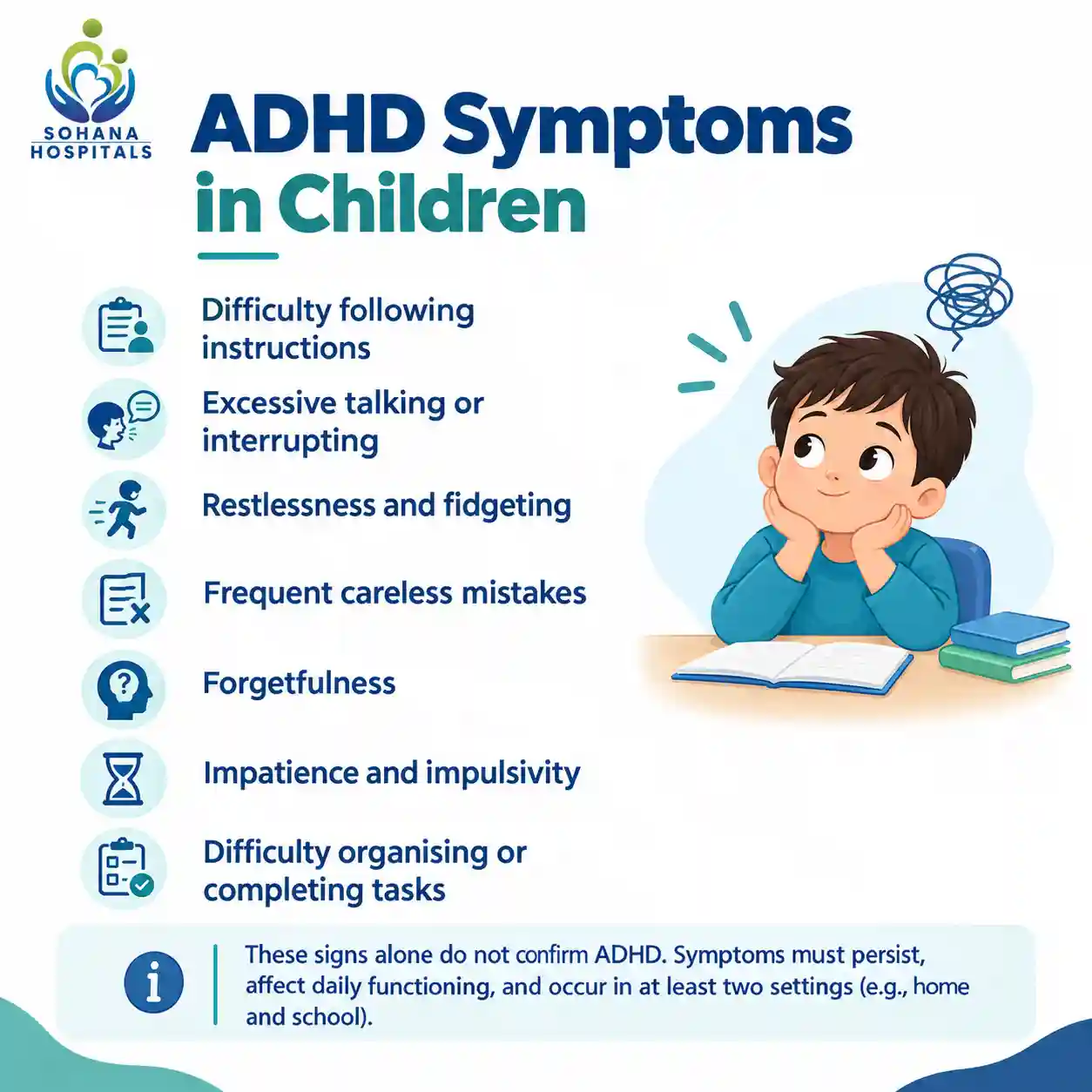
- Difficulty listening to or following instructions
- Excessive reports of talking or interrupting class
- Restlessness and constant fidgeting with clothes or objects in front of them
- Frequent silly mistakes in homework/studies
- Forgetfulness in routine activities
- Impatience
- Difficulty keeping things organised or completing assigned tasks
*Note:
- These behaviours alone do not confirm ADHD. Symptoms must be persistent, inappropriate for the child’s developmental level, and associated with difficulties in everyday functioning. Occasional inattentiveness, restlessness, or impulsivity is common in children.
- Several symptoms must be present in at least two settings, such as home and school, to meet ADHD diagnostic criteria. Information from parents, teachers, and other caregivers can help a paediatric neurologist understand the child’s behaviour.
How Do They Diagnose ADHD?
Diagnosing ADHD takes more than just a single test. It involves a series of complex assessments of the child’s developmental history, current behaviour, and overall academic and social performance.
Diagnosing ADHD is often a 3-step process:
- Identifying whether the symptoms present align with ADHD symptoms and whether they affect normal functioning in everyday life.
- Ruling out alternative causes for the symptoms. These may include social issues and sleep disturbances, depression, or adjustment problems/disorders.
- Identifying comorbidities like learning or intellectual disabilities, or mood or anxiety disorders.
| 📖 The DSM-5-TR states specific diagnostic criteria for attention deficit hyperactivity disorder. |
Multiple tests are involved in properly diagnosing children, along with information from the parents or teachers of the child about his everyday behaviours.
A consultation with an experienced child neurologist in Chandigarh can help you get the answers you may/might be looking for. A complete assessment can help you understand if the symptoms are associated with ADHD or other sleep, mood, learning, or social issues.
It’s important to remember: children affected by ADHD can learn to manage their symptoms and participate in everyday activities, provided they receive appropriate support, which may include behavioural interventions, educational strategies, and medication.