
When was the last time you thought about your bone health? We should start taking care of our bones when we are still young. But if you never did that, you should act now and take steps to make your bones stronger.
In this blog, we are going to have a look at 5 ways to improve your bone health and make them stronger.
How Does Age Impact Bone Health?
Bones are not a static entity. They change constantly throughout our lives. And the older you grow, the more difficult it becomes to maintain strong bones.
Your overall bone strength depends largely on two main factors:
- Your bone density (the amount of calcium and other minerals packed into a given volume of bone tissue)
- How strong or healthy that bone tissue is
Advancing age has a negative impact on both these aspects.
“Our bones continue to develop and gain strength until around age 30,” says Dr. Gagandeep Singh Sachdeva, CEO and Chief Robotic Joint Replacement Surgeon, Sohana Hospital, Mohali. “After 30, our bodies may begin losing bone faster than they rebuild it. Most people reach peak bone mass in their 20s. After this, bone mass may gradually decline as bone breakdown begins to exceed bone formation. Bone loss varies from person to person and may accelerate with ageing, particularly after menopause.”
How to Build Bone Strength?
He suggests 5 tips that can help you combat bone loss as you age:
Calcium: The Key to Stronger Bones
Calcium is the most abundant mineral in the body. It forms much of the bone structure and supports normal movement of the body by keeping tissue hard, strong, and flexible.
How much calcium should you take every day as you age?
Let’s have a look:
| Age | Recommended Dietary Allowances (RDAs) for Calcium in Milligrams (mg) |
| Women up to age 50 | 1,000 milligrams |
| Men up to age 70 | 1,000 milligrams |
| Women over 50 | 1,200 milligrams |
| Men over 70 | 1,200 milligrams |
*Source: National Institutes of Health (NIH)[1]
Tip: Include food items containing calcium (e.g., milk, curd, cheese, broccoli, fortified products, etc.). You can also talk to your healthcare provider regarding dietary supplements if your calcium intake is insufficient.
Vitamin D: The Key to Better Calcium Absorption
You may be taking adequate calcium and still have weak bones. Why? One reason may be a deficiency of vitamin D.
Your body needs vitamin D to absorb calcium effectively. Vitamin D, in combination with calcium, helps safeguard you from developing osteoporosis, a disease associated with thinning and weakening of bones, that can increase the risk of fractures.
Read more: Why are Women at Higher Risk of Osteoporosis?
How much vitamin D do you need every day?
| Age | Recommended Dietary Allowances (RDAs) for Vitamin D in Milligrams (mg) |
| Adults up to age 70 | 15 mcg (600 IU) |
| Adults over 70 | 20 mcg (800 IU) |
*Source: National Institutes of Health (NIH)[2]
*Tip: Include vitamin D-rich foods such as fatty fish, egg yolks, and fortified products in your diet. Sun exposure can also help your body produce vitamin D. Consult your doctor about supplements if required.
Exercise: Keep Your Bones Active
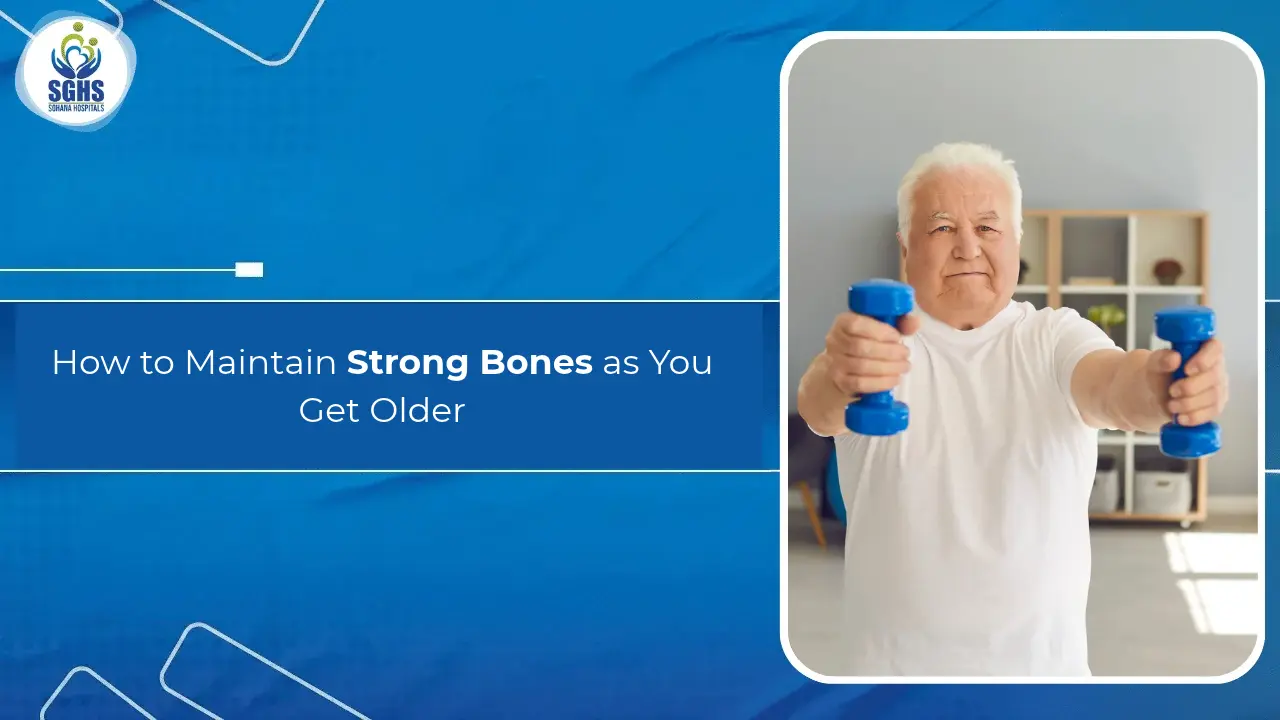
Regular physical activity is non-negotiable. It not only helps keep your muscles strong but also helps maintain bone density. Opt for weight-bearing exercises, such as walking, and resistance exercises, such as weightlifting. These can help slow bone loss. Balance exercises are also beneficial, particularly for older adults, as they can help reduce the risk of falls and fractures.
*Tip: Make walking, strength training, or other suitable physical activities part of your routine. And yes, choose exercises according to your age, fitness level, and health condition.
Smoking: A Hidden Threat to Bone Strength
Smoking can interfere with the body’s ability to maintain healthy bones. It can reduce bone density and increase the risk of fractures. The longer you smoke, the greater the potential negative impact on your bone health.
According to the American Academy of Orthopaedic Surgeons (AAOS)[3], smoking raises osteoporosis risk (and hence, fractures) in senior citizens. They are 30–40% more likely to experience a hip fracture than their peers who don’t smoke.
*Tip: Quit smoking. Seek professional support if you need help.
Alcohol: Its Impact Goes Beyond the Liver
Most people know alcohol is detrimental to liver health. But did you know that excessive alcohol consumption can interfere with your body’s ability to build and maintain healthy bones? Yes, that’s true. (via NIH)[4]
Additionally, it may also increase the risk of falls, which can lead to fractures.
*Tip: Avoid excessive alcohol consumption, as it can negatively affect bone density, impair bone healing, and increase the risk of falls and fractures. If you want to improve your bone health, not drinking is the safest choice. Do not hesitate to seek professional help. You can also join social support groups like Alcoholics Anonymous.
Give Your Bones Extra Care: 2 More Tips
Protein: An Essential Nutrient for Bone Strength
Protein is one of the building blocks of your bones. It is an important component of bone tissue and helps maintain muscle strength. You may or may not be getting enough protein through your diet. Make sure your meals include good protein sources, such as eggs, lentils, poultry, lean meat, dairy, soy, etc.
Healthy Weight: Better Bone Health
Being underweight can increase the risk of bone loss and fractures. On the other hand, excess weight can also harm bone health by putting excessive pressure on bones and accelerating wear and tear. Excess body weight can affect joint health and mobility, although its relationship with bone strength and fracture risk is complex.
*Tip: Maintain a healthy body weight. Avoid drastic weight loss. At the same time, control obesity through a combination of a balanced diet and regular exercise. It would be advisable to consult an orthopaedic doctor regarding an optimal weight and how to maintain it.
When Should You Get Your Bone Health Checked?
If you have:
• A history of fragility fractures
• Osteoporosis risk factors
• Long-term corticosteroid use
• Family history of osteoporosis or hip fractures
It is crucial to get your bone health evaluated by an orthopedic doctor in Chandigarh, Mohali.
You may be recommended a bone mineral density (DEXA/DXA) test depending on your age and risk factors.
Conclusion
You need strong bones for maintaining your mobility, independence, and quality of life as you age. While some bone loss is a natural part of ageing, adopting the right lifestyle choices can help slow it down.
If you have been ignoring your bone health, start now. Make small changes to your diet and daily routine. Remember that it is never too late to take care of your bones.
Reference Sources
- NIH. https://ods.od.nih.gov/factsheets/Calcium-HealthProfessional/. Calcium – June 22, 2026
- NIH. https://ods.od.nih.gov/factsheets/VitaminD-Consumer/. Vitamin D – November 8, 2022
- Ortho Info. https://www.orthoinfo.org/staying-healthy/bone-health/smoking-and-musculoskeletal-health/. Smoking and Musculoskeletal Health
- NIH. https://pmc.ncbi.nlm.nih.gov/articles/PMC6761900/. Alcohol’s Harmful Effects on Bone