
हिंदी में पढ़ें: रोज़ाना कैल्शियम की आवश्यकता: स्रोत, कमी और सप्लीमेंट्स
With rising concern about nutrition, many people start taking calcium supplements without even consulting their doctor. But have you ever wondered: How much Calcium do you really need?
In this blog, we are going to answer this question, helping you decide how to fulfill your daily calcium requirements.
Why Do You Need Calcium?
Calcium is one of the most vital minerals that the human body needs. And it is present in your body in high concentration, too.
Calcium serves several vital functions. Here are some of them:
- Helps build bones and keep them strong
- Keeps teeth healthy
- Regulates contraction of muscles
- Regulates heartbeat
- Ensures normal clotting of blood
- Supports proper growth and height in children
Small amounts of calcium are lost daily through urine, stool, sweat, skin, hair, and nails. Your body cannot produce calcium. This makes it vital to get sufficient calcium from food. If you do not get the calcium your body needs, it is taken from your bones. This makes bones lose strength.
An increasing number of Indians are falling prey to calcium deficiency. This can result in bone loss, poor bone density, and even bone fractures. Over 3.5 billion people worldwide are at risk of calcium deficiency, and 90% of them reside in Africa and Asia.
| 👉Did you know? A fetus’s bone development depends on the dietary calcium intake of the mother. Likewise, a nursing mother also needs enough calcium to support proper bone growth for the baby and keep her own bones healthy, too. |
What Happens When You Have a Calcium Deficiency?
Among several other problems, calcium deficiency may result in conditions like:
- Rickets in children
- Osteomalacia and osteoporosis in older adults
| 👉Did you know? Nearly 99% of the calcium in your body is present in your bones and teeth. |
What are the Sources of Calcium?
You can obtain dietary calcium from diverse sources. Talking specifically in the Indian context, here are some food items rich in calcium:
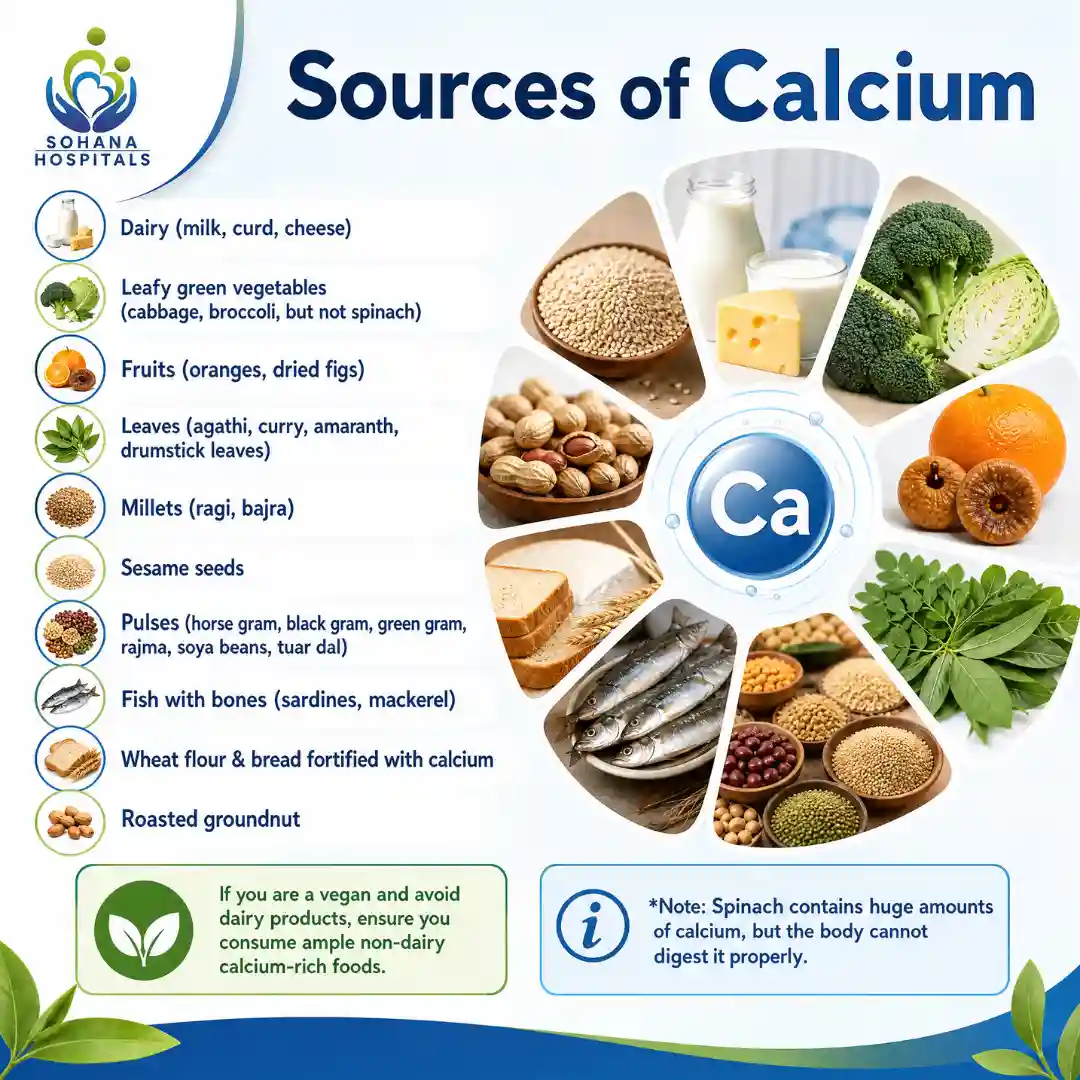
- Dairy (milk, curd, cheese)
- Leafy green vegetables (cabbage, broccoli, but not spinach)
- Fruits (oranges, dried figs)
- Leaves (agathi, curry, amaranth, drumstick leaves)
- Millets (ragi, bajra)
- Sesame seeds
- Pulses (horse gram, black gram, green gram, rajma, soya beans, tuar dal)
- Fish with bones (sardines, mackerel)
- Wheat flour & bread fortified with calcium
- Roasted groundnut
If you are a vegan and avoid dairy products, ensure you consume ample non-dairy calcium-rich foods.
*Note: Spinach contains huge amounts of calcium, but the body cannot digest it properly.
| 👉Did you know? Proper calcium absorption requires Vitamin D. One reason why you may be calcium deficient is the lack of adequate vitamin D. |
How Much Calcium Do You Need?
Most adults aged 19 and above need 700mg of calcium every day. The requirement is the same for pregnant women.
Exception: Those with specific health conditions may require less or more calcium. For example, individuals at risk of osteoporosis may be advised to take around 1000mg of calcium daily. Talk to your doctor if you’re unsure how much calcium you should be consuming.
Here is the age-wise calcium requirement for children younger than 19 years:
| Age in Years | Daily Calcium Requirement |
| Infants (0 – 1) | 525 mg |
| 1 – 3 | 350 mg |
| 4 – 6 | 450 mg |
| 7 – 10 | 550 mg |
| Boys (11 – 18) | 1,000 mg |
| Girls (11 – 18) | 800 mg |
Who is at Higher Risk of Calcium Deficiency?
- Older adults
- Postmenopausal women
- Vegans
- Lactose-intolerant individuals
- People with vitamin D deficiency
- Long-term steroid users
Should I Take Calcium Supplements?
Most people can meet their calcium requirement from the food they eat and do not need to take calcium supplements. However, if you are unable to get adequate calcium from your food, you can take supplements.
Calcium supplements are available in two forms:
- Calcium carbonate
- Calcium citrate
Studies have revealed that both types of calcium supplements are beneficial for your bone health.
| 👉Did you know? Dairy products, be they high-fat or low-fat, contain the same amount of calcium. |
What Happens If You Take Excessive Calcium?
Taking too much calcium – more than 1,500 mg a day (from food + supplements) – can be harmful. You may suffer from stomach pain, constipation, and diarrhoea. Some people may also experience nausea. It may also lead to kidney stones.
Ideally, you should fulfil your calcium requirement by consuming a diverse and balanced diet. Taking calcium supplements requires caution. You should take them after consulting your doctor.
If you notice any side effects, you should talk to your doctor about trying a different calcium supplement. And be mindful that taking more calcium than the recommended amount does not improve your bone health.
| 👉Did you know? When you take a supplement, check the packaging to see how much calcium it contains. Most calcium supplements give you 300 – 1000mg calcium. |
Conclusion
Calcium is an important mineral that your body requires for several purposes. The most prominent need is building and maintaining bone strength.
Calcium needs grow constantly through childhood, until you reach the age of 18 years, following which most adults require 700 mg of calcium on a daily basis. The best option to maintain optimum calcium levels in your body is to consume food items containing calcium or fortified with it.
In case you are unable to fulfil your daily dose of calcium from the food you eat, you should consult your healthcare provider regarding calcium supplements. But overdoing the mineral is not a good idea, since it does not boost your bone strength further but may have side effects.
Numbness and tingling in limbs, muscle cramps, or brittle nails? These signs may indicate calcium deficiency. Not sure? Get in touch with the best bone doctors in Chandigarh at Sohana Hospital. A leading multi-super-specialty 400-bed facility, it is equipped with advanced diagnostics like DEXA to check your calcium levels.
If you are diagnosed as being calcium deficient at an early stage, our expert bone specialists help treat the problem by suggesting the right food and supplements, as per your unique requirements. This can help avoid complications like osteomalacia and osteoporosis later on.
- National library of Medicine. Modern India and Dietary Calcium Deficiency—Half a Century Nutrition Data—Retrospect–Introspect and the Road Ahead. https://pmc.ncbi.nlm.nih.gov/articles/PMC8056136/ – (6 April 2021)
- National Institute of Nutrition. https://www.nin.res.in/ebooks/Calcium.pdf.
- National Institutes of Health(NIH). https://ods.od.nih.gov/factsheets/Calcium-Consumer/ – (14 September 2023)
- National Health Service. Calcium. https://www.nhs.uk/conditions/vitamins-and-minerals/calcium – (03 August 2023)