
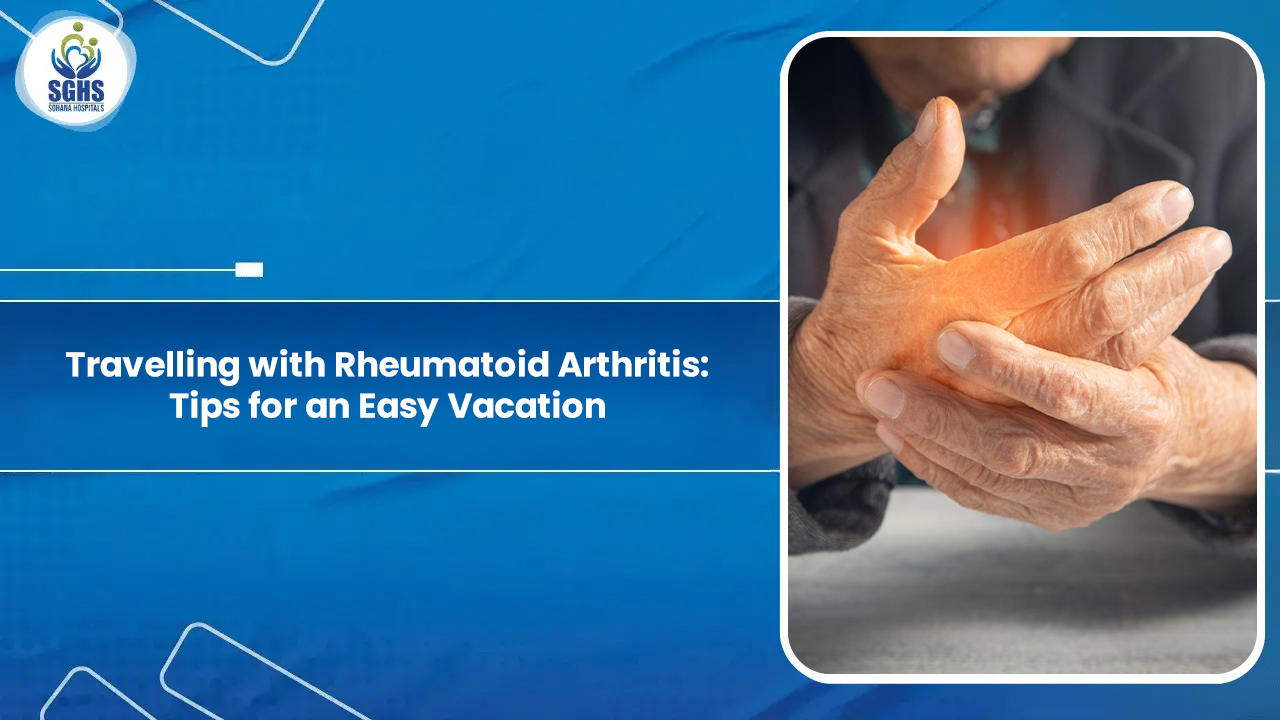
Travelling serves as an escape from the mundane – a way to relax, rejuvenate, and unwind. But for those affected by rheumatoid arthritis (RA), even a relaxing holiday may seem tedious. The constant joint pain, stiffness, and reduced range of motion may limit them from partaking in fun activities like sightseeing, exploration, etc.
The good news, though, is that with ample preparation, a smooth, hassle-free journey is very much a possibility for people with RA. A little caution goes a long way – so whether it’s a family vacation, a friends’ get-together, or a business trip that you’re planning, this blog will tell you all you need to know to make your journey much more enjoyable!
👉 Also read: Rheumatoid Arthritis Symptoms
Travelling with Rheumatoid Arthritis: Overview
RA affects millions of people globally, restricting everyday movements like walking, climbing stairs, or sitting/laying in one position for too long. And when you’re travelling, these problems can feel much more pronounced owing to long flight durations, waiting in queues, or carrying heavy luggage.
When RA patients sit in the same position in cars, buses, or flights for prolonged periods of time, their joints may start swelling up, causing pain and stiffness. Additionally, if you travel to a cold destination, you may notice an increase in overall joint discomfort.
The key to pain-free travel is in identifying such triggers and planning your travel around them accordingly.
Rheumatoid Arthritis Management on Vacation
Proper preparation lays the foundation for an easy journey. Following a few simple cautionary steps before you leave for your destination can help prevent unnecessary fatigue, strain, and pain, etc.
Consult a Specialist
The first thing you must do before planning a holiday is consult your rheumatologist. If you don’t have a regular doctor, it is crucial to consult an expert. Inform them about your itinerary and medical history so they can alter your medication dose, prescribe pain management strategies, and make other adjustments, if necessary.
If you plan to travel long distances via air, be sure to ask about precautions to prevent stiffness and swelling.
Pick an Arthritis-Friendly Spot
One thing you can do to make the vacation enjoyable for yourself or a family member with RA is to choose arthritis-friendly vacation spots. Meaning trekking & hiking trails, extremely cold hill stations, etc., are a big no-no.
Additionally, it may be beneficial to choose your stay at a property with ramps, lifts, and easy room access, not long and tiring staircases.
👉 Also read: Rheumatoid Arthritis Treatment Options
Pack Light
Pack light – keep only essentials. Light luggage places less strain on your joints, making your journey much more comfortable.
Don’t forget to pack all your prescribed medicines, along with their prescription slip. Keep pain relief sprays, gels, compression gloves/socks, compact heating pads, etc., handy.
Stay Mobile
It is a known fact that RA causes joint stiffness after long stretches of inactivity. Therefore, it is crucial to keep engaging in light physical activity during your journey. If you’re travelling via a bus, train, or flight, try to stand, stretch your limbs, and walk for a few minutes every hour. If you’re driving or travelling by car – try to take pit stops every 2 hours to stand, stretch, and walk around a bit.
| 💡 PRO TIP: Shoulder stretches, ankle rolls, wrist movements, at regular intervals, etc., can help prevent stiffness. |
Maintain Good Posture
Choose ergonomic seats, if possible, with proper back, knee, and leg support. Avoid sitting in the same posture for long stretches. If standing and walking are not possible, try to keep changing your sitting position. Carry a lumbar support cushion or a travel neck pillow for extra comfort.
Drink Enough Water
Prevent dehydration – drink at least 3L of water while travelling to avoid exhaustion. Dehydration has been seen to worsen RA symptoms, so make sure you’re hitting your daily water intake.
| ❓ COMMON PATIENT QUERIES: CAN I DRINK ON VACATION IF I HAVE RA? Drinking alcohol in moderation is typically not advised against (for RA patients). One glass a day for women and two a day for men is the general safe limit for alcohol consumption. However, it is crucial that you clear this with your doctor first. If any medication you’re on does not mix with alcohol, you should avoid drinking completely. (via WebMD)[1] |
Don’t Be Scared to Use Mobility Aids
There’s no shame or harm in carrying mobility aids with you if they help you move better. A foldable cane, a joint brace, a walking stick – can help improve stability and movement. Most airports even provide wheelchair assistance if requested.
Use Heat or Cold Therapy
Heat pads or warm compresses can help ease stiffness in joints. In colder regions, inflammation and swelling can be brought down by using a cold gel pack.
Maintain Balance Between Activity & Rest
It is important to stay mobile during the day, but it is just as important to get proper rest and a peaceful night’s sleep to get you ready for the next day. Practice some light pain- and stiffness-relieving exercises when you wake up to ward off the morning joint stiffness that comes with RA.
👉 Also read: Stages of Rheumatoid Arthritis
Conclusion
Travelling when you have rheumatoid arthritis may seem like a daunting task. But that doesn’t mean you have to miss out on life. Leading a functional life with an RA diagnosis is possible if you take the right precautionary steps.
If you or a loved one is dealing with rheumatoid arthritis – schedule an appointment with the best rheumatology doctor in Chandigarh, Mohali, at Sohana Hospital. The institution boasts advanced diagnostic tests and best-in-class modern treatment facilities – to help you get back to your normal life with personalised treatment plans.
Don’t let RA stop you from achieving your travel dreams
Get expert rheumatology care at Sohana Hospital
Frequently Asked Questions
1. Can travelling make rheumatoid arthritis worse?
Travel itself does not worsen rheumatoid arthritis symptoms, but long periods of sitting, bad postures, or too much strain can contribute to increased joint pain and stiffness. This is why it is crucial to travel with proper precautions.
2. What type of shoes are best for travelling with RA?
Comfortable, soft-insole walking/running shoes are generally good for travelling if you have rheumatoid arthritis. Good arch support can help prevent pain and fatigue. Heels or uncomfortable sandals, etc., must be avoided.
3. Do weather changes affect joint pain while travelling?
Yes, cold and humid weather can have an impact on joint stiffness and pain. Make sure you dress appropriately – wear gloves, warm knee sleeves, and socks to protect inflammation-prone joints in cold climates.