

Yes. Poor-quality sleep can worsen your orthopaedic problems. Inadequate or disrupted sleep can contribute to increased pain, fatigue, and reduced joint functioning in people with some musculoskeletal and orthopaedic conditions.
Let’s have a look at the significance of sleep for orthopaedic health. The blog also includes tips to enhance sleep quality.
Overview
Many arthritis patients take appropriate measures to alleviate their joint pain all day long. However, they tend to be ignorant of an important aspect that may significantly contribute to chronic pain: not getting sufficient sleep.
When you sleep, your body:
- Repairs tissues
- Strengthens bones and muscles
- Regulates immunity and inflammation
- Resets pain pathways, affecting pain processing and pain sensitivity
Poor sleep may intensify joint pain, and severe joint pain does not allow you to sleep properly, creating a vicious loop.
Hectic schedules in the modern world, coupled with stress and pain, often upset sleep. In such a scenario, getting better sleep can be an effective way to reduce joint pain caused by arthritis and other conditions, and live better.
The Link Between Pain and Sleep
When in pain, it is difficult to fall asleep and have peaceful, uninterrupted sleep. And a lack of adequate sleep makes your body more sensitive to pain. Thus begins a vicious cycle:
- Pain upsets sleep
- Insufficient sleep contributes to a rise in inflammation
- Inflammation increases pain sensitivity, making joint pain more severe
- Pain does not let you get good sleep
Over time, this pain-sleep cycle results in chronic fatigue, less physical activity and exercise, muscle weakness, and degrading joint function.
What is the Impact of Poor Sleep on Inflammation and Joint Health
Why is deep sleep non-negotiable? It is at this time that the body repairs damaged tissues by releasing growth hormone and anti-inflammatory mediators. Deep sleep plays a crucial role in physical recovery and several other processes involved in tissue repair and regulation of inflammation.
What does a lack of sleep do to your joints? Poor or insufficient sleep has been associated with changes in inflammatory markers, including CRP (although the relationship can vary between individuals and conditions). Also, your body’s ability to bear pain decreases.
Have arthritis or any other joint condition and regularly get insufficient or disrupted sleep (less than 6 hours of sleep a night)? You may be at risk of:
- Fatigue and reduced alertness
- More stiffness and less flexibility in joints
- Increased muscle soreness
- Higher pain scores
- Slower recovery from injury
- Higher risk of developing chronic pain
- Lower ability to tolerate activity
- More sensitivity to discomfort
- Falls or injuries
- Poor posture and movement patterns
Remember: Good sleep is a crucial part of overall recovery and joint pain management.
How Poor Sleep Worsens Joint Issues
Joint Pain
Poor sleep can make joint pain feel worse. Research suggests that inadequate or disrupted sleep may increase inflammation in the body, which can contribute to greater pain and discomfort.
On the contrary, getting sufficient sleep may help lower inflammation, reduce pain sensitivity, and improve overall joint functioning in some people with chronic joint pain.
Also read: Morning Joint Pain: Causes & Treatment
Mobility
Muscles require sleep for repair and recovery. When you sleep, your body repairs and rebuilds muscle tissue. This may help enhance mobility and flexibility.
On the other hand, not getting proper sleep can result in weakness and stiffness in muscles, impacting mobility and overall joint function over time.
Quality of Life
Sleep is crucial to overall quality of life. In the absence of enough sleep, you may experience general fatigue, irritability, and poor cognition. You may not want to move much or exercise, which may negatively affect your joint health.
Conversely, proper sleep can enhance mood, cognitive abilities, and overall health. When you feel optimistic, you are more likely to be physically active and exercise regularly, improving your orthopaedic health.
Also read: Is Walking Enough Exercise for Healthy Joints?
Is Poor Sleep Worsening My Joint Pain?
Many people with joint issues do not realise that sleep is contributing to their joint pain. Here are some signs that insufficient sleep is aggravating your joint pain:
- Morning stiffness for more than 1 hour
- Pain makes you wake up frequently
- Joint pain increases after you fail to get proper sleep at night
- Fatigue that makes it hard to perform routine activities
Do these symptoms look familiar? If yes, better sleep quality can help reduce your joint pain while improving joint mobility and function during the day.
*Note: Persistent joint pain requires evaluation to identify the underlying cause.
How Can I Improve Sleep Quality?
Here are some things you can do to get better sleep and improve your joint health:
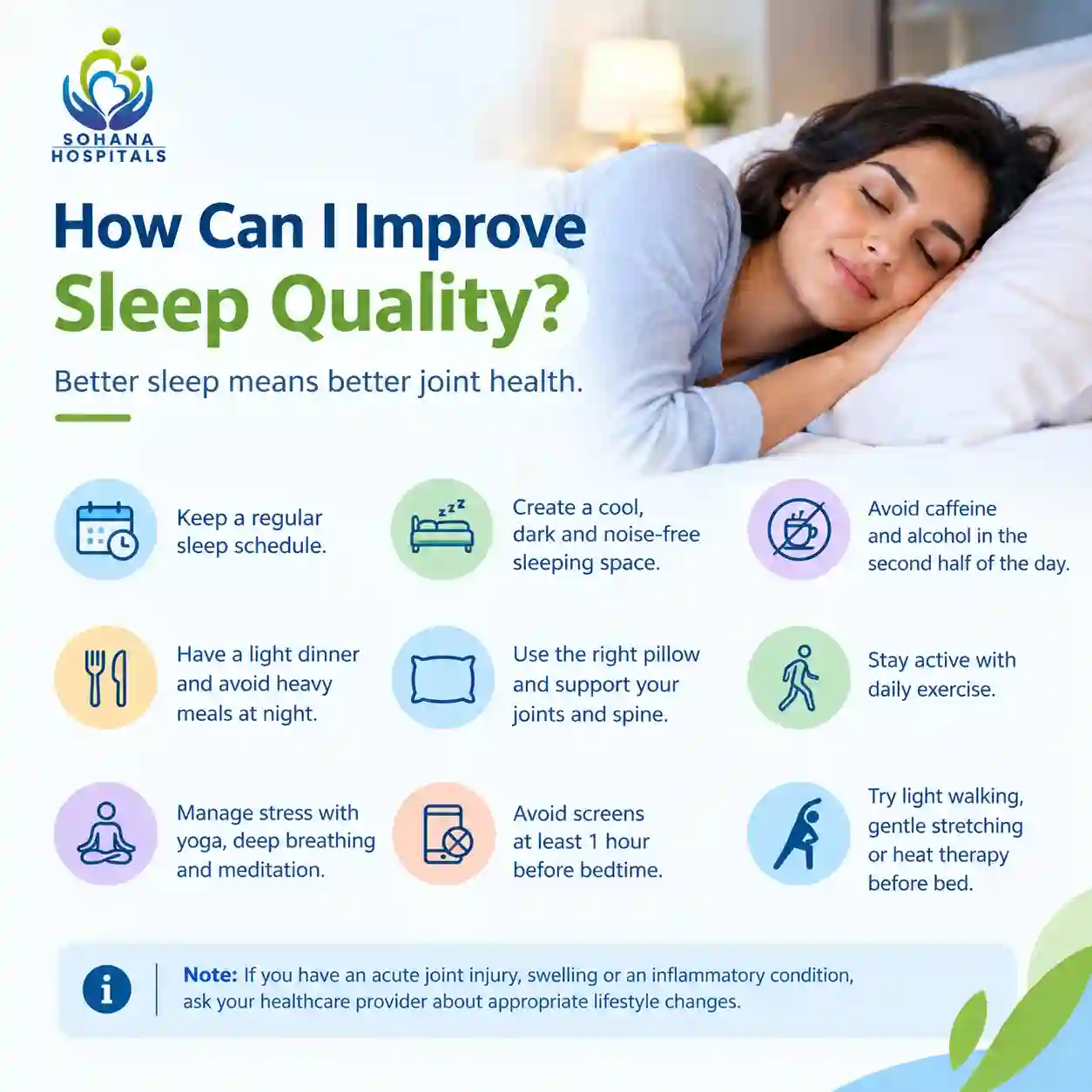
- Follow a regular sleep schedule by going to bed at a set time each night.
- Make sure you create a cool, dark, and noise-free sleeping space.
- Avoid caffeine and alcohol during the second half of the day, especially before bedtime.
- Preferably, have a light dinner and avoid large or heavy meals close to bedtime
- Use the right type of pillow and place it suitably to avoid straining your knees, hips, shoulders, and the spine.
- Stay active by making exercise a daily habit.
- Manage stress by engaging in yoga, deep breathing, and meditation.
- Stop using screens (mobile phone, computers, laptops, etc.) at least 1 hour before bedtime.
- Try light walking, gentle stretching, or heat therapy before you go to bed. It may help improve stiffness and comfort.
*Note: If you have an acute joint injury, swelling, or an inflammatory condition, ask your healthcare provider about appropriate lifestyle changes.
When to Seek Medical Advice
If painful joints do not let you sleep properly, or sleep quality continues to be poor despite making changes to your lifestyle, it is advisable to consult a trusted healthcare provider.
It could be due to mechanical joint problems, underlying inflammation, or injury. In any of these cases, a doctor’s advice is essential. Seek medical attention sooner if joint pain was caused by an injury or is accompanied by significant swelling, redness, warmth, fever, sudden severe pain, or inability to bear weight.
A comprehensive sleep and joint assessment can help find out the actual reason so that you can sleep better and get relief from joint pain.
Dr. Gagandeep Singh Sachdeva, MCh (Orth), Univ. of Seychelles | FIJR (Australia, USA) is a renowned name in the field of orthopaedics in Chandigarh, Mohali. Currently serving as the Chief Robotic Joint Replacement Surgeon and CEO of Sohana Hospital, he has multidisciplinary teams working under him to take care of all your sleep and joint issues.
The holistic approach at Sohana Hospital may include:
- Therapies for managing pain
- Tailored physical therapy
- Stress management and relaxation techniques
- Sleep therapy
- Medical treatments for underlying pain conditions
Conclusion
Proper sleep is essential to overall well-being, including your joint health. Getting enough sleep can reduce joint pain while boosting your mood, mobility, and overall quality of life.
Have joint pain or discomfort? Lack of sleep may be a contributing factor. Sohana Hospital has the best joint doctors in Chandigarh, who work in close collaboration with sleep specialists to provide you with tailored treatment according to your requirements.
Precise diagnosis followed by expert treatment can help you get better sleep and improve orthopaedic health. Reach out at +91 87250 01155 to book an appointment and improve your joint health.