
Wondering, “Why do my knees hurt in monsoons?” Well, you are not alone. It is a problem faced by many people, especially those who have crossed their forties. Orthopaedists get to hear this question all the time during the rainy season.
It may sound surprising, but pains and aches are common with weather changes. Research shows that weather changes are frequently associated with joint pain. In fact, some people start experiencing more knee pain as the weather is about to change.
While anybody may face knee pain issues when it rains, those with past knee injuries or arthritis are more vulnerable to it.
If you have ever wondered, “Why do my knees turn painful when it rains?”, this blog is for you. Discover why humid weather brings knee pain and the ways to relieve discomfort.
Causes of Knee Pain During Monsoon
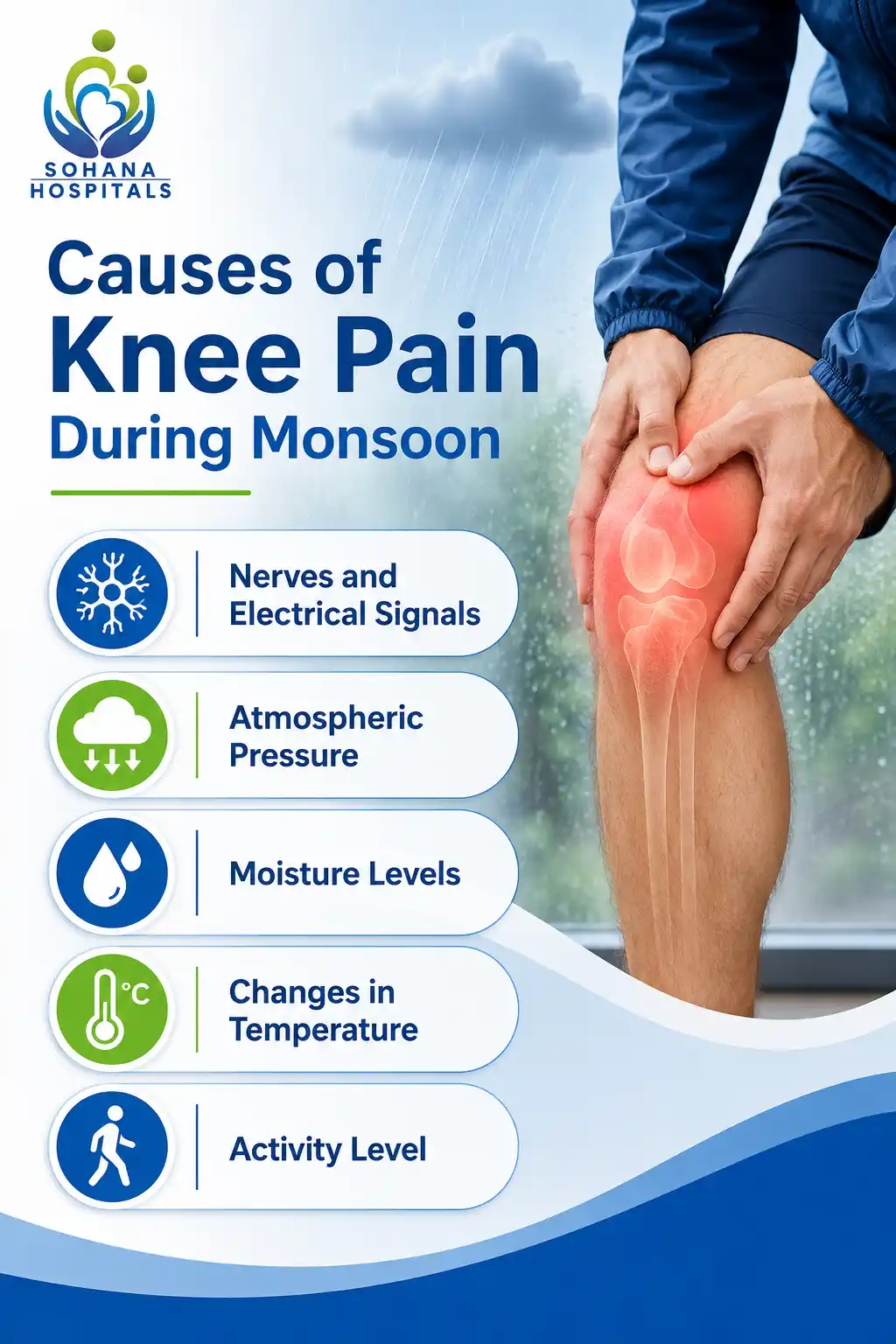
Nerves and Electrical Signals
The human body has an extensive network of nerves that send signals to the brain to alert it about changes in the environment. When there are any changes in humidity or temperature, nerves transmit these signals, becoming more sensitive. The higher sensitivity is the reason you notice and experience pain.
Atmospheric Pressure
Rains are typically associated with a dip in the atmospheric pressure. This causes the tendons and muscles around the joints to expand slightly and exert more stress on your knees. The result is pain and inflammation.
Moisture Levels
When it rains, humidity levels rise. This can cause some people to experience swelling in the knee joints, thereby increasing sensitivity. If you have any knee conditions, like arthritis, or have had an injury in the past, increased humidity can aggravate the pain. High humidity may increase stiffness and discomfort in some people, especially those with existing joint conditions.
Changes in Temperature
Temperature fluctuations are normal during monsoons. This can have an adverse impact on joint lubrication. As the temperature drops, the synovial fluid, which lubricates the joints, becomes thicker. This leads to knee joints becoming stiff and painful.
Activity Level
During the rainy season, physical activity also takes a dip. People find it difficult to step outside and continue their regular walking or exercise routine. Movement is like lotion for the joints. Inactivity can also contribute to stiffness and pain in the knees. Also, sometimes, people may not be able to socialise much during the monsoons, which affects their mood. Depression and joint pain are also interlinked.
How to Prevent Knee Pain During Monsoons: Knee Care Tips
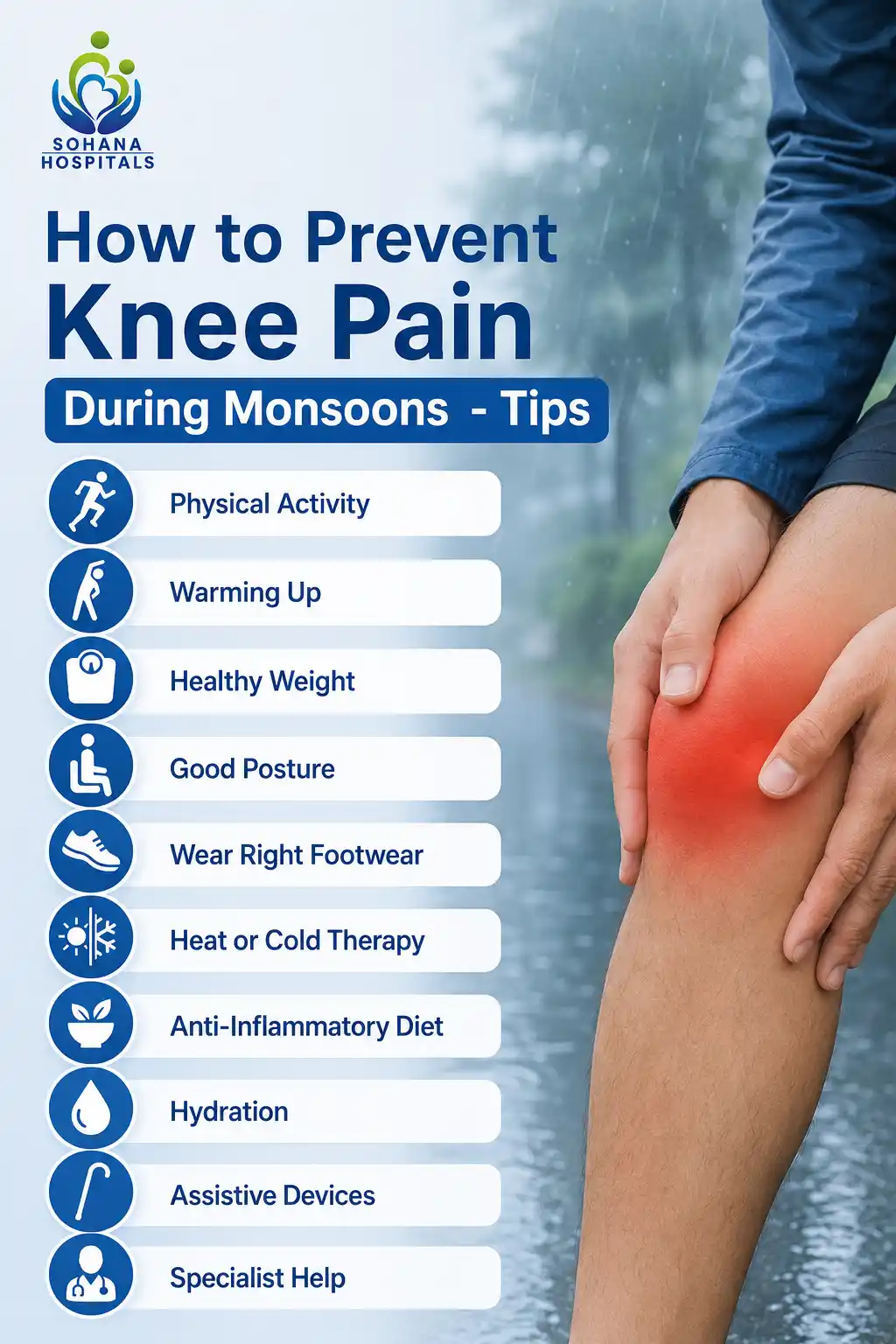
Physical Activity
It is essential to engage in regular physical activity. You can choose to walk inside the house, do stationary cycling, and perform other low-impact activities to maintain knee joint health. This will help maintain strength and flexibility in the ligaments and muscles surrounding the knee, and keep pain at bay.
Warming Up
The importance of a proper warm-up before exercising cannot be overstated. Before you perform any kind of physical activity, make sure you warm up adequately and also do some stretching. Focus on your legs, particularly the hamstrings and quadriceps. This may help reduce stress on your knees and provide relief from pain.
Healthy Weight
For every one kilogram of extra body weight, your knees may have to bear up to 4x extra pressure, especially while walking, climbing stairs, and performing daily activities. This may worsen your knee pain. Taking a balanced diet and exercising regularly can help you maintain an ideal body weight, reduce pressure on the knee joint, and ease pain.
Good Posture
Maintain the right posture when you stand, sit, and walk. It will promote even weight distribution on your joints. Drooping or bad posture can put unnecessary pressure on your knee joints.
Wear Right Footwear
Choose supportive shoes with optimal cushioning and good arch support for your feet. This may help decrease stress on your knees by absorbing shock. It is advisable not to wear flats or high heels, which can cause discomfort.
Heat or Cold Therapy
Try using hot or cold compression on your knees to reduce inflammation and ease discomfort. To reduce swelling, you can use ice wrapped in a towel. For improving blood flow and to relax stiff muscles, you can use a heating pad or a warm towel. You can also consider wearing knee caps to keep your knees warm and comfortable.
Anti-Inflammatory Diet
Include food items like chia seeds, flax seeds, walnuts, etc., that contain good amounts of omega-3 fatty acids. Also, consume foods like ginger, garlic, and turmeric with anti-inflammatory properties. It can help control inflammation and reduce knee pain.
Hydration
Drink enough water to promote joint health. Hydration can help maintain cartilage elasticity and support lubrication in your knee joint.
Assistive Devices
You can also use walking aids, such as supports and knee braces, to keep your knees stable and lower stress on them.
Specialist Help
Is your knee pain worsening despite all precautions? It’s time to seek expert advice from a trusted orthopaedic expert. The best knee pain doctor in Chandigarh at Sohana Hospital can assess your condition, give a precise diagnosis, and advise the right treatment strategies. Sohana Hospital is a leading super-speciality healthcare facility in the heart of the tricity, known for world-class orthopaedic care.
Conclusion
A lot of people aged 40+ complain of knee pain in the rainy season. But the good news is that with the correct strategies, you can control or even prevent pain in your knees.
Incorporate the expert tips mentioned in the blog and take a step towards keeping your knees healthy and pain-free even in the rainy season.
The key is to remember that staying active, maintaining a healthy lifestyle, and seeking medical care from a trusted knee specialist can go a long way in helping you manage knee pain effectively.
Be proactive, care for your knees, and have an enjoyable rainy season!