
A migraine is a condition that affects a substantial number of Indians. Characterised by throbbing or pulsating pain typically on one side of the head, it is generally a long-term condition, although its frequency and severity may change over time.
Migraine attacks progress in stages, may last 4-72 hours, and may be accompanied by diverse symptoms, including nausea, vomiting, light and sound sensitivity, among others.
Migraines may affect anybody, irrespective of age and gender. However, females are more prone to it, possibly due to frequent hormonal changes. The precise cause of migraines remains unknown, but most people with migraines have their specific triggers.
In this blog, we are going to discuss the different types of migraines, along with the management and treatment approach for each type.
Types of Migraines
There are different types of migraines. Here is a list of the most common types:
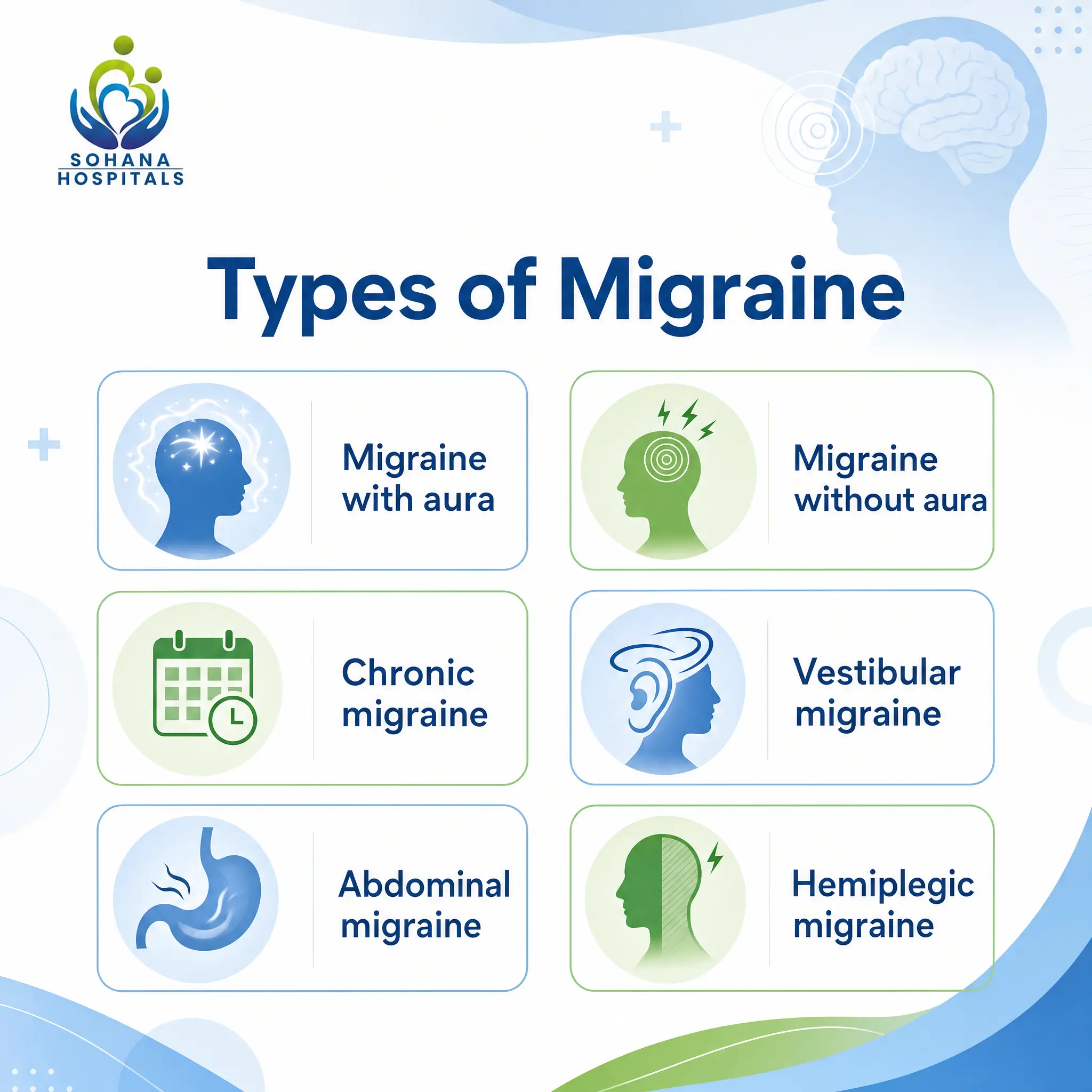
- Migraine with aura
- Migraine without aura
- Chronic migraine
- Vestibular migraine
- Abdominal migraine
- Hemiplegic migraine
1. Migraine with Aura
Also known as classic migraine, it is accompanied by neurological symptoms (related to the nervous system), which occur for the duration of the episode. Up to 33% of people (or 1 in 3) with migraine have this type of migraine attack.
💡 A migraine aura refers to the visual, motor, or sensory disturbances that patients often experience just before the actual migraine attack.
Typical symptoms include:
- Blurry vision
- Blind spots
- Seeing flickering or flashing lights
- Seeing coloured lines or spots
- Appearance of zig-zag patterns in sight
- Numbness in body parts
- Difficulty speaking
- Dizziness
- Weakness in muscles (an uncommon symptom)
Note: Should you experience muscle weakness for the first time, you must consult a doctor at the earliest.
👉 When does an aura happen?
Just before the main attack, after the headache has started. In some cases, it can overlap or occur without headache.
👉 How long does the aura last?
5 minutes to 1 hour, or sometimes throughout the migraine attack.
Treatment: Migraine with Aura
Your healthcare provider will suggest treatment based on:
- The frequency of the attacks
- Their severity
- Any other conditions you have
- Any medications you take
What are the common treatment approaches?
Acute treatment approach
Your doctor will prescribe medicines for symptom management. These medicines should be taken as soon as the headache starts. However, if you have no headache and only aura, these medications will be ineffective. Also, be careful not to overdo them.
Examples of these medicines include:
- Over-the-counter painkillers
- Migraine-specific treatments (triptans)
- Anti-sickness medication
Preventive treatment approach
These medicines help control the frequency and severity of your migraine attacks.
Examples of these medicines include:
- Beta-blockers
- Tricyclic antidepressants
- Anti-epilepsy drugs
Lifestyle modifications
- Follow a particular routine for food and sleep
- Drink enough water
- Reduce alcohol intake
- Manage other triggers
2. Migraine without Aura
It is the most common type of migraine. You do not experience any aura (problem with vision, speech, and other senses). Typical symptoms include:
A throbbing headache generally on one side of the head
- Pain aggravated with movement
- Pain so severe that it disrupts daily activities
- Nausea and vomiting
- Sensitivity to light, sound, and/or odour
👉 How often do migraines without aura occur?
Once in a year or multiple times a week.
👉 How long do migraines without aura last?
4 hours to 3 days, if not treated or treatment does not work.
Treatment: Migraine without Aura
Your healthcare provider will suggest treatment based on:
- The frequency of the attacks
- Their severity
- Any other conditions you have
- Any medications you take
What are the common treatment approaches?
Acute treatment approach
Your doctor will prescribe medicines for symptom management. These medicines should be taken as soon as the headache starts. However, if you have no headache and only aura, these medications will be ineffective. Also, be careful not to overdo them.
Examples of these medicines include:
- Over-the-counter painkillers
- Migraine-specific treatments (triptans)
- Anti-sickness medication
Preventive treatment approach
These medicines help control the frequency and severity of your migraine attacks.
Examples of these medicines include:
- Beta-blockers
- Tricyclic antidepressants
- Anti-epilepsy drugs
Lifestyle modifications
- Follow a proper routine for food and sleep
- Drink enough water
- Exercise regularly
- Maintain a healthy lifestyle
- Reduce alcohol intake
- Manage other triggers
Learn more: Why Does Migraine Keep Coming Back? Know Its Causes
3. Chronic Migraine
Affecting nearly 2% of people, it is a migraine so severe that it feels debilitating. When is a migraine labelled ‘chronic’? There are 3 conditions:
- The headache occurs a minimum of 15 days a month
- 8 of these have migraine symptoms
- It happens for 3 months in a row
If you have fewer migraines in a month, it is an episodic migraine.
Typical symptoms include:
- Frequent headache
- Light, sound, and odour sensitivity
- Nausea and vomiting
- Visual disturbances
- Speech issues
- Tingling in body parts
- Dizziness
Treatment: Chronic Migraine
Medicines and non-medicinal options are used to treat chronic migraine. However, medicines are usually needed to manage symptoms.
What are the common treatment approaches?
Acute treatment approach
Typical medicines include over-the-counter painkillers and migraine-specific triptans. However, you need to take them at the right time (when pain starts), but not more than 2 days a week. Also, you can take medicine for nausea, but steer clear of opiate-based treatments.
Preventive treatment approach
Your doctor will advise a suitable treatment depending on your migraine pattern, any other health issues, your preferences, and potential side effects.
Examples of the preventive treatment options include:
- Beta-blockers
- Tricyclic antidepressants
- Anti-epilepsy drugs
- Blood pressure tablet
- Botox
- Calcitonin gene-related peptide (CGRP) monoclonal antibodies
- Greater Occipital Nerve (GON) block
- Riboflavin (B2), co-enzyme Q10, or magnesium supplements
- Devices like Cefaly or gammaCore
- Psychological interventions (e.g. CBT)
Lifestyle modifications
- Follow a proper routine for food and sleep
- Drink enough water
- Exercise regularly
- Maintain a healthy lifestyle
- Reduce alcohol intake
- Manage other triggers
- Relaxation techniques
4. Abdominal Migraine
It’s quite a common condition affecting 4% children and also some adults. As they grow up, children’s abdominal migraines usually transform into migraine headaches. Typical symptoms include:
- Moderate to severe stomach pain lasting 2-72 hours (in routine)
- Nausea and vomiting
- Not accompanied by headache
Treatment: Abdominal Migraine
Treatment begins with the doctor taking the medical history and physical examination to rule out other diseases. For adults, treatment is similar to that in other types of migraine, but options are restricted for children.
What are the common treatment approaches?
Acute treatment approach (for children)
Simple painkillers
Preventive treatment approach
Aim at controlling the frequency and severity of migraine attacks:
- Managing triggers (poor sleep, bright light, hunger, travel)
- Handling stress
5. Hemiplegic Migraine
It’s a rare type of migraine. Typical symptoms are similar to those of stroke, which makes it scary:
- A temporary weakness on one side of the body
- Visual changes in both eyes (e.g., seeing sparkles or zig-zags)
- Slurred speech
- Difficulty with language reading, writing, speaking, and listening
- Dizziness
- Problem hearing properly
- Confusion
- Headache
- First-time symptoms should always be treated as a medical emergency until stroke is ruled out.
👉 How long do hemiplegic migraines last?
1 hour to many days, although the typical duration for weakness is 24 hours.
Treatment: Hemiplegic Migraine
This migraine requires a thorough diagnosis to assess the cause of sudden weakness on one side of the body. The doctor will precisely evaluate your symptoms and discuss your full family history.
There is no single best treatment for hemiplegic migraine. A specialist doctor will review everything – from your symptoms to medical and family history, and use their experience to recommend the most suitable treatment.
6. Vestibular Migraine
Also referred to as migrainous vertigo, this type of migraine is associated with some symptoms that can make it highly disabling:
- vertigo (a sensation of movement that lasts between 5 minutes and 72 hours)
- dizziness
- balance issues
Typical symptoms include:
- Vertigo (spinning dizziness or a feeling of swaying)
- Light, sound, and odour sensitivity
- Nausea and vomiting
- Headache
- Sensitivity to movement (for some individuals, exercise can worsen their headache)
The diagnosis of vestibular migraines may require a multidisciplinary approach, including general practitioners, ENT specialists, neurologists, and neuro-otologists.
Treatment: Vestibular Migraine
Treatment includes managing acute symptoms and preventive medications.
Acute treatment approach
- Migraine-specific medicines (e.g., triptans)
- Non-specific medicines (NSAIDs like ibuprofen, naproxen, and paracetamol)
- Vestibular sedative (e.g., prochlorperazine) and antiemetic medications (e.g., domperidone and ondansetron) – to control vertigo
- Steer clear of opiate-based treatments
Preventive treatment approach
This approach focuses on preventing a vestibular migraine. Examples include:
- Amitriptyline
- Candesartan
- Propranolol
- Flunarizine
- Greater Occipital Nerve (GON) block
Apart from these common types, there are some other kinds of migraines, too. Examples include migraine with brainstem aura, menstrual migraine, migraine without headache, retinal (ocular) migraine, etc.
Conclusion
Migraines are a condition typically associated with a throbbing, pulsating headache on one side of the head. Migraines are of several types, each with its own set of distinguishing symptoms.
Migraine treatment involves medications to manage acute pain in the head and other symptoms like nausea and dizziness, and preventive strategies that include medications and lifestyle modifications.
Migraine symptoms can vary significantly and mimic other conditions. Talk to your doctor immediately if you experience symptoms that are different from your usual migraine symptoms. Symptoms that demand urgent medical intervention include:
- Slurred speech
- Drooping face (on one side)
- Weakness in arms or legs
- Loss of consciousness
- Double vision, stiff neck, fever, confusion, seizure, or numbness
- Symptoms much more severe than usual
It is good to keep track of your migraine attacks, the symptoms, triggers, and frequency of occurrence. This knowledge can help you better manage the condition.
Sohana Hospital has all kinds of treatment options to provide relief to those dealing with migraines. The multidisciplinary team of doctors comprises expert neurologists along with other specialists to thoroughly investigate your symptoms and suggest the right treatment approach – personalised to your unique condition.
FAQs – Migraines
Which is the most severe type of migraine?
All types of migraines can cause intense pain and disrupt daily life. Some migraine types, such as hemiplegic migraine and status migrainosus, may even lead to hospitalisation.
Having said that, it is important to mention that the severity of a migraine episode depends on several factors. So, pinpointing a particular type of migraine as the most severe can be difficult.
Which conditions do people mistake for a migraine attack?
Conditions like tension headaches, medication overuse headaches, flu, and sinus infections can also result in severe headaches, causing people to assume them to be migraine attacks.
Some serious conditions, like stroke and hypertension, can also have migraine-like symptoms. This makes it crucial to talk to a doctor about your symptoms.