
Yes, it’s true. A lot of people wake up to weak bones when they suffer a fracture. Just a minor fall may result in a broken bone if your bones have become weak and brittle.
Many people think bones become weak only in old age. However, the reality is that bone loss begins silently, and bones can continue to lose density for years before any prominent signs appear.
This is the reason osteoporosis is known as a “silent disease”. It often progresses without any clear symptoms until it’s too late. That makes it vital to identify the early signs of bones getting weak and act before you suffer a bone fracture.
Watch out for subtle variations in your body and make appropriate changes to your lifestyle – to maintain healthy bones for life. Read this blog to learn 10 signs of weakening bones.
🚨 Osteoporosis News Alert: India 🚨
- Almost one in two Indian adults have osteopenia (precursor to osteoporosis)
- Nearly 1 in 5 adults have osteoporosis
- Osteoporosis is more common in women and older people
- Roughly 1 in 3 Indian women in the postmenopausal age group have osteoporosis
Note: Findings from the International Journal of Research in Orthopaedics[1]
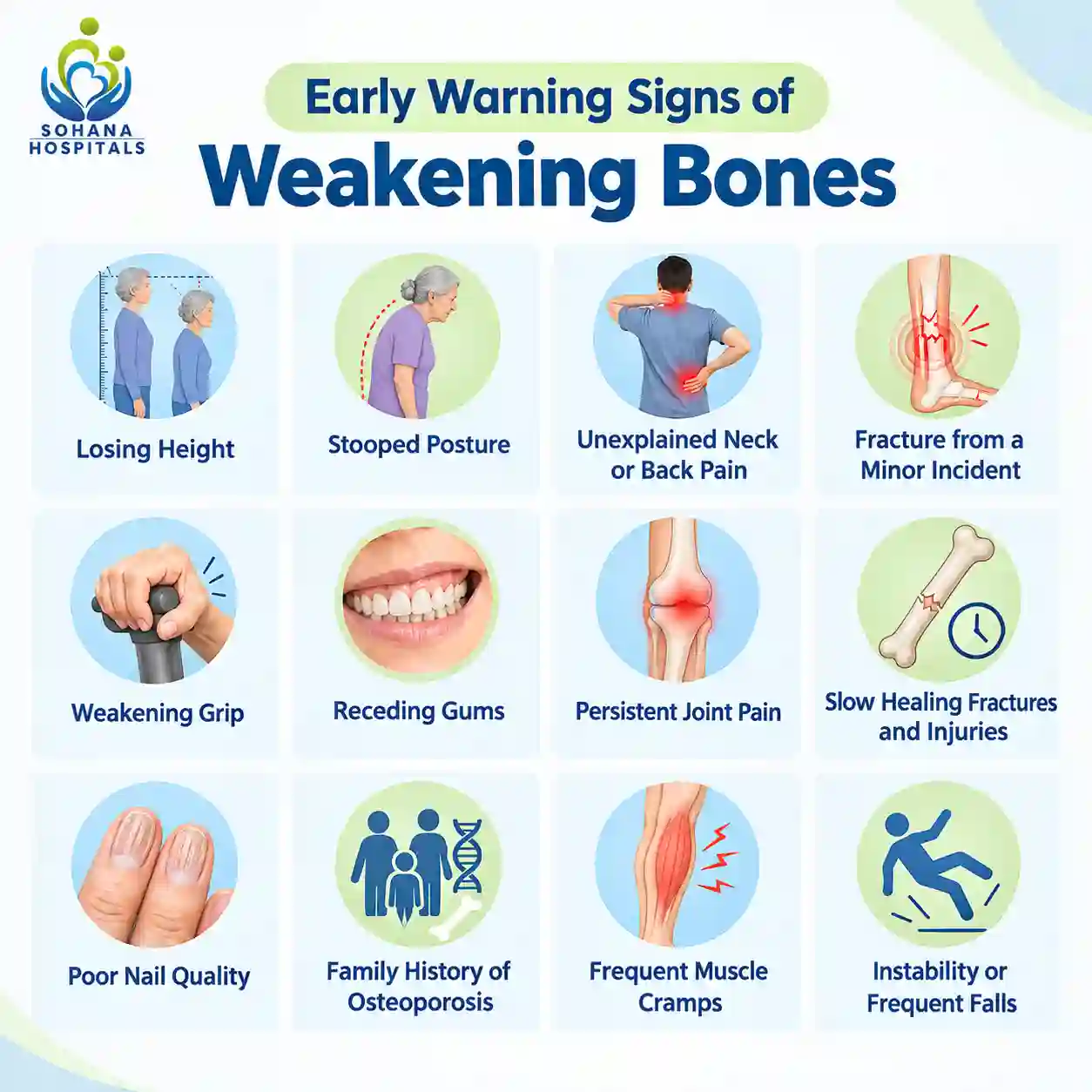
Early Warning Signs of Weakening Bones
Losing Height
Did anybody point out that you seem to have become shorter? Losing more than 0.5 inches of height a year, especially when accompanied by back pain, is a prominent symptom of spinal bone compression. Weakened bone tissue can lead to slight collapse of vertebrae, affecting the spine curvature and resulting in a stooped posture.
Compression fractures in the spine can be one of the first indicators of osteoporosis.
Stooped Posture
Have your shoulders and back started bending forward, giving rise to a hunched posture? This could indicate deterioration of the spine that occurs because of vertebral compression. Such a posture affects your looks as well as your balance and breathing, making you vulnerable to falls.
| 👉 Did you know? Common osteoporosis causes[2] include a family history of fractures, hormonal changes, being female, deficiency of calcium or vitamin D, inactive lifestyle, aging, small body frame, low body weight, smoking, excessive alcohol consumption, stress, certain chronic illnesses, some medications, etc. |
Unexplained Neck or Back Pain
Your back and neck hurt persistently even though you had no injury? It could be due to micro-fractures in vertebrae that may happen with minimal force in people with low bone density. Such fractures may occur gradually, causing persistent discomfort or sudden sharp pain. Pain generally worsens with movement.
Note: Neck pain should not automatically be attributed to osteoporosis.
| 👉 Did you know? You can know your bone density and strength by getting a DEXA (dual-energy X-ray absorptiometry) scan done. |
Fracture from a Minor Incident
A simple fall (from a standing height), a mild collision, trying to pick up something, or just coughing or sneezing resulted in a fractured bone? It’s a cause for concern. These are fragility fractures, and they happen due to severe thinning of bones. The typically affected bones are those in your wrists, hips, and spine.
What do statistics say? 1 in 3 women and 1 in 5 men aged above 50 suffer fragility fractures (via The International Osteoporosis Foundation)[3].
Weakening Grip
Finding yourself unable to hold things or open jars? Do not ignore weak grip as a trivial inconvenience. It is strongly associated with lower muscle strength, poorer overall physical function, and lower bone density.
Note: Weak grip alone is not a specific sign of osteoporosis.
| 👉Did you know? Women may lose bone rapidly[4] during menopause as levels of the estrogen hormone drop. Men can also lose bone density as testosterone declines with age. |
Receding Gums
Can dental issues possibly reflect bone problems? Yes, they do. It’s the jawbone that holds the teeth. As bones lose mass, the gums start moving back. So, receding gums could be a subtle indicator of osteoporosis, especially in postmenopausal women.
Persistent Joint Pain
Joint pain refuses to go away despite medication, rest, or massage? This can also sometimes be due to declining bone strength. Weakening bones may cause the joints around them to feel strained and overworked. There may be pain, stiffness, and reduced flexibility.
While joint pain is a common issue, long-lasting symptoms may point to hidden bone issues.
Note: Persistent joint pain has many possible causes and may not necessarily be due to osteoporosis. However, sudden or persistent back pain may occur with an osteoporosis-related vertebral fracture.
Slow Healing Fractures and Injuries
Do your injuries and fractures take longer to heal? It could be a sign of weak bones. While healthy bones regenerate quickly, those lacking density result in a delayed healing process.
You may also experience frequent pain around previously injured areas. This may also be an indicator of poor bone health. Do not ignore slow healing, particularly if it happens often.
Note: Several factors can affect fracture healing, including the type and location of the fracture, age, nutrition, blood supply, smoking, certain medical conditions, and some medications. Osteoporosis may affect fracture risk and, in some circumstances, healing.
| 👉Did you know? Osteoporosis is becoming increasingly common, affecting over 200 million[5] people globally. |
Poor Nail Quality
Do your nails peel, crack, or break frequently, and that too without any injury? Both bones and nails are composed of minerals like protein and calcium. Frequently chipping nails or nails lacking moisture and flexibility are signs of nutritional deficiencies that affect not just your nails but also bones. If you have other symptoms along with poor nail quality, your bones may be losing strength.
Note: Nutritional deficiencies, repeated exposure to water or chemicals, and other medical or dermatological conditions may also result in brittle nails.
Family History of Osteoporosis
Did an immediate family member have osteoporosis? If yes, you may be at a considerable risk of the condition. It is more so if you are a female and have a small, slender body structure, or have had an early menopause. Genetic aspects can affect peak bone mass and the rate at which it declines as age increases.
If you have this risk factor, it’s important to start performing bone-strengthening exercises at a young age.
Frequent Muscle Cramps
Do you often experience muscle spasms and cramps, especially at night? It could be due to a deficiency of calcium, magnesium, or Vitamin D. These minerals are vital for the contraction and relaxation of muscles. When calcium levels in the blood drop, your body draws calcium from bones. Hence, cramps may be an indicator of calcium depletion in bones.
Note: Muscle cramps may also occur due to dehydration, electrolyte abnormalities, muscle overuse, or certain medications.
| 👉 Did you know? Research shows that smokers are at a 2.46x[5] higher osteoporosis risk. The risk is 3.78x in diabetic patients and 6.23X in individuals with a fracture history. |
Instability or Frequent Falls
Have you been finding it somewhat difficult to maintain balance? Or have frequent falls become a new normal? Difficulty maintaining balance or coordination could be associated with weakening muscles and bone structures.
It is common for aging adults to experience frequent falls if they are experiencing bone loss. Falls are a serious issue and must not be ignored. It is essential to consult a doctor regarding bone strength and fracture prevention.
Note: Other causes of falls include muscle weakness, vision problems, neurological conditions, and medication side effects.
Importance of Good Bone Health
Healthy bones are essential for movement, be it something as simple as walking or a strenuous activity like lifting heavy weights. Sound bone health ensures good posture, flexibility, and balance, allowing you to be active and self-reliant.
When your bones start losing strength, even routine activities may seem hard. Apart from the above-mentioned signs, you may experience fatigue or stiffness, or become slower at tasks without realising why.
Identifying these subtle signs early on and taking steps to maintain bone strength can help you prevent long-term complications that can ruin the quality of your life.
Conclusion
Osteoporosis is a silent condition that affects your bones, making them weaker and prone to fractures. You may feel absolutely fine even when your bones are quietly becoming fragile.
Prioritising bone health at an early age can make a huge difference as you grow older. Many people continue to lose bone strength without realising it until a fracture occurs. Identifying early symptoms of bone loss can help you seek timely intervention.
Consulting the best orthopaedic doctors in Chandigarh and making lifestyle adjustments, monitoring your vitamin levels, getting proper nutrition, and exercising regularly can support bone health and help reduce the risk of osteoporosis and fractures.