
Seizures in children occur unexpectedly, and this can be alarming for parents. However, if you know what triggers seizures in children or the underlying causes, you may be better equipped to understand the potential risks, identify warning signs, and get timely medical intervention.
Seizures are often caused by unusual electrical activity in the brain, but other factors can also trigger them. Some causes are temporary in nature and may not happen again, while others may be an indicator of some chronic condition.
In this blog, we are going to shed light on common triggers of seizures in children.
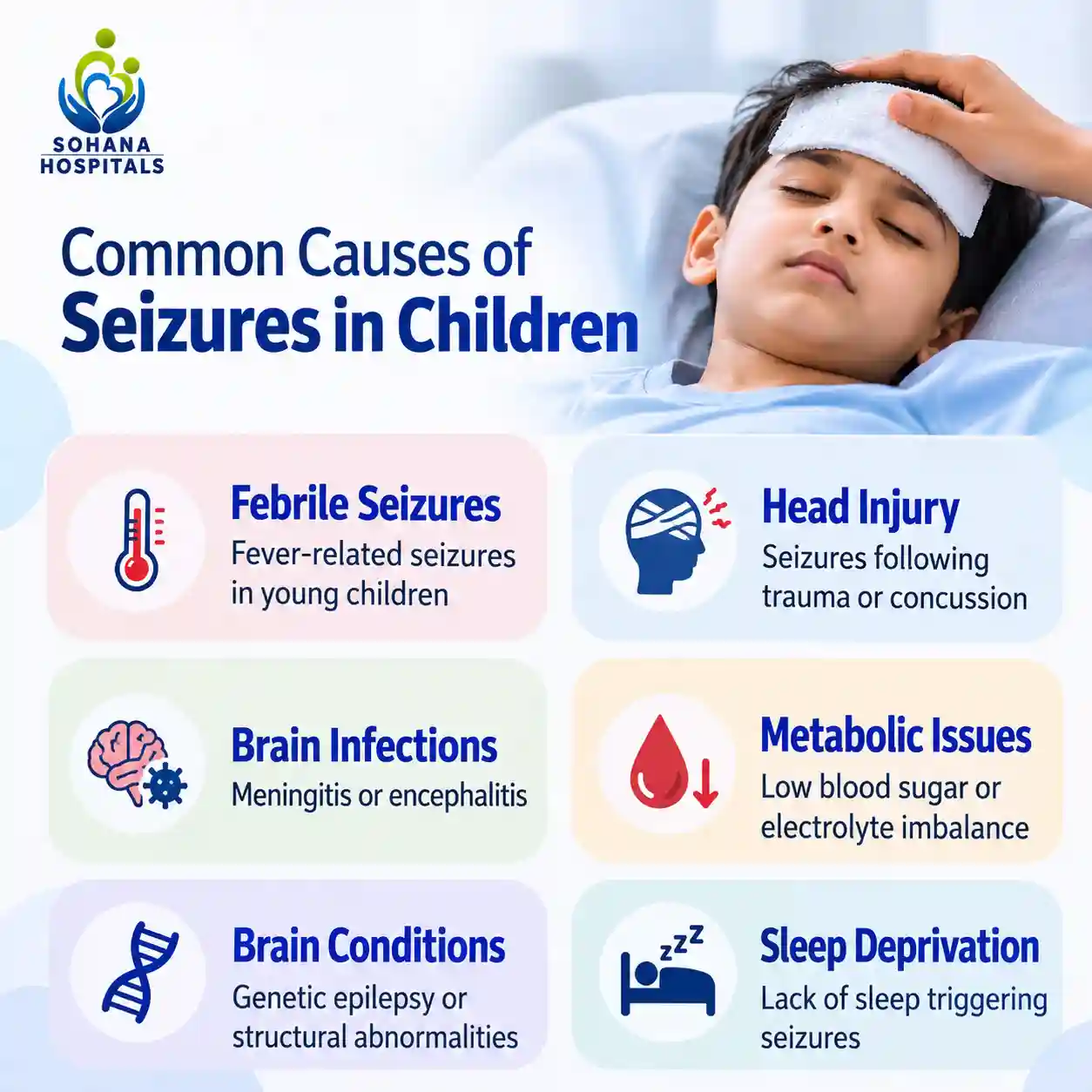
Febrile Seizures
- Caused by high fever
- Typically affects children aged between 6 months and 5 years
- Often occur when there is a sudden rise in the child’s body temperature (although the exact mechanism is not fully understood)
- It’s the response of the brain’s temperature-regulating system, disrupting the brain’s normal electrical activity
- Generally of short duration (less than 5 minutes)
- May not point to long-lasting brain or nervous system issues
- Medical evaluation crucial to rule out any serious cause
Post-Traumatic Seizures
- Caused by head injury or concussion (bump, fall, or other serious injury), resulting in abnormal electrical activity
- A brain injury may lead to irritation or swelling in specific regions of the brain, triggering a seizure
- A seizure after a head injury can indicate a serious injury and requires urgent medical assessment.
- A child suffering a head injury must be closely monitored (seizures, dizziness, confusion, trouble concentrating, etc.)
Infections (Encephalitis, Meningitis or others)
- Caused by serious infections impacting the brain or the structures around it
- Examples include encephalitis (inflammation in the brain) and meningitis (inflammation in the protective membranes of the brain)
- Underlying cause is abnormal electrical impulses due to infection-induced swelling and inflammation in the brain
- Younger children may be more prone to these seizures. However, these infections can be serious at any age
- Watch out for infection symptoms like headaches, vomiting, fever, confusion, unusual drowsiness, and stiffness in the neck
- Such seizures often require immediate diagnosis and treatment
Low Blood Sugar and Electrolyte Imbalances
- Caused by electrolyte imbalance (calcium, sodium, etc.) or low blood sugar (hypoglycemia)
- Blood sugar is an important energy source for the brain, and excessive drops in it can impair brain function, resulting in seizures
- The same applies to electrolyte imbalance that may happen due to other factors, like dehydration, skipping meals, diarrhoea, certain illnesses, or excessive perspiration
- Make sure your child eats proper food at regular intervals
- Seek medical evaluation if your child experiences a seizure, particularly if they have diabetes or another underlying medical condition.
Structural or Genetic Brain Issues
- Structural differences or genetic conditions affecting a child’s brain may increase their risk of having seizures
- Examples of such conditions include genetic epilepsy syndromes, developmental malformations in the brain, brain tumours, and others
- If your child suffers repetitive seizures or the cause is not known, it’s vital to visit the best child neurologist – since the child may be in need of long-term management and personalised care
Extreme Exhaustion or Sleep Deprivation
- Caused by a child experiencing extreme fatigue, stress, or lack of sleep
- More common in children predisposed to seizures, particularly those with epilepsy
- In the absence of proper rest, the brain’s functioning may get disrupted, leading to seizures
- Ensure that your child follows a proper routine, gets enough sleep, and adequate rest
- Triggers may include exhausting long hours at school or sleep deprivation for any reason
*Note: Lack of sleep alone does not necessarily cause seizures in every child.
Seizure Care: What to Do?
It may be a scary thing to see your child going through a seizure. Here’s what you should do to ensure their safety:
- Stay calm and remain with the child
- Protect the child’s head with something soft
- Do not put anything in the child’s mouth to avoid choking
- Move sharp objects away from them to protect them from injury
- Do not restrain the child or attempt to stop their movements
- Gently turn the child onto their side when possible, especially after the seizure
- Note the time for which the seizure lasts
- Once the seizure is over, make the child feel comfortable
- Do not give any food or drink to the child until they are fully alert.
- Get immediate medical attention if the seizure lasts 5 minutes or longer, another seizure begins before the child recovers, the child has difficulty breathing, or a serious injury occurs
*Note: Do not wait until a seizure has lasted more than 5 minutes to seek help if it is the child’s first seizure or there are other emergency warning signs.
Conclusion
It’s good for parents to learn about the factors that may trigger seizures in their children. This knowledge can help you identify potential risk factors and take fast action. Some seizures, such as those caused by high fever, do not usually result in any long-term neurological problems.
However, some seizures may point to a chronic neurological condition, such as epilepsy. In either case, it is advisable to consult the pediatric neurologist in Mohali, especially if the child has had more than one instance of seizures.
Timely diagnosis and care can help manage seizures.
Medical disclaimer: This article is for educational purposes and does not replace professional medical advice.