
Children with Autism Spectrum Disorder (ASD) have to deal with several challenges. A common one is trouble with sensory processing. Communicating, interacting, and responding to their surroundings is often an uphill task. These experiences vary from child to child.
As a parent, you should understand these sensory problems of your child. This can equip you to give better support to the child and enhance the quality of their daily life.
| 👉Do children with autism look different from other children? No, they do not look different but differ in behaviour, communication, interaction, and learning. (via CDC) |
What are Sensory Issues?
Autistic kids are often either too sensitive (hypersensitive) or under-sensitive (hyposensitive) to sensory input. This means their reaction to ordinary lights, sounds, smells, touch, or textures may be too strong. Others may seek additional sensory input or respond less strongly to particular sensations. These sensory issues vary from child to child.
Here are some common sensory challenges autistic children may exhibit:
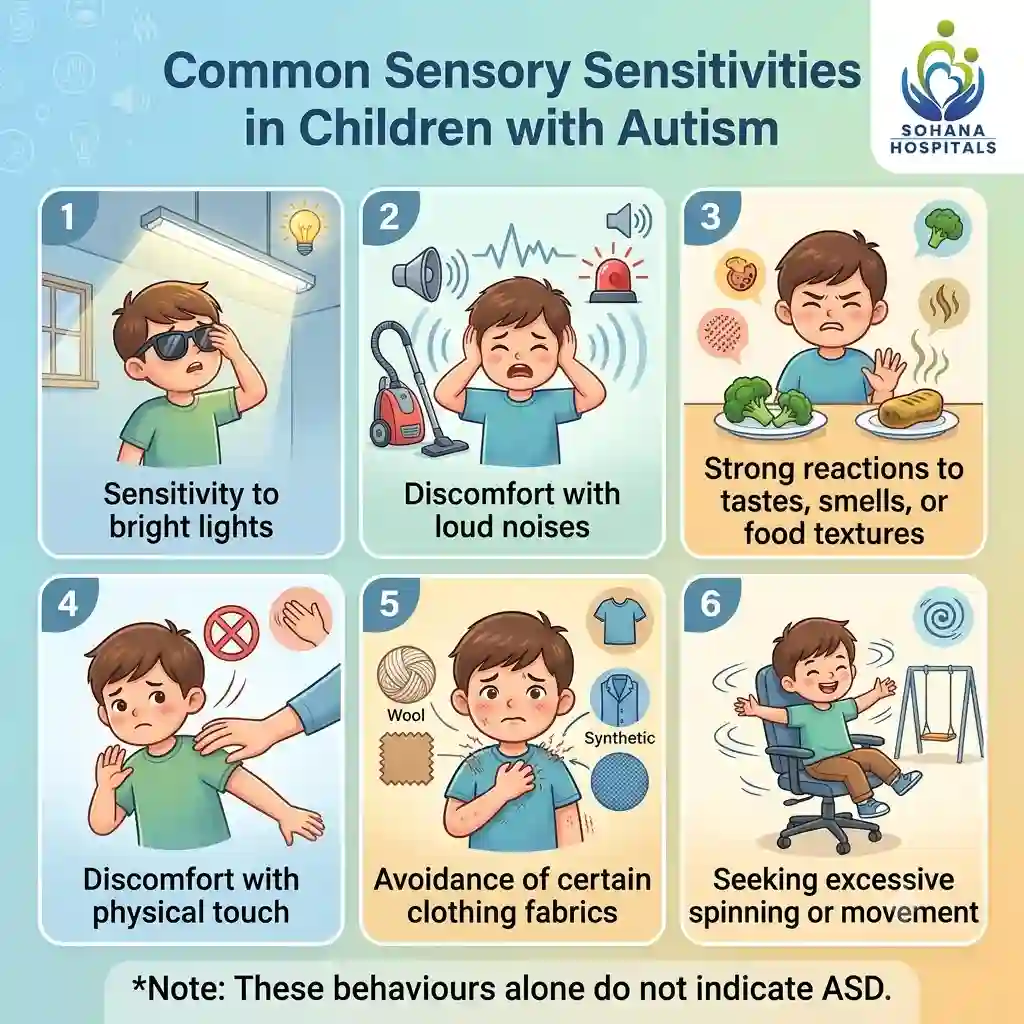
- Trouble facing bright lights
- Unease with loud noises (e.g., they may cover their ears)
- Reacting strongly to particular tastes, smells, or food textures
- Uneasiness dealing with physical touch
- Avoiding specific fabrics (clothing textures)
- Desiring too much spinning or movement
*Note: These behaviours alone do not establish an ASD diagnosis.
| 👉 Are all children with ASD similar with regard to disability level? No. The abilities may have significant variation. For instance, some autistic kids may have good conversation skills while others may use alternative communication methods. Some may need little support in daily life, while others may require a lot of help in their daily routines. (via CDC) |
What do these sensory challenges impact?
A child’s social interactions, learning, and daily activities may be affected.
What Can You Do as a Parent?
Parents can take proactive steps to improve behaviour, comfort, and participation of their child in everyday activities and routine life:
- Identify sensory triggers
- Create a predictable ambience
- Maintain consistent routines and prepare your child for changes whenever possible
- Work with occupational therapists
With these strategies, you can help your child better manage sensory issues.
*Note: Occupational therapy strategies should be individualised according to the child’s needs and goals.
| 👉 When do ASD signs appear in children? It may vary from the first 12 months of life to after 2 years of age or even later (via CDC). If you have concerns about your child’s development, consult a healthcare professional. |
When to Seek Professional Guidance
Are sensory issues impacting your child’s interactions, learning, or daily life? It would be advisable to get in touch with an experienced child neurologist. They can identify the underlying concerns and develop a tailored ASD management plan for your child.
| 👉 Do autistic kids always have cognitive impairment? No, individuals with ASD may even have above-average IQs (via Autism Science Foundation). |
Conclusion
ASD poses sensory difficulties for affected children. These can have a considerable impact on a child’s quality of life. Timely medical care and management can be a vital step in enhancing an autistic child’s daily functioning.
Sohana Hospital has a Department of Paediatric Neurology, where doctors can prepare personalised care plans for each child. These plans are tailored to each child’s needs, with a focus on supporting performance, development, and overall well-being.