
Ever heard of rheumatoid arthritis (RA) in young adults? We know the condition is typically associated with middle-aged and older individuals. But in reality, it is actually prevalent in young adults across the world – some get a timely diagnosis, while others remain undiagnosed for years.
| 💡 DID YOU KNOW? 8 in 1,00,000 people between the ages of 18 and 34 get diagnosed with rheumatoid arthritis. (via WebMD) |
In this blog, we will discuss all there is to know about rheumatoid arthritis in young adults, its causes, symptoms, and management strategies that can help young adults lead substantially normal lives.
How Common is Rheumatoid Arthritis in Young Adults?
Arthritis is a chronic autoimmune condition – it is characterised by inflammation in joints, leading to pain, swelling, and stiffness. It is a common misconception that RA only affects older people. However, that is far from the truth. Unlike osteoarthritis (a form of arthritis associated with wear and tear of joints with age), RA can affect people of any age.
Rheumatoid Arthritis Causes in Young Adults
Common causes of RA in young adults include:
Other autoimmune diseases
If you have an autoimmune condition, your risk of developing RA can increase. Your immune system may start affecting the body’s healthy joints, leading to inflammation and pain.
Genetics
Genetics play a huge role in the development of autoimmune conditions. If you have a family history of RA, you may be predisposed to developing it at a younger age.
Lifestyle & diet
A sedentary lifestyle, being overweight, smoking, and a poor diet can increase the risk of RA if you are already predisposed to it. Unhealthy eating habits can contribute to extra body weight; this means extra pressure on joints, which can lead to inflammation and pain.
Environmental factors
Individuals with a family history of RA, exposed to environmental triggers like smoking, infections, etc., are at a greater risk of developing the condition.
Hormonal changes
RA is more commonly diagnosed in women than men. In some cases, certain hormonal changes and imbalances may affect immune system activity, leading to the development of RA in young women.
Common Rheumatoid Arthritis Symptoms in Young Adults
It may be challenging to diagnose RA in younger individuals as the symptoms might not always be obvious or noticeable. But it is important to watch out for persistent signs that could point to the condition.
It is crucial that you do not ignore any of the below-mentioned symptoms and seek medical care for proper management of the condition, thus reducing the risk of long-term joint damage.
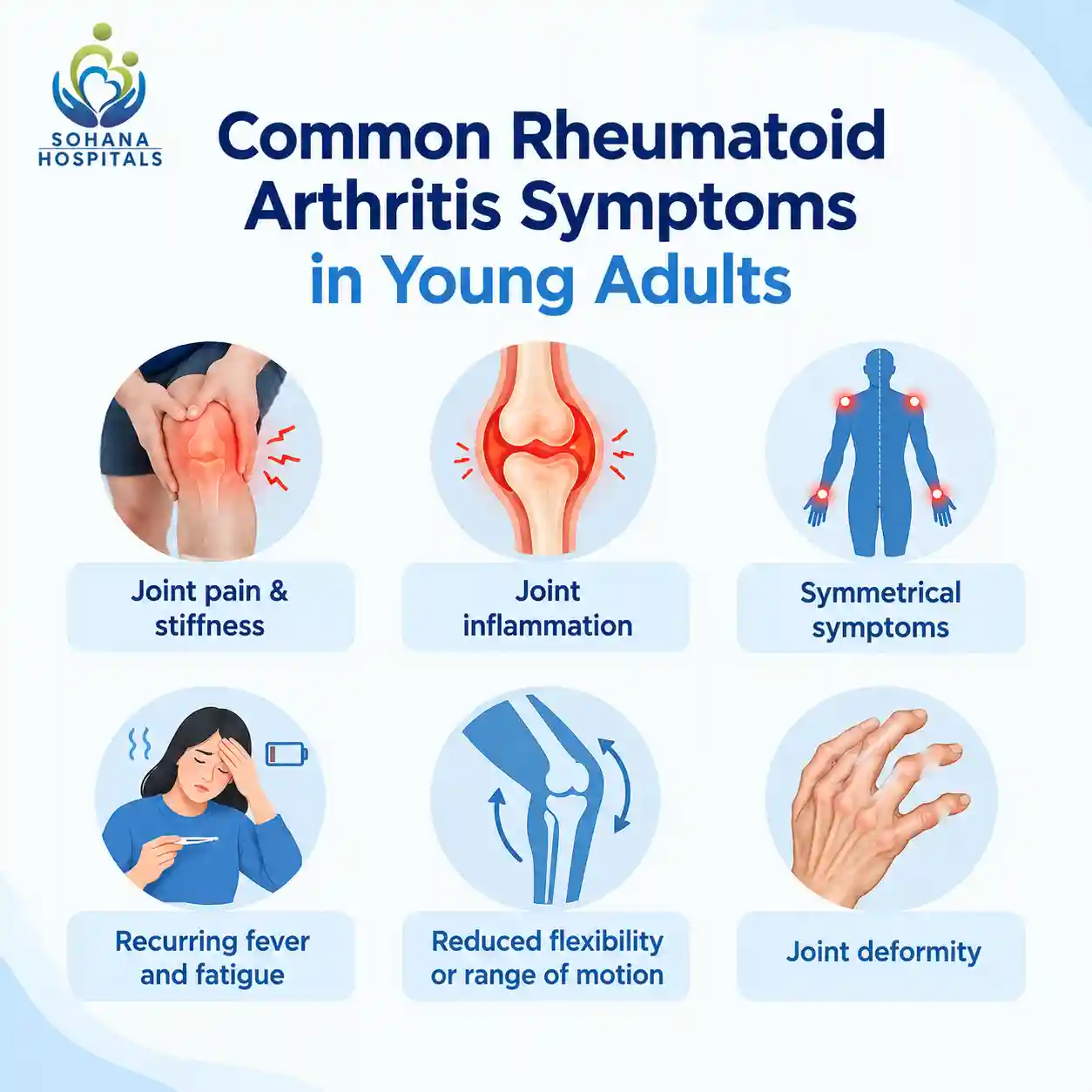
Joint pain & stiffness
The most common signs of RA are persistent pain and morning stiffness in joints. These symptoms are not normal for young adults; therefore, if you experience them, a physical evaluation may help you get an accurate diagnosis. Stiffness after long periods of rest or inactivity is also a sign of RA.
Joint inflammation
Another hallmark of the condition is inflammation. Swollen, red, tender, and warm joints are a sign of inflammation.
Symmetrical symptoms
One thing that sets RA apart from other forms of arthritis is symmetrical symptoms in joints on both sides of the body. For eg: any symptoms felt in the left knee will typically also be felt in the right knee, meaning the condition affects both joints at the same time.
Recurring fever and fatigue
Recurring or persistent mild fever is experienced by some people with RA, but it is important to note that not everyone with RA might experience fever. A general feeling of fatigue or tiredness is often reported by most RA-affected individuals.
Reduced flexibility or range of motion
Pain and stiffness in the joints might impact your flexibility and range of motion, making everyday tasks like walking, running, driving, etc., feel like a challenge. This may be especially experienced after inactivity or rest periods.
Joint deformity
If RA is left untreated for long, it can eventually lead to deformities in joints. This can significantly impact your ability to lead a functional life. It is important to identify and address RA symptoms before the condition progresses to the final stage.
Rheumatoid Arthritis Treatment for Young Adults
RA treatments in young adults aim to manage the symptoms, to delay joint degeneration, and prevent eventual damage, thereby enhancing the overall quality of everyday life.
Here is a list of the most commonly used management strategies for RA treatment:
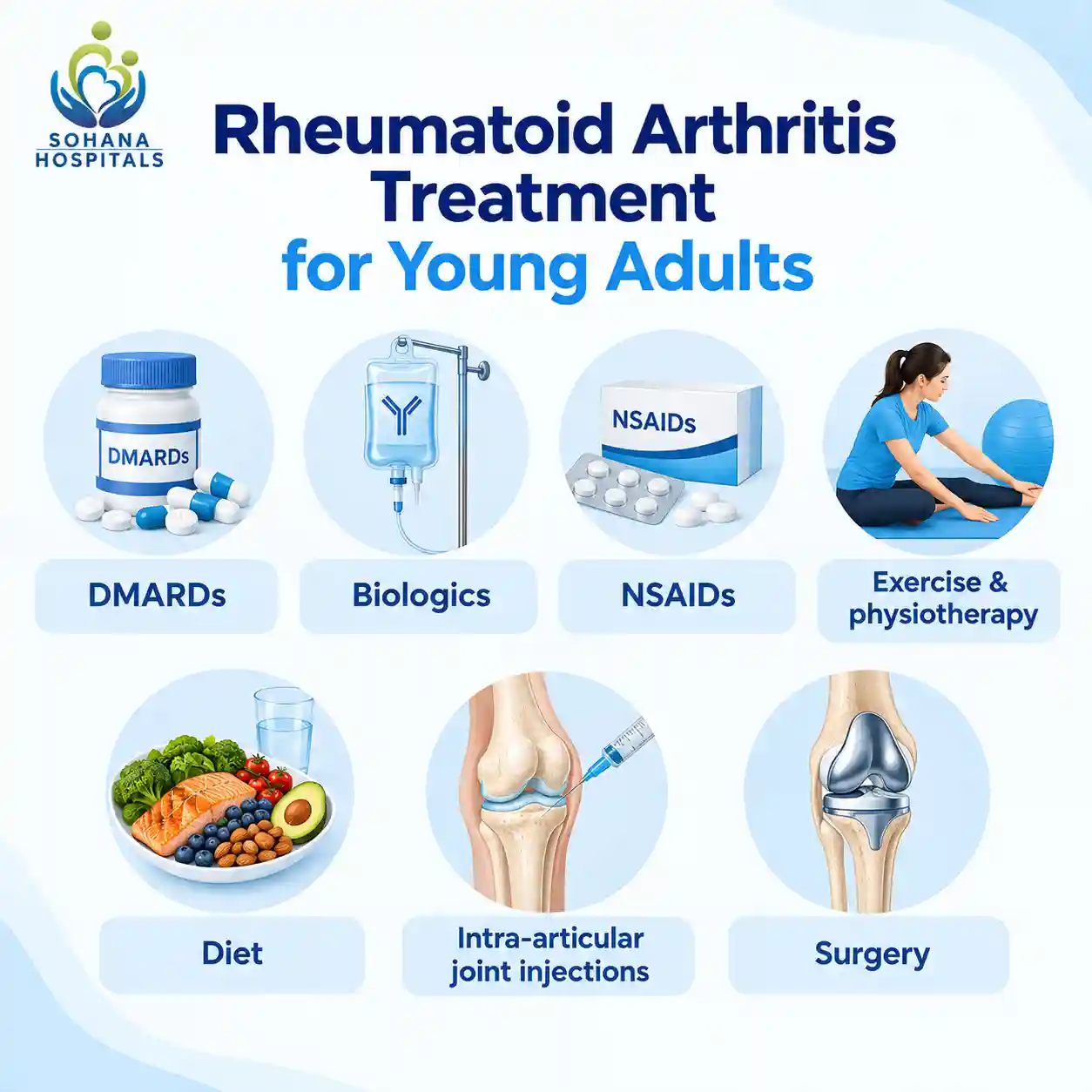
DMARDs
These are disease-modifying anti-rheumatic drugs. These target specific components of the immune system and are often prescribed when conventional DMARDs do not provide ample disease progression prevention. They aim to slow down the progression of inflammatory and autoimmune diseases such as rheumatoid arthritis.
Biologics
Biologics are a type of DMARDs. Usually administered via an injection or IV infusion, these help target the specific parts of the body’s immune system to stop joint inflammation, thus delaying or preventing joint damage.
NSAIDs
These are non-steroidal anti-inflammatory drugs that help reduce joint pain and stiffness by lowering inflammation in the body.
Exercise & physiotherapy
These help keep your joints active. Not only that, physical therapy and suitable exercises have actually been linked with improved overall strength and joint function. Exercising regularly may also help relieve pain, improve range of motion, and enhance mobility in general.
Diet
It is crucial to consume a well-balanced diet and maintain a healthy weight so as to avoid more strain on your already affected joints.
Intra-articular joint injections
These injections are administered directly into the affected joint capsule to help alleviate joint inflammation & pain. Intra-articular injections also help increase lubrication in joints, giving better range of motion.
Surgery
This is advised if the condition progresses to the stage of joint deformity or even chronic pain that causes difficulty in performing everyday tasks like walking, running, cooking, or driving, etc. Surgical interventions are not inevitable and may be advised for select individuals with advanced joint damage. Typical types of surgeries may include joint replacement or arthroplasty procedures.
Conclusion
RA is a chronic condition that can significantly impact your everyday life. But with modern management strategies, it is possible for young adults affected by rheumatoid arthritis to lead normal lives. Timely diagnosis and proper medical care are crucial to a good quality of life.
If you or anyone you know is experiencing any of the mentioned symptoms, a complete evaluation by a rheumatologist in Chandigarh can help you get the right diagnosis.