
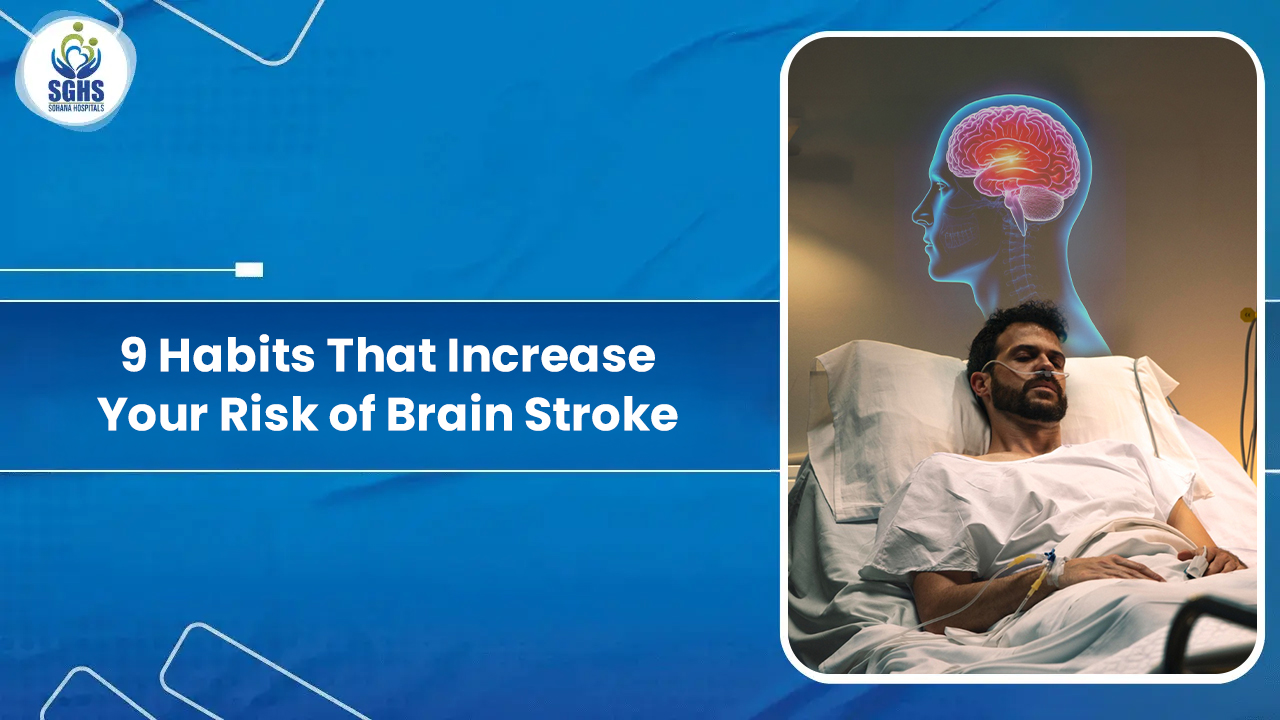
No warning, and suddenly the face droops, language becomes slurred, one arm feels hard to move, and body balance is lost. Yes, that’s how a brain stroke hits, taking a toll on precious lives and leaving others disabled.
While some factors like genetics and age may be beyond your control, you can definitely give up some habits that raise your stroke risk.
Note: Recognise a Stroke: Act FAST. If the aforementioned symptoms appear suddenly, emergency medical care must be sought immediately. Stroke is a medical emergency, and timely treatment is critical.
| 🚨Stroke ranked as the third leading cause of death and disability worldwide in 2021, affecting an estimated 93.8 million people. (WHO) |
Let’s see which lifestyle choices put you at a higher risk of stroke.
Prolonged Inactivity
Being physically inactive or sitting for long hours at a stretch without much movement is associated with several health conditions, such as high blood pressure, obesity, diabetes, and high cholesterol. This, in turn, raises your stroke risk over time.
What to do: Make regular physical activity a part of your life. If you have a desk-based routine, set an alarm for every 30-60 minutes for short walks and some stretching. It can help improve your vascular health. Avoid prolonged periods of sitting, whenever possible.
| 🚨Being overweight has been linked with higher levels of “bad” cholesterol and triglycerides and lower levels of “good” cholesterol. Excess body weight may also result in high BP and diabetes. (via CDC)[1] |
Sodium-Rich, Processed Food
Excessive salt intake can lead to elevated blood pressure, a leading risk factor for stroke. Avoid adding extra salt to your meals. And yes, stay away from fast and processed foods. They are high in sodium and unhealthy fats.
What to do: Cook more at home, avoid outside food, choose whole foods over refined ones, and take a careful look at food labels to watch your sodium intake.
| 🚨The year 2021 witnessed 11.9 million new stroke cases globally. (via WHO)[2] |
Hypertension
High blood pressure is known as the “silent killer” because it does not always exhibit symptoms despite being a major cause of stroke.
What to do: Make changes to your lifestyle and take prescribed blood-pressure medicines as per your doctor’s advice. Also, check your BP regularly.
| 🚨Hypertension is a major contributor to stroke. Hypertensive individuals are at roughly 3X greater stroke risk than non-hypertensive people. (via WHO)[3] |
Poor Oral Health
Going to sleep without brushing your teeth could raise your stroke risk. Research indicates a link between periodontal disease and stroke. Poor oral hygiene could lead to gum disease, which could further allow bacteria to enter the bloodstream and result in inflammation.
What to do: Develop a habit of brushing twice daily, preferably with fluoride toothpaste. Also use floss to clean between your teeth regularly, and see a dentist if you experience persistent gum bleeding, swelling, or other signs of gum disease.
| 🚨With a 50% rise in the lifetime stroke risk over the past 2 decades, 1 in 4 adults is predicted to suffer a stroke. (via WHO)[4] |
Excessive Alcohol
Consuming too much liquor can contribute to high blood pressure as well as irregular heartbeat, which are known stroke risk factors.
What to do: Guidelines say men should not take more than 2 drinks a day, while women should not consume more than 1 drink a day (via CDC)[5]. Be a part of support groups or discuss with a doctor if you find it hard to refrain from alcohol.
Note: These alcohol limits should not be interpreted as a risk-free level of drinking.
Tobacco Smoke
Smoking and even inhaling second-hand smoke (passive smoking) drastically raises the risk of stroke by damaging blood vessels, thickening the blood, and accelerating the buildup of plaque in arteries.
What to do: Quit smoking to safeguard your vascular and overall health. Join support programs or take medications that can help you give up smoking.
| 🚨For people aged 18-24, smokers are at a 5.2X greater stroke risk than non-smokers in the same age group. Female smokers have a 2.8 times higher stroke risk than their non-smoking peers. (via NIH)[6] |
Sleep Deprivation
Not getting adequate and sound sleep is associated with high blood pressure, heart issues, and stroke.
What to do: Try to get 7-8 hours of quality sleep daily. Follow healthy sleep habits. If you feel exhausted or snore loudly, consult a sleep specialist.
Working 55+ Hours a Week
Being a workaholic may come at the cost of your health. Working 55 or more hours a week has been linked with a 35% higher risk of stroke as compared with working 35-40 hours (via WHO)[7]. Prolonged working hours could mean little or no physical activity, lack of adequate sleep, and an unhealthy routine.
What to do: If you cannot change your work routine, try to get up from your seat every hour, walk a little, and do some stretching exercises.
Missing Health Screenings
If you skip body tests to assess your health, particularly if you have high cholesterol, diabetes, high BP, heart issues, or a family history of stroke, it would be like turning a blind eye to stroke risk.
What to do: Get regular health checkups and the tests prescribed by your healthcare provider. Regular health checks can help identify any health conditions early and allow appropriate management. People with heart conditions, previous TIA/stroke, or other risk factors may need additional evaluation.
Start Now: Before the Opportunity is Lost
Stroke is a prominent cause of disability and death globally. But the good news is that many important stroke risk factors can be reduced or managed through healthy lifestyle choices, regular health checks, and appropriate medical treatment.
It is in your hands to adopt a healthy lifestyle, exercise restraint, and follow your healthcare provider’s advice – to reduce your stroke risk. At Sohana Hospital, an expert team of neurologists provides expert diagnosis and management for stroke and its associated risk factors.
Worried about your stroke risk? Book an appointment with the best neurologist in Chandigarh, Mohali at Sohana Hospital: +91 87250 01155
References:
- U.S. Centers for Disease Control and Prevention. Obesity can also lead to high blood pressure and diabetes.
- World Health Organization. In 2021, there were 11.9 million new cases of stroke.
- World Health Organization. Hypertension: the leading contributor to stroke.
- World Health Organization. The lifetime risk of stroke has increased.
- U.S. Centers for Disease Control and Prevention- Women should have no more than one drink a day.
- National Library and Medicine. Association Between Smoking and Stroke.
- World Health Organization. Working 55 or more hours per week is associated with an estimated 35% higher risk of a stroke.