
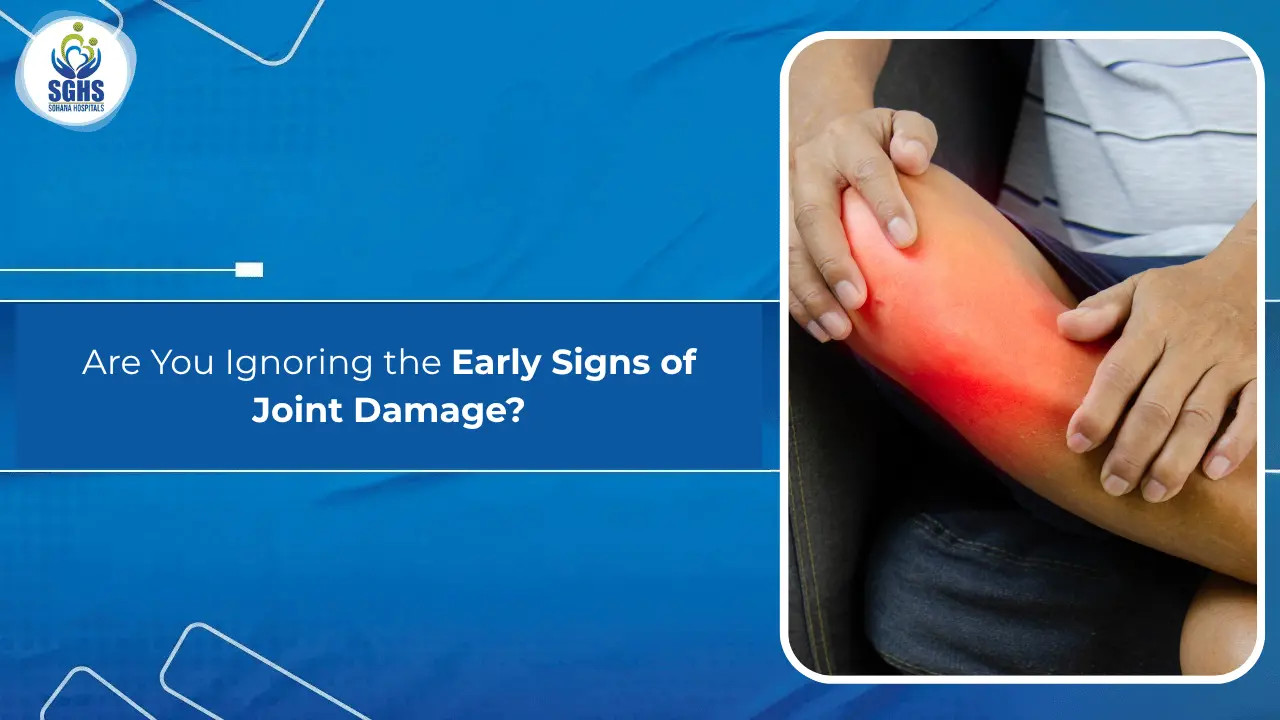
Most joint damage issues like osteoarthritis generally do not appear overnight. They continue to build up slowly over months and years with subtle signs and symptoms. These signs are easy to ignore, particularly when they do not pose hassles in your routine life.
However, it is vital to recognise these small warning signs to catch the underlying condition early on. Armed with this knowledge, you can seek timely treatment, avoid further damage, and stay active and independent for life.
Note: Some joint problems can appear suddenly and require prompt medical attention. Examples include trauma-induced joint problems as in accidents and sports injuries.
| 👉Did you know? Nearly 23.46 million Indian residents had osteoarthritis (the most common type of arthritis) in 1990. By 2019, the number had risen to 62.35 million. |
Early Signs of Joint Damage
You may think that minor joint symptoms do not require attention or even perceive them as a part of the normal ageing process. The absence of trauma may lead individuals to delay medical consultation. Recognising subtle signs early may help prevent long-term complications, like cartilage loss, joint instability, or bone deformity.
Morning Stiffness
Do you regularly experience stiffness in your knees, shoulders, back, or other joints after waking up from sleep?
Joints may feel stiff occasionally if you happen to sleep in one position. Increasing exercise or physical activity may also result in temporary stiffness.
However, if morning stiffness becomes a new normal for you, it may be a sign of an underlying condition and one of the initial signs that you should pay attention to your joints.
Until the time you visit an orthopaedic specialist, try performing some gentle flexibility exercises at the start of the day and do not put sudden excessive pressure on stiff joints.
| 👉Did you know? Osteoarthritis (OA) and Rheumatoid Arthritis (RA) generally responsible for morning stiffness lasting for 30 minutes or less. Inflammation in the joint can cause stiffness for more than 30 minutes. (via NIH) |
Unexplained Swelling
Did a joint swell without any injury? Such unexplained swelling may be indicative of internal joint fluid accumulation or synovial inflammation.
Talking in the context of knees, visible puffiness may point to osteoarthritis, bursitis, inflammation, injury, or other joint conditions. It is another sign that demands attention.
Popping or Clicking Sounds
Do your joints often make sounds? And is the clicking sound accompanied by pain, inflammation, instability, or difficulty moving the joint?
While joints may make sounds for several harmless reasons, it is the symptoms that you experience along with the sound that indicate if there’s a problem.
If the joint does not feel or move well, it is worth paying attention.
Lack of Flexibility
Has it become harder to bend, reach overhead, climb stairs, or move your neck?
Decreasing flexibility is easy to overlook since it develops slowly. However, if it has started affecting your daily life, it may be time to take charge of your joints.
You can feel somewhat better by doing some stretching exercises, but the situation may be a sign of joint damage or other problems and demands evaluation by an orthopaedic doctor.
| 👉Did you know? Osteoarthritis (OA) is the most common joint disorder. Ageing, being overweight, overuse, joint instability, etc. feature among the main risk factors. (via NIH) |
Persistent Joint Pain
Do your joints hurt often? If the pain keeps coming back or continues for several days at a stretch, particularly when you engage in specific activities, do not take it as normal ageing.
Frequent joint pain may be due to weakness in muscles, limited movement, previous injuries, overuse, or other bone and muscle issues. Additionally, joint conditions like osteoarthritis often begin with intermittent pain and discomfort.
Many people just rest more, take painkillers, or use home remedies when joint pain becomes persistent. However, it is advisable to visit an orthopaedic doctor to identify the root cause and treat it.
Warmth Around the Joint
Has the area around your joint become red, warm, and painful? These are signs of active inflammation. If there’s fatigue or fever as well, it could be due to an autoimmune condition, inflammatory arthritis, gout, or a serious infection.
In such circumstances, it is essential to seek prompt medical attention to safeguard yourself from joint damage and systemic spread.
Difficulty Performing Routine Activities
Have you started finding normal day-to-day activities hard? If opening a jar, getting up from a chair, or buttoning a shirt seems difficult now, it may be a sign of joint issues that require medical attention.
When to Seek Urgent Medical Attention
While we have discussed the initial signs of joint damage, all of which should be discussed with an orthopaedic specialist, here are some symptoms that require prompt medical intervention:
- Sudden severe joint pain/swelling
- Warm/red joint
- Fever or chills
- Inability to move or bear weight
- Significant injury
- Sudden unexplained severe pain
Sohana Hospital: Trusted Care for Your Joints
Sohana Hospital is known for the best orthopaedic doctors in Chandigarh, Mohali. Also, the hospital has the most advanced diagnostics to detect early signs of joint damage. In fact, early detection is necessary for preventing complications and protecting long-term joint health.
Our specialist team is led by the award-winning orthopaedist, Dr. Gagandeep Singh Sachdeva, Chief Robotic Joint Replacement Surgeon & CEO. With over 25 years of experience, he is an expert in carefully evaluating symptoms, identifying the root cause, and formulating tailored treatment plans to preserve joint function in his patients.
If you are experiencing subtle signs, such as stiffness, swelling, persistent pain, or difficulty performing routine tasks, our dedicated team is here to provide comprehensive support through the latest diagnostics, physiotherapy, lifestyle recommendations, and long-term monitoring.
Noticed an early sign of joint damage? Get a detailed assessment, guidance, and a customised treatment plan at Sohana Hospital.
Recognise early signs of joint damage – Move comfortably and confidently at every stage of life.