
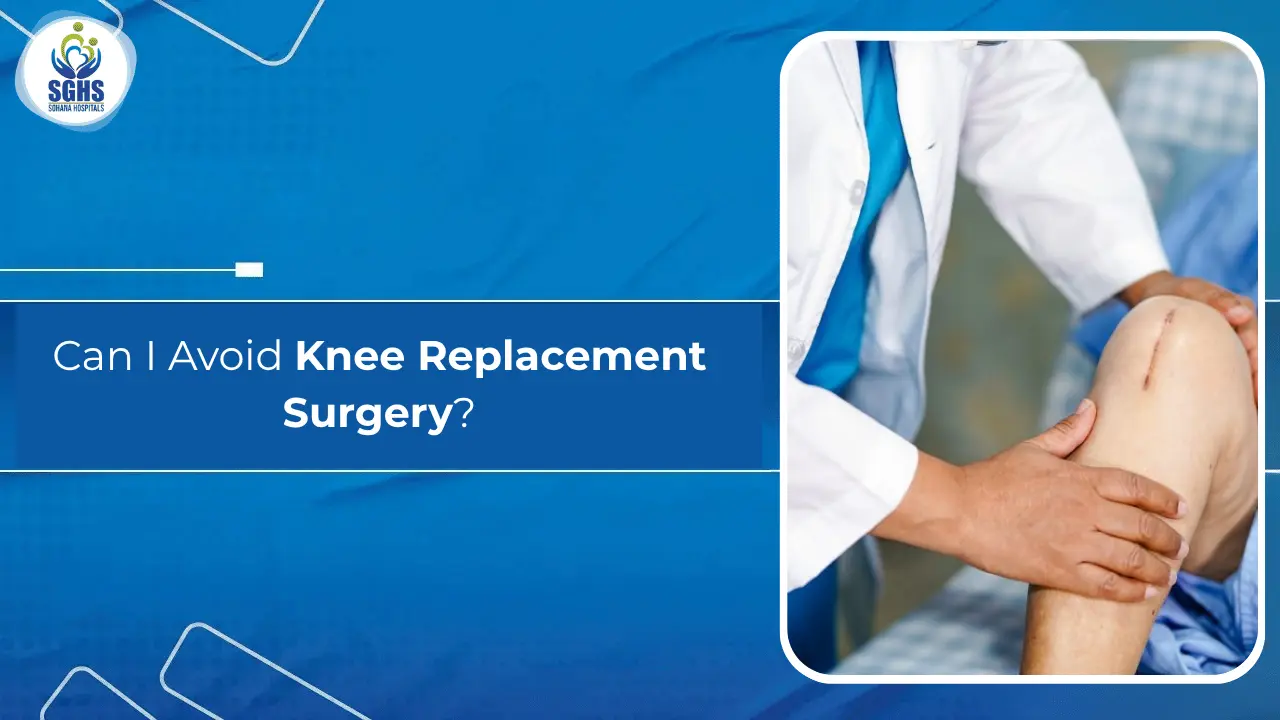
Yes, many people can potentially avoid or at least delay knee replacement surgery – provided they start caring for their knee joint well in time.
Wondering what that means? You may have observed that it’s usually after the age of 50 that most people start facing knee issues, like knee pain, swelling, stiffness, difficulty climbing stairs, standing for a long time, or sometimes even walking.
But does that mean knees suddenly start deteriorating around this age? No! The damage begins much earlier. It is just that it comes to notice when symptoms arise.
Without going into the reasons behind knee problems, let us come straight to the point. Want to avoid knee replacement surgery? Start early by adopting knee-healthy practices.
How to Care for Your Knees As You Age
Weight
Weight management is a crucial factor for healthy knees. Excess weight means additional stress on the knee joints. For every extra kilogram of body weight, your knees may have to bear up to 4 kg of extra pressure.
Losing weight is easier said than done, but if you want to avoid knee replacement surgery or at least delay it, weight reduction can go a long way.
Eat a balanced diet and get regular exercise as suited to your age and fitness level. Start slow but be consistent. And do not engage in high-impact exercises or go on a crash diet without consulting your doctor.
Remember, obesity is a precursor to several health issues.
Physical Activity
You can protect your knee joints by engaging in moderate physical activity that does not put much stress on your knees. Low-impact physical activity can help with weight management while delaying osteoarthritis progression. Yoga, swimming, walking, and cycling can be good options.
Additionally, you should also opt for strengthening, resistance, and stretching exercises after talking to a good physiotherapist. These exercises help develop leg muscles, like the quadriceps, hamstrings, and calf muscles, thereby improving knee health. Exercises specially tailored to your needs can be highly effective.
Footwear
High heels may be a preferred choice of many individuals, especially females. But it is important to understand that regular use of such footwear may spell trouble for your knees in due course of time. Your quadriceps have to struggle to maintain knee alignment when you wear heels. Doctors recommend comfortable and supportive flat shoes and sandals for better knee health.
Posture
How are knees and posture interlinked? A hunching or slouching posture can upset the body’s centre of gravity. This puts more stress on the knees and hips. Practise standing and walking straight so that your knees are comfortable.
Performing balance-improving and core-strengthening activities, such as Pilates, yoga, and tai chi, can also prove helpful in improving posture.
Diet
The food you eat has a significant influence on your body’s level of inflammation. Some foods, like processed flour and sugar, can increase inflammation in the body. Similarly, a diet containing high amounts of dairy products, eggs, and meat can also temporarily spike inflammation in some people.
Give preference to an anti-inflammatory, plant-based diet comprising whole grains, plenty of fruits and vegetables, garlic, turmeric, nuts, onions, ginger, etc. Pomegranate is another plant-based food that may help protect joint cartilage[1] from damage while being safe for cartilage cells.
Supplements
Both genders have a tendency to develop osteoarthritis (the most common type of arthritis) with age, especially if they are deficient in Calcium and Vitamin D. This is especially true of postmenopausal women.
It is essential to get adequate calcium and vitamin D through diet, sunlight, or supplements. For example, adults aged 19-50 generally need 1,000 mg of calcium/day, while women aged 51-70 and adults over 71 generally need 1,200 mg/day.
Similarly, most adults require 600 IU of Vitamin D daily, but the requirement rises to 800 IU for those aged 71. [via NIH][2]. Apart from these, glucosamine, chondroitin, curcumin, Omega-3 fatty acids, etc., may also be essential.
However, you should consult your doctor before you start taking any supplements.
Alternatives to Knee Replacement Surgery
We talked about how you can protect your knee health. But what to do if you have already started experiencing symptoms like knee pain, stiffness, swelling, difficulty climbing stairs, walking, standing for a long stretch of time, instability, etc.?
What Not to Do
A lot of people may avoid visiting an orthopaedic specialist and try various home remedies, like over-the-counter painkillers, massage oils, creams, etc. Some even start performing rigorous exercises. However, this may prove ineffective or sometimes even counterproductive, causing further damage.
Knee Assessment
It is advisable to approach an experienced knee specialist for expert advice. They may conduct a physical examination and study your medical history. They may also recommend appropriate diagnostic tests (e.g., an X-ray) to assess the condition of your knees.
Stages of Knee Damage
Knee damage (in osteoarthritis) generally progresses through stages or grades (1, 2, 3, 4). Depending on the severity of symptoms and findings on examination and imaging, your doctor may recommend non-surgical or minimally invasive treatment options to avoid knee replacement surgery.
Non-Surgical Knee Treatments
If you are diagnosed with stage 1, 2, or 3 of knee damage, you may have several non-surgical and minimally invasive treatment choices. These treatments may help stop or at least delay the progression of knee conditions (e.g, osteoarthritis), thereby helping you avoid or delay knee replacement surgery. Let’s have a look:
Stage 1:
- Physiotherapy
- NSAIDs (medications)
- Lifestyle modifications
- Supplements
Stages 2 & 3:
- Tailored exercises
- Weight loss and other lifestyle modifications
- Pain-relieving medicines
- Strength training
- Supplements
- Braces, wraps, shoe inserts, or knee support
- Knee injections (PRP, Hyaluronic, Corticosteroid)
- Stem cell therapy
- Arthroscopy
But what if you’ve reached stage 4 (advanced) of knee damage? You still do not need to panic. The reason is that the modern world offers cutting-edge surgical options that allow you to get rid of knee pain and live an active life once again.
Knee Replacement Surgery: Evolution & Virtually Painless Options
Knee replacement surgery has come a long way over the years. Initially, it was done manually by knee surgeons, who relied mostly on their experience and visual clues, along with imaging tests like X-rays, CT Scans, and MRIs.
Traditional Knee Replacement Surgery
Traditional knee replacement is still a popular option in many places that lack advanced technologies. While traditional knee replacement is a largely successful surgery when performed by expert orthopaedic surgeons, it may have some drawbacks:
- Bigger cuts
- More tissue damage
- More pain
- More blood loss
- Implant alignment may not always be very precise
- Longer recovery (3-6 months)
Robotic Knee Replacement Surgery
As the name suggests, robotic knee replacement uses robotic assistance. No, it does not mean that the surgery is done by a robot. The robot is like an advanced instrument in the tool kit of the surgeon.
If you choose robotic knee surgery, your surgeon(s) can plan the surgery beforehand by performing a virtual surgery first to see the results. This surgical planning is based on your unique bone structure. Additionally, the robot gives real-time feedback to surgeons once the actual surgery begins. This advanced technology boasts precise outcomes.
Robotic knee surgery has fast become the preferred choice of patients for benefits like:
- Smaller cuts
- Negligible pain
- Saving of healthy tissue
- Less blood loss
- Low complication risk
- Precise implant placement
- Faster recovery (can be as early as 30-45 days)
- Natural feeling knees
Note: Recovery may vary from patient to patient depending on several factors, including rehabilitation (physical therapy).
Intellijoint® AI-Driven Knee Replacement Surgery
Intellijoint® is a revolutionary AI-integrated navigation technology that takes knee replacement surgery precision to the highest levels. This AI technology guides surgeons consistently by providing them with intra-operative measurements throughout the procedure.
Equipped with a mini optical camera, a tray of specialised instruments, and a compact workstation with software application, Intellijoint® has fully personalised knee replacement surgery for precise implant alignment and the best results.
Sohana Hospital is one of the few hospitals in India with this cutting-edge joint replacement technology. The super-speciality hospital has the best knee joint replacement surgeons in Chandigarh, who utilise the Intellijoint® technology in combination with the already existing robotic knee technology to ensure 100% personalised surgery, consistently precise results, and faster recovery.
The aim is to help patients get back on their feet as early as possible. No longer do patients need to worry about surgical pain, long recovery, or an unnatural knee feel after surgery. Needless to say, innovative advancements in the medical field have simplified things to a great extent.
Conclusion
The best way to avoid knee replacement surgery is to start caring for your knees at an early age – without waiting for any symptoms. However, if you miss that and symptoms start making their presence known, do not self-medicate.
Seek expert advice from an experienced orthopaedist. They may still help you with non-surgical treatments like personalised physiotherapy, lifestyle changes, stem cell therapy, knee injections, and arthroscopy.
In the last case scenario, where you have already reached the advanced stage of knee degradation, you can avail yourself of the latest minimally invasive knee replacement technologies like robotic knee replacement and AI-Intellijoint® to get back a pain-free and active life once again.
Looking for the best knee doctor? Call +91 87250 01155 to consult award-winning knee specialists and get freedom from knee pain.
Reference Sources:
- National Institutes of Health. Intake of Pomegranate Prevents the Onset of Osteoarthritis: Molecular Evidences
https://pmc.ncbi.nlm.nih.gov/articles/PMC4825888/#:~:text=They%20have%20shown%20that%20a%20standardized%20pomegranate%20fruit%20extract%20(PFE)%20is%20highly%20effective%20in%20exerting%20human%20cartilage%20sparing%20effects%20and%20is%20non%2Dtoxic%20to%20human%20cartilage%20cells. – April 10, 2016 - National Institutes of Health. Vitamin D.
https://ods.od.nih.gov/factsheets/VitaminD-Consumer/#:~:text=Recommended%20Amount-,Birth%20to%2012%20months,15%20mcg%20(600%20IU),-Download%20this%20table – November 8, 2022