
*हिंदी में पढ़ें: रूमेटॉइड आर्थराइटिस (RA) के लिए एंटी-इन्फ्लेमेटरी डाइट
If you or someone you know has been dealing with rheumatoid arthritis (RA), it’s important to know how your diet impacts your condition.
While there is no specific diet that can treat RA, certain foods can help reduce inflammation, subsequently lowering joint pain, swelling, and stiffness. An anti-inflammatory diet is the best option to help manage RA symptoms to a certain extent.
It also helps you maintain a healthy bodyweight, which is crucial for avoiding extra pressure on your joints. What a lot of people don’t know is that while RA initially affects the joints, as it progresses, it can lead to negative impacts on other organs like the heart, lungs, kidneys, etc.
In this blog, we are going to discuss some of the best and worst foods that individuals affected by rheumatoid arthritis can follow for reducing joint pain and stiffness.
What Works Best?
Mediterranean Diet
Research suggests a strong connection between the Mediterranean diet and reduced inflammation. It is based on common foods that are consumed across the globe, like:
- Fruits & veggies
- Fish
- Whole grains
- Beans & peas
- Olive oil
- Seeds & nuts
Omega-3 Fatty Acids
One of the primary reasons the above-listed foods are good for lowering inflammation is their omega-3 fatty acid content – a type of healthy fat commonly found in seeds, nuts, and fish.
*Note: Since individuals affected by rheumatoid arthritis have a higher risk of developing cardiovascular disease, the heart-protective advantages of omega-3 fats are especially important.
These fats also help promote heart health by lowering triglycerides (a type of fat that increases heart disease risk if consumed in large quantities). Not just that, they also reduce plaque buildup in arteries (plaque in the arteries comprises cholesterol, fat, and calcium). Excess plaque can block arteries and increase your chances of suffering a heart attack, failure, or stroke.
Best Foods for Rheumatoid Arthritis (RA)
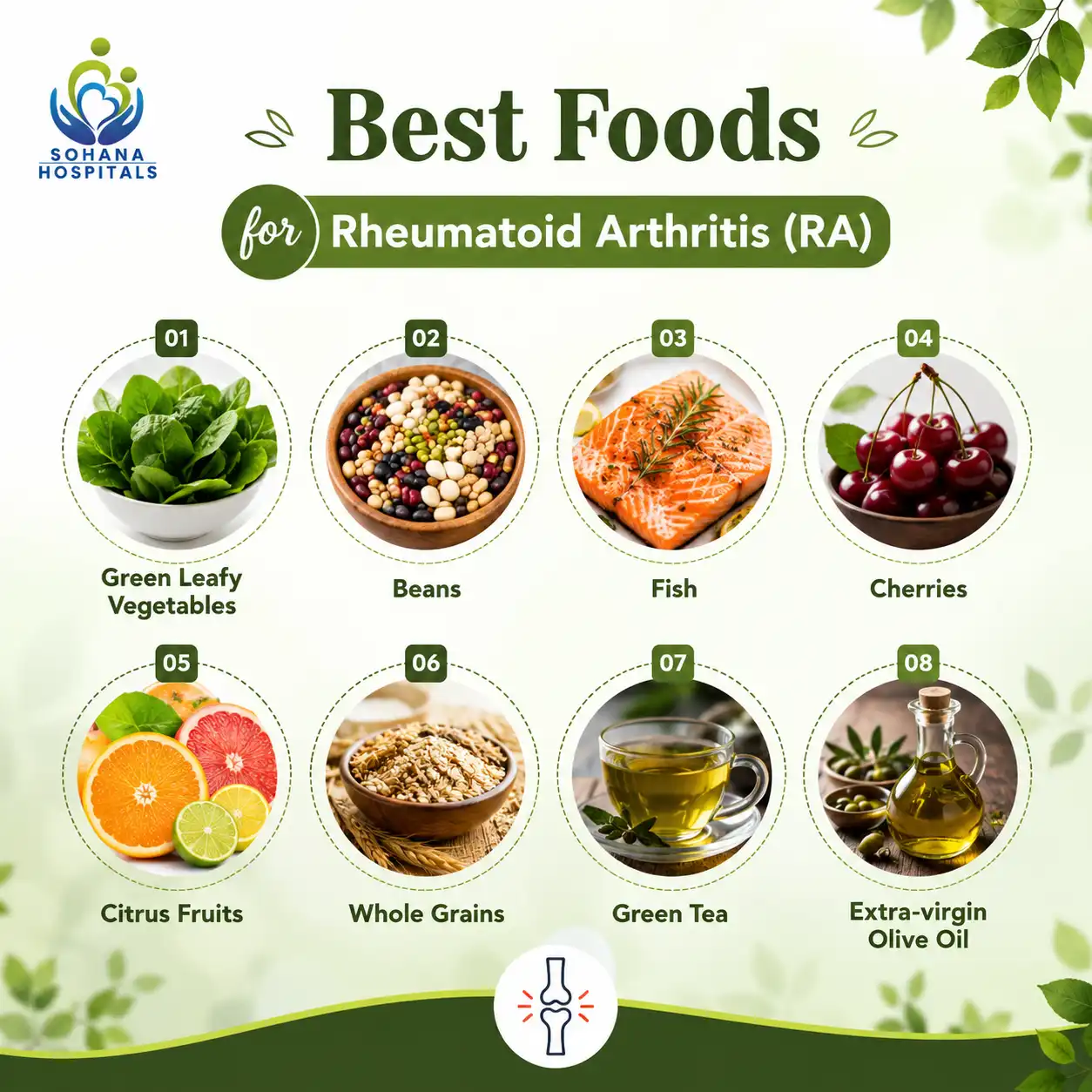
Green Leafy Vegetables
Green & leafy vegetables, including kale, spinach, Brussels sprouts, Swiss chard, etc., are rich in Vitamin A and C. These nutrients act as a natural shield against free radical damage as well as protect cells from oxidative stress.
| 👉 What are free radicals? They are unstable molecules capable of damaging the body’s cells and worsening RA symptoms. |
Beans
Beans are full of fiber, which helps reduce C-reactive protein (CRP – an inflammation indicator) in the body. They also give the body protein, required to keep your muscles strong. Kidney, pinto, and red beans are great sources of iron, folate, potassium, and magnesium – all of which promote heart health as well as your immunity.
Fish
Sardines, anchovies, herring, salmon, tuna, and mackerel are rich sources of omega-3 fatty acids. These help lower inflammation, support your heart health, and promote general wellbeing.
Nuts
If you’re a vegetarian or simply not a fan of fish, then walnuts, macadamias, pecans, pine nuts, and hazelnuts are great alternatives.
| 👉 Walnuts are the undisputed champions of nuts when it comes to omega-3-rich foods. |
Cherries
Cherries are rich in anthocyanins (powerful antioxidants that help fight free radicals along with reducing inflammation). Anthocyanins are also what give cherries their vibrant, bright colour. These antioxidants can also be found in other red and purple fruits like blueberries, raspberries, etc.
Citrus Fruits
Limes, grapefruits, and oranges are good sources of vitamin C. These help boost your immunity and fight away free radicals that cause inflammation.
Whole Grains
Whole wheat, brown rice, rolled oats, popcorn, quinoa, buckwheat, and millets are high in fibre, making you feel fuller sooner, helping you manage a healthy bodyweight. A healthy bodyweight ensures less stress is placed on your joints. This subsequently lowers joint pain, stiffness, and discomfort.
Green Tea
Green tea is a healthy and tasty source of polyphenols – antioxidants that help reduce inflammation and delay cartilage damage.
Extra-virgin Olive Oil
Using extra-virgin olive oil in your food prep can increase your polyphenol intake as it contains approximately 30 different types of polyphenols. Additionally, it is also rich in heart health-friendly monounsaturated fats, making it a key element of the Mediterranean diet.
Which Foods to Avoid with Rheumatoid Arthritis?
There are many foods that trigger inflammation, increasing pain, stiffness, and swelling in your joints. Foods high in salt, sugar, and fat are generally not recommended for patients with RA.
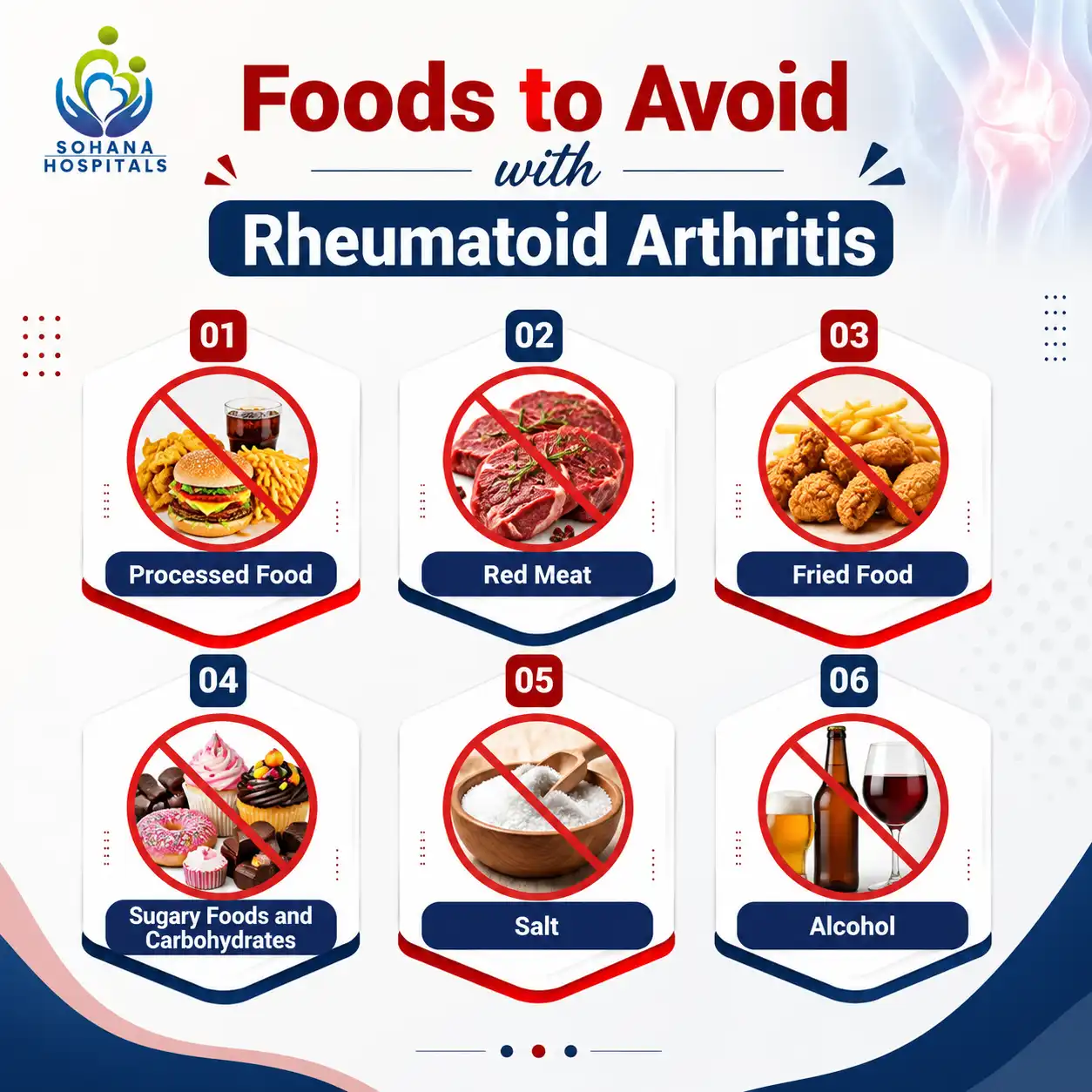
Processed Food
Processed foods can cause significant inflammation, heart issues, and weight gain as they have high sugar, salt, and unhealthy fat content. Processed foods are not just bad for individuals with rheumatoid arthritis, but also bad for the general health of otherwise healthy people.
Red Meat
Red meats (pork, mutton, beef) contain high levels of saturated fat, which is high in cholesterol and can have negative impacts on your heart health and increase inflammation.
Fried Food
Fried foods are high in saturated fats, which worsen RA-associated inflammation along the lining of the joints and can affect heart health as well, increasing cardiovascular risk.
Sugary Foods and Carbohydrates
Sugary and sweet foods like candies, pastries, and sweet beverages make your body release cytokines (inflammatory messengers). Refined carbohydrates such as white bread, white pasta, white rice, potato, etc, which are broken down into simple sugars inside your body, do the same.
Salt
If you’re used to eating excessively salty food, STOP immediately! Not only is excess salt harmful for your blood pressure, but if your doctor has prescribed you steroidal medication for RA, your body can hold onto the salt relatively more easily.
👉 Less than 5g of salt per day is a safe limit advised by doctors and nutritionists.
Alcohol
It’s a widely known fact that medicines and alcohol do not mix well. So you should mindfully limit your alcohol intake if you’/re on regular RA medication. And besides the fact that the two don’t pair well, alcohol can also increase inflammation in the body.
We hope this guide helps you understand which foods you should consume more and which ones you should limit, avoid, and eliminate from your everyday diet if you have rheumatoid arthritis (RA). Save this blog for your future reference or share with a loved one who is dealing with RA.
If you want a personalised consultation with our expert rheumatologists, you can book an appointment by contacting +918725001155. Sohana Hospital has a dedicated department with the experienced rheumatologists in Mohali, helping patients with over 200 kinds of rheumatic disorders. Our comprehensive diagnostics, world-class treatment facilities, and patient-centric values ensure you get the best care at the most reasonable prices.