
With changing lifestyles, we frequently find people complaining of migraines. What exactly is a migraine? How to distinguish it from a regular headache? What are the causes of migraine attacks? Are migraines of different types? How to treat a migraine?
Get answers to all your questions in this blog.
What is a Migraine?
A migraine may initially seem to be a severe headache. It is usually a throbbing or pulsating headache, commonly affecting one side of the head, though both sides can also be involved.
It may be accompanied by other symptoms that can worsen it. These symptoms include nausea, vomiting, light sensitivity, and sound sensitivity, among others.
Talking in medical terms, a migraine is a common neurological condition that can adversely affect the efficiency, productivity, and quality of life of the affected person. It may also raise medical expenditure.
Which Gender is more prone to Migraines?
Women are more susceptible to it, particularly those in their reproductive years.
How many Indians have migraines?
While the global average of migraine is 14.7%, India witnesses a higher prevalence, with 25 out of every 100[1] people affected by migraines.
Since migraines can be debilitating, it is advisable to seek diagnosis and treatment for effective management. Proper treatment can help significantly reduce the frequency of migraine attacks, so that you can lead a healthier life and work efficiently.
What are the Symptoms of a Migraine?
Migraine symptoms may vary from person to person, depending on the type of migraine they have and its intensity. Here are some common symptoms that most people report:
- One-sided headache (usually)
- Throbbing or pulsating pain
- Headache lasting 4-72 hours (if not treated)
- Moderate to severe intensity
- Worsens with movement
- Nausea (may or may not be accompanied by vomiting)
- Light and sound sensitivity
Other symptoms typically associated with a migraine include:
- Aura
- Tiredness
- Dizziness
- Brain fog
- Vertigo
- Difficulty maintaining balance
- Neck pain
- Feeling of pain or pressure in the ear
- Sinus pain or pressure
- Nose turning runny or stuffy
- Mood changes
- Food cravings and changes in appetite
- Changes in sleep
- Upset stomach or diarrhoea
- Frequent yawning
- Increased urination
- Odour sensitivity
- Tinnitus (ringing in the ears)
Learn more: Migraine: Recognising the Signs and Symptoms
Migraine Triggers and Causes
Migraines are believed to result from abnormal brain activity involving nerve signals, chemicals, and blood vessels in the brain. Different people have different triggers that initiate this abnormal brain activity. The exact chain of events is still not known.
Some of the perceived causes include:
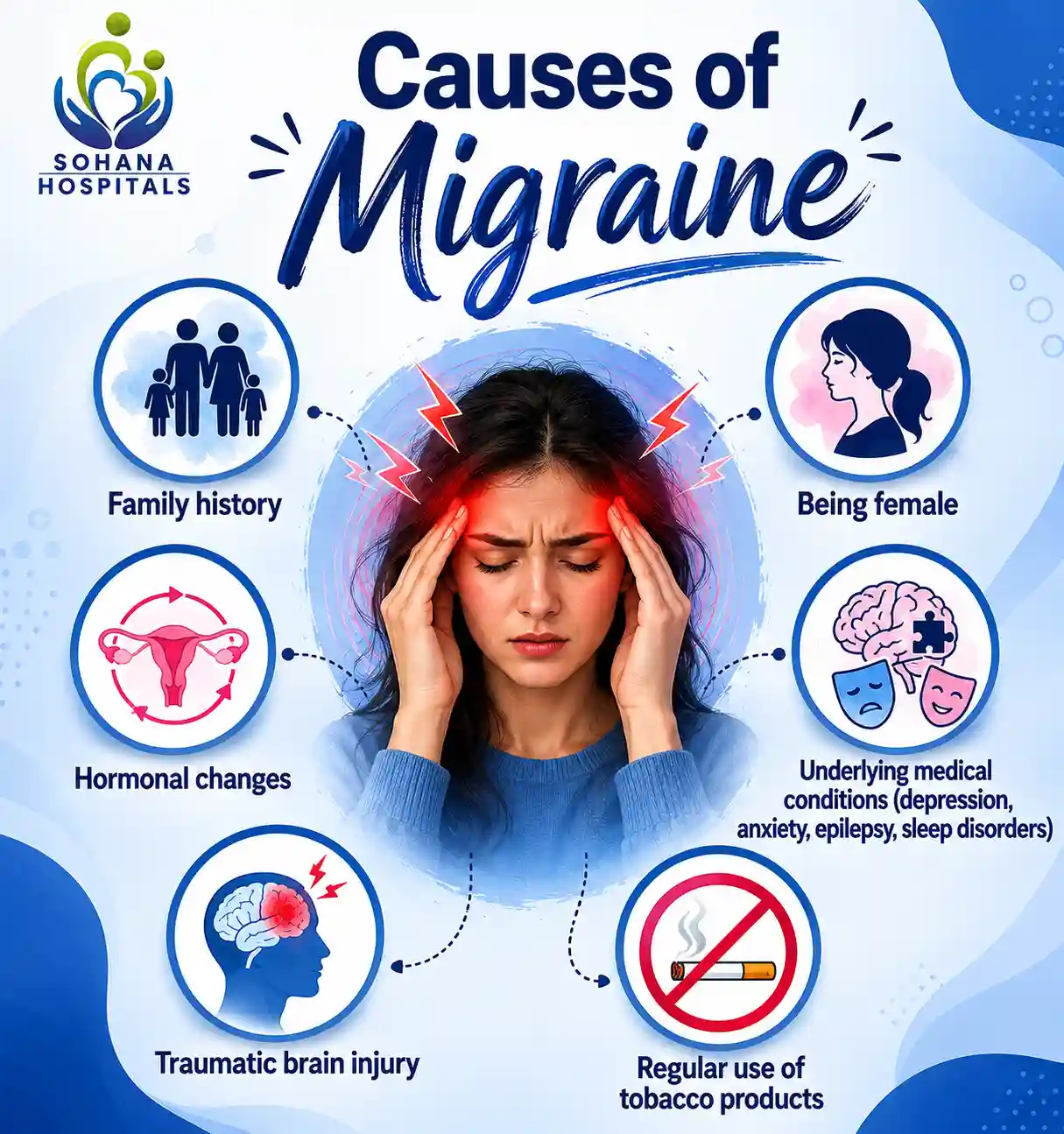
- Family history
- Being female
- Hormonal changes
- Underlying medical conditions (depression, anxiety, epilepsy, sleep disorders)
- Traumatic brain injury
- Regular use of tobacco products
Learn more: Why Does Migraine Keep Coming Back? Know Its Causes
What are Triggers for Migraines?
Migraine triggers may vary from person to person. Let’s have a look at some common triggers:
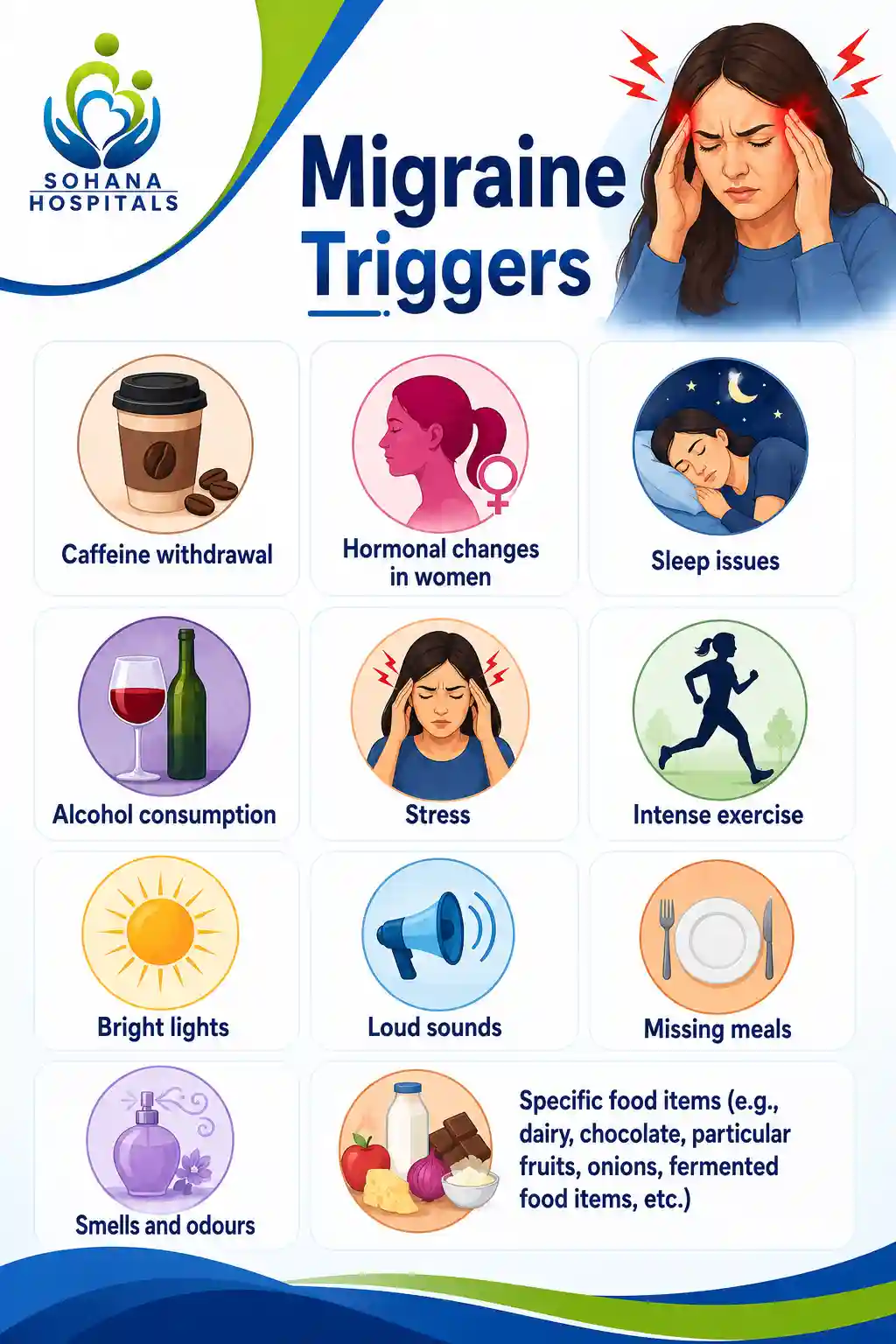
- Caffeine withdrawal
- Hormonal changes in women
- Sleep issues
- Alcohol consumption
- Stress
- Intense exercise
- Bright lights
- Loud sounds
- Missing meals
- Smells and odours
- Specific food items (e.g., dairy, chocolate, particular fruits, onions, fermented food items, etc.)
Learn more: Migraine Triggers and Treatments: What Really Works
Types of Migraine
There are many different types of migraines. Here are some of them:
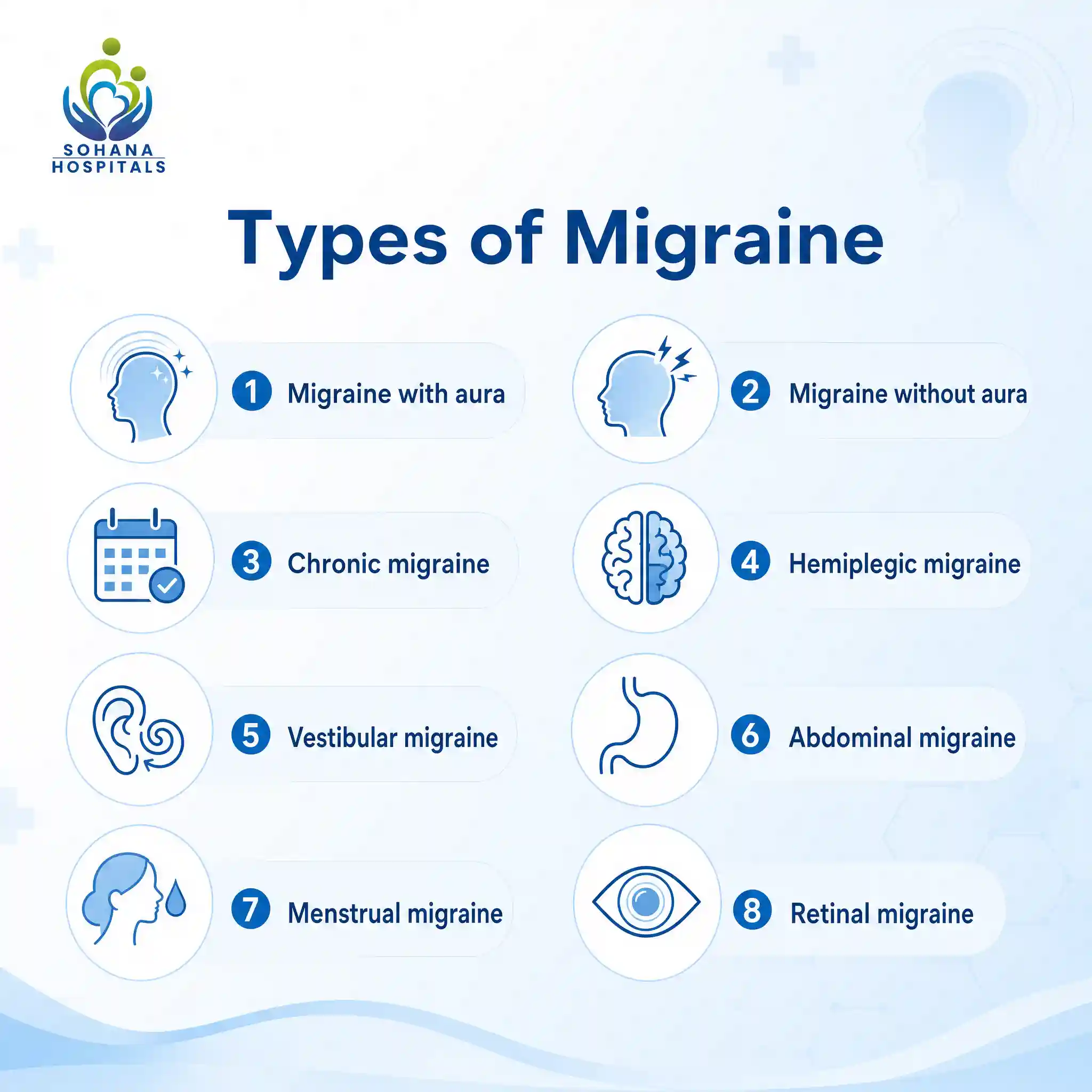
- Migraine with aura
- Migraine without aura
- Chronic migraine
- Hemiplegic migraine
- Vestibular migraine
- Abdominal migraine
- Menstrual migraine
- Retinal migraine
Another characteristic of migraines is that they usually progress through 4 stages or phases, namely – prodrome, aura, headache, and postdrome. Each of these stages is typically associated with distinct signs and symptoms.
Learn more: What Are the Different Types of Migraine? Treatment Guide
Treatment of Migraine
There is no particular cure for migraines. Most types of migraines have a similar treatment approach – a.) treatment for acute migraine b.) prevention treatment. Prevention primarily focuses on reducing the frequency and intensity of migraine attacks.
Treatment for Acute Migraine
This treatment aims at managing symptoms through the use of medicines. Your doctor will advise you when to take them, depending on the type of headache you have. Also, it is essential to avoid overdoing them.
Examples of these medicines include:
- Over-the-counter (OTC) painkillers (e.g., acetaminophen, ibuprofen, naproxen, aspirin)
- Prescription medicines (triptans, nasal sprays, suppositories, injections)
- Anti-sickness medication (for nausea and vomiting)
Preventive Treatment
These medicines help control how often you have migraines and their severity.
Examples of these medicines include:
- Beta-blockers (medicines typically used for high BP)
- Tricyclic antidepressants
- Anticonvulsants (medicines typically used to treat seizures)
- Botulinum toxin type A injections (for select people)
- Medicines that block calcitonin gene-related peptide (CGRP)
- Nerve stimulation or magnetic stimulation devices
Lifestyle modifications
- Have a proper routine for food
- Observe sleep hygiene
- Drink enough water
- Limit alcohol intake
- Exercise regularly
- Manage other triggers
Managing Migraine Triggers
Maintain a migraine journal to note down what triggers your migraine whenever it happens. Also, note down how severe it was, the symptoms you experienced, and the duration. Add details like the food items you consumed and the activities you did. Discuss it with your doctor to identify your migraine triggers.
Once you know what triggers your migraine attacks, take steps to prevent them. This may not always be possible, but the knowledge of your triggers can prove beneficial in identifying them and treating a migraine when it starts.
For example, if a particular food, say aged cheese, gives you a migraine, better not eat it. If stress triggers a migraine attack, use techniques like yoga, meditation, and breathing exercises, etc., to manage stress. Alternatively, talk to your doctor about it.
Conclusion
A migraine is a painful neurological condition that causes throbbing, pulsating pain often on one side of the head. Typically accompanied by other symptoms like nausea, dizziness, light sensitivity, and others, it may seriously impact the quality of life.
While precise causes of migraines are not yet fully known, it is possible to identify the triggers and work on them. This may help reduce the occurrence of migraines and allow you to lead a better life.
Expert neurologists at Sohana Hospital use the best diagnostic strategies to diagnose the root cause and triggers. They conduct a physical examination, followed by a neurological exam. They ask questions to understand your family history and medical history. They also ask questions to know the details about your migraines. To rule out other conditions, they may recommend blood tests and special imaging tests.
Sohana Hospital has some of the best neurologists in Chandigarh. They offer the right solutions and personalised treatment based on the type, severity, and symptoms of your migraine. The aim is to help you get relief from migraine symptoms and enhance your quality of life.
Identify triggers, live healthy, follow doctor’s advice – Keep migraines away
FAQs
What are the stages of migraine?
Migraines usually have 4 stages (or phases) – prodrome, aura, headache, and postdrome.
How often do migraine attacks occur?
Migraine frequency varies from person to person. Some people may experience them once a year. Others may experience headaches once every week. Most people experience them 2-4 times a month.
How common is migraine in India?
Migraines affect a significant 25% of all Indians. The numbers are much higher than the global prevalence of 14.7%.
Are migraines hereditary?
Yes, migraines tend to run in families. Up to 80 out of 100 people with migraines have a close family member with the condition.
What do I do when a migraine happens?
You should rest in a cool, dark, and quiet room. Apply a warm (or cold) compress to your forehead or behind the neck. Massage your scalp. Apply pressure to your temples in a circular motion. Stay calm and relaxed. Follow your doctor’s advice.
When is it essential to seek medical advice?
If you notice a change in your migraine symptoms, you must seek immediate medical intervention. These signs include:
- Unbearable headache as you have never had before
- Sudden onset of headache
- Difficulty speaking
- Drooping face
- Vision issues
- Inability to maintain balance
- Headache with a fever, stiff neck, confusion, or seizures
- Headache after a head injury
- New headache after age 50
Reference Source: