
Treatment for a gout attack must ideally start within 24 hours. Gout attacks are extremely painful episodes or flare-ups that can last a few days to weeks, or even longer.
The first line of treatment in case of a gout attack primarily focuses on reducing the inflammation and pain. Ideally, management must begin within 24 hours of the attack and stop once the symptoms go away.
In this blog, we are going to walk you through some of the most common management strategies for gout attacks or flare-ups.
Common Treatment/Management Options for Gout
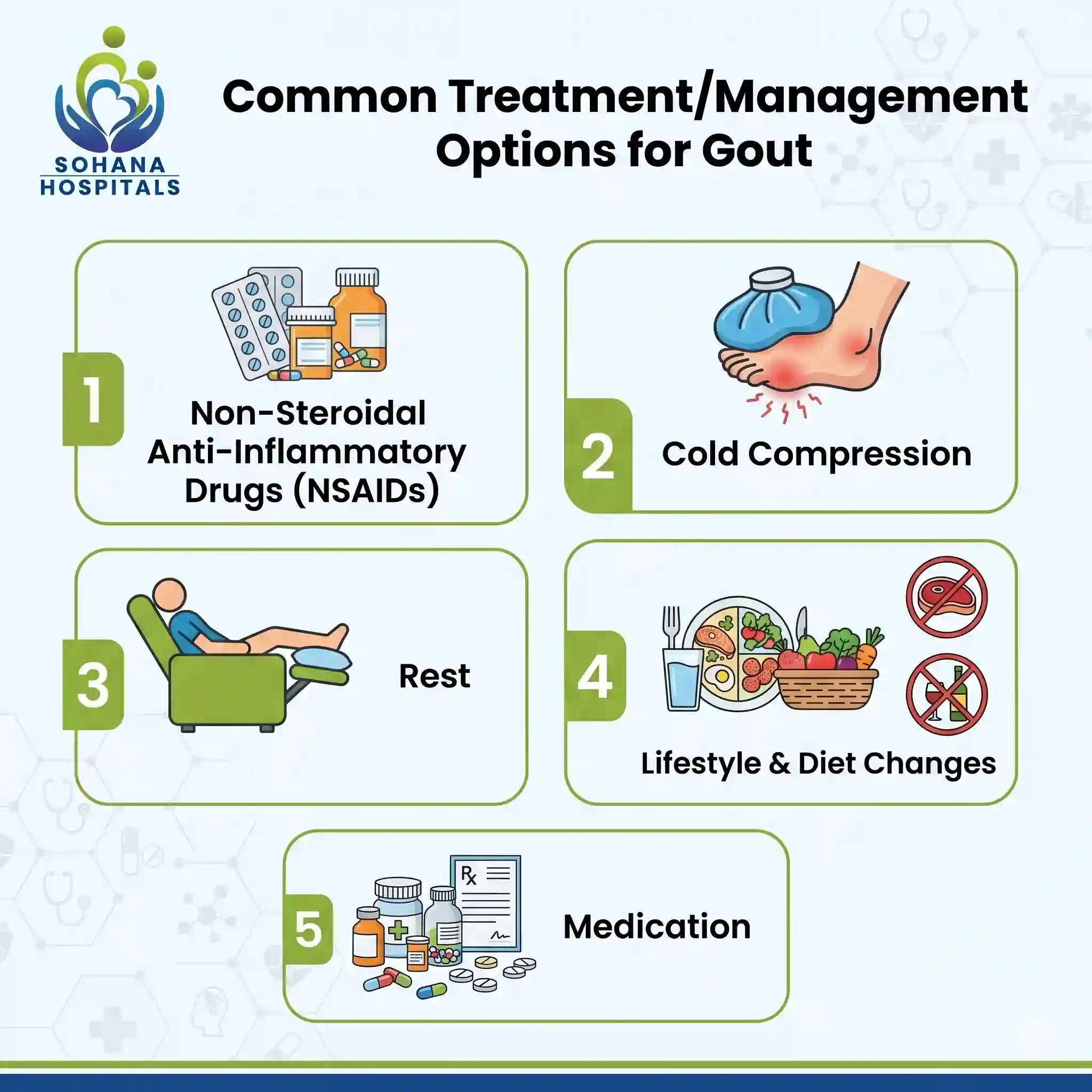
Non-Steroidal Anti-Inflammatory Drugs (NSAIDs)
Common NSAIDs like ibuprofen and naproxen are often prescribed to reduce inflammation. The dose or the combination of drugs prescribed to you depends entirely on your specific condition – how severe the pain is, how many joints are affected, etc. Your medical history is also taken into account before prescribing medication.
*Note: NSAIDs may not be the ideal course of treatment for people with pre-existing health conditions. Therefore, it is important that you only consume medication that you have been prescribed after a thorough medical history assessment.
Cold Compression
Applying an ice pack to the affected joint can help reduce inflammation and relieve some pain. An ice pack can typically be applied for 15-20 minutes at a stretch. You can repeat the process as many times as required.
Rest
Try to rest the affected joint as much as possible. This can be done by sitting in a relaxed position or lying down – you can place a pillow underneath the affected area to elevate it, and try to avoid movement until sharp pain subsides.
👉 Another major goal of gout treatment is to lower the uric acid levels in order to prevent attacks or flare-ups in the future. A blend of lifestyle and diet modifications paired with prescription medication, known as urate-lowering therapy (ULT), is generally recommended if flare-ups become more frequent or severe.
*Note: ULT is often prescribed only if the individual has experienced 2 or more gout attacks in a year or if they have joint damage because of gout. ULT must continue even when the symptoms subside.
Lifestyle & Diet Changes
Diet changes include consuming low-purine food items:
- Try to avoid or completely eliminate red meat and shellfish (both of these foods are known to increase uric acid levels).
- You must also significantly reduce your alcohol consumption (especially beer), along with other high-fructose drinks.
- It is very important to stay hydrated – drink at least 2.5-3 litres of water every day (unless your doctor has advised fluid restriction).
- It is also essential to maintain a healthy and ideal body weight as excess weight & obesity are often closely linked with gout.
Medication
Long-term treatment of gout needs medication in order to prevent future flare-ups. Medication is prescribed to either slow down uric acid production or speed up uric acid excretion. It can take weeks or even months for the medication to have an impact on the condition.
👉Also read: Things You Can Do To Prevent Gout
If you or anyone you know is dealing with recurrent gout attacks, do not delay treatment. Get the right medical help from expert rheumatologists in Chandigarh at Sohana Hospital, Mohali. Advanced diagnostics, cutting-edge treatment facilities, modern technology, and affordable pricing ensure you get the best gout treatment.