

*हिंदी में पढ़ें: पैरालिसिस (लकवा) के संकेत और लक्षण – कब लें डॉक्टर की मदद
India has been witnessing a rapid rise in cases of paralysis. This makes it important to know the key symptoms associated with the condition.
Paralysis is a neurological condition that can be caused by a variety of factors. Paralysis symptoms may vary according to the cause and the specific body part affected. Early recognition of these symptoms can help start timely treatment to prevent lifelong disability.
| 👉 Did you know? An individual facing a paralysis attack can be cured if they get treatment within 4.5 to 6 hours of the attack. Treatment within 1 hour of the attack can determine whether the patient recovers well. With timely treatment, 65 out of 100 patients may be able to recover. |
In this blog, we are going to have a look at the prominent signs and symptoms of paralysis.
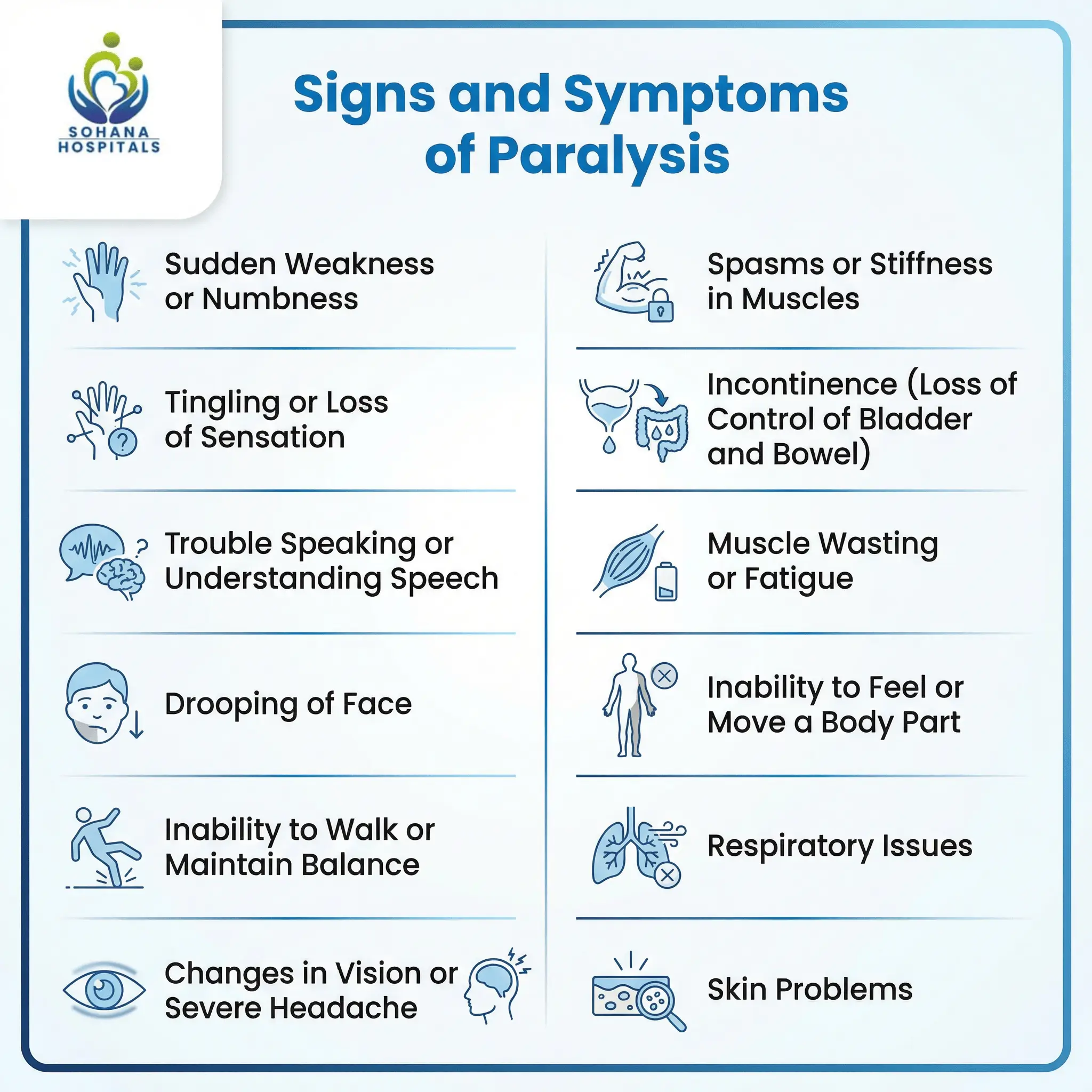
Sudden Weakness or Numbness
One of the most common paralysis symptoms is a feeling of sudden weakness in one arm, leg, or side of the face. The patient may complain of “heaviness” or “loss of control” in the affected part of their body. Sudden weakness in limb(s) accompanied by speaking difficulty may point to a stroke.
👉 Also read: Early Warning Signs of Brain Stroke You Must Not Ignore
Tingling or Loss of Sensation
Early nerve damage can give rise to a feeling of numbness, tingling, or “pins and needles” in a specific body part. If left untreated, this symptom may advance, leading to a total loss of movement or feeling.
Trouble Speaking or Understanding Speech
This one is a serious red flag. Stroke-induced paralysis frequently causes speaking issues – since it affects speech centres in the brain. The patient may not be able to speak properly, have slurred speech, or seem confused. They may also lose the ability to understand simple sentences and instructions.
Drooping of Face
One side of the face may droop or look expressionless. The patient’s smile may be uneven and lack symmetry. Also, they may not be able to close one eye properly. This symptom is commonly noticed in those with facial paralysis (Bell’s palsy and stroke).
Inability to Walk or Maintain Balance
Trouble walking, tripping, and sudden giddiness may point to brain or spinal cord issues. Such symptoms are commonly associated with paralysis that occurs due to neurological damage.
Changes in Vision or Severe Headache
Paralysis due to a stroke or brain haemorrhage can result in blurry vision or a sudden, intense headache. This is yet another symptom that demands immediate medical intervention.
Spasms or Stiffness in Muscles
Some patients feel stiffness or spasms in their muscles before total paralysis happens. It is common in patients with progressive disorders, such as multiple sclerosis.
👉 Also read: Systemic Sclerosis or Scleroderma: Symptoms, Causes & Treatment
Incontinence (Loss of Control of Bladder and Bowel)
Stroke and injury to the spinal cord may cause damage to nerves. If a patient witnesses difficulty in controlling bladder or bowel movements, it could be a sign of nerves being affected.
Muscle Wasting or Fatigue
Gradual weakness in or shrinking of muscles (atrophy) can indicate progressive nerve disorders.
Inability to Feel or Move a Body Part
The clearest symptom of paralysis is losing the ability to feel or move a particular body part voluntarily. Limb(s) – an arm and/or a leg may feel limp or floppy. It may happen abruptly (as in a stroke) or over a period of time (as in conditions like multiple sclerosis).
Respiratory Issues
If paralysis affects the respiratory muscles, the patient may face breathing difficulties and potentially life-threatening complications.
Skin Problems
A paralysed patient may go through changes in their skin condition as there may be an increased risk of skin infections and bedsores.
Let’s have a quick glance at the initial signs of paralysis according to the body part affected:
| Body Part | Possible Early Symptoms | Possible Cause |
| Face | Drooping to one side, smile lacking symmetry, one eye not closing properly | Stroke, Bell’s palsy |
| Tongue or Throat | Difficulty speaking and swallowing, loss of taste | Stroke, nerve damage |
| Head, eyes | Severe headache, blurred vision | Stroke, brain haemorrhage |
| Limbs (Arm, Leg) | Weakness, numbness, inability to control movement, floppiness | Stroke, injury to nerves |
| Bladder, bowel | Inability to control urine and stools | Stroke, injury to spinal cord |
| Both Legs | Loss of balance, numbness, trouble walking, blood clots may also form | Injury to spinal cord |
| Whole Body | Loss of sensation and movement | Acute brain or spinal injury |
When to Seek Medical Help
Recognising the early signs of paralysis, followed by fast action, can help prevent permanent disability due to paralysis.
Do not waste time getting medical help if you or someone around you exhibits any of the following symptoms:
- Drooping face
- Trouble speaking or understanding simple instructions
- Sudden numbness or weakness in face, arm, or leg
- Sudden loss of vision
- Intense headache or giddiness
- Inability to walk and maintain balance
- Losing bladder and bowel control
These signs may point to a stroke or some other neurological emergency. It is important to mention here that for neurological conditions like paralysis, early treatment can considerably enhance outcomes.
Timely medical intervention by highly experienced neurology experts at trusted super-speciality hospitals, like Sohana Hospital, can restore function, prevent paralysis-related complications, and ensure the best possible recovery.
At Sohana Hospital, we have 24×7 emergency care to cater to patients of different neurological conditions, including stroke, brain haemorrhage, spinal injury, and paralysis. Equipped with world-class facilities and advanced treatments to provide immediate care to paralysis patients, the hospital is known for having the best neurologists in Chandigarh who race against time to save patients. In advanced cases, we have the best management approaches in place to restore function to the greatest possible extent.
Recognise paralysis symptoms – Save your loved ones from permanent disability!