

*हिंदी में पढ़ें: 20s और 30s में जोड़ों का दर्द: क्या आपकी लाइफस्टाइल जिम्मेदार है?
“Wait, I’m just 30. Why do I have joint pain? Should my knees hurt at such a young age?” If you have ever had such thoughts, you are not alone.
An increasing number of young adults in their twenties and thirties are falling prey to joint pain, stiffness, and discomfort. Typically, these symptoms are associated with old age, but lately, even younger people have been reporting them. Why is it happening?
In this blog, we are going to explore the reasons behind joint pain in younger adults, what it means, and what steps you can take to prevent or reduce your joint pain.
Is Joint Pain Normal in Young Adults?
The answer is – No. However, it is becoming increasingly common among people in their late 20s and 30s. While the symptoms may be similar, joint pain in your 30s differs greatly from joint pain after 50s or 60s.
What is the difference? The cause is generally identifiable in young people. Sometimes, it is just related to lifestyle; other times, it may also be serious. The main point here is that pain is your body’s way of communicating with you. And if it happens repeatedly, you must pay attention.
Joint Pain in Young Adults: 11 Common Causes
Let’s have a look at the top 11 factors responsible for joint pain in young adults:
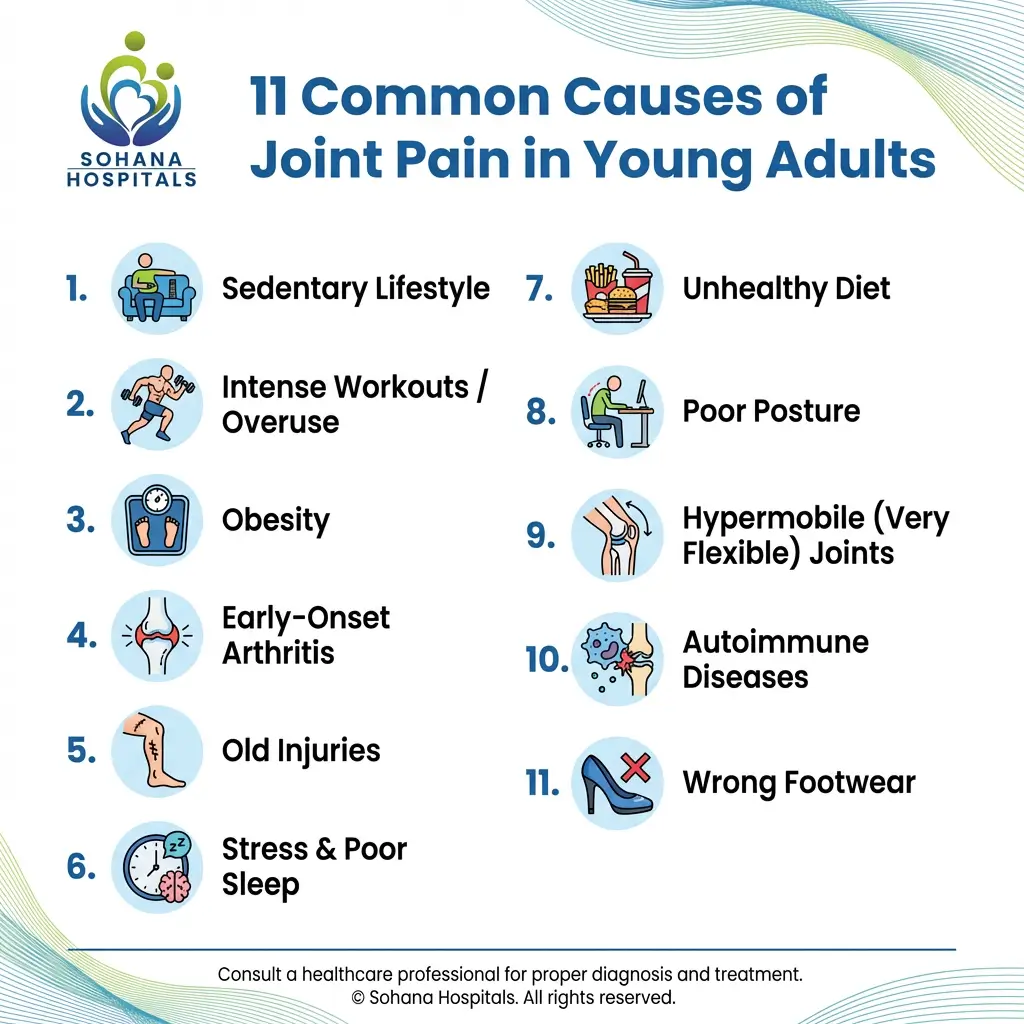
1. Inactive & Sedentary Lifestyle
Spend long hours sitting at your desk? Love binge-watching web series? This could be the reason for your painful joints.
Underlying Cause
Lack of movement and physical activity can weaken the muscles that support your joints.
Symptoms
Stiff or sore joints after continuous sitting, mild pain in the lower back or knees.
Health Tip
Every 30 minutes, try to move a little. Walk around, do some stretching, or use a standing desk intermittently.
2. Intense Workouts or Overuse
It’s good that you like to hit the gym, but an excess of everything is bad. It is more so if you start lifting heavy weights too soon.
Underlying Cause
Improper form or posture, or repetitive stress, could put excessive strain on your joints.
Symptoms
Piercing pain in the elbows, shoulders, or knees after workout sessions.
Health Tip
Make sure you warm up properly before intense workouts, go for the right cooling down practices, and include adequate rest days.
3. Obesity
It’s not just a weight issue. Among other health issues, obesity can silently damage your joints – even in your 20s and 30s.
Underlying Cause
Excess pressure on weight-bearing joints like the knees, hips, and lower back. Over time, this may lead to cartilage breakdown, inflammation, and early joint degeneration.
Symptoms
Knee or hip pain while walking or climbing stairs, early morning stiffness, swelling around joints, reduced flexibility, and difficulty sitting cross-legged.
Health Tip
Maintain a healthy weight, opt for low-impact exercises (like swimming or cycling), and strengthen muscles around the joints to reduce stress on joints. If joint pain persists, consult an orthopaedic specialist.
4. Early-Onset Arthritis
It may be hard to believe, but arthritis can occur even in young people.
Underlying Cause
Juvenile arthritis and rheumatoid arthritis (RA): These conditions can affect people in their 20s and 30s as well.
Symptoms
Morning stiffness in joints; pain, redness, and swelling in multiple joints.
Health Tip
If your pain stays for more than a few days, do consult a rheumatologist. Early diagnosis and treatment can help you lead a normal life.
5. Past Injuries That Did Not Heal Completely
Did you hurt any joint (e.g., had an ankle sprain, sprain, or tendinitis) while participating in sports during your college days – but did not take enough rest to let it heal properly?
Underlying Cause
Old injuries like dislocations or ligament tears may leave a long-lasting impact on your joints.
Symptoms
Joint feeling unstable, popping sounds, and pain during activity.
Health Tip
Get proper imaging tests followed by personalised physiotherapy.
6. Stress and Poor Sleep
Stress is a known cause of numerous diseases. It not only takes a toll on your mental health but also on your physical health. Chronic stress can also be harmful to joints.
Underlying Cause
Continued stress and sleep disorders may contribute to increased pain sensitivity and inflammation in joints.
Symptoms
All over pain or general stiffness in joints.
Health Tip
A healthy mind lives in a healthy body and vice versa. Try to relax your mind and get proper sleep by doing yoga, meditation, and deep breathing.
7. Unhealthy Diet
Your diet has a direct effect not only on your weight but also on your overall health and joints.
Underlying Cause
Excessive intake of food products loaded with sugar, salt, or processed food and red meat can lead to inflammation in joints. Inadequate calcium, vitamin D, and Omega-3 fatty acids can also weaken bones and joints.
Symptoms
Persistent pain, morning joint stiffness, swelling in joints, reduced range of motion, and a grinding sensation.
Health Tip
Avoid excessive sugar, salt, processed foods, and red meat. Increase intake of green leafy vegetables, turmeric, berries, fish, nuts, etc.
8. Poor Posture
Have you heard of “couch slouching” or “tech neck”? Well, they are real culprits. Improper posture during screen use ruins joint alignment.
Underlying Cause
Joint compression and muscle imbalance may occur as a result of bad posture.
Symptoms
Pain in the neck, shoulders, and lower back.
Health Tip
If we ask you to straighten your back right now, what would you do? If you have noticed your posture problem, be watchful of your posture from now on.
9. Double-Jointedness (Hypermobile Joints)
Some individuals have very flexible joints. Strangely, this can also cause joint pain.
Underlying Cause
Excessive range of motion translates into poor joint stability. This raises joint injury risk.
Symptoms
Popping joints, joints that make clicking sounds, or ache even after mild activity.
Health Tip
Getting physiotherapy may help strengthen joints and improve control.
10. Autoimmune Conditions
In some cases, joint pain may indicate something more serious, such as psoriatic arthritis and lupus.
Underlying Cause
The body’s immune system causes damage to healthy joint tissues.
Symptoms
Feeling of persistent tiredness, swelling in joints, rashes, and fevers.
Health Tip
Do not choose self-diagnosis or treatment – get yourself checked by a healthcare provider.
11. Wrong Footwear
Fond of heels or flat sneakers? Well, they may allow you to make a fashion statement, but they disturb joint alignment.
Underlying Cause
Arch support is poor, which may result in ankle, knee, and hip strain.
Symptoms
Pain in heels; sudden, sharp, and jabbing pain in the knee; uneven walk.
Health Tip
Get your foot evaluation done and purchase suitable shoes or orthopaedic insoles.
When to Consult a Doctor for Your Joint Pain
Just about anybody can have pain in some body part once in a while. However, if your joint pain persists, it would be good to see the best orthopaedic doctors in Mohali for expert advice.
- Pain continues for more than 15 days
- There is swelling, redness, or warmth around joints
- Your joint(s) lack a complete range of motion (flexibility)
- Fever accompanies joint pain
- Arthritis runs in your family
How to Treat Joint Pain Naturally
It is basically about adopting and following a healthier lifestyle. Let’s have a quick look at the simple steps you can take to keep your joints healthy.
- Maintain a healthy weight.
- Stay physically active, but do not overdo things.
- Follow the right guidelines and use proper gear when you workout.
- Opt for low-impact activities like walking, stretching, swimming, and yoga.
- Avoid sitting continuously for hours at a stretch.
- Consume an anti-inflammatory diet.
- Drink sufficient water.
- Get enough sleep (7-9 hours daily).
- Take steps to keep stress away.
Conclusion
Given the modern lifestyle, eating habits, and work pressure, joint pain is no longer restricted to the elderly. Even young people have become susceptible to it. However, the key lies – not in suffering silently, but in being proactive. It is about preserving your natural joints for years to come.
Take measures to prevent and treat your joint pain. If home remedies do not work, seek expert advice from trusted orthopaedic specialists. Acting today can prevent regrets later in life.
Sohana Hospital, Mohali, is renowned the world over for its world-class orthopaedic treatment. The department works under the leadership of award-winning orthopaedist, Dr. Gagandeep Singh Sachdeva, who currently renders his services in the capacity of Chief Robotic Joint Replacement Surgeon and CEO, Sohana Hospital.
Highly experienced doctors utilise advanced diagnostics and personalised treatment strategies to treat joint issues in people of all age groups. You can choose from a range of treatment options from the revolutionary stem cell therapy and minimally invasive arthroscopy to virtually painless joint surgeries.
Pay attention to your joints and take timely action – have pain-free and functional joints for life.