
*हिंदी में पढ़ें: हड्डियों की मजबूती छीनने वाली 8 गलत आदतें
Do you know that you achieve peak bone mass around the age of thirty, and after that, your bones may start losing strength? And osteoporosis is a silent disease that makes your bones weaker without you even realising it until you suffer a broken bone?
Yet another fact that most people may be ignorant about is their habits, which slowly and quietly damage their bones. In this blog, we are going to have a look at such habits that have become very common today and are harming bones.
The Importance of Good Bone Health
Bones provide structural support to the body. They allow you to move, protect body organs, and store minerals like calcium. It is critical to maintain good bone health as you grow older, since bones start losing density after a particular age.
Several diseases have been linked with weak bones, with the most prominent ones being osteoporosis, osteopenia, osteomalacia, rickets, fragility fractures, etc.
You would want to safeguard yourself as well as your children from these bone-related conditions. Wouldn’t you?
Which Habits are Associated with Poor Bone Health?
Is osteoporosis inevitable? No, it is not. You can delay or even stop osteoporosis by giving up these habits:
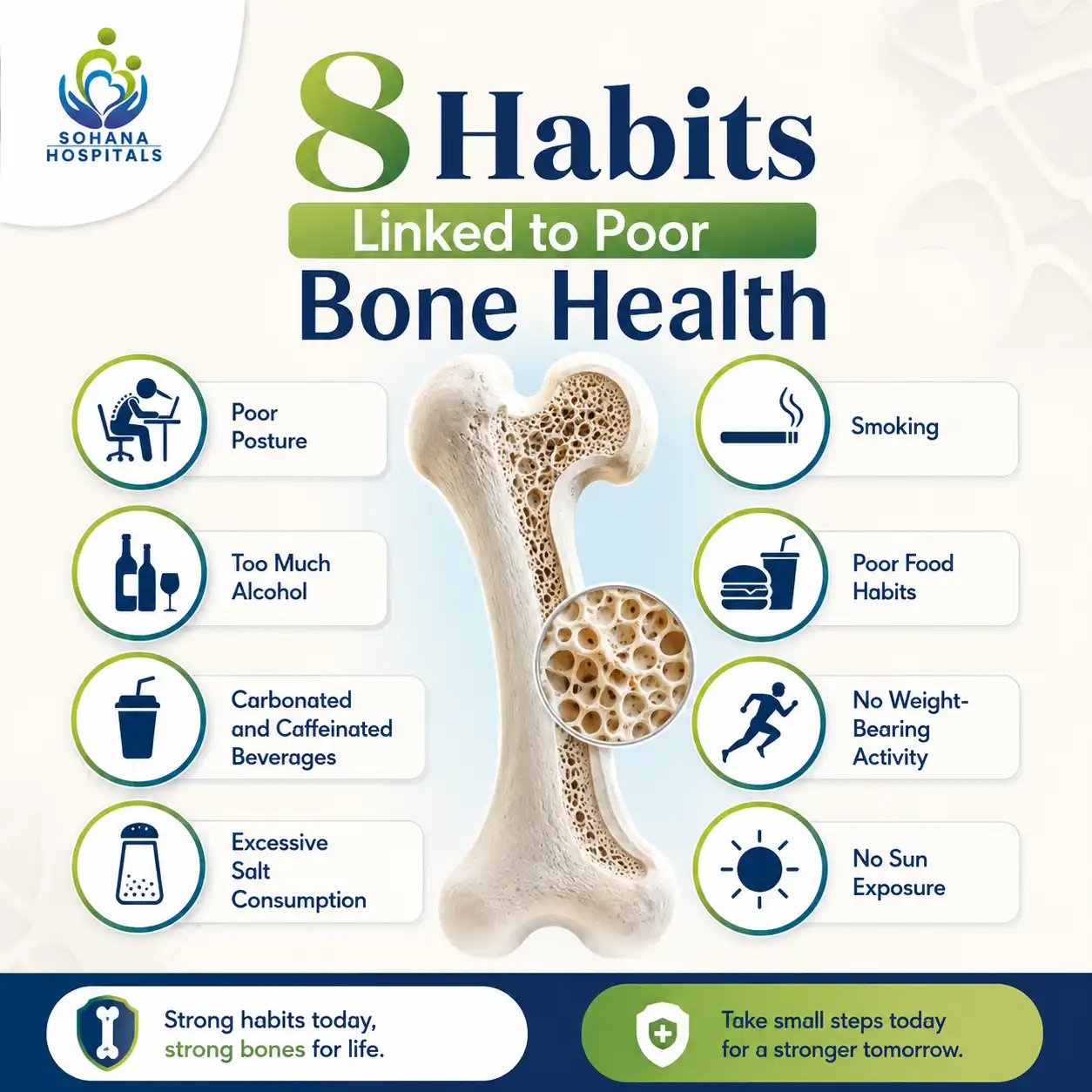
Poor Posture
Spending several hours a day using screens may be unavoidable. But what matters is your posture. Do you tend to slouch on the couch or have bad posture? Poor posture puts extra stress on your spine and other joints. This may lead to degenerative changes in your bones and joints.
*Tip: Be mindful of your posture.
Too Much Alcohol
Excessive liquor intake can adversely affect your bone health. It interferes with calcium absorption and disrupts the formation of new bone, reducing bone density and increasing the risk of fractures.
*Tip: If you cannot kick the habit, restrict the intake. Men should not consume more than 2 drinks a day. For women, 1 drink a day is the limit.
Carbonated and Caffeinated Beverages
Love tea, coffee, or, for that matter, cola-flavoured soda? High intake of cola beverages has been associated with lower bone mineral density, making bones fragile and prone to getting easily broken. Similarly, excess caffeine consumption may affect calcium absorption, especially when calcium intake is inadequate. Moderate tea or coffee consumption is generally safe.
*Tip: Switch over to beverages containing milk, fortified soy-based drinks, green, white, or black teas, or fresh fruit or vegetable smoothies.
Excessive Salt Consumption
You may not know, but a lot of processed food and bakery items contain salt. Consuming too much salt makes the bones weak by increasing the amount of calcium excreted in urine. This increases your risk of osteoporosis.
*Tip: Chips, breads, cakes, cookies, sauces, processed foods, and processed cheeses are loaded with salt. These should be best avoided.
Smoking
Smoking affects bones in more than one way. Tobacco reduces blood flow to your bones, joints, and muscles. This affects bone healing. Nicotine in cigarettes slows down bone formation. Smoking impacts calcium absorption in the body, making bones weaker. It also upsets hormone balance, especially estrogen, which is vital for the growth and maintenance of bones. Smokers are at a higher risk of fractures.
*Tip: Quit smoking immediately!
Poor Food Habits
A diet lacking in calcium, vitamin D, and protein can result in weak bones, increasing the risk of easy fractures due to osteoporosis. Similarly, high sugar content in food is also linked with osteoporosis. Excessive intake of saturated fats can impact your body’s ability to absorb calcium.
*Tip: Include adequate calcium, vitamin D, and protein in your diet, while cutting down on sugar and saturated fats.
No Weight-Bearing Activity
High-impact activities like hiking, running, brisk walking, and weight training help boost bone mass and density. However, low-impact activities like cycling or swimming may help improve heart health but may not strengthen your bones.
*Tip: Develop a habit of carrying weights. You can go grocery shopping on foot and carry things home.
No Sun Exposure
Even though you might consume vitamin D-rich foods, it is advisable to get some sunlight on a daily basis. It is a natural way to help the body produce vitamin D, which supports calcium absorption from the food you eat. However, too much sun exposure should be avoided since it may raise the risk of skin cancer.
*Tip: Soak up some sun for about 10-30 minutes in the early morning.
(Note: Vitamin D production depends on skin type, season, latitude, and clothing.)
For more guidance on how to maintain good bone health, get in touch with trusted orthopaedic experts at Sohana Hospital, Mohali. Known for the best bone doctors in Chandigarh and the most advanced world-class facilities, the hospital offers comprehensive and personalised care to every patient. Our goal is to ensure that you remain pain-free, healthy, and active for years to come.
Sohana Hospital – Serving humanity since 1995
FAQs – Bone Health
Does an inactive lifestyle damage bones?
Yes. It may speed up bone loss and raise your risk of osteoporosis.
Is smoking harmful to joints?
Yes. Smoking impairs the blood flow to your joints, meaning they do not get adequate oxygen and nutrients. It also slows down bone formation and affects calcium absorption in the bones.
Which foods are bad for bone health?
Soft drinks, excessive alcohol, caffeine, salt and sugar, and processed and packaged food products are harmful to bone health.