
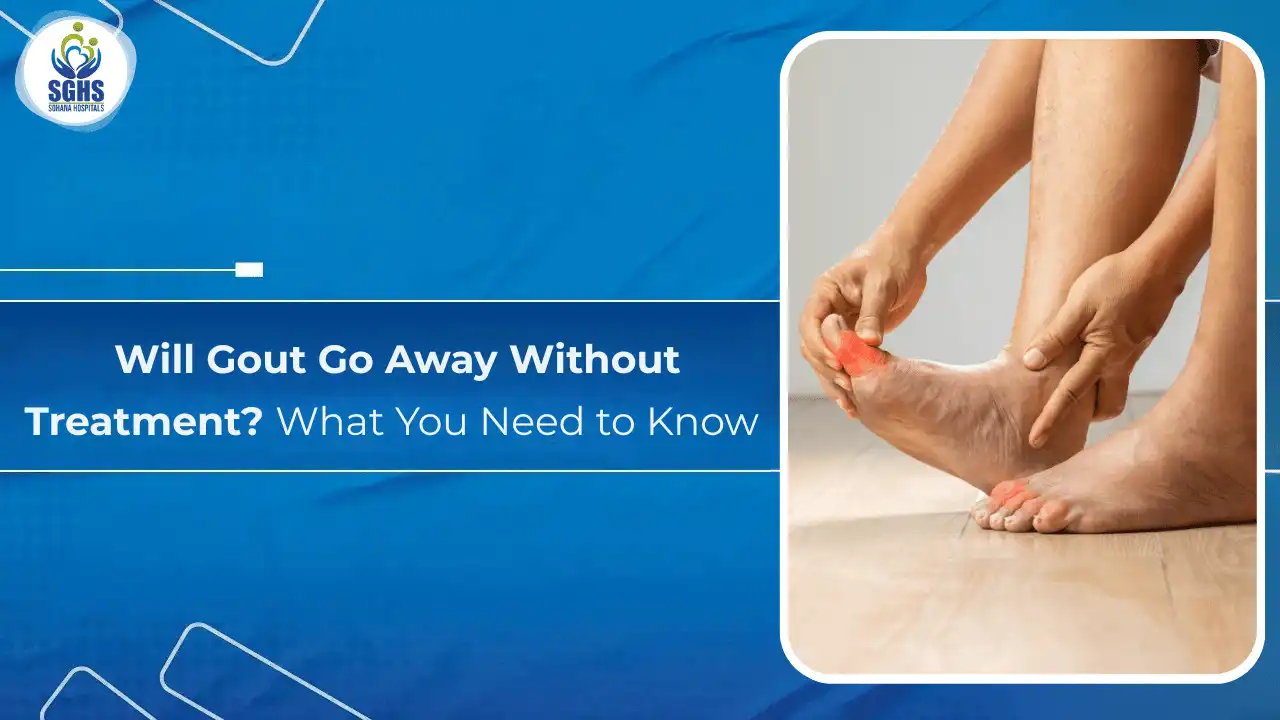
If you or anyone you know is living with gout, it’s natural to wonder, “Maybe this condition will go away on its own”. But it’s a little more complex than that.
Having proper knowledge about what gout is and what causes it can help you better understand how the condition can be managed. Read along to learn more about the inflammatory condition’s nature and treatment (management) strategies.
Gout: An Overview
Gout is a type of arthritis that causes sudden and intense bouts of inflammation & pain. These sudden bouts are known as “flare-ups”. Gout primarily affects the big toe, but it can also affect other joints like knees, elbows, ankles, fingers, or toes.
Gout occurs when uric acid levels become elevated, and urate crystals form around joints, causing inflammation and pain. Uric acid is a waste material produced inside the body during the process of breaking down purines. Purines can be found naturally in the body or in certain foods and beverages.
Uric acid buildup due to insufficient excretion or excess production of it can lead to the formation of crystals near small joints. These crystals can cause sharp pain during flare-ups.
Read in detail: Gout: Causes, Symptoms, Treatment
Can Gout Go Away on Its Own?
A gout flare-up can last a day to up to a week for some, while it may last longer for others (weeks or even months). However, just because your pain or symptoms subside does not mean that your condition has “healed”.
During gout flare-ups, the pain usually peaks within 24 hours and starts subsiding after that. However, even if your pain goes away, the root cause of the condition – high uric acid levels – can remain the same.
If the root cause is left untreated or not managed in a timely manner, it can lead to chronic gout or even joint damage or deformity.
*Note: Not everyone with high uric acid develops gout, but high uric acid increases the risk.
How to Treat Gout?
The first and foremost measure one can take to bring down their uric acid levels is making changes to their lifestyle. A well-balanced low-purine diet can do wonders if you have high uric acid levels or are prone to spikes.
Foods to avoid include:
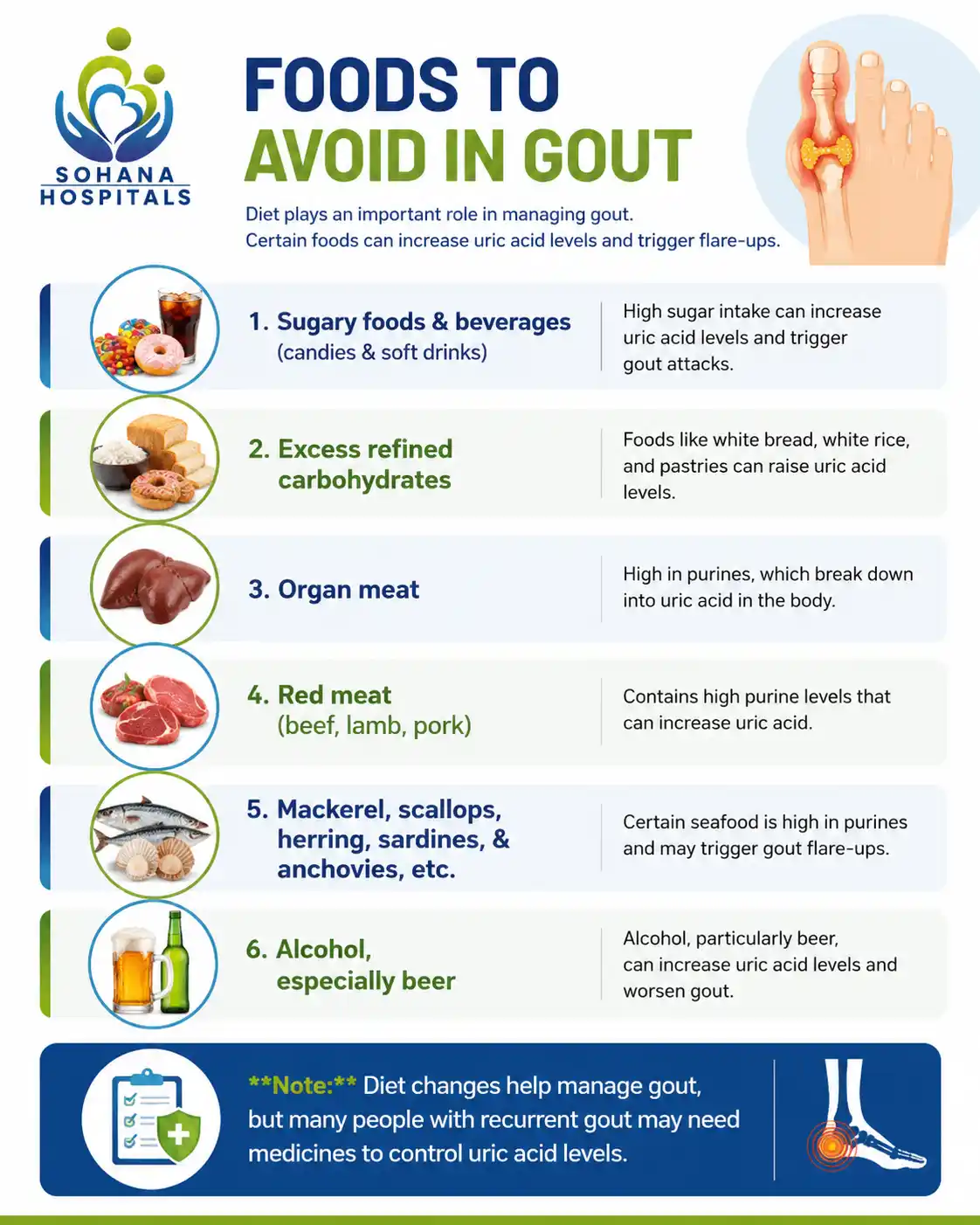
- Sugary foods & beverages (candies & soft drinks)
- Excess refined carbohydrates
- Organ meat
- Red meat (beef, lamb, pork)
- Mackerel, scallops, herring, sardines, & anchovies, etc.
- Alcohol, especially beer
*Note: Diet changes help manage gout, but many people with recurrent gout may need medicines to control uric acid levels.
Learn more about: Dietary Changes to Prevent Gout
Apart from dietary changes, physical activity and hydration also help you stay healthy and maintain optimal uric acid levels. Elevation and cold compression can also help reduce symptoms during a gout attack.
If your symptoms are too severe, you are advised to visit a gout specialist at the earliest. They may prescribe medicines to reduce inflammation during attacks and other medications that help lower uric acid levels long term.
All of these help reduce the frequency and intensity of gout attacks and symptom flare-ups.
Read in detail: Gout Treatment & Pain Management
So, while the pain may subside, gout doesn’t simply “go away” on its own unless you take the necessary steps to manage your uric acid levels.
Sohana Hospital has a committed team of the best rheumatologists in Chandigarh who work to treat the root cause of every inflammatory condition, providing long-term relief. After a series of thorough diagnostic tests, a personalised treatment plan is devised under the expertise of our specialists, so you can live your best, pain-free life!