
We see more women than men suffering from knee pain. The causes that make females more likely to experience knee issues include anatomical differences, hormonal changes, and lifestyle habits.
Understanding knee pain in women, especially in those aged over 40, can help you seek early diagnosis and timely treatment to maintain a good quality of life.
In this blog, we are going to have a look at the causes of knee joint pain in women.
Why are Women more Prone to Knee Pain?
Clinical studies reveal that women are more susceptible to knee pain than men due to various factors:
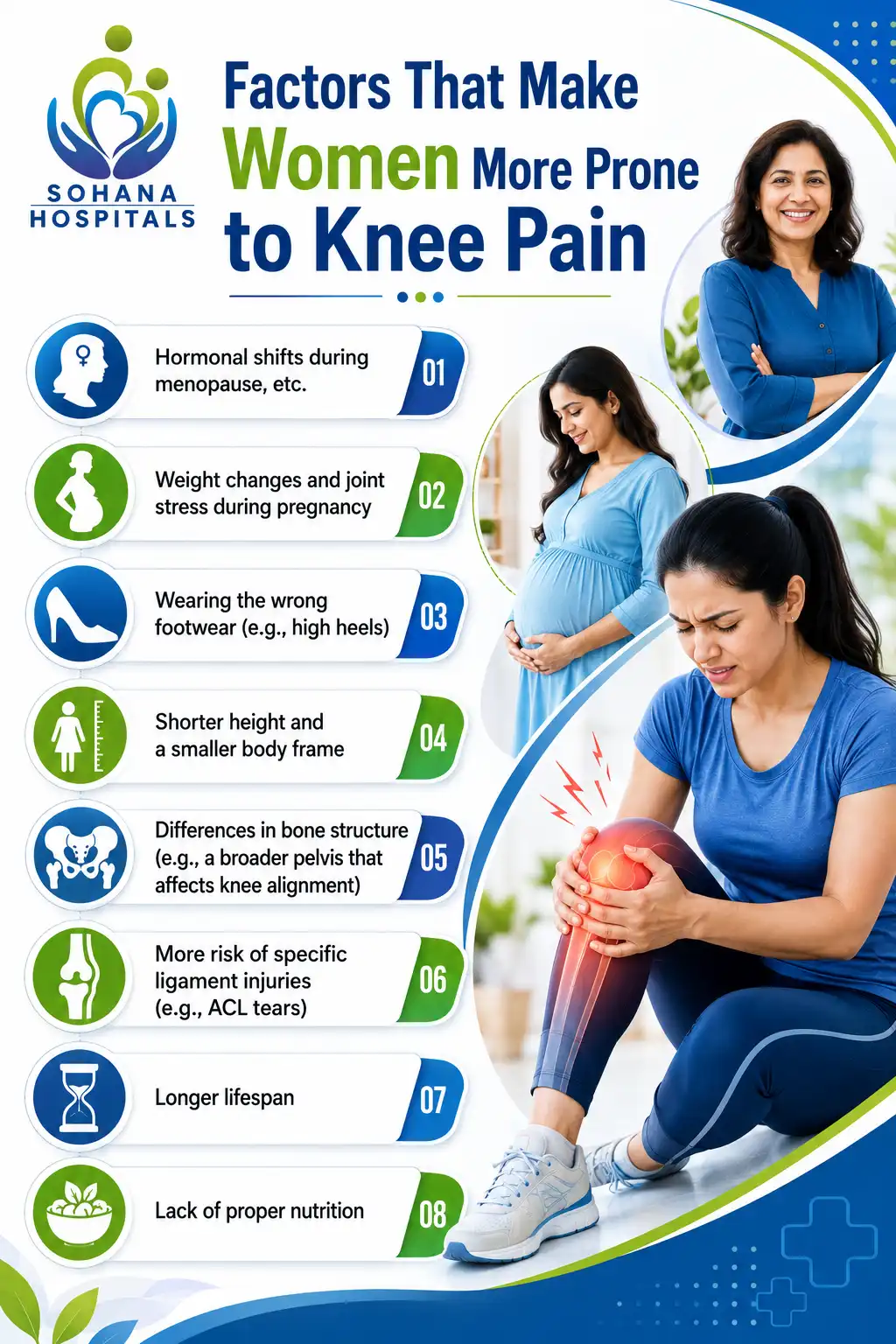
- Hormonal shifts during menopause, etc.
- Weight changes and joint stress during pregnancy
- Wearing the wrong footwear (e.g., high heels)
- Shorter height and a smaller body frame
- Differences in bone structure (e.g., a broader pelvis that affects knee alignment)
- More risk of specific ligament injuries (e.g., ACL tears)
- Longer lifespan
- Lack of proper nutrition
Top Reasons for Knee Pain in Women
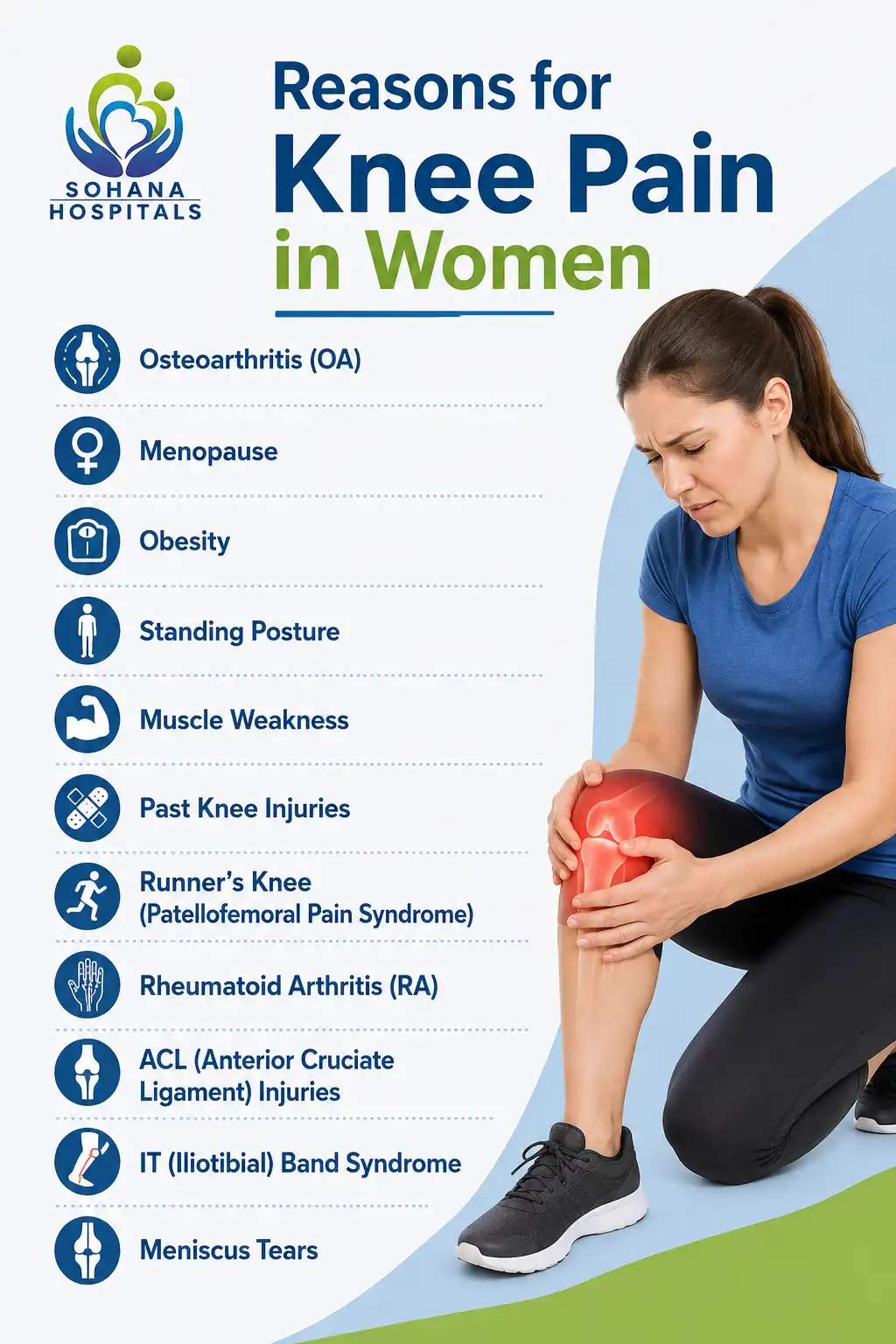
The major causes of knee pain in women over 40 include:
Osteoarthritis (OA)
One of the most prominent causes of knee pain in women over 40 is osteoarthritis. It refers to the wearing away of the protective cartilage (responsible for providing cushioning between bones and preventing friction).
Women are more vulnerable to this degenerative joint condition. The reasons include genetics and post-menopausal changes. Typical symptoms include pain, swelling, and stiffness in the knees.
Read in Detail: Osteoarthritis: Symptoms, Types, Causes, Risk Factors, Stages, Treatment
Menopause
Most women go through menopause around the age of 45-50. When it happens, and in fact, during the perimenopausal stage too, oestrogen hormone levels start dropping sharply. This decline in oestrogen levels can result in several conditions, one of them being osteoporosis.
Osteoporosis causes the bones to gradually lose calcium and phosphorus, reducing bone density and making bones weaker. Bones may even become brittle. Though the disease is largely silent (without any symptoms), some women may experience knee pain, backache, poor posture, etc.
Obesity
As menopause occurs, many women experience a tendency to put on weight. When this happens, joints have to bear more pressure. And knee joints suffer the most.
For every kg of extra weight, the knees have to bear 4 kg of additional stress. There is more wear and tear. This is yet another prominent reason for knee joint pain in women over 40.
Standing Posture
Many women spend long hours standing at work or while managing household responsibilities. This has consequences for knee health. And symptoms typically appear around the menopausal age or a year or two before that.
Muscle Weakness
Many of us have been leading a sedentary lifestyle – sitting more and moving less. It means our joints are not getting the movement they require to stay lubricated and healthy.
As joints are not put to adequate use, the surrounding muscles lose strength. This is especially true of the muscles supporting the hips and knees. This may lead to knee pain.
Past Knee Injuries
As you grow older, that old sports injury you sustained in college may creep in quietly. Yes, it may have seemed to recover at that time, but it may become the reason behind your knee instability, early arthritis, or scar tissue today.
40s and beyond is the time when such unresolved injuries start to trigger knee pain.
Runner’s Knee (Patellofemoral Pain Syndrome)
Runner’s knee is common in active women, athletes, and those with poor kneecap alignment. Symptoms include pain in the front part of the knee and around the kneecap. The pain intensifies when you squat, climb stairs, or sit for prolonged periods. The reasons for runner’s knee include weak thigh muscles, misalignment, and overuse.
Rheumatoid Arthritis (RA)
Rheumatoid arthritis is an autoimmune condition that is seen to affect women more than men. As the disease progresses, you may witness inflammation, pain, and stiffness, often in both knees.
Read in Detail: What is Rheumatoid Arthritis (RA)? Types, Signs, Stages & Treatment
ACL (Anterior Cruciate Ligament) Injuries
If you happen to suddenly twist your knee, it could lead to an ACL tear. Women, especially those who participate in any high-impact activities, are more likely to sustain ACL tears because of hormonal influences on ligament strength and muscle imbalances.
IT (Iliotibial) Band Syndrome
If the iliotibial (IT) band, which runs from the hip to the shin, becomes stiff or inflamed, you may experience pain in the outer knee. It is generally seen in women with muscle weakness or poor posture.
Meniscus Tears
Older women with cartilage degeneration are also at risk of suffering a torn meniscus. It often happens if they happen to twist their knee while bearing weight.
Conclusion
Knee pain is becoming increasingly common among women over 40 due to the aforementioned reasons. Needless to say, it does not just affect movement; it also takes away your happiness, confidence, and freedom. But fortunately, there is hope, and it begins with understanding the causes and getting expert advice.
Firstly, it is essential to keep moving. When your knee hurts, the answer isn’t no movement; instead, the right movement. Do not ignore; do not delay. Women should start caring for their knees early on and not wait for symptoms to appear.
And if you start experiencing knee pain, it would be good to consult the best knee doctors in Chandigarh at Sohana Hospital. The leading super-speciality hospital boasts highly experienced doctors, along with the most advanced diagnostics and a wide variety of knee pain treatment options –
- Dedicated physiotherapy at the initial stage
- Revolutionary stem cell therapy, arthroscopy, and knee injections in the moderate stages
- Virtually painless Intellijoint and robotic knee replacement technologies at the advanced stages of knee degeneration
And last but not least, the hospital is known for providing compassionate and affordable care. So if you are a resident of the tricity or nearby regions, and are looking for trusted orthopaedic care, do visit Sohana Hospital.
Stay active, stay alert, seek timely treatment – Enjoy pain-free mobility!