
Come the weekend, many working professionals in their 30s, 40s, and 50s have an urge to make up for the whole week of a sedentary lifestyle by engaging in intense physical activities.
Some may go for a long trek, while others may suddenly run 10 km, go for a rigorous gymming session, or play badminton and cricket back-to-back. The thought behind it? Something is better than nothing!
Excess of Everything is Bad!
Well, going for intense exercise only on the weekends can actually be a damaging pattern in recreational sports. For 5 days, you sit in front of screens for long hours at a stretch. Then, abruptly, you put an excessive load on your deconditioned muscles, stiff tendons, and other body parts lying in disuse.
What is Weekend Warrior Syndrome?
The pattern of staying largely sedentary through the work week and squeezing all physical activity into the weekend has a name now: Weekend Warrior Syndrome.
Why is Weekend Warrior Syndrome catching the fancy of people? At first glance, it seems to be a healthy lifestyle-friendly option!
But the reality is, in fact, very different! The sudden burst of heavy exercise generally catches your body off guard, resulting in injury and pain. In this blog, we’re going to understand why casual sportspersons get injured, and how to exercise safely and sustainably.
What is Making Weekend Warrior Syndrome So Common?
In the modern world, people face the inevitable demands of long hours at work, which often involve sitting in the same position for hours at a stretch and excessive screen fatigue. Add to it the commute home and familial responsibilities, and little time is left for exercise during the weekdays.
When the weekend comes, people dive straight into intense physical activity without preparing their bodies properly. While exercise is good from an overall health perspective, doing it after prolonged inactivity puts you at a considerably higher risk of injury compared to regular, distributed exercise throughout the week.
What Causes Weekend Warrior Syndrome?
During the week, you sit for prolonged periods of time. This can stiffen the muscles and weaken stabilising joints. When you abruptly perform high-intensity exercise on the weekend, your body finds it hard to handle the sudden stress. Tight or deconditioned muscles lack strength and flexibility. Also, joints may not have the support required to absorb the shock.
Stiff muscles and poorly conditioned joints significantly increase injury risk.
What are Common Weekend Warrior Syndrome Injuries?
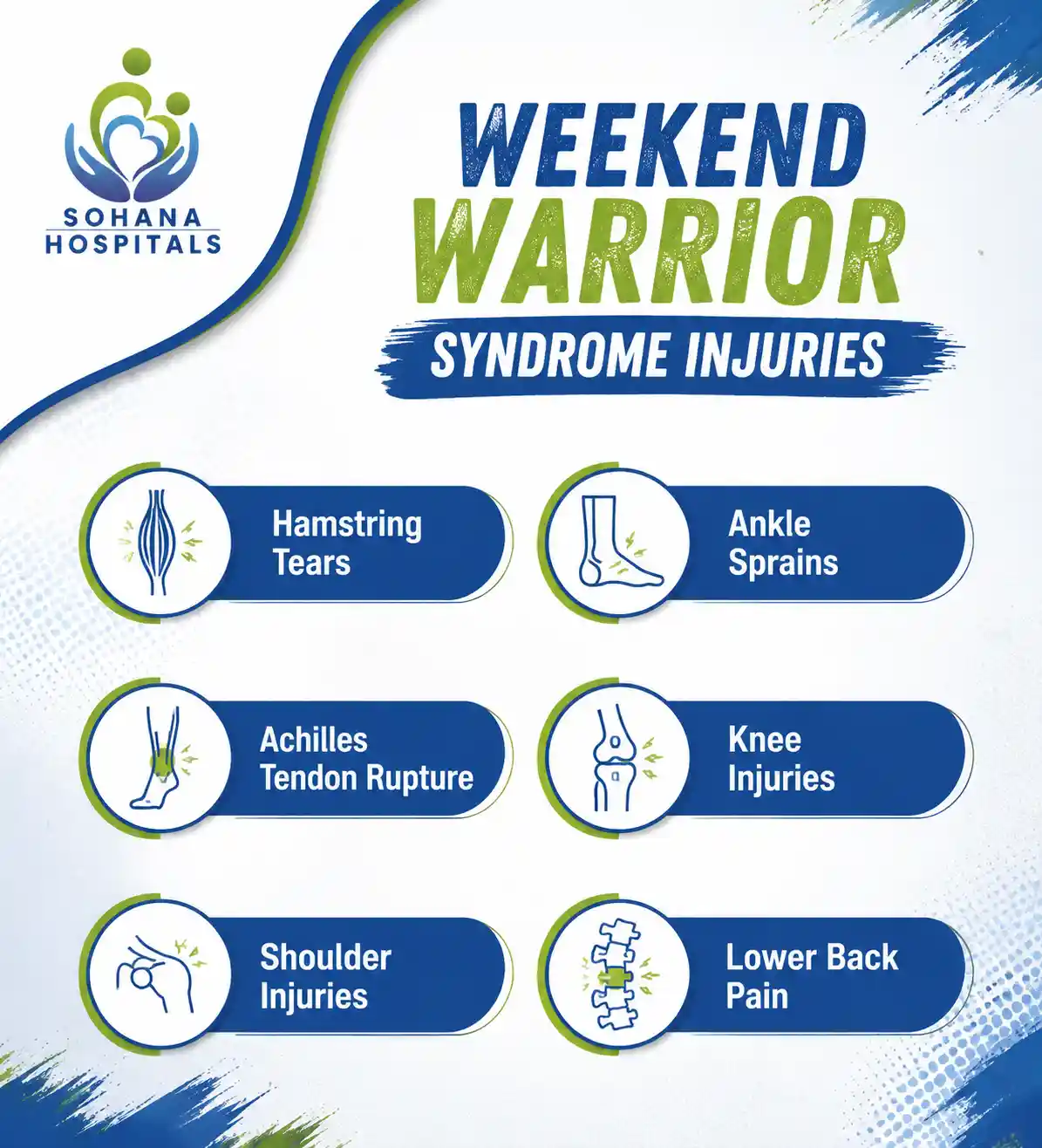
Hamstring Tears
Love sprinting or playing football? You may be in for hamstring strains. Unprepared muscles may suffer minor fibre disruptions and, in severe cases, complete tears that take months to heal and need proper rehabilitation.
Ankle Sprains
Are basketball and badminton your favorite weekend sports? Beware of lateral ankle sprains! They are common during court sports, especially if players do not have the conditioning that comes with regular training.
Achilles Tendon Rupture
Do you fall in the 30-50 age bracket? Be mindful while engaging in high-impact activities, such as jumping and sprinting. Deconditioned adults are at risk of Achilles tendon injury. In severe cases, weekend athletes may suffer a complete Achilles tendon rupture. It’s a serious injury that may need surgical intervention or prolonged immobilisation and long-term physiotherapy.
Knee Injuries
Do you like to take part in sports that require you to squat and pivot? Stay cautious of meniscal tears and patellofemoral pain! The reason? Inadequate gluteal and quadricep strength.
Shoulder Injuries
Badminton would seem incomplete without overhead smashes, and volleyball must have overhead spikes, isn’t it? But these activities and, yes, swimming, too, may result in rotator cuff strains and impingement, especially if your shoulder muscles lack conditioning through regular training.
Lower Back Pain
So many of your favourite activities can give you a painful lower back, especially if you have weak core muscles and lack lumbar stability. So, be careful when you go for a trek with a full backpack, prolonged golf sessions, or intense gym workouts.
Here are examples of some other exercise injuries that weekend warrior syndrome may cause:
- Strained muscles in the calves, hamstrings, or lower back
- Ligament sprains, especially in the knee and ankle
- Tennis elbow, Achilles tendinopathy, and other tendon injuries
- Overuse injuries from repetitive motions (e..g., jumping, sprinting, etc.)
What are the Signs and Symptoms of Weekend Warrior Syndrome?
While some injuries may cause instant pain, others may take some time before pain and other signs show up. And that’s when most people realise they are overloading their bodies.
It’s important to identify the early warning signs so that you can act before your condition worsens. Here are the red flags:
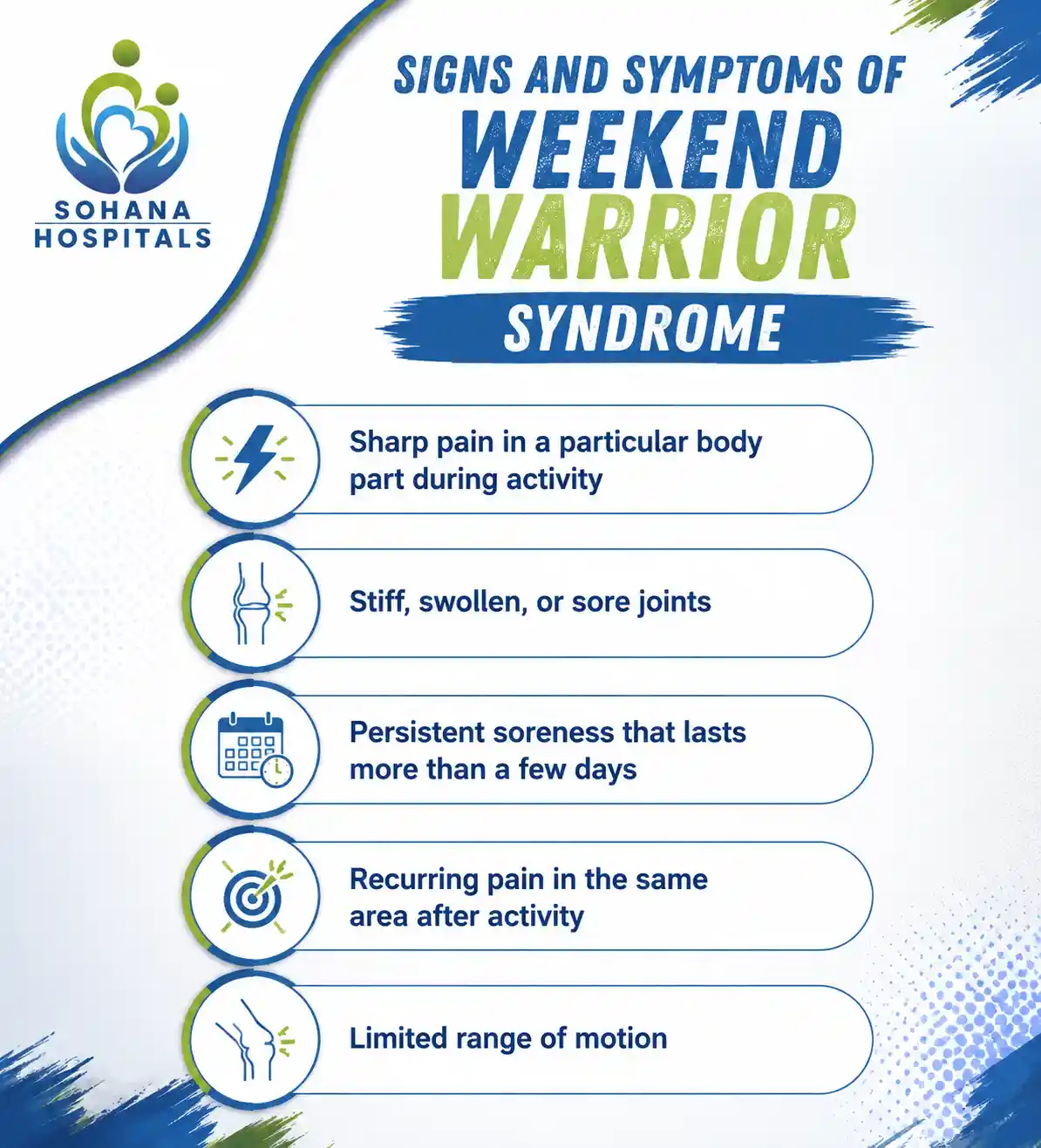
- Sharp pain in a particular body part during activity
- Stiff, swollen, or sore joints
- Persistent soreness that lasts more than a few days
- Recurring pain in the same area after activity
- Limited range of motion
Encountering any of the above symptoms regularly? It’s your body’s way of telling that it’s not recovering well between sessions.
Why is Consistency the Key for Sports Injury Prevention?
Remember the hare and tortoise story and the lesson it gave? Slow and steady wins the race. The human body likes gradual and consistent activity. Sudden, infrequent sessions of intensive activity can result in injuries that are beyond the body’s capability to repair.
The way out is to follow a balanced approach. Go for shorter spells of low-intensity activities spread over the whole week. To exemplify, you can include 20-minute sessions of stretching, brisk walking, core training, etc. It will help get your body ready for more intense weekend workouts.
How to Protect Yourself from Weekend Warrior Injuries?
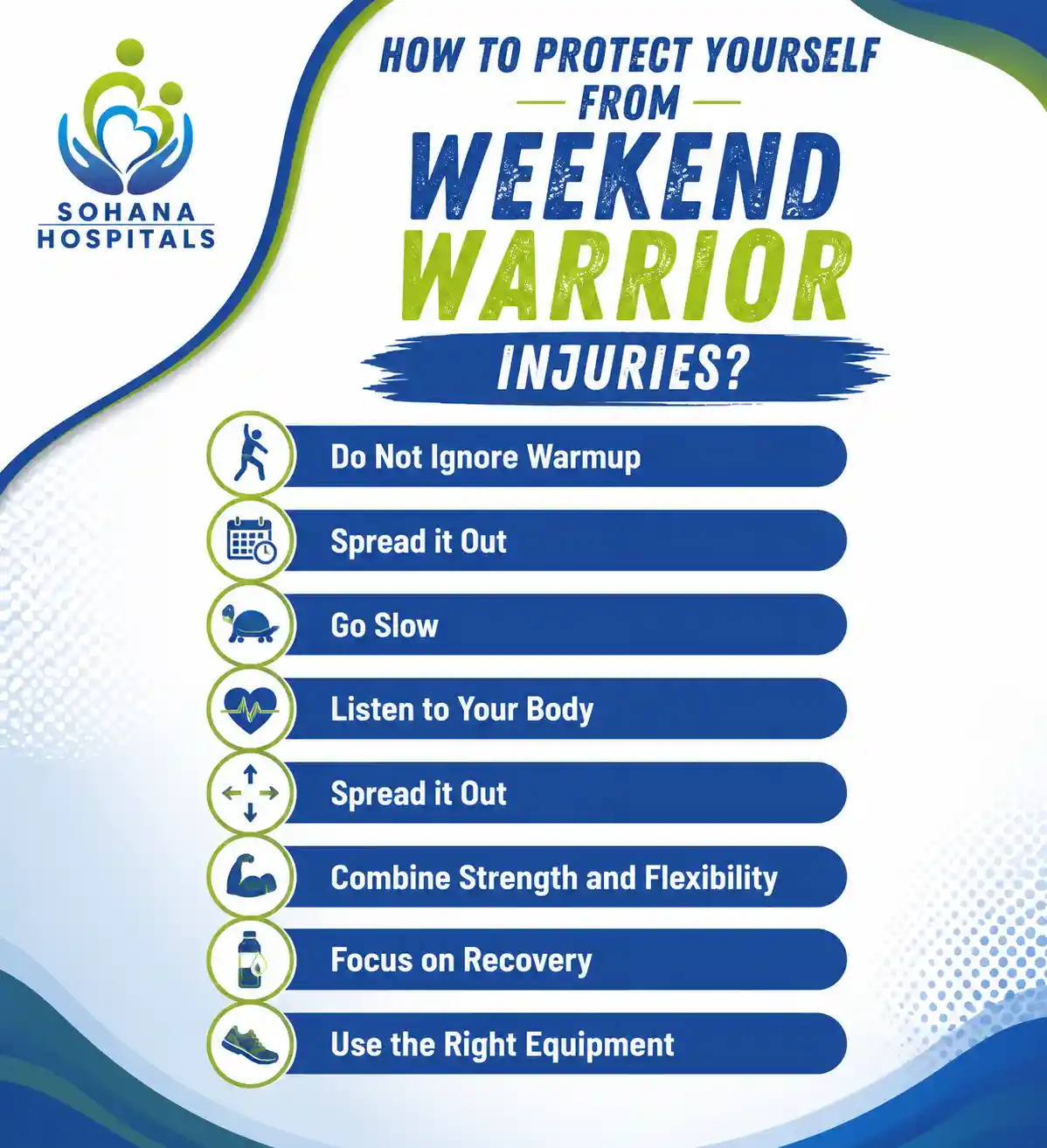
Do Not Ignore Warmup
Do you skip the warm-up session? Or start too vigorously? The significance of warming up adequately and using the right techniques cannot be overemphasised. It helps improve blood circulation and prepares your muscles for higher-intensity activities. It raises your heart rate slowly and activates the main muscle groups prior to the main workout.
Spread it Out
Are short, simple activity sessions useful? Definitely, they are. Light activities like yoga, brisk walking, cycling, over the week can translate into a huge difference by maintaining muscle memory and joint stability.
Go Slow
Can’t wait to give your best to your favourite activity? Learn to raise the intensity slowly, be it sprinting, lifting weights, or playing badminton. This allows your muscles, ligaments, and tendons the much-needed time to adjust and adapt, and saves you from injury.
Listen to Your Body
Always heard endurance is good? Being tough is good, but ignoring sharp or persistent pain is definitely not a good idea. Fatigue may be normal, but if something feels wrong, pay attention and discontinue the activity or consult a specialist if need be.
Combine Strength and Flexibility
What makes balance so significant? Balance is needed in every aspect of life, including exercise. While weekend exercise is still better than complete inactivity, problems arise when the body is pushed too hard without regular conditioning. Imbalances between weak and strong muscles often result in sports injuries. The same holds for overstretched and tight muscles. Use a combination of mobility and strength training.
Focus on Recovery
Your phone also needs to be recharged, doesn’t it? Likewise, your body and muscles need rest to heal and grow stronger:
- Get a minimum of 7 hours of sleep
- Stretch gently to heal stiffness
- Drink enough water before and after exercise
- Consume a balanced diet with enough protein
- If soreness lasts longer than a few days, rest a little more
Use the Right Equipment
What makes the right equipment and gear important? Do not use ill-fitting gear, worn-out shoes, and poorly adjusted equipment. These can increase unnecessary stress on joints. Minor improvements in equipment, like racquets and bicycle seats, not only ensure comfort but also help avoid bigger issues afterwards.
When to Consult a Doctor
Minor problems may heal with rest. However, if you experience sharp pain or pain that refuses to subside, it may be time to consult an orthopaedic healthcare provider.
Similarly, if there is sudden swelling in any body part or a joint that feels unstable, it would be good to seek medical intervention. Proper orthopaedic assessment by the best orthopaedic doctors in Chandigarh at Sohana Hospital can help find out the kind of injury and treatment required.
Early diagnosis can help you recover faster. Also, in the initial stages, you may benefit from non-surgical treatment options like physiotherapy, guided exercise, and strength conditioning. Contrarily, a delay in treatment may lead to the worsening of the injury and also take longer to heal.
Sohana Hospital has the most advanced diagnostics and treatment options for all kinds of sports injuries, from minor sprains and strains to ligament injuries, meniscus tears, and fractures. Expert ortho specialists pay individualised attention to each patient, so that you can recover safely and smoothly in the shortest time.
Exercise regularly and mindfully – Stay safe from the Weekend Warrior Syndrome!