
Recognising rheumatic diseases in the early stages can ensure timely treatment and help you lead a relatively good life.
In the initial stages, you may start to feel some stiffness or pain in your joints; maybe your fingers start to swell, and small joints start feeling tender, warm, and painful to touch. Most people ignore such symptoms if they’re not too severe. But that’s where they are wrong.
These signs must never be dismissed as just “getting older”. Aches and inflammation are not always a byproduct of aging. In this blog, we are going to discuss what rheumatic diseases are and how you can catch them early.
Rheumatic Diseases: Overview
The term “rheumatic disease” refers to a group of over 200 disorders that affect bones, muscles, connective tissues, and joints. These conditions are generally categorised by inflammation. Some commonly seen rheumatic diseases include:
- Rheumatoid Arthritis (RA) – an autoimmune condition where the body’s immune system attacks healthy tissue, causing inflammation in small joints (hands and feet).
Read more: What is Rheumatoid Arthritis (RA)? Types, Signs, Stages & Treatment
- Gout – a type of inflammatory disease caused by excess uric acid buildup in the body. Excess uric acid causes crystals to form around joints (typically the big toe, but it can affect other joints too), causing sharp pain and swelling.
Read more: Gout: Causes, Symptoms, Treatment & When to See a Doctor
- Lupus – another autoimmune condition where the immune system starts attacking healthy organs and tissues. Lupus can even lead to severe organ damage impacting the kidneys, lungs, heart, brain, or skin.
- Spondyloarthropathies- a group of conditions that cause inflammation, pain, and stiffness in the joints surrounding the spine.
Rheumatic Diseases Signs & Symptoms
The symptoms of different rheumatic conditions may vary from one another as different conditions affect the body differently. However, under the broader umbrella term, here are some symptoms that generally accompany most rheumatic diseases:
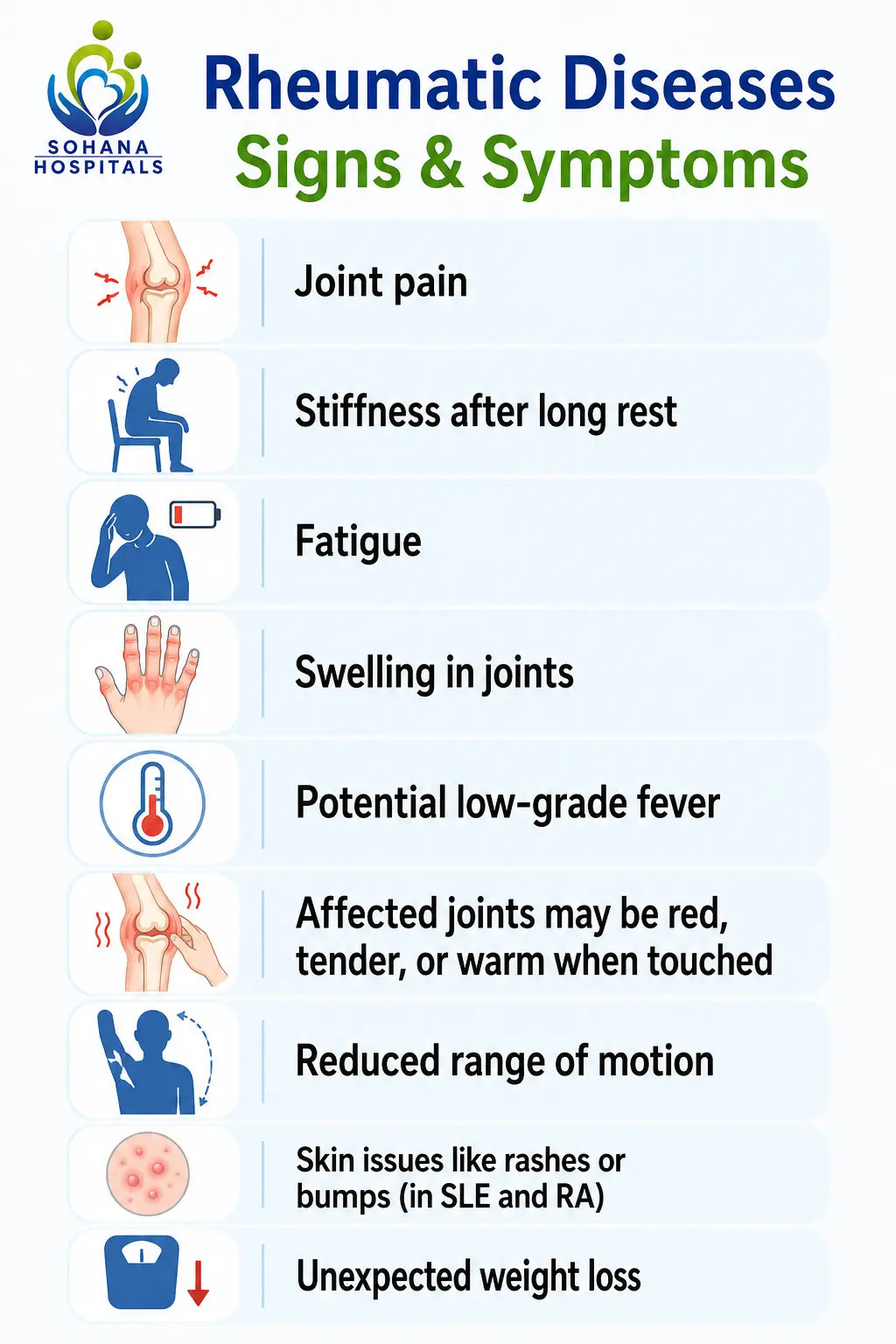
- Joint pain
- Stiffness after long rest
- Fatigue
- Swelling in joints
- Potential low-grade fever
- Affected joints may be red, tender, or warm when touched
- Reduced range of motion
- Skin issues like rashes or bumps (in SLE and RA)
- Unexpected weight loss
How to Detect Rheumatic Diseases?
The first thing you should do if you suspect you or someone close to you is experiencing the typical symptoms of a rheumatic disease is to consult a specialist. An expert rheumatology doctor will be able to properly assess and diagnose your condition. Your doctor will:
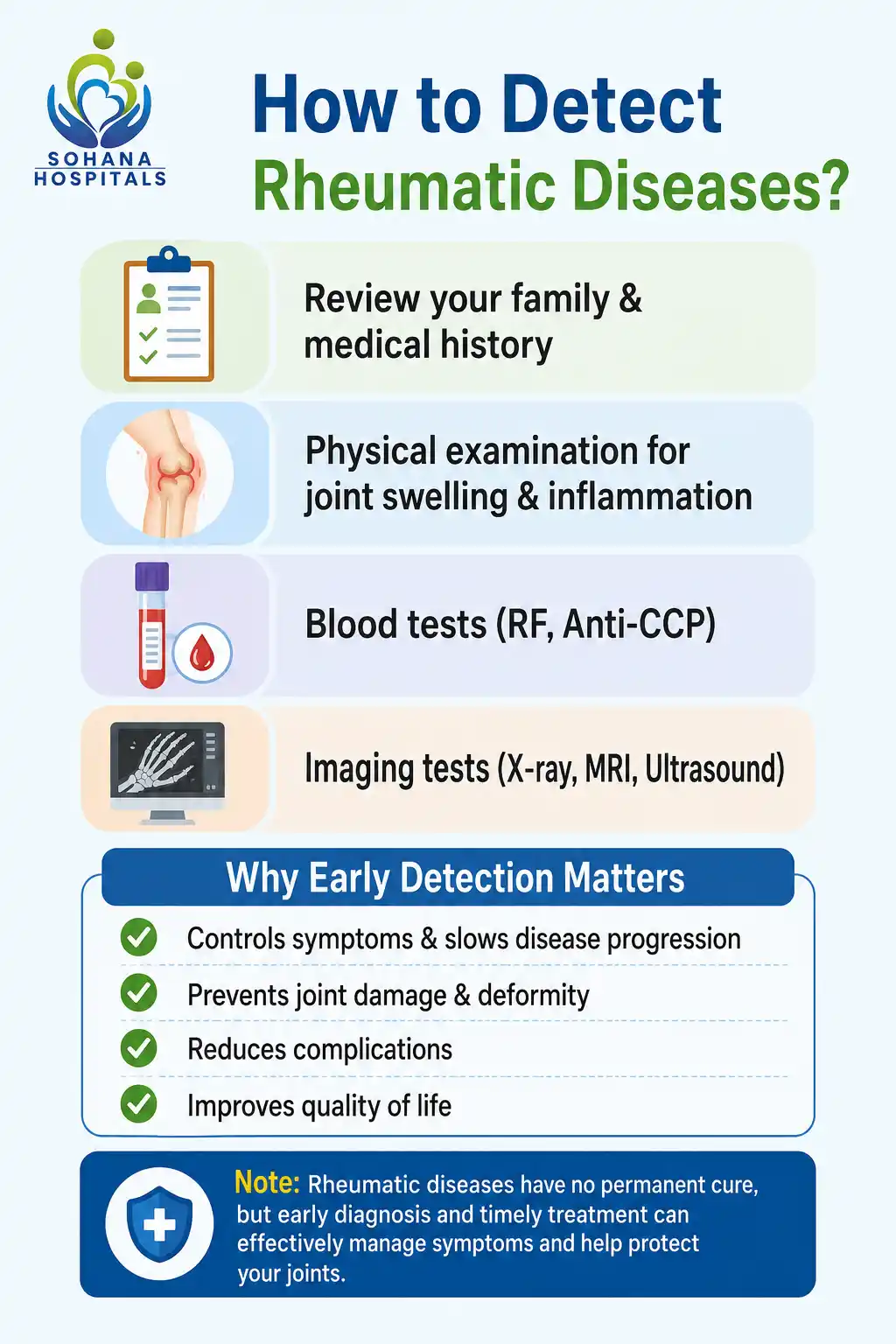
- Ask questions about family history of the disease, personal medical history, and the nature & duration of the symptoms that you’ve been experiencing.
- Conduct a physical examination to look for signs of inflammation, swelling, warmth, and redness.
- Advise blood tests (RF, Anti-CCP) to identify antibodies typically present in rheumatic diseases.
- Recommend other diagnostic tests like X-rays, MRIs, or ultrasounds to get visual insights about your condition.
Early detection can lead to timely management of your symptoms before they start significantly impacting your life. With early detection, you can:
- Access appropriate management strategies, control your symptoms, and slow down the progression of the disease
- Prevent irreversible joint deformity and damage
- Reduce the risk of further disease-related complications
- Get an enhanced quality of life
*Note: There is currently no permanent cure for rheumatic conditions. However, with timely treatment, the symptoms can be managed to a great extent. If the disease is caught in the initial stages, relevant management options can be employed to slow down the disease progression and help you lead a relatively normal, pain-free life.
The dedicated rheumatology department at Sohana Hospital is here for all your needs. We understand the importance of early detection and want every patient who walks through our doors to walk out with a solution to their symptoms.
Our team of the best rheumatologists in Punjab is committed to providing every patient with a customised treatment approach, prescribing appropriate treatment options to tackle their specific symptoms.
The advanced range of treatment options at Sohana Hospital includes therapies, medication (DMARDs, NSAIDs), injections, biologics, lifestyle changes, and surgery (in extreme cases). If you or anyone you know has been dealing with the above-listed symptoms, do not delay diagnosis – book an appointment today!
Frequently Asked Questions
What are rheumatic diseases?
Rheumatic diseases refer to a group of 200+ inflammatory conditions that affect the bones, joints, muscles, and connective tissue. These can generally be characterised by inflammation, joint pain, stiffness, and general fatigue.
Who treats rheumatic diseases?
If you suspect you may be experiencing symptoms of a rheumatic condition, consult a rheumatology doctor, also known as a rheumatologist. Rheumatologists are experts, highly trained and experienced in managing a variety of complex rheumatic conditions.
How to treat rheumatic diseases?
Treatment and management options depend on the specific condition. Typically, DMARDs, NSAIDs, biologics, physical therapy, or surgery are prescribed for common rheumatic conditions.