
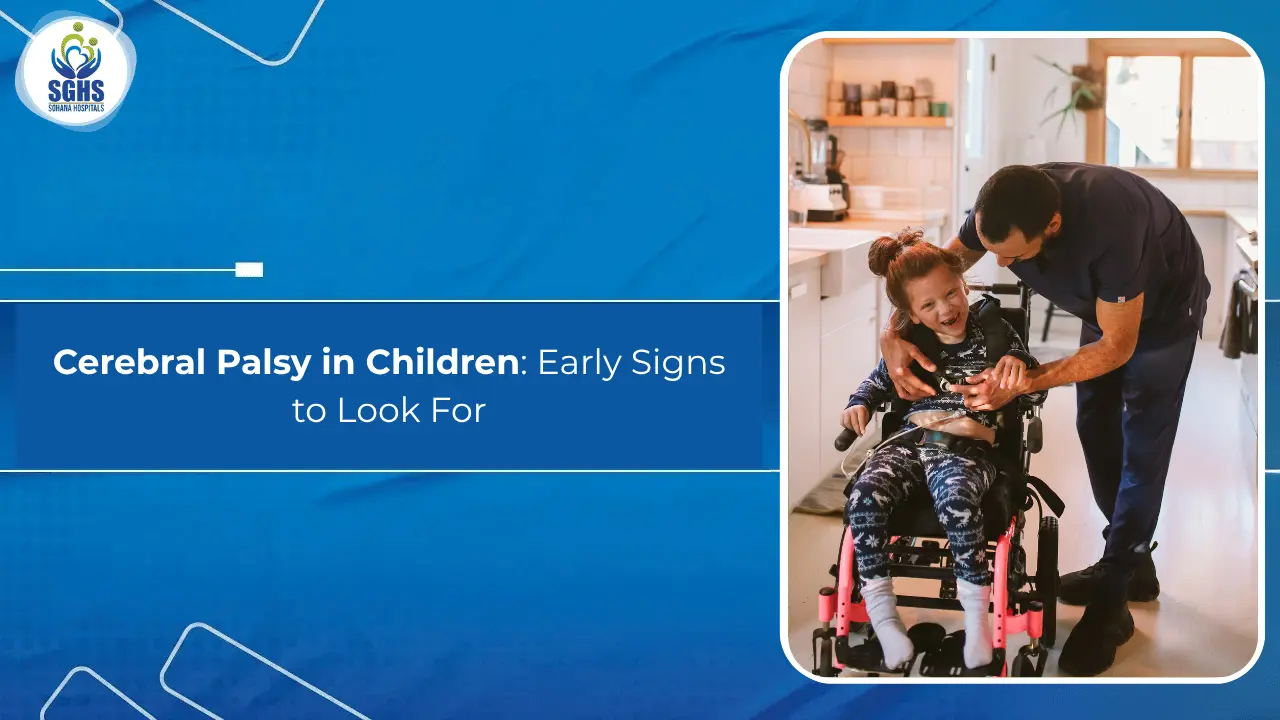
Cerebral Palsy (CP) in children is a group of brain and nerve disorders, affecting a child’s ability to move and maintain posture, coordination, and balance. The condition often occurs as a result of an injury to the brain or its abnormal development prior to, during, or soon after birth.
How many children in India have this disorder? Approximately 3 in 1,000[1] (as per a clinical study). Although it is a lifelong condition without a definitive cure, early intervention can help enhance physical abilities, improve comfort, and make daily activities easier for the affected child.
*Note: Although the underlying brain issue is non-progressive, its effects on movement and physical function may change as a child grows.
| 👉CP is the most common condition causing movement-related disabilities in children. (via CDC)[2] |
What are the Symptoms of Cerebral Palsy?
CP symptoms may not be noticed in a newborn. However, signs start appearing at an early age.
Also, two children affected by CP may not have the same symptoms. Some children may be free from walking disability; others may have it. Some struggle with intellectual disabilities, while others do not. Epilepsy, deafness, or blindness may also be present in some children.
| 👉 CP is estimated to account for roughly 15–20%[3] of physical disabilities among children in India. |
Here are some common CP Symptoms:
| Symptom | Explanation |
| Developmental delays | The child may take longer than expected to achieve important movement milestones, such as sitting, crawling, or walking. For example, not being able to hold the neck up properly by 6 months of age, not sitting by 8 months, or not walking by 1.5 years. |
| Extreme rigidity or floppiness | Muscles may seem too stiff (spasticity) or too soft and hanging downwards (floppy). |
| Limb weakness | Weak arms or legs. |
| Ataxia | Lack of balance and muscle coordination. |
| Unusual movements | Random, uncontrolled movements beyond their control – jerky, fidgety, or clumsy movements, which may be slow and writhing. |
| Difficulty walking | Walking style and gait may not be normal. They may walk on tiptoes or crouch down while walking. Knees may be crossed or too wide apart when they walk. Also, their walk may be unsteady. |
| Trouble with fine motor skills | Inability to grasp things or button their clothes. |
| Swallowing problems | Drooling, difficulty chewing, sucking, or eating. |
| Speaking problems | Difficulty speaking or delayed speech development. |
| Vision problems | Problems with vision and eye movements, such as focusing the eyes, squinting, etc. |
| Hearing issues | The child may have trouble hearing. |
| Learning disabilities | Trouble learning and intellectual disabilities (Not every child with CP has an intellectual disability. Movement and speech difficulties do not necessarily indicate problems with intelligence). |
| Sleep issues | The child may face difficulty falling asleep and/or staying asleep. |
| Delayed growth | Growth may be inhibited; consequently, the child looks shorter for their age. They may have a head size smaller or larger than what is normal at their age (not in every child with CP). |
| Epilepsy | Epileptic seizures or fits may occur. |
| Other sensory issues | The child may have trouble sensing touch or may find even gentle contact painful. |
| Bladder & bowel problems | Lack of urinary control and/or constipation (in some children). |
| Mental wellbeing | May have behaviour problems and emotional issues. |
| Scoliosis | An abnormally curved spine. |
| GORD (Gastro-oesophageal reflux disease) | Intestinal acid may pass to the gullet (oesophagus) in some kids with CP. |
Do All Children with Cerebral Palsy Have Same Symptoms?
No. Symptoms may differ significantly. Some kids may have just minor issues, while others may have serious disabilities and cannot function independently. For example, some kids may walk and perform routine chores independently. Also, some may also suffer from epilepsy, blindness or deafness.
The part of the affected body may vary – one arm, one leg, half the body, or full body.
Do Cerebral Palsy Symptoms Improve Over Time?
The underlying brain condition associated with cerebral palsy does not change over time. So, symptoms also may not show much variation, neither improvement nor worsening. It’s just that you may start noticing the signs as the child starts growing.
With growth, muscle stiffness, joint contractures, or mobility difficulties may develop or increase. Physiotherapy, occupational therapy, medical treatment, and appropriate rehabilitation can help improve function, comfort, and independence.
When to Seek Medical Help
As parents, it’s important to note developmental milestones in your child. CP symptoms vary across children, and not all children have the same symptoms. Also, symptoms may not be apparent when a child is born. They may come to notice during infancy and early school days.
While cerebral palsy is not curable, timely diagnosis and proper treatment can significantly enhance the quality of life of your child.
Consult an experienced pediatric neurologist if your little one shows symptoms like delayed developmental milestones, unusual muscle stiffness or floppiness, persistent toe-walking, or difficulties with movement and coordination.
The pediatric neuro specialist may assess various aspects of your child’s growth, development, and other areas. Following the diagnosis, they can recommend the appropriate treatment approach to manage symptoms and lead a more independent and comfortable life.
References:
1) In India, the estimated incidence is around 3/1000 live births– January 27, 2017
2) CP is the most common motor disability in childhood– June 12, 2026
3) Nearly 15-20% of physically disabled children are affected by Cerebral Palsy– January 27, 2017