
As competitive sports are gaining popularity in schools and colleges, sports injuries are becoming increasingly common among teenagers and adolescents. Reasons can be diverse, from sports specialisation, improper technique, and inadequate warm-up to rapid growth spurts and insufficient recovery time.
Sports may bring several benefits. For example, building stronger bones while also improving physical agility, mental alertness, cardiovascular fitness, etc. However, a lack of knowledge about the reasons for sports injuries and their prevention can spell trouble for developing bodies.
If you’re a young sports enthusiast wondering: I did not fall, trip, or collide; how could I suffer a sports injury, this blog is for you.
What are Sports Injuries in Teenagers?
Sports injuries are the injuries sustained while participating in any sports or athletic activities. A person may suffer an injury to their muscles, tendons, ligaments, joints, or bones.
What makes sports injuries in teenagers differ from those in adults is the fact that growing bones have growth plates, which have a greater susceptibility to stress.
Which sports are commonly associated with sports injuries in youth?
Cricket, football, basketball, gymnastics, and athletics are among the sports commonly associated with injuries in young athletes. However, the type and risk of injury may vary depending on other factors too, including the sport, training intensity, and individual fitness.
What are the Causes and Risk Factors for Sports Injuries in Adolescents?
Various factors may be responsible for sports injuries in teenagers:
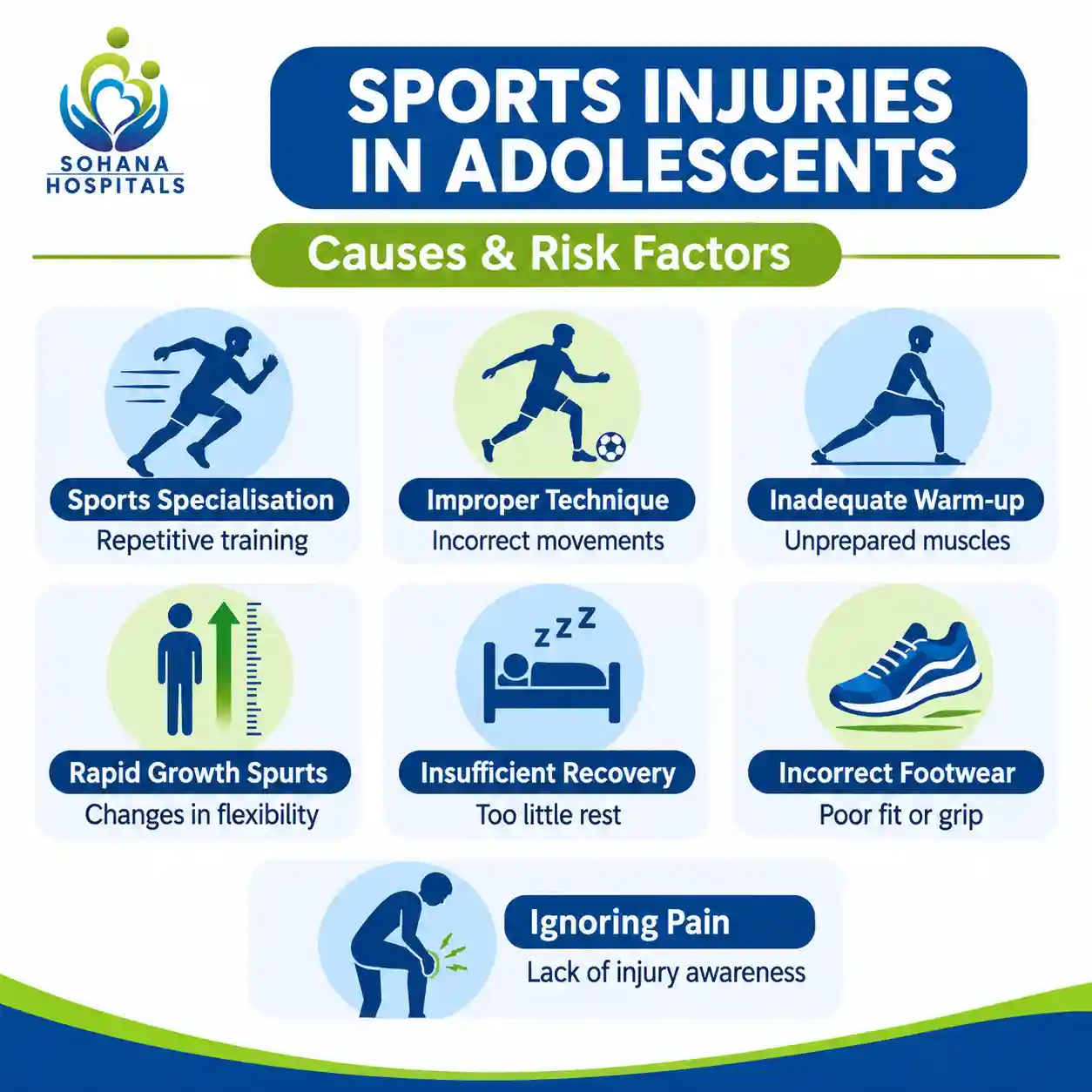
Sports Specialisation
Sports specialisation may be a new term for some. What it means is intensive and consistent year-round training in only one sport, often at the expense of participating in other sports. It generally happens when growing children focus on improving particular athletic skills (e.g., pitching) instead of working towards enhancing core physical abilities, such as balance and flexibility. Needless to say, it is associated with repetitive stress or overuse of particular body parts, raising the risk of overuse injuries and burnout.
Improper Technique
Incorrect posture or technique while running, jumping, lifting weights, or playing a sport can put unnecessary stress on muscles and joints. It may happen due to a lack of proper coaching, and small mistakes over time can gradually lead to injuries.
Inadequate Warm-up
Warming up is a crucial element of sports participation. A gradual, sport-specific warm-up helps prepare the muscles, joints, and cardiovascular system for physical activity. Skipping it or not warming up enough and diving right into intense physical activity can increase the risk of muscle strains and other injuries. Warming up properly is as necessary for growing children as it is for adults. It prepares the muscles and joints for the demands of the sport.
Rapid Growth Spurts
During adolescence, bones may grow faster than muscles and tendons can adapt. This can temporarily affect flexibility and coordination, making teenagers more vulnerable to certain growth plate and overuse injuries, particularly when training loads increase excessively during periods of rapid growth. This factor can make balance, jump-landing control, and movement efficiency more difficult.
Little Recovery Time
Back-to-back training sessions, frequent competitions, and inadequate rest can prevent the young bodies from recovering properly. Over time, repeated stress may result in overuse injuries, such as tendon irritation or stress fractures.
Incorrect Footwear
Shoes should be selected according to the sport, playing surface, and individual fit. Wearing shoes that do not fit properly or are inappropriate for the particular sport can affect comfort, stability, grip, and movement during sports. This may increase the risk of ankle sprains, foot pain, and other injuries. It is true for players of all ages, whether professional or amateur.
Lack of Sports Injury Prevention Education
Many young athletes are unaware of the importance of proper technique, hydration, rest, and recognising early signs of injury. Some may even have a misconception that pain is a part of playing. Ignoring persistent pain or continuing to play despite discomfort can turn a minor problem into a more serious one.
How Can Teenagers Prevent Sports Injuries?
A few simple precautions can help teenagers continue to participate in sports while reducing their risk of injury:
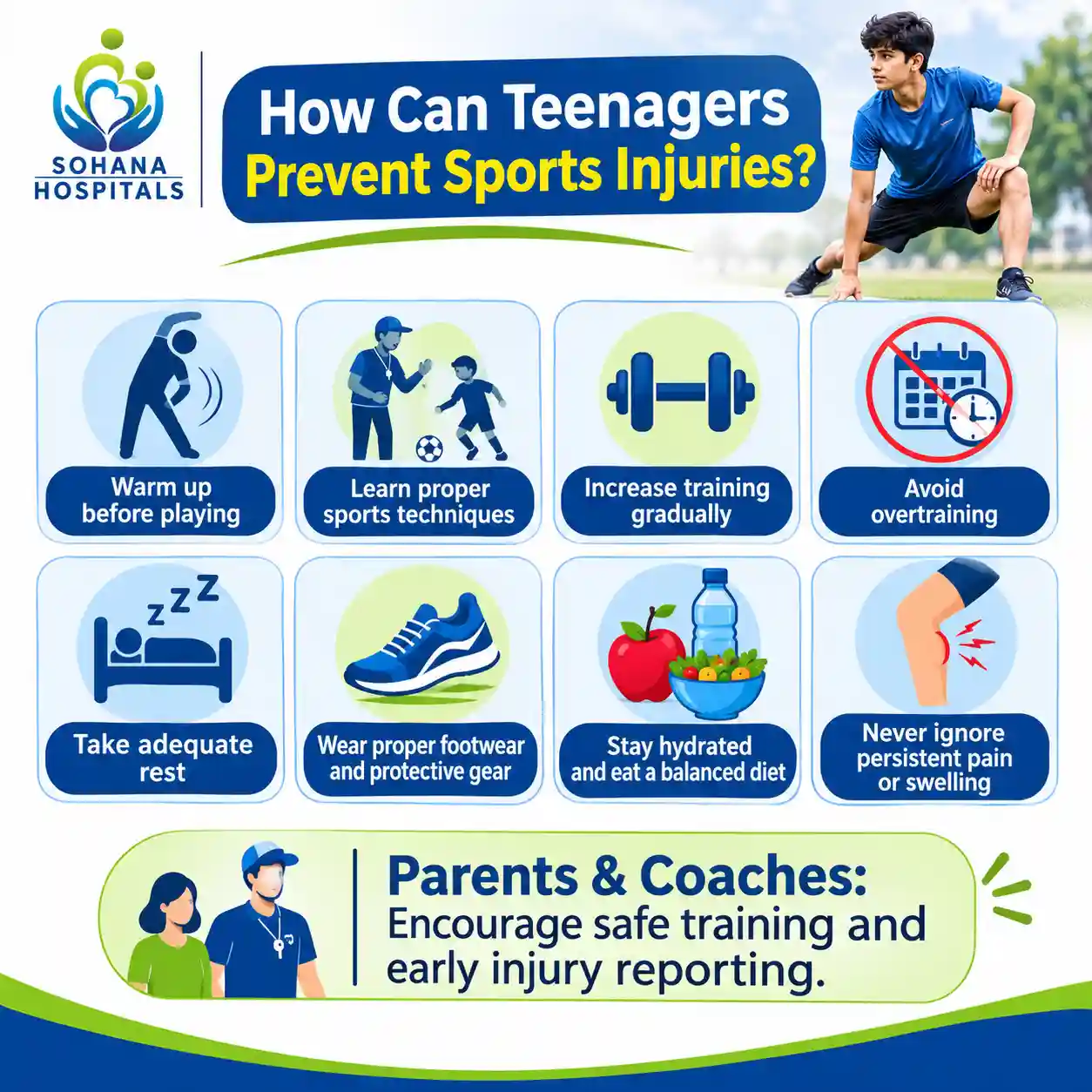
- Warm up before training and cool down afterwards
- Learn the correct techniques of a specific sport under the guidance of a qualified coach
- Add strength and conditioning exercises to your regimen
- Gradually increase your training intensity and duration
- Avoid excessive training
- Do not play if pain is persistent
- Take regular rest days to allow adequate recovery
- Wear sport-appropriate footwear and protective gear
- Maintain a balanced diet
- Stay adequately hydrated
- Never ignore persistent pain, swelling, or difficulty moving a joint. Report it to your coach, parent(s), or a healthcare professional.
Coaches and parents can play a vital role in inculcating sports injury prevention principles in teenagers. They should have the knowledge to identify early signs of common sports injuries and report them immediately.
When to See a Doctor?
Not every sports injury in a teenager requires extensive treatment. Some simple injuries, such as minor sprains and strains, may be managed at home with RICE (rest, ice, compression, and elevation).
But persistent or worsening pain should not be ignored. Seek medical attention if you have significant swelling, difficulty bearing weight, restricted movement, etc. Severe pain, visible deformity, or an inability to use the injured limb often requires prompt assessment.
Early diagnosis can help prevent further damage and support a safe return to sports. You can consult orthopedic doctors.
Conclusion
Sports injuries among teenagers are not always the result of falls or collisions. Overtraining, poor technique, rapid growth, and inadequate rest can also take a toll on their developing bodies.
This does not mean that you should stop participating in sports. The need is to learn how to participate safely. With the right training, sufficient rest, proper equipment, and timely medical attention, teenagers can look forward to improving their performance in sports while reducing their risk of injury.