
Key Facts:
- The knee is the most affected joint, with nearly 30% of Indians[1] suffering from it.
- Women are more at risk of OA than men, and account for 60% of patients.
- 73%[2] of patients are aged above 55 years.
- Apart from old age, obesity, a sedentary lifestyle, and injury are among the prominent risk factors.
What is Osteoarthritis?
Osteoarthritis (OA) is the most common type of arthritis, typically affecting the elderly population and those who make repetitive use of their joints. It is a degenerative condition of the joints that occurs when the protective cushioning (cartilage) of the joints wears out.
The result is bones rubbing against each other, leading to pain, stiffness, swelling, and mobility issues in the affected joint(s). OA is a chronic and progressive condition. While there is no permanent cure for OA, different treatment options are available to manage the condition and slow down its progression.
The most commonly affected joints include: knees, hips, spine, and hands. OA often affects the muscles and tissues around the joints as well.
Regular exercise, a healthy diet, and an optimal weight can go a long way in managing OA. In advanced cases, when no other treatment works, joint replacement surgery may be necessary to restore movement and reduce pain.
What are Osteoarthritis Symptoms?
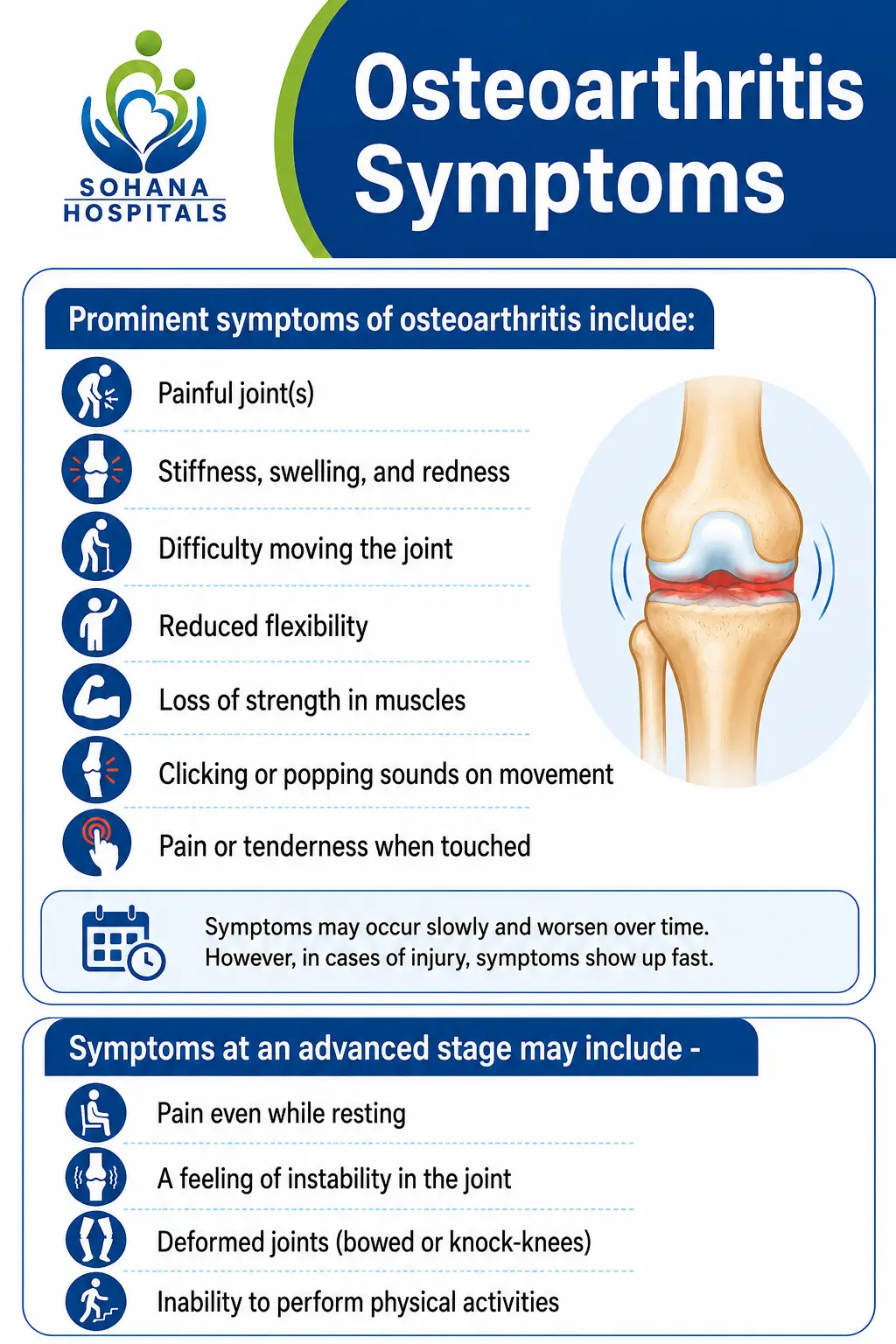
Prominent symptoms of arthritis include:
- Painful joint(s)
- Stiffness, swelling, and redness
- Difficulty moving the joint
- Reduced flexibility
- Loss of strength in muscles
- Clicking or popping sounds on movement
- Pain or tenderness when touched
Symptoms may occur slowly and worsen over time. However, in cases of injury, symptoms show up fast.
Symptoms at an advanced stage may include –
- Pain even while resting
- A feeling of instability in the joint
- Deformed joints (bowed or knock-knees)
- Inability to perform physical activities
A lack of physical activity can become a reason for other problems, including –
- Heart diseases
- Weight gain and obesity
- Diabetes
- Anxiety
- Depression
- Poor social life
- Difficulty sleeping
- Relationship issues
Osteoarthritis can significantly diminish the quality of life.
What are the Types of Osteoarthritis?
Osteoarthritis is commonly put into 2 categories:
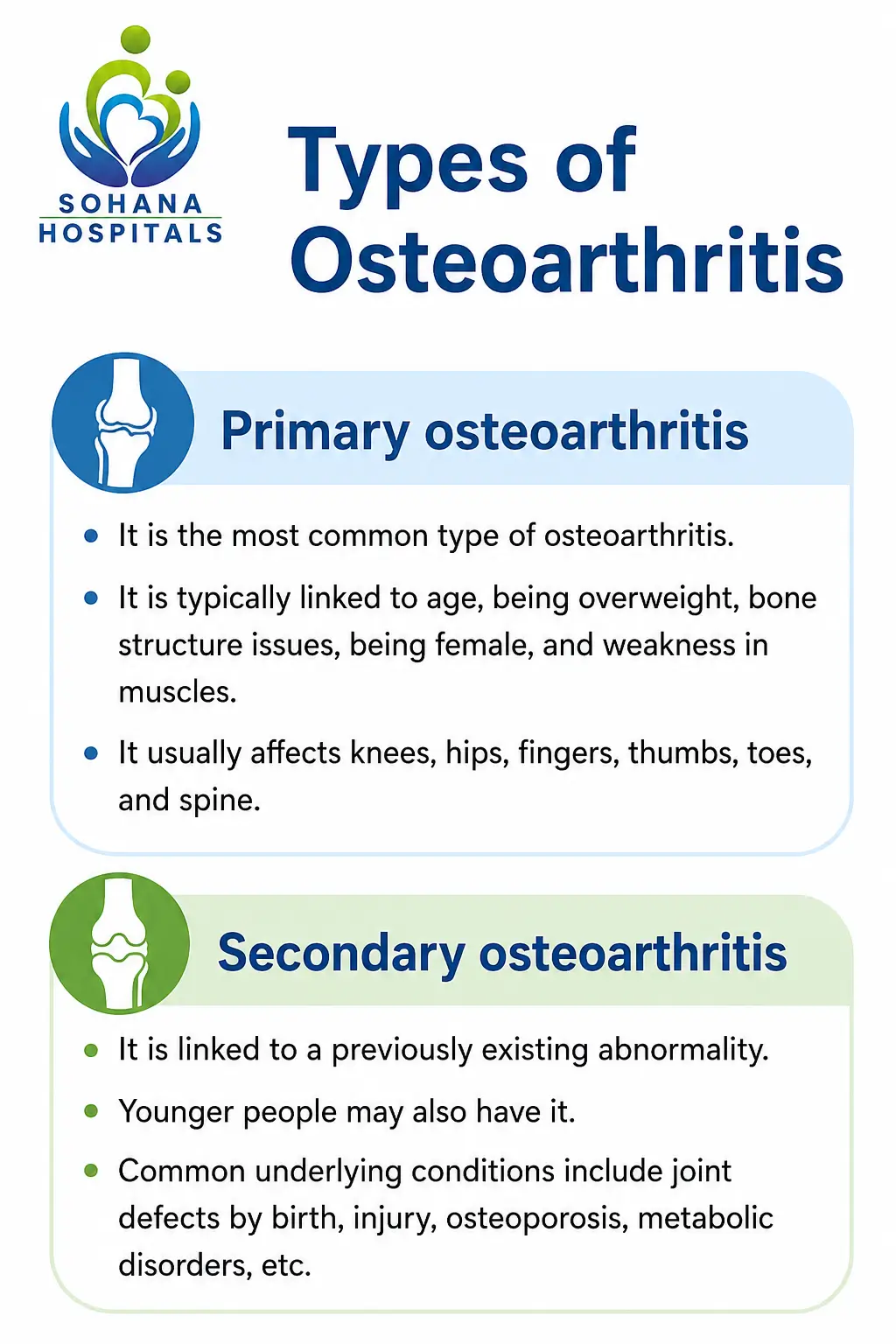
Primary osteoarthritis
- It is the most common type of osteoarthritis.
- It is typically linked to age, being overweight, bone structure issues, being female, and weakness in muscles.
- It usually affects knees, hips, fingers, thumbs, toes, and spine.
Secondary osteoarthritis
- It is linked to a previously existing abnormality.
- Younger people may also have it.
- Common underlying conditions include joint defects by birth, injury, osteoporosis, metabolic disorders, etc.
What are the Causes & Risk Factors for Osteoarthritis?
Some of the main causes and risk factors for OA are:
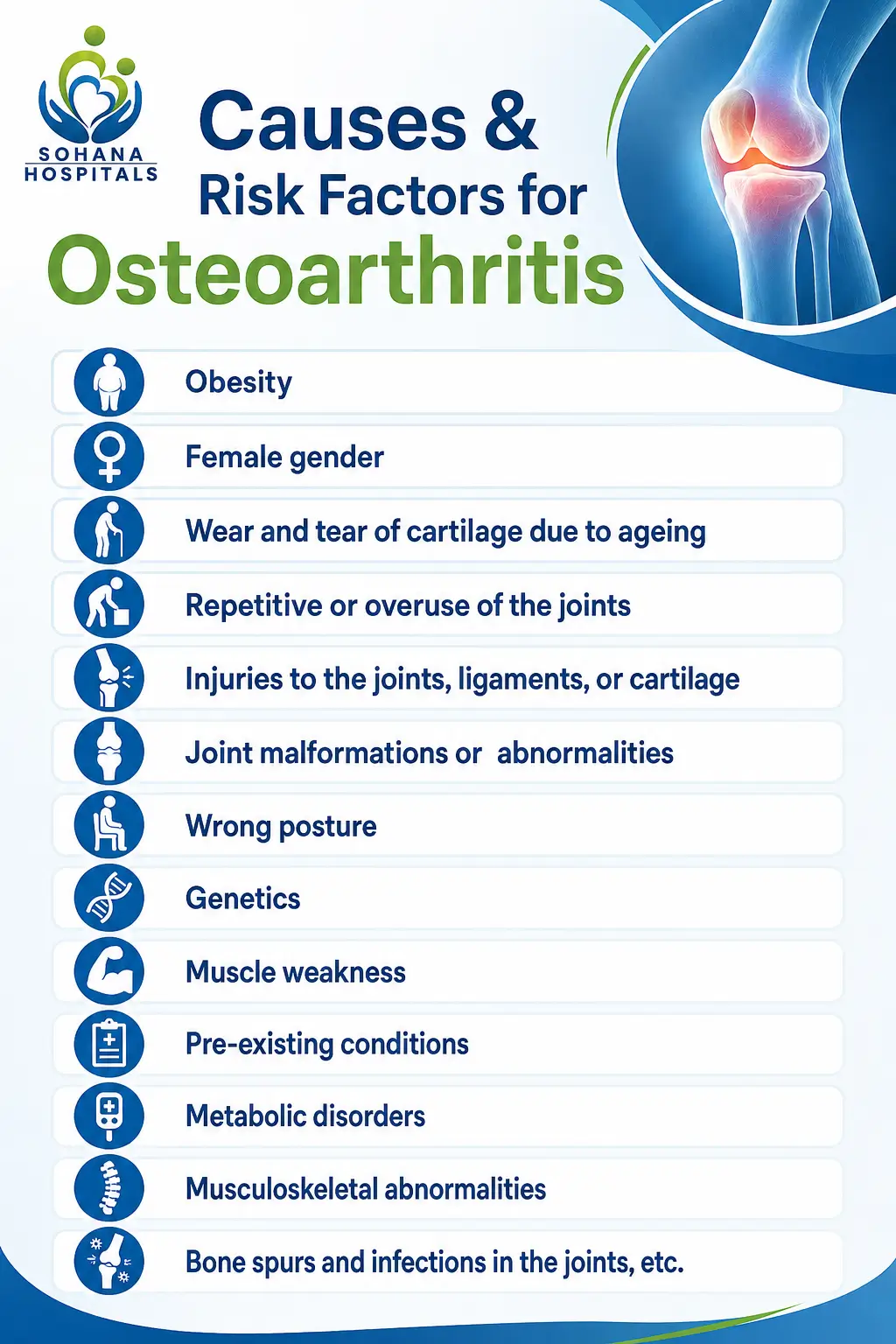
- Obesity
- Female gender
- Wear and tear of cartilage due to ageing
- Repetitive or overuse of the joints
- Injuries to the joints, ligaments, or cartilage
- Joint malformations or abnormalities
- Wrong posture
- Genetics
- Muscle weakness
- Pre-existing conditions
- Metabolic disorders
- Musculoskeletal abnormalities
- Bone spurs and infections in the joints, etc.
What are the Stages of Osteoarthritis?
OA progresses in 4 main stages:
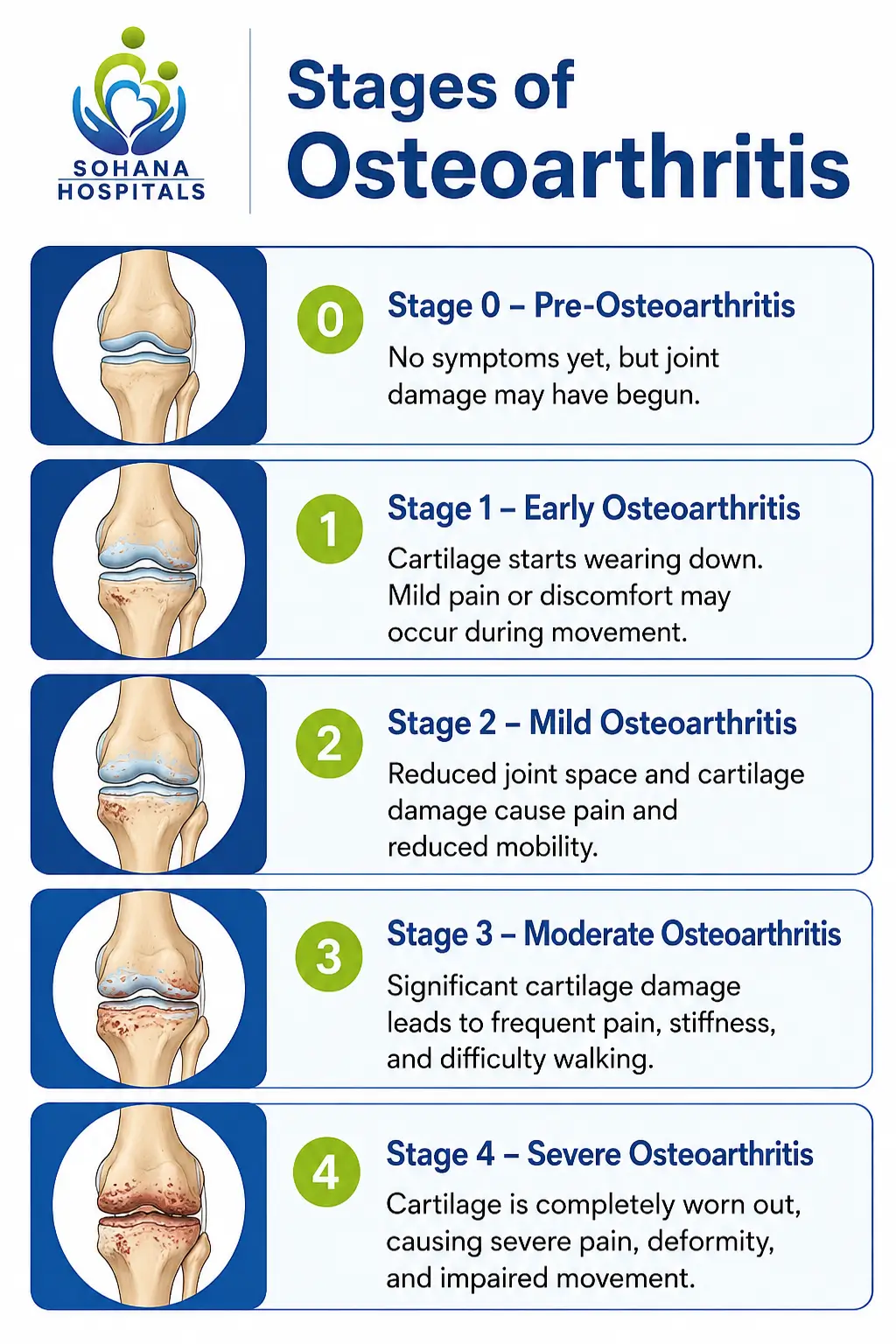
Stage 0 or Pre-arthritis Stage
Damage may have just set in, but there are no symptoms
Stage 1 or Early Osteoarthritis
Cartilage starts wearing out. In common language, people say that the gap between bones has started to reduce. X-rays may reveal slight changes, and patients may start experiencing a little discomfort in their affected joints. For example, pain in their knee(s) while climbing stairs.
Stage 2 or Mild Osteoarthritis
Some cartilage damage has occurred, and there is a reduction in the gap between bones. Patients may experience pain in joint movement, thereby affecting mobility.
Stage 3 or Moderate Osteoarthritis
There has been significant cartilage damage. The patient experiences frequent pain while walking and even bending. Other symptoms, like bone spurs, may also be present. Mobility continues to decline.
Stage 4 or Severe Osteoarthritis
A completely worn-out cartilage leaves no gap between bones, giving rise to more bone spurs and loose bodies. There may be unbearable pain, deformed knees, and altered gait.
What is Osteoarthritis Treatment?
Depending on the stage of your osteoarthritis (OA), your doctor may advise you one or more of the following treatment strategies:
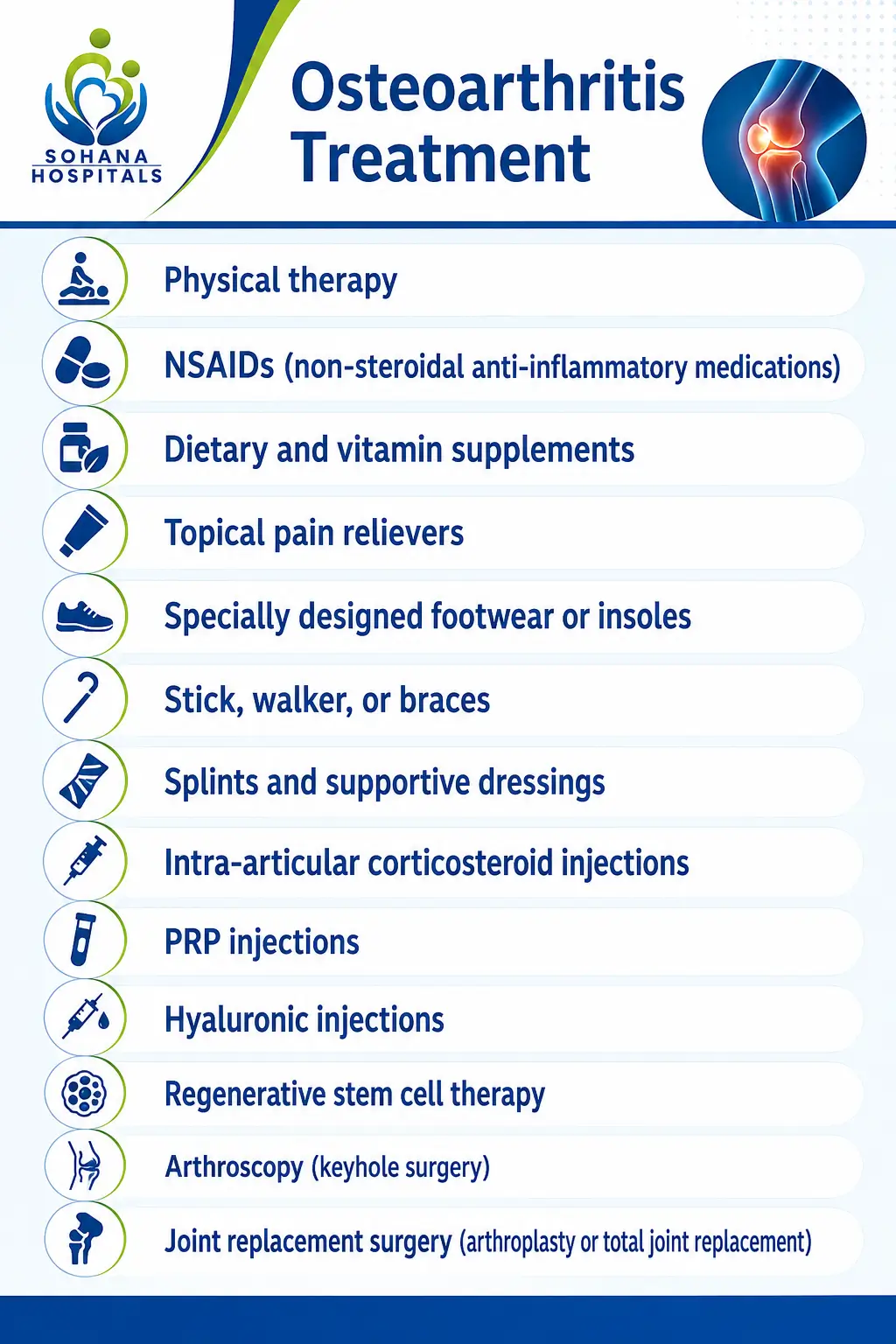
- Physical therapy
- NSAIDs (non-steroidal anti-inflammatory medications)
- Dietary and vitamin supplements
- Topical pain relievers
- Specially designed footwear or insoles
- Stick, walker, or braces
- Splints and supportive dressings
- Intra-articular corticosteroid injections
- PRP injections
- Hyaluronic injections
- Regenerative stem cell therapy
- Arthroscopy (keyhole surgery)
- Joint replacement surgery (arthroplasty or total joint replacement)
Conclusion
Osteoarthritis is a degenerative condition affecting the joints. The protective cartilage that prevents friction between bones breaks down, leading to bones rubbing against each other. The result is pain, inflammation, and gradual loss of mobility.
OA progresses through 4 stages, each with its own set of treatments. As long as you are still at stage 3 (moderate) of OA, you may be able to delay or prevent joint replacement surgery with non-surgical or minimally invasive treatment options.
Sohana Hospital is a leading super-speciality facility in the heart of Punjab (Mohali) that offers cutting-edge treatments for all stages of OA. The best joint doctors in Chandigarh utilise advanced diagnostics and treatments to provide relief to OA patients, coming to the hospital from India and abroad for world-class care.
If you or a loved one is dealing with OA, look no further. Visit Sohana Hospital for personalised treatment from trusted experts – at the most affordable prices.
FAQs
How is osteoarthritis diagnosed?
Expert orthopaedists conduct a thorough physical examination and review your medical history. Further, blood tests (CBC, ESR, etc.) and imaging tests (X-ray, MRI, ultrasound, etc.) may be necessary to diagnose the condition and its progression.
How to prevent osteoarthritis?
You can lower your OA risk by avoiding overuse of your joints, getting regular exercise, eating healthy, maintaining an ideal weight, getting enough sunlight, managing blood sugar levels, etc.
How to avoid knee replacement with osteoarthritis?
If you approach a knee specialist in the early stages of osteoarthritis, you may be able to delay or prevent knee replacement surgery. Early diagnosis will allow timely, non-surgical treatment using physical therapy, knee injections, and the revolutionary stem cell therapy. You can also get arthroscopy, a minimally invasive treatment.
However, in advanced cases, knee replacement may be needed to reduce pain and restore mobility. Sohana Hospital has the minimally invasive robotic knee replacement surgery – a painless and highly precise procedure that comes with faster recovery and a natural knee feeling.
What foods to avoid with osteoarthritis?
Research indicates that processed sugars, refined carbohydrates, and saturated fats should preferably be avoided if you have OA.
Reference Sources: