
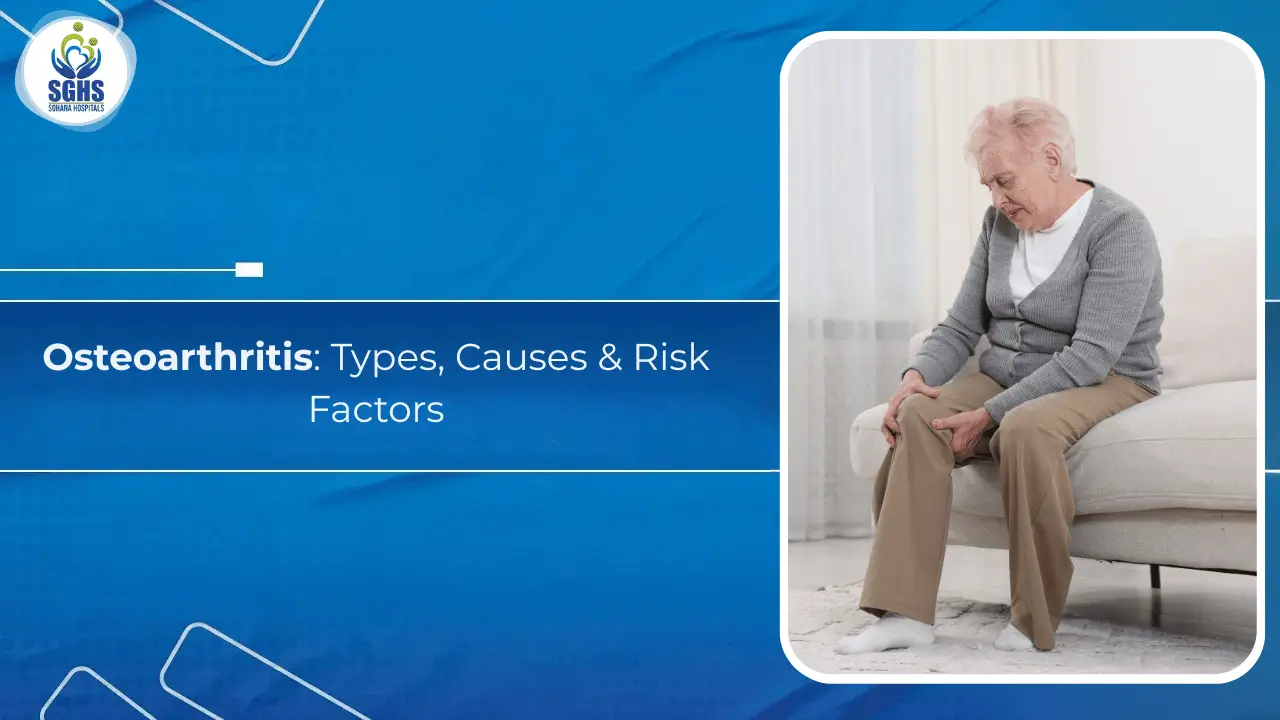
Osteoarthritis (OA) is a common form of arthritis that results from degeneration of the protective cartilage cushioning between bones. The wearing away of the cartilage causes bones to rub against each other, leading to joint pain, stiffness, damage, and eventually loss of mobility.
OA is a lifelong, progressive condition. Advanced age, joint injury, and joint overuse are some prominent reasons behind OA. The condition lacks a permanent cure. However, the good news is that it can be managed with physical exercises, lifestyle changes, and advanced treatment options.
If osteoarthritis reaches an advanced stage, your doctor may advise knee replacement surgery.
Learn more: The 4 Stages of Osteoarthritis: From Early to Severe
🚨News Alert: Osteoarthritis🚨
- From 1990 to 2019, there has been a 113% rise in the cases of osteoarthritis.
- In 2019, nearly 528 million people had osteoarthritis (globally).
- Almost 73% of osteoarthritis patients are aged above 55.
- Women are more at risk of OA, accounting for 60% of OA patients.
- The most commonly affected joint is the knee.
- With the increasing longevity of the global population and rising obesity and injury, OA prevalence is also expected to rise.
- OA is the 11th most disabling disease worldwide.
How common is osteoarthritis in India?
OA is the most common joint condition in India, with a prevalence of 22% to 39%.
Which body parts are commonly affected?
Knees, hips, spine, hands, neck, and lower back.
What are the Types of Osteoarthritis?
Knee osteoarthritis is put into two categories:
- Primary osteoarthritis
- Secondary osteoarthritis
The classification is based on the cause of OA.
Primary Osteoarthritis
- A generalised arthritis and the most common OA type
- Results from articular cartilage degeneration – without any known reason
- Linked to degeneration due to age, as well as wear and tear
- Causes include age, obesity, female gender, anatomical factors, and muscle weakness
- Typically affects knees, hips, toes, fingers, thumbs, and spine
Secondary Osteoarthritis
- May affect younger people too
- Results from articular cartilage degeneration due to a known reason
- The causes include:
| Pre-existing abnormality | Postsurgical | Congenital joint disorders or malformation of the limb |
| Malposition (varus/valgus) | Scoliosis | Rickets |
| Osteoporosis | Injury or trauma | Hemochromatosis |
| Chondrocalcinosis | Inflammatory arthritis | Ochronosis |
| Wilson disease | Gout | Pseudogout |
| Acromegaly | Avascular necrosis | Hemoglobinopathy |
| Rheumatoid arthritis | Infectious arthritis | Psoriatic arthritis |
| Ehlers-Danlos syndrome | Hemophilia | Paget disease |
| Sickle cell disease |
What are the Causes of Osteoarthritis?
Some of the common causes for OA are:
- Obesity (being overweight)
- Overuse or repetitive use of the joints
- Injuries to the joints, ligaments, or cartilage
- Joint malformations or abnormalities
- Poor posture
- Sporting activities (high-impact sports)
- Jobs that require lifting or climbing for long periods
- Age-related wear and tear of cartilage
- Joint infections
What are Osteoarthritis Risk Factors?
Here are the common risk factors for osteoarthritis:
Ageing
As age increases, body cells and tissues lose the ability to maintain homeostasis, especially under stress. This is the underlying cause of several conditions, one of which is osteoarthritis (OA). Extreme or unusual mechanical stresses play a role in the development of OA.
Female gender
Menopause often causes a decline in estrogen levels. This is associated with an increased synthesis of bone-eroding cells and the development of OA.
Obesity
Having a BMI (body mass index) of 30 or more aggravates OA risk. For every kilogram of extra body weight, knees have to bear nearly 4 times more pressure. Similarly, obesity also affects other weight-bearing joints, like the hips. It causes degeneration of articular cartilage, leading to OA. Also, fat tissue produces proteins that can cause inflammation in and around your joints.
Anatomical factors
Deformities in the bones and joints can result in osteoarthritis. For example, crooked bones or joints, such as having bowed or knocked knees.
Muscle weakness
Declining periarticular muscle mass and function affect the stability and health of joints. As we age, muscles undergo wasting. It is commonly seen in OA patients.
Predisposing or pre-existing conditions
Abnormalities like birth joint defects, infectious arthritis, osteopetrosis, inflammatory arthritis, osteochondritis dissecans, avascular necrosis, Paget disease, Marfan syndrome, rheumatoid arthritis, gout, hemoglobinopathy, and Ehlers-Danlos syndrome raise the risk of OA.
Injury and overuse (occupation/sports activities/trauma)
Any injury or trauma to the joints due to any reason elevates the probability of OA later on. For example, fractures and strains that occur in an accident or while participating in sports. Similarly, any repetitive activity involving heavy lifting or climbing, performed as part of your job or in sports, may also put you at a greater risk for OA. Even injuries that occurred many years ago can raise the risk of osteoarthritis.
Genetics
Some people have an inherited tendency to develop OA. Alterations in genes like bone density genes, cartilage extracellular matrix structural genes (COL2A1 genes), inflammatory cytokine genes (IL-1R1 genes), and chondrocyte cell signalling genes (FRZB genes) are also risk factors for the development of osteoarthritis.
Musculoskeletal conditions
Bone, joint, and muscle conditions, like osteoporosis and sarcopenia, increase the risk of osteoarthritis.
Metabolic diseases
Metabolic disorders such as hemochromatosis (a condition in which your body has excessive iron), diabetes, and Wilson’s disease elevate the risk of OA.
Conclusion
Osteoarthritis is a degenerative condition of the joints that progresses over time and can significantly diminish the quality of life. It can severely impact mobility by making joints painful and inflamed.
The condition can restrict people from performing routine household tasks. It can also hamper work and social life. Patients may face mental health issues, sleep disturbance, and ruined relationships as well.
There are diverse factors that can contribute to the development of osteoarthritis (OA). Depending on the cause, OA is categorised into two types, namely primary and secondary.
💡 DID YOU KNOW? Women are more at risk of OA than men.
You can take steps to prevent or control the progression of OA – by avoiding overuse of your joints, maintaining an ideal weight, being physically active, and choosing a healthy lifestyle. Additionally, early diagnosis and the right treatment can help slow down OA progression and allow you to better use your joints for an active life.
Sohana Hospital – Best Knee Doctors in Chandigarh
At Sohana Hospital, you can consult some of the best joint doctors in Chandigarh. They conduct a physical examination, followed by discussing your medical history and advising appropriate diagnostic tests. Treatment is based on the stage of your osteoarthritis.
Those in the first stage of OA can manage with guided physiotherapy by highly trained physiotherapists at Sohana Hospital. Those in stages 2 and 3 of the condition can avail themselves of the non-surgical treatments like stem cell therapy, PRP, hyaluronic acid, and other knee injections. Keyhole technique (arthroscopy) is also available for specific patients.
If your condition reaches an advanced stage, Sohana Hospital also specialises in robotic knee replacements. It is a minimally invasive surgery that allows you to get your mobility back in a short period of time. Patients choose this procedure for many reasons. The prominent reasons are that it is virtually painless, highly safe, precise, and gives a natural knee feeling.
Have knee pain? Get in touch with world-renowned knee doctors at Sohana Hospital. You have a right to pain-free mobility.