

Knee osteoarthritis is becoming a common problem today, especially in individuals crossing the age of 50. Symptoms typically include knee pain, stiffness, and reduced mobility.
The good news is that today we have several effective OA treatment options that can help relieve pain, improve mobility, and enhance your quality of life.
A common question that many patients may have in mind is: What is the best treatment for osteoarthritis (OA) in the knees?
Among the diverse non-surgical and advanced surgical osteoarthritis (OA) treatment options, the best treatment for you depends on the stage of your osteoarthritis, your age, activity level, and overall health.
WHO News Alert – Osteoarthritis (OA)[1]
👉Osteoarthritis has witnessed an astounding rise of 113% from 1990 to 2019.
👉OA affects nearly 530 million people globally (2019 data).
👉73% of those affected are aged over 55 years.
👉Women are more at risk of OA, accounting for 60% of OA patients.
👉Knee OA is the most common form, affecting nearly 365 million individuals.
👉344 million of those affected are in moderate to severe stages of OA, and can benefit from rehabilitation.
👉With rising longevity, obesity, and injury, OA is expected to increase worldwide.
Understanding Knee Osteoarthritis
Osteoarthritis (OA) is a degenerative joint condition in which the protective cartilage (commonly referred to as ‘grease’) that provides cushioning between the knee bones gradually wears away. With this, the bones begin to rub against each other, causing pain, swelling, stiffness, and difficulty in movement.
Common symptoms include:
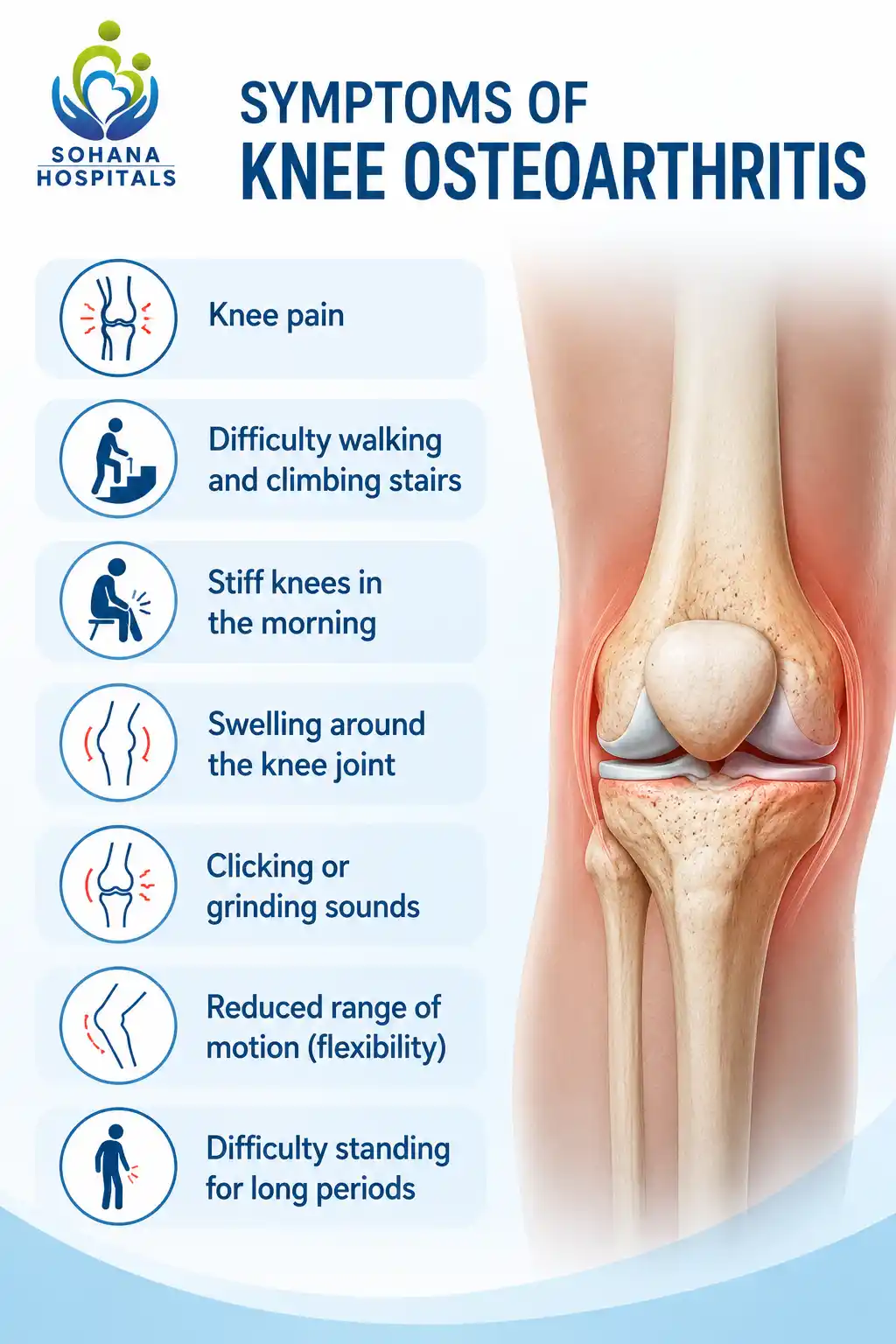
- Knee pain
- Difficulty walking and climbing stairs
- Stiff knees in the morning
- Swelling around the knee joint
- Clicking or grinding sounds
- Reduced range of motion (flexibility)
- Difficulty standing for long periods
Early diagnosis followed by the right treatment can significantly slow OA progression in your knees and improve mobility.
Non-Surgical Treatments for Knee Osteoarthritis
Knee osteoarthritis generally progresses in stages. For those in mild to moderate stages of osteoarthritis, non-surgical treatments are usually the first line of management. Here are the most common non-invasive knee OA treatment options that orthopaedic experts utilise for patients in the early stages of OA:
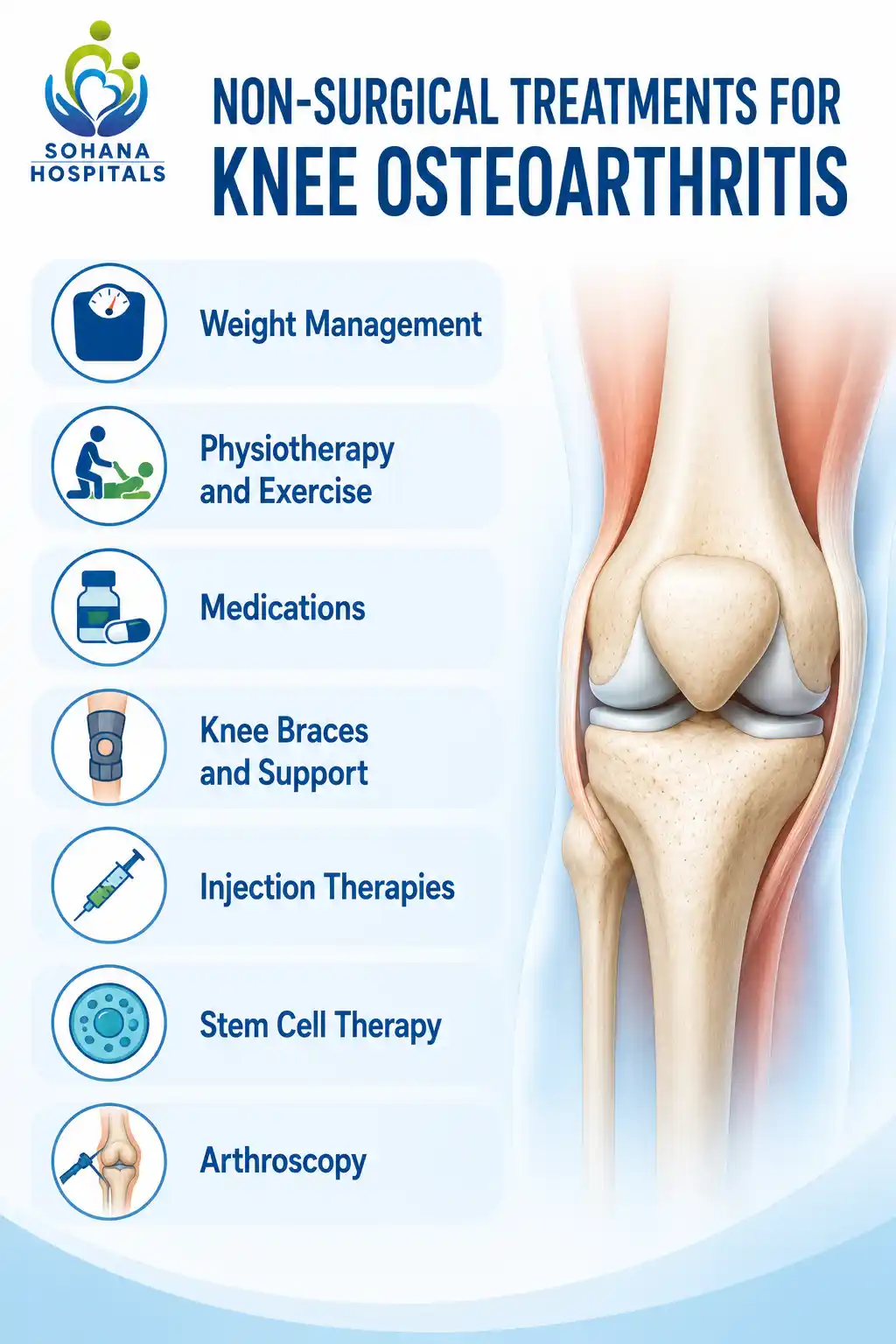
Weight Management
Obesity is the root cause of many diseases. Joints are no exception. Excess body weight puts additional stress on the knee joints. Losing even a little weight can help reduce pain and improve knee function. Maintaining a healthy weight is one of the most effective long-term strategies for managing osteoarthritis.
Physiotherapy and Exercise
Structured physiotherapy helps to strengthen the muscles around the knee, improve flexibility, and enhance joint stability. Simple low-impact activities such as walking and cycling can also be helpful.
Read more: Why You Need Physiotherapy After Knee Replacement Surgery
Medications
Doctors may prescribe pain-relieving medications or anti-inflammatory medicines to bring pain under control and reduce discomfort. It is important to note that painkillers can give you only temporary relief. Also, they should always be taken under medical supervision, the reason being that these medications can have a negative effect on some other body organs.
Knee Braces and Support
Some patients may be advised specialised knee braces. These supportive devices come in different types and work by compressing your muscles or stabilising your knee. Braces may help reduce pressure on the affected part of the joint and improve mobility in select patients.
Injection Therapies
In some cases, injections such as corticosteroids, hyaluronic acid, platelet-rich plasma, etc., may provide temporary pain relief and reduce inflammation. These injections are administered directly into the knee. It is important to note that their effectiveness varies from patient to patient.
Stem Cell Therapy
It is a revolutionary non-invasive treatment approach that can help treat osteoarthritis. If you are in stages 2 or 3 of knee damage, you may benefit from stem cell therapy in Punjab. Sohana Hospital is one of the few hospitals in the country to offer stem cell therapy for the benefit of patients.
Read more: Stem Cell Therapy for Knee: Can It Delay Knee Replacement?
Arthroscopy
It is a minimally invasive option for the treatment of osteoarthritis stage 2 & 3 (mild to moderate) patients. It is done using pencil-sized instruments and a camera that are inserted through tiny holes.
Read more: Arthroscopy: Types, Procedure, Benefits, Recovery Time
Surgical Treatments for Knee Osteoarthritis
Knee replacement surgery involves the replacement of the damaged parts of the knee with artificial implants. It can be a partial knee replacement (PKR) or a total knee replacement (TKR). Also, it can be manual, robotic, or intellijoint surgery depending on the technique used.
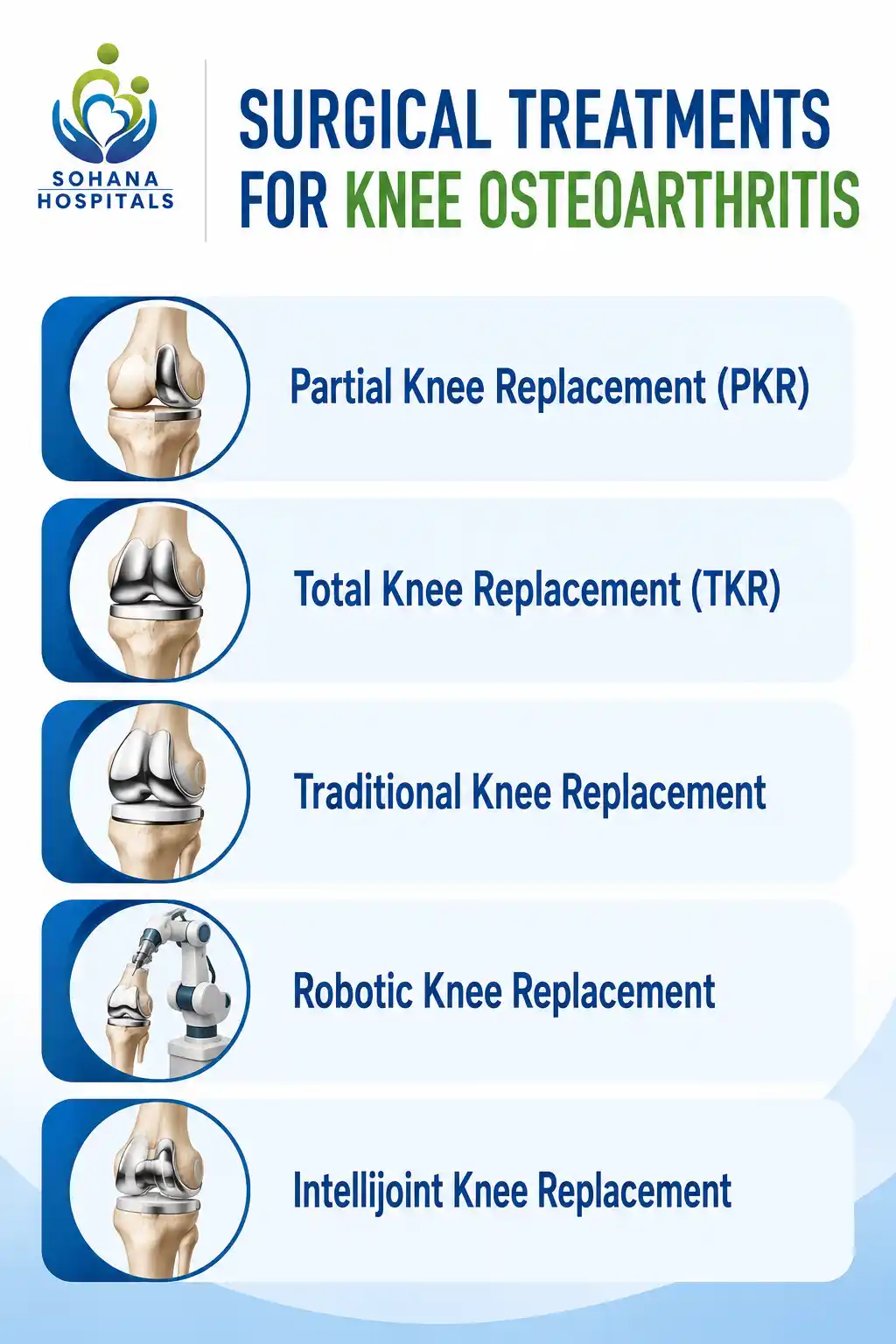
1. Partial Knee Replacement (PKR)
Your knee has a total of 3 compartments. Sometimes, only one particular compartment is damaged while the rest are fine. PKR surgery allows you to get only the damaged compartment replaced with an artificial implant.
Read more: Partial Knee Replacement: Types, Eligibility, Benefits, Recovery
2. Total Knee Replacement (TKR)
When a patient has all three compartments of their knee(s) damaged, TKR is used to replace the entire knee with an artificial implant.
3. Traditional Knee Replacement
Traditional or conventional knee replacement surgery is done manually by surgeons. They depend hugely on imaging tests like X-rays, along with visual clues and their judgment, to conduct the surgery.
4. Robotic Knee Replacement
Robotic knee replacement uses an advanced robotic system to assist the surgeon with the procedure. With this, the surgery becomes highly accurate and offers several benefits to patients. Some of the prominent benefits include less pain and faster recovery.
5. Intellijoint Knee Replacement
Intellijoint Knee Replacement is currently the most advanced procedure for knee joint replacement. This US-based AI+Robotics navigation technology gives real-time guidance to surgeons so that the patient can have a highly precise and personalised (according to individual bone structure) surgical experience.
Major benefits include:
- Accuracy in implant placement
- Better balance and alignment
- Saving of healthy tissue
- Natural feeling in the joints
- More flexibility
- Faster recovery
- Greater patient satisfaction
When is Knee Replacement the Best Treatment?
In patients with severe osteoarthritis, non-surgical treatments, stem cell therapy, and arthroscopy (keyhole surgery) may not provide relief. In such cases, knee replacement surgery is generally the most effective and long-lasting solution.
Signs that you may need knee replacement include:
- Persistent knee pain
- Difficulty walking even short distances
- Severe knee stiffness affects daily activities
- Knee pain that disturbs sleep
- Deformity in the knee joint
- Conservative treatments do not work
Knee replacement is one of the most successful surgeries in modern times, thanks to its potential to restore pain-free mobility in individuals struggling with advanced OA and other conditions.
What is the Best Treatment for Osteoarthritis in Knees?
Every patient is unique. The extent of damage caused by osteoarthritis is also different. So, there is no single treatment that works for every patient. The best knee osteoarthritis treatment for you will depend on your specific stage and condition, symptoms, lifestyle, and expectations.
Patients in the early stages of osteoarthritis can manage with a combination of:
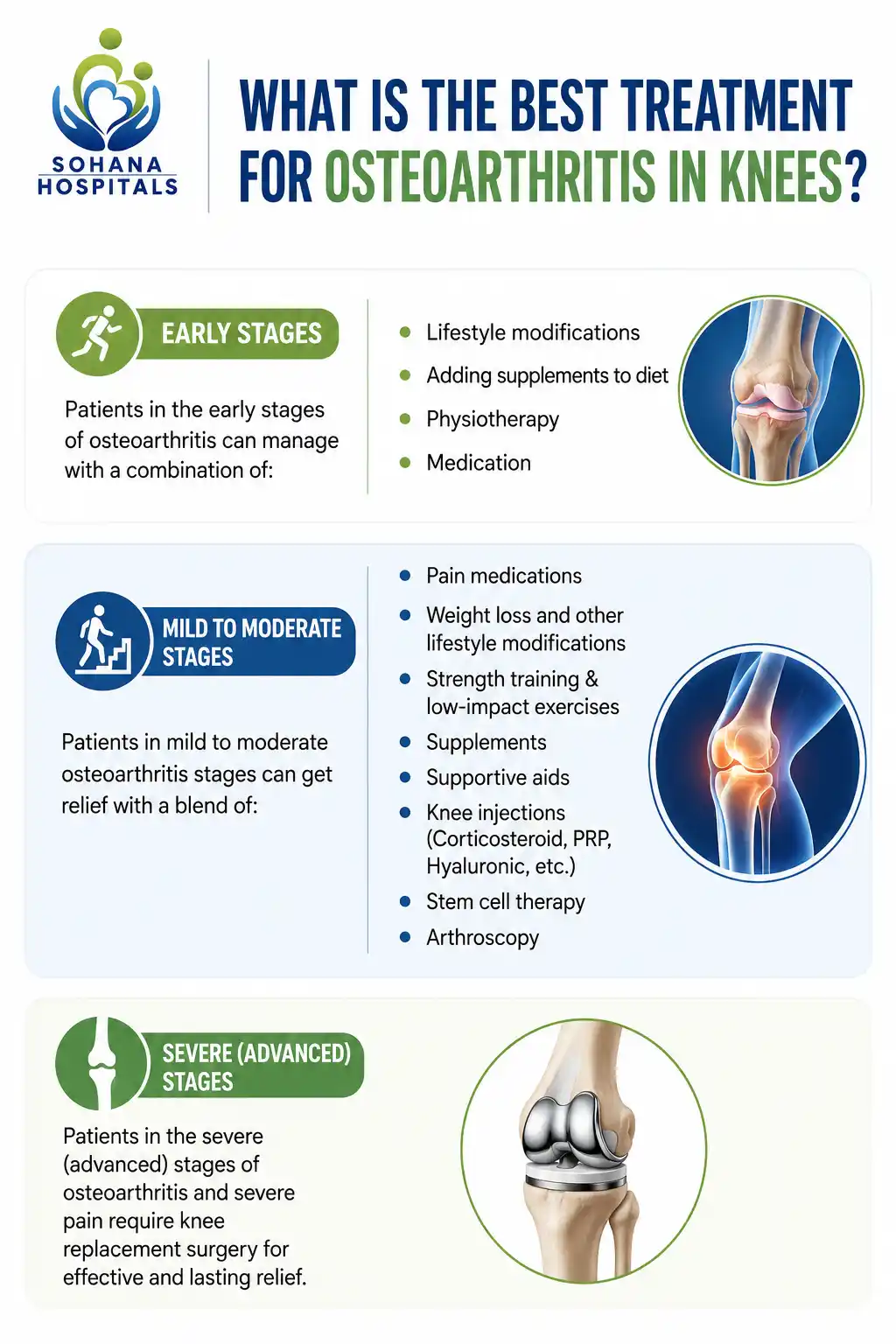
- Lifestyle modifications
- Adding supplements to diet
- Physiotherapy
- Medication
Patients in mild to moderate osteoarthritis stages can get relief with a blend of:
- Pain medications
- Weight loss and other lifestyle modifications
- Strength training & low-impact exercises
- Supplements
- Supportive aids
- Knee injections (Corticosteroid, PRP, Hyaluronic, etc.)
- Stem cell therapy
- Arthroscopy
Patients in the severe (advanced) stages of osteoarthritis and severe pain require knee replacement surgery for effective and lasting relief.
Given the benefits of modern knee replacement surgeries, patients who do not get relief with any other treatment finally turn to – Robotic knee replacement and lately Intellijoint AI-guided knee replacement to get freedom from knee pain and regain mobility.
Most patients choosing these advanced surgeries at Sohana Hospital generally recover in 30-45 days and get back to an active lifestyle.
Take the First Step Towards Pain-Free Movement
Knee osteoarthritis is very manageable now. Patients no longer need to live with pain and mobility issues associated with knee OA. The modern world brings advanced solutions for patients.
The only crucial point to note here is that early diagnosis can mean totally non-invasive treatment options. As you continue to get late, the condition may progress through stages and demand comparatively more complex treatment.
However, hope is always there with advanced robotic AI technologies. At leading super-speciality hospitals, like Sohana Hospital, you get access to world-renowned knee surgeons and the latest technologies.
Delay is never appreciable. While treatment is available, it comes with surgery getting more complicated and more time-consuming, and recovery taking longer. It may not sound pleasing, but it is far better than being in persistent pain and losing independence.
If knee pain is affecting your daily routine, consult the best orthopaedic specialists in Punjab at Sohana Hospital. The sooner you seek treatment, the more options you may have to protect your joints, relieve pain, and regain movement.
FAQs – Best Treatment for Knee Osteoarthritis (OA)
Can knee osteoarthritis be cured permanently?
As of now, knee osteoarthritis does not have a permanent cure. However, early treatment, lifestyle changes, medications, physiotherapy, and advanced surgical options like knee replacement can help relieve pain and improve mobility.
Is walking good for knee OA?
Yes, regular walking can help strengthen the muscles around the knee, reduce stiffness, and improve knee movement. If you have knee OA, avoid high-impact running, and consult a specialist if pain worsens.
When is knee replacement needed?
Knee replacement is generally advised in cases of severe knee osteoarthritis. If you have persistent pain, stiffness, and difficulty performing daily activities despite medications, physiotherapy, and other non-surgical treatments, knee replacement may be necessary.
What is Intellijoint knee replacement?
Intellijoint® knee replacement is the most advanced AI+Robotic technology from the USA that ensures high precision in implant positioning and personalised surgery for patients. It is associated with accurate joint alignment, faster recovery, and natural-feeling knees.
How long does knee replacement last?
Modern knee replacement implants are quite durable and have been seen to last 15–20 years or longer in many patients. However, implant durability also depends on factors such as age, activity level, weight, and overall joint health.
Reference Source: