
*हिन्दी में पढ़ें:- रुमेटॉइड गठिया (Rheumatoid Arthritis) क्या है? लक्षण, चरण और उपचार
Rheumatoid arthritis (RA) is a kind of arthritis characterised by the immune system attacking the tissue lining of your joints. While joint damage is the most common characteristic of rheumatoid arthritis, it can impact other body parts as well.
Treatment and management options include physical therapy, lifestyle modifications, medication, and joint replacement surgery for severe cases. In this blog, we are going to discuss rheumatoid arthritis, its symptoms, stages, and treatment options in detail.
What is Rheumatoid Arthritis (RA)?
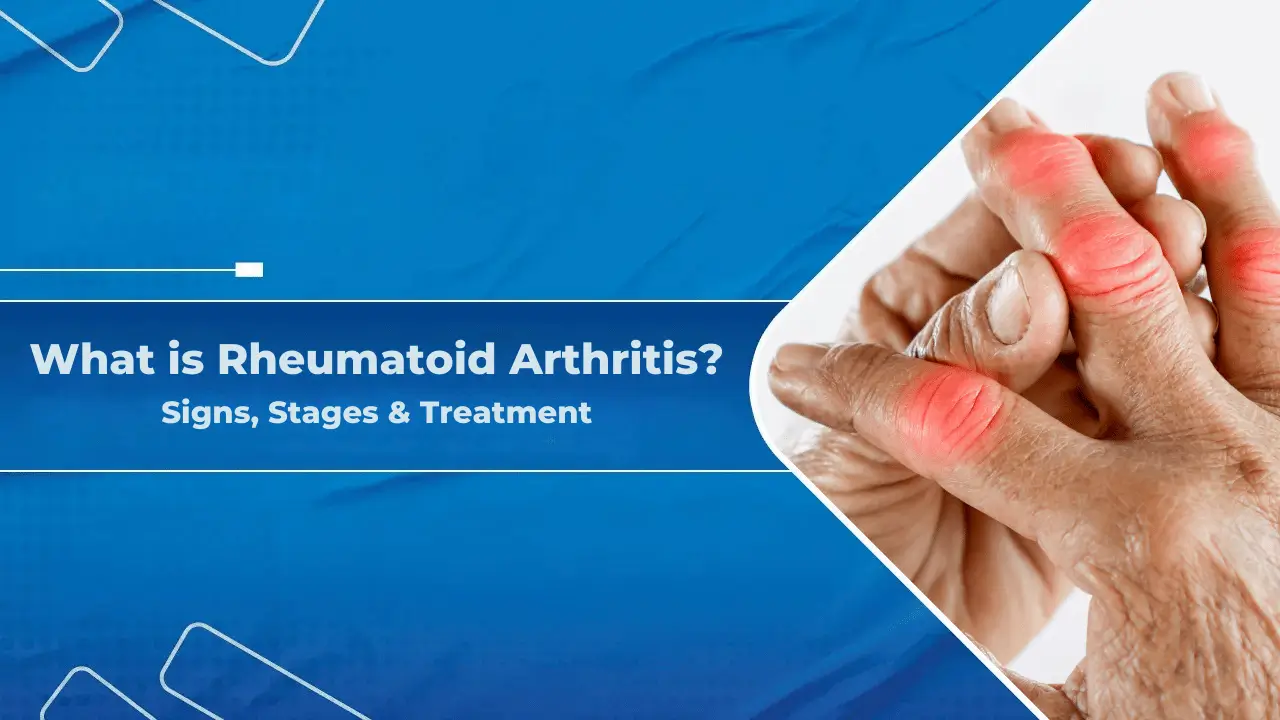
Rheumatoid Arthritis, also known as RA, is a chronic autoimmune disease that leads to swelling, stiffness, and pain in the lining of your joints. It primarily impacts the joints in your hands, wrists, fingers, knees, ankles, feet, and toes. RA typically affects and causes symptoms in joints on both sides of your body – this is what makes it different from other kinds of arthritis.
RA typically affects adults and senior citizens aged 30-60 years. However, RA is not limited to older adults. Children and young adults can develop RA too, since it’s not the type of arthritis that is caused by the natural wear-and-tear of joints. It is an autoimmune disease that can affect anyone, regardless of their age.
Uncontrolled inflammation tends to damage cartilage, which generally acts as a type of “shock absorber” for your joints. If not managed properly, rheumatoid arthritis can even lead to deformity of joints over time. Gradually, bones begin to erode, which leads to fusion of the joints.
That being said, RA doesn’t just affect your joints. Some other body parts that may get affected include:
- Skin
- Mouth
- Lungs
- Eyes
- Heart
Types of Rheumatoid Arthritis
Rheumatoid arthritis can be classified into 3 broad categories. These are as follows:
- Seropositive RA: This type of RA is diagnosed when a patient tests positive for RF and Anti-CCP/ACPA antibodies. This is a more severe form of the condition. Patients may not always respond fast to the treatment.
- Seronegative RA: This form of RA is diagnosed when a patient tests negative for antibodies and is often less severe. Early diagnosis may not always be possible. This leads to a diagnosis only after the symptoms become more obvious. Patients with this condition respond better to treatment.
- Juvenile Idiopathic Arthritis (JIA): Diagnosed in children below 16, who present symptoms consistent with RA. Symptoms may be temporary or persistent.
👉 Read our complete guide: Different Types of Rheumatoid Arthritis (RA) Explained
Symptoms of Rheumatoid Arthritis
Some common signs and symptoms of rheumatoid arthritis include:
- Pain, stiffness, tenderness, and swelling in joints
- Pain and stiffness in the same joints on both sides of body
- Fatigue
- Fever
- Weakness
- Joint stiffness in the morning
👉 Read our complete guide: Symptoms of Rheumatoid Arthritis
Stages of Rheumatoid Arthritis
RA typically advances in stages. The four stages are:
- Stage 1: In the initial stage, there is inflammation around joints. You might experience mild stiffness and joint pain. However, in this stage, X-rays won’t be able to detect any significant bone or joint damage.
- Stage 2: The inflammation begins to damage the cartilage in this stage. You may notice an increase in stiffness and reduced range of motion.
- Stage 3: In this stage, the inflammation is severe, and it begins to damage your bones. You will experience chronic pain, stiffness, and an even poorer range of motion than in the previous stages. Physical changes may also begin to appear.
- Stage 4: This is the most advanced stage of RA. The inflammation may not be present, but joint degeneration becomes predominant. You will experience extreme pain, swelling in joints, stiffness, and significant loss of mobility.
👉 Read our complete guide: Understanding the 4 Stages of Rheumatoid Arthritis (RA)
Rheumatoid Arthritis Treatment
Common management and treatment options include:
- Disease-modifying anti-rheumatic drugs (DMARDs)
- Non-steroidal anti-inflammatory drugs (NSAIDs)
- Corticosteroids
- Biologics
- Intra-articular injections
- Joint replacement surgery (for extreme cases)
👉 Read our complete guide: Best Treatment Options for Rheumatoid Arthritis (RA)
When to Visit a Doctor?
You must visit a specialist as soon as you experience any of the above-mentioned symptoms. Early detection and management can control the progression of the disease. You can book an appointment at Sohana Hospital and consult the best rheumatology doctors in Chandigarh for effective management of rheumatoid arthritis and prevention of joint deformity.
Sohana Hospital boasts a team of highly experienced and skilled rheumatologists who provide the best care for autoimmune diseases in the tricity. With advanced diagnostic facilities and modern treatment options, Sohana Hospital stands out as one of the very few hospitals in the city to have a dedicated rheumatology department – treating countless autoimmune and rheumatic diseases.