

Rheumatoid arthritis, or RA, is characterised by swollen, tender, painful, and red joints. Individuals affected by RA experience persistent pain (worse in the mornings or after long periods of rest), reduced range of motion, and reduced overall mobility.
Since the condition is a progressive autoimmune disorder, the symptoms generally get worse over time. If these progressing symptoms are left untreated, RA can negatively impact more than just the joints.
In this blog, we are going to discuss what happens when RA is not adequately treated in a timely manner and what you can do to manage its progression.
Short-Term Impact
People with RA typically experience symptoms in episodes known as flare-ups. During flare-ups, RA symptoms tend to significantly worsen in intensity. Treatment and management help relieve some of them and reduce the frequency of flare-ups.
Short-term symptoms include:
- Joint pain, stiffness, swelling, or tenderness that lasts for 6 or more weeks
- Morning stiffness that lasts for 30 minutes or more
- Same joints affected on both sides of the body (eg, both hands or both knees)
- Persistent low-grade fever
- Fatigue
RA typically affects small joints like wrists, fingers, and feet first. The symptoms can later progress to the knees and other joints. This may lead to difficulty walking if the symptoms are not promptly managed.
Affected individuals also have a higher risk of developing viral or bacterial infections. This happens because the immune system attacks its own joints and tissues, rendering it unable to fight real pathogens efficiently.
*Note: You might still be more susceptible to infections even after RA treatment or management, as some medications tend to weaken your immune system.
Long-Term Impact
Long-term damage to the affected joints can be severe if RA is left untreated. Significant joint damage and deformity are also possible in later stages of the condition. As a result, many experience loss of mobility & structural changes in their joints/bones, which causes significant physical & mental distress not just to the affected individual but also to caretakers.
👉In short, if RA is left untreated in the long term, it can lead to a significantly reduced quality of life.
Other Health Complications
If RA is left untreated for a long time, it can lead to severe complications in other organs, such as the lungs, skin, heart, and kidneys.
RA Effects on the Skin
The skin can also be negatively affected by the same immune response that affects the lining of joints. When the immune system mistakenly attacks the skin, it can lead to blisters and lumps under the skin, known as nodules.
Another complication that affects the skin is rheumatoid vasculitis. This happens when the inflammation reaches the blood vessels. Most common symptoms include splinter infarcts on/around the fingernails. Severe symptoms include purple lesions on the fingers and legs, sores, or big ulcers on the ankles. This is less common and only affects about 1% of the RA-affected population.
RA Effects on the Heart
Inflammation from unmanaged RA can lead to damage to the blood vessels. It can also cause a buildup of plaque in the arteries, narrowing the blood vessels and blocking proper blood flow. Such blockages can increase your chances of having a stroke or heart attack. Chronic inflammation in RA is also associated with increased cardiovascular risk.
Untreated RA may also lead to pericarditis, which is inflammation of the membrane surrounding the heart.
RA Effects on the Lungs
Lung issues resulting from unmanaged RA include:
- Rheumatoid nodules – These are similar to skin nodules, but they form in the lungs. If they rupture, it could lead to the lung(s) collapsing.
- Airway obstruction – The small airways in your lungs can thicken due to chronic inflammation. This leads to chronic cough, mucus buildup, fatigue, and weakness.
- Interstitial lung disease (ILD) – The most common lung-related complication of RA is caused by inflammation in the lungs. Prolonged inflammation can lead to irreversible scarring.
- Pleuritis – This refers to inflammation in the tissue surrounding the lungs. This can cause breathing issues and pain.
RA Effects on the Kidneys
Individuals with rheumatoid arthritis are at a higher risk of developing kidney disease. This can be because of the combined effects of inflammation and side effects from certain medications.
Typical symptoms include:
- Reduction in appetite
- Darkening of skin
- Swollen ankles & feet
- Fatigue
- Itchiness
- Shortness of breath
- Cramping muscles
Rheumatoid Arthritis Treatment
When you are diagnosed with rheumatoid arthritis, your rheumatologist will likely prescribe one of the following treatment options based on the degree of your condition:
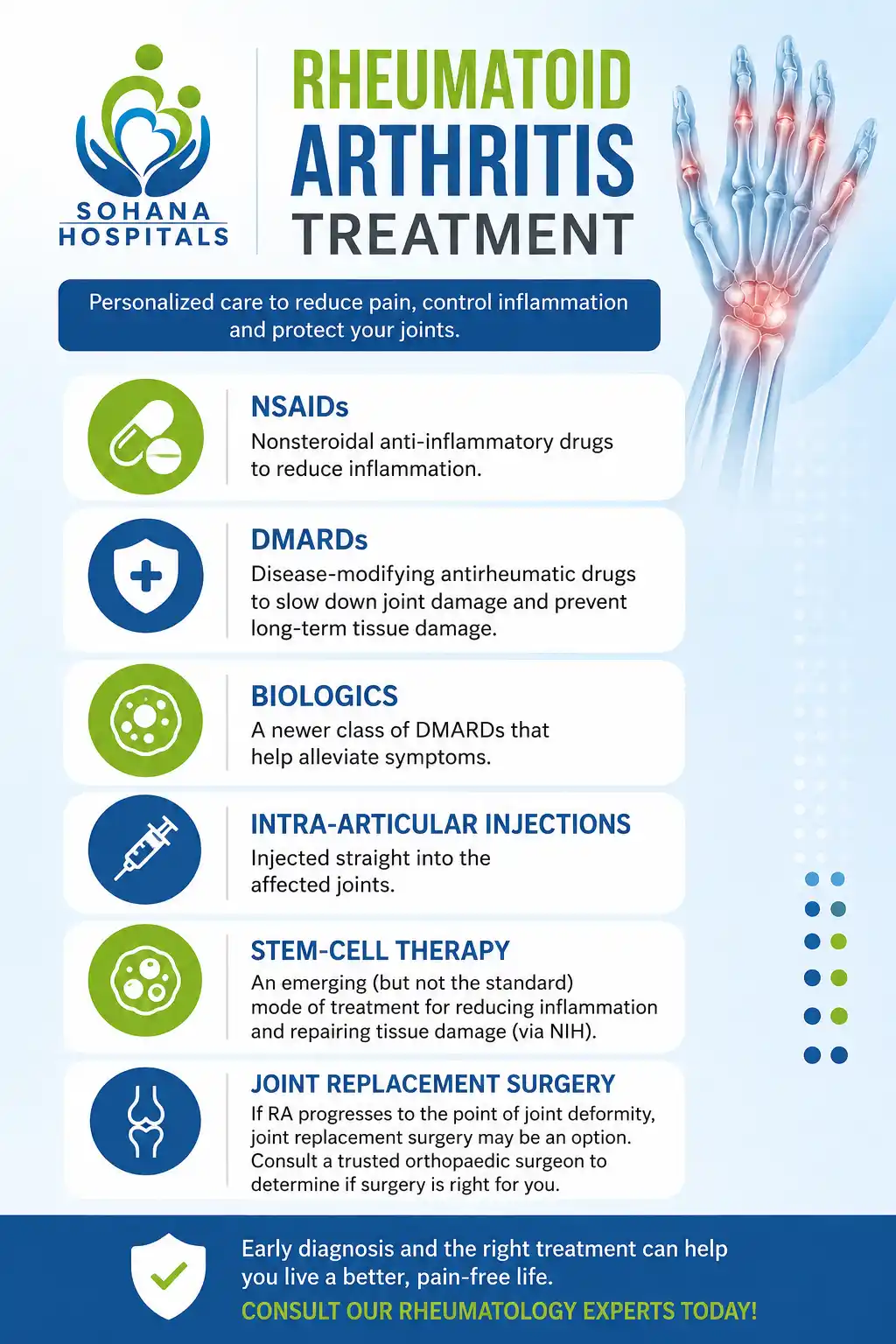
- NSAIDs – Nonsteroidal anti-inflammatory drugs to reduce inflammation.
- DMARDs – Disease-modifying antirheumatic drugs to slow down joint damage and prevent long-term tissue damage.
- Biologics – A newer class of DMARDs that help alleviate symptoms.
- Intra-articular Injections – Injected straight into the affected joints.
- Stem-cell therapy – An emerging (but not the standard) mode of treatment for reducing inflammation and repairing tissue damage (via NIH).
- Joint replacement surgery – If RA progresses to the point of joint deformity, joint replacement surgery may be an option. It is important to consult a trusted orthopaedic surgeon in such cases to ascertain whether your joint deformity can be treated with surgery or not.
*Note: Every patient’s condition is unique. What works for one may not be effective for another. This is why it’s important to consult a specialist who can assess your condition and prescribe the right course of treatment for you.
While rheumatoid arthritis cannot be treated permanently as it is an autoimmune condition, its symptoms can most definitely be managed to a great extent. If caught early, the condition may not progress to severe stages (granted proper management strategies are in place).
At Sohana Hospital, patients get comprehensive care for RA and RA-related complications. Our team of the best rheumatology doctors works closely with multiple departments to ensure each patient gets personalised treatment. Combining advanced diagnostics, modern treatment facilities, and a patient-first approach, we strive to ensure every individual who comes to us leaves with the freedom of pain-free mobility and a healthy life.