
*हिंदी में पढ़ें: ब्रेन स्ट्रोक के क्या कारण हैं? जानिए 9 प्रमुख जोखिम कारक
A stroke or a brain attack strikes when the blood supply to the brain is interrupted. The brain needs oxygen and nutrients constantly – only then can it work properly. It is such a delicate balance that even a slight disruption in blood flow can result in complications.
Brain cells start dying in seconds, leading to loss of brain function. Individuals who suffer a brain stroke can often lose the ability to perform activities related to that part of the brain that suffered an interruption in oxygen and blood supply.
This is just a glimpse at a brain stroke. It is a serious medical emergency that must receive prompt treatment.
In this blog, we are going to have a look at the top 9 brain stroke reasons. Understanding these brain stroke causes can help you take preventive measures to safeguard yourself from this debilitating condition.
What are the Results of a Brain Stroke?
Just anybody may get struck by a stroke at just any time. A stroke can seriously impair the patient’s ability to:
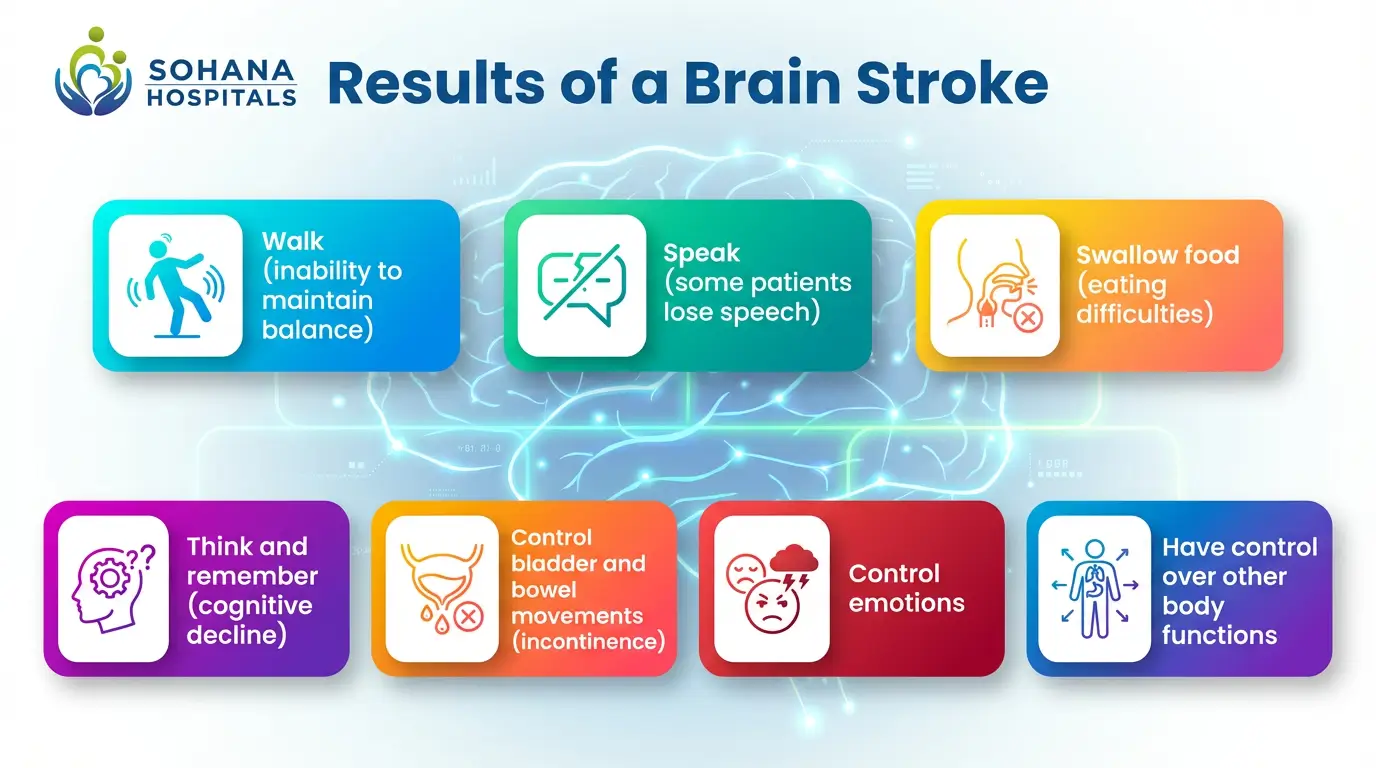
- Walk (inability to maintain balance)
- Speak (some patients lose speech)
- Swallow food (eating difficulties)
- Think and remember (cognitive decline)
- Control bladder and bowel movements (incontinence)
- Control emotions
- Have control over other body functions
⚠️Stroke News Alert!⚠️
| Year 2021 – World | 🚨Stroke was the 3rd major cause of death and disability worldwide, accounting for nearly 93.8 million cases[1] 🚨The number of new stroke cases rose to as high as 11.9 million 🚨Lifetime stroke risk has seen a rise of 50% in the past 2 decades |
| India | 🚨Witnessing an alarming rise in stroke cases – accounting for 10% of all stroke cases[2] globally 🚨1.25 million new stroke cases reported in the year 2021 – a rise of 51% since 1990 🚨Stroke became the 4th leading cause of death[3], and the 5th leading cause of disability 🚨Nearly 20–30% of stroke cases now occur in the younger population (aged below 50) |
| World Stroke Day | 🚨Celebrated on October 29 every year 🚨 Established in 2004 🚨 Aims at raising awareness about prevention, recognition, and treatment of stroke |
| Frequency | 🚨 Every 2 seconds[4], someone in the world gets a brain stroke 🚨 80% of strokes[5] can be prevented |
| Treatment | 🚨 Necessary within 4.5 hours of stroke – can decide whether a patient recovers or gets disabled for life |
What are the Types of Stroke?
There are two predominant causes of a brain stroke. The first is when the blood flow gets disrupted, and the other is when bleeding occurs in the brain.
Ischemic Stroke
It is the most common type of stroke, accounting for approximately 70-80%[6] of strokes. It happens when an artery supplying blood to the brain gets choked – due to fatty deposits in the artery getting ruptured and moving to the brain. The other reason is that a blood clot formed because of insufficient blood flow.
Haemorrhagic Stroke
Haemorrhagic stroke accounts for nearly 20-30%[7] of all cases of stroke. However, it can have more serious consequences. It may be caused by the expansion and bursting of a blood vessel in the brain. Alternatively, leakage in a weak blood vessel can also result in this kind of stroke. Either way, the blood supply to the brain gets disturbed. The underlying causes include uncontrolled blood pressure (high) and excessive use of blood-thinning medicines.
What are the Causes of Brain Stroke?
While stroke can affect anybody, some factors increase your risk.
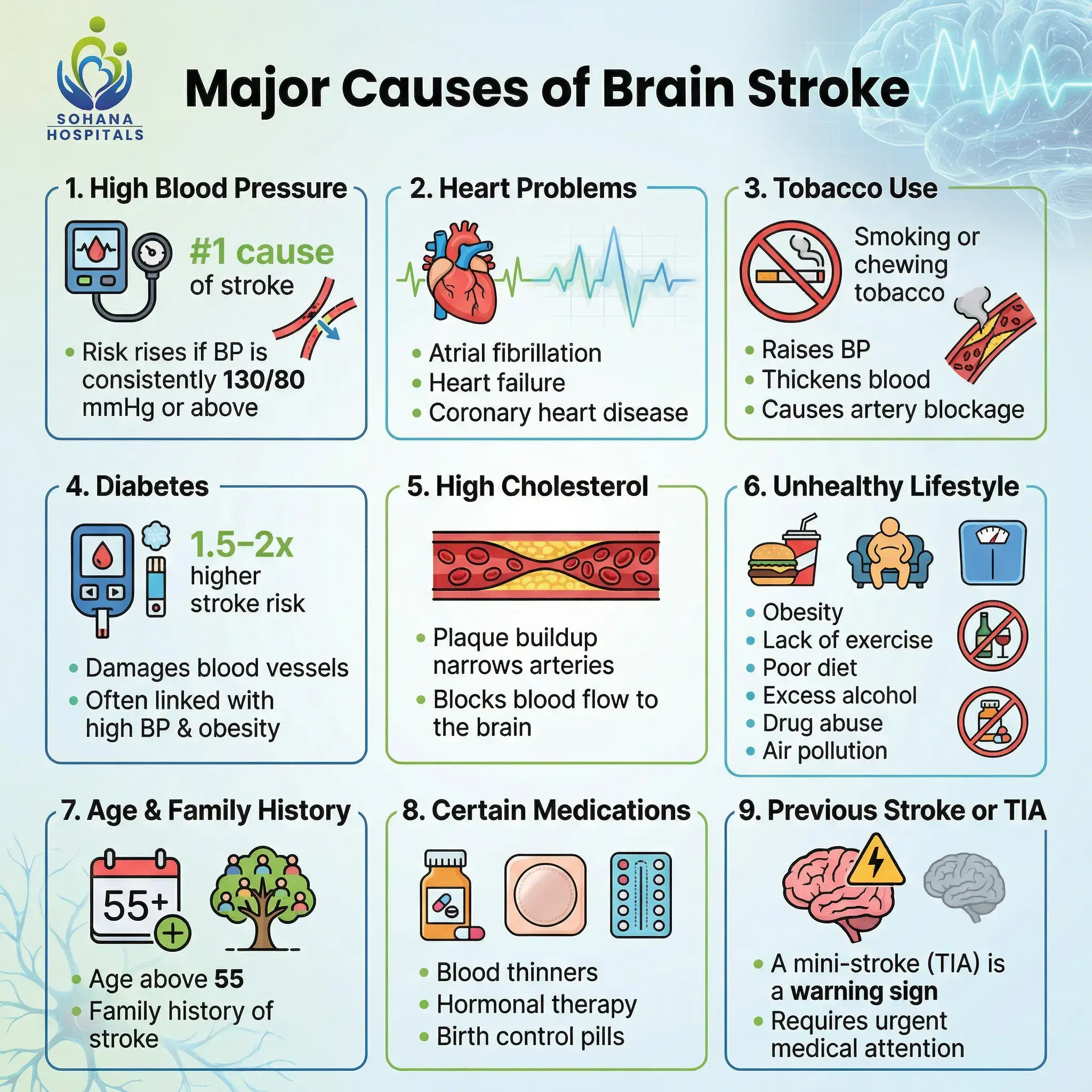
1. High Blood Pressure
It is the major cause of stroke, responsible for 54% of stroke cases globally[8]. As per the WHO, those with high BP are at nearly 3X higher stroke risk[9] than those who are not hypertensive.
What is the normal blood pressure for adults? It is 120/80 mmHg. And when to be alert? If you consistently measure 130/80 mmHg or above, you should consult your doctor.
2. Cardiac Issues
Research indicates that the incidence of stroke more than doubles in patients with coronary heart disease, it becomes 4X for those with heart failure, and is 5X for those with atrial fibrillation (irregular heartbeat).
Heart disease is responsible for nearly 1 out of every 5 cases[10] of ischemic strokes, and the primary risk factor in these cases is irregular heartbeat.
3. Tobacco
Smoking or chewing tobacco significantly raises the risk of stroke. WHO says tobacco accounts for nearly 40%[11] of all stroke-related deaths for those aged below 65. Passive smoking may also have a serious effect.
How does tobacco lead to stroke?
- Increases your BP
- Leads to fat accumulation in the primary neck artery
- Thickens blood so that it clots more
4. Diabetes
Diabetes is a disease that brings several other diseases with it, and one of them is stroke. Diabetics are 1.5 – 2 times more prone to stroke[12] than those who do not have diabetes. Also, the risk is higher during the duration of diabetes.
The reason? Diabetes is frequently associated with high BP and obesity, both of which raise your risk of stroke. It also affects the arteries that carry blood.
5. High Cholesterol
High levels of cholesterol promote the buildup of plaque. This results in arteries becoming narrow, thereby obstructing smooth blood flow. High LDL cholesterol has been responsible for nearly 6,10,000 or 24%[13] ischemic stroke-related deaths globally (since 1990).
6. Lifestyle Factors
Unhealthy habits can also raise your risk of stroke. Here are the prominent ones:
- Obesity (being overweight)
- Not participating in physical activities
- Unhealthy diet (consuming more sodium and fewer fruits and vegetables)
- Excessive alcohol intake
- Drug abuse (e.g., methamphetamine and cocaine)
- Living in an area with high air pollution levels
7. Age and Family History
Those aged above 55 are more vulnerable to stroke. Also, if any of your family members have had a stroke, it puts you at a higher risk. There’s a hereditary condition that interferes with proper blood supply to the brain, resulting in a stroke.
8. Medications
Specific medicines may also raise stroke risk. Here are some examples of such medicines:
- Blood thinners (may cause bleeding in the brain)
- Hormonal treatment (such as for treating hot flashes and other symptoms of menopause)
- Oral birth control pills (have low-dose osteogeny)
9. Previous Stroke or TIA
If you had a transient ischemic attack, it may significantly raise the probability of another stroke. This is particularly true if you did not control the underlying causes, such as those discussed above.
TIA, also known as a mini-stroke, is a stroke with temporary effects. It serves as a warning sign pointing to your high susceptibility to a real stroke. A TIA must not be ignored. It requires emergency care at the earliest.
Other factors that may elevate stroke risk include:
- Race or ethnicity – Being of Asian, African American, Hispanic, or Native American descent
- Gender – Men are more at risk of stroke, but women are more likely to die when they have a stroke
- COVID-19 infection
- Frequent migraines
- Those with sickle cell disease
Prevention and Management
Now you know the risk factors for a stroke, the precise facts about the incidence of stroke, and how it can lead to permanent disability or even death. While some risk factors are unavoidable, many others are very much in your hands.
How to prevent a stroke? Maintain a physically active lifestyle, consume a healthy diet, stay away from unhealthy food products, try to have an optimal weight, and get regular checkups to identify any underlying conditions.
If someone suffers a stroke, rush them to the emergency department. The first 4.5 hours can make the difference between life and death. Also, the right treatment can save them from lifelong disability.
At Sohana Hospital, there is a 24×7 neurology team ready to handle any stroke-related emergencies. Diagnosis is done through advanced imaging tests, such as a CT or an MRI scan of the brain. Once confirmed, expert neurologists utilise cutting-edge stroke treatments – thrombolysis & mechanical thrombectomy to save precious lives from irreversible brain damage.
Comprehensive rehabilitation ensures better recovery prospects for the patient. Personalised physiotherapy, occupational and speech therapy, and psychological support from the best neurologists in Chandigarh helps patients regain freedom and a good quality of life.
Reference Sources:
- https://www.who.int/news-room/fact-sheets/detail/stroke#:~:text=In%202021%2C%20stroke,in%20their%20lifetime.
- https://theindianpractitioner.com/world-stroke-day-2025-every-minute-counts/#:~:text=India%20is%20witnessing%20an%20alarming%20rise%20in%20stroke%20incidence%2C%20with%20over%201.25%20million%20new%20cases%20reported%20in%202021%E2%80%94an%20increase%20of%2051%25%20since%201990.%20The%20prevalence%20has%20more%20than%20doubled%2C%20placing%20India%20among%20the%20top%20global%20contributors%2C%20accounting%20for%2010%25%20of%20all%20stroke%20cases%20worldwide.
- https://www.nature.com/articles/s41598-024-72551-4#:~:text=Stroke%20ranks%20as%20the%20fourth%20leading%20cause%20of%20death%20and%20the%20fifth%20leading%20cause%20of%20disability%20in%20the%20country
- https://www.heart.org/-/media/Stroke-Files/About-the-ASA/World-Stroke-Day-Marketing-Materials/World-Stroke-Day-Toolkit-for-Professionals-ucm_502753.pdf?sc_lang=en#:~:text=Every%20two%20seconds%2C%20someone%20in,%E2%80%A2%20Stop%20smoking
- https://www.cdc.gov/vitalsigns/pdf/2017-09-vitalsigns.pdf
- https://www.nature.com/articles/s41598-024-72551-4#:~:text=70%E2%80%9380%25%20of%20all%20strokes
- https://www.nature.com/articles/s41598-024-72551-4#:~:text=70%E2%80%9380%25%20of%20all%20strokes
- https://pmc.ncbi.nlm.nih.gov/articles/PMC3838588/#:~:text=54%C2%A0%25%20episodes%20of%20stroke%20worldwide.
- https://www.who.int/news-room/fact-sheets/detail/stroke#:~:text=the%20leading%20contributor%20to%20stroke.%20Individuals%20with%20hypertension%20have%20a%20nearly%20three%20times%20higher%20risk%20of%20stroke%20compared%20to%20those%20without%20hypertension
- https://pmc.ncbi.nlm.nih.gov/articles/PMC5553569/#:~:text=The%20Framingham%20study%20reported%20that,being%20atrial%20fibrillation9.
- https://www.who.int/news-room/fact-sheets/detail/stroke#:~:text=tobacco%20use%3A%20associated%20with%20approximately%20two%2Dfifths%20of%20all%20stroke%20deaths%20among%20individuals%20under%20the%20age%20of%2065%3B
- https://www.j-stroke.org/journal/view.php?doi=10.5853/jos.2022.02306#:~:text=Diabetes%20is%20associated%20with%20an%20increased%20risk%20of%20cardiovascular%20complications%2C%20including%20stroke.%20People%20with%20diabetes%20have%20a%201.5%2D2%20times%20higher%20risk%20of%20stroke%20compared%20with%20people%20without%20diabetes%2C%20with%20risk%20increasing%20with%20diabetes%20duration.
- https://www.nature.com/articles/s41598-025-04677-y#:~:text=Since%201990%2C%20approximately%20610%2C000%20IS%20deaths%20worldwide%20have%20been%20attributed%20to%20hLDL%2DC%2C%20accounting%20for%2022.4%25%20of%20all%20IS%20deaths9