
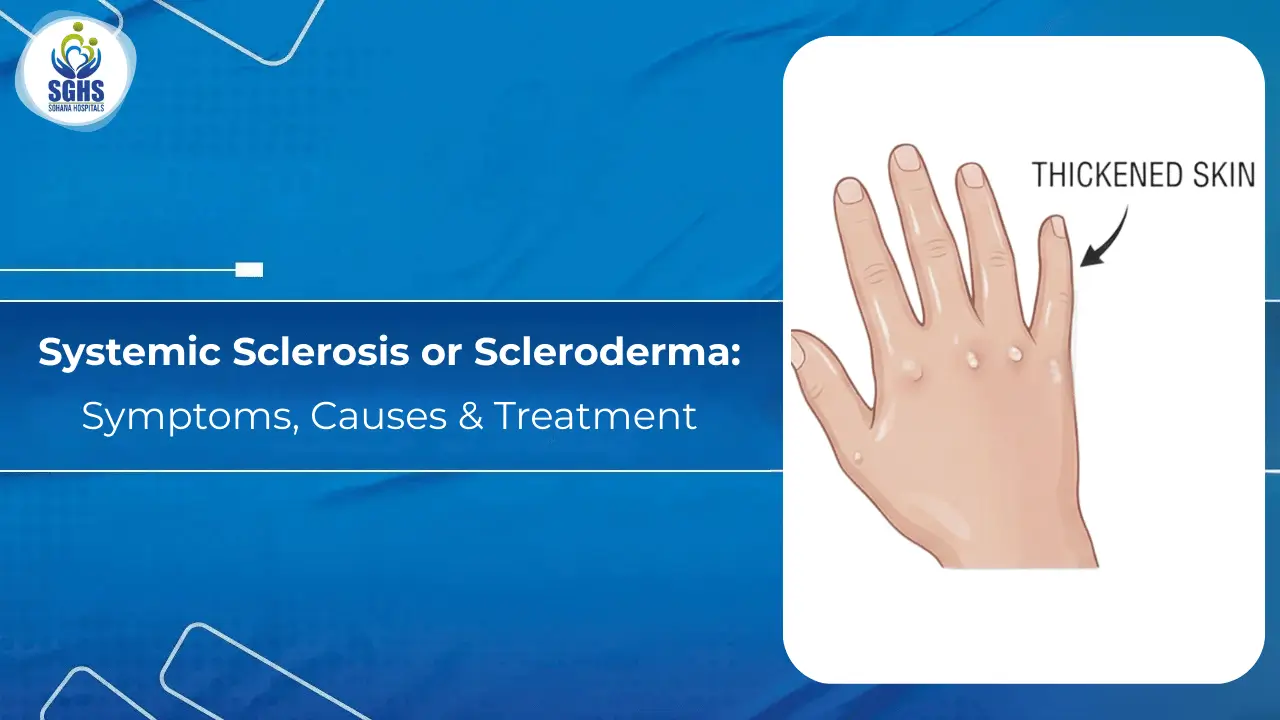
Systemic Sclerosis or Scleroderma is when your body produces too much collagen. Collagen is a protein necessary for healthy skin and tissue. This is a rare rheumatic, autoimmune condition, meaning your immune system attacks your body instead of safeguarding it.
Scleroderma can present with multiple symptoms and affect tissues throughout the body. In extreme cases, it can even lead to life-threatening complications. That being said, the condition is quite rare, affecting only 25.9/1,00,000 Indians as indicated by a 2016 study[1].
In this blog, we are going to discuss what systemic sclerosis or scleroderma is, its symptoms, causes, and treatment options.
What is Systemic Sclerosis or Scleroderma?
Systemic sclerosis is a rare condition that leads to excessive collagen deposition leading to skin thickening. The condition typically affects the skin, but it can also cause symptoms throughout the body.
Scleroderma causes the body to produce more collagen than required. Collagen is typically needed for strong connective tissues in the body to support your organs and hold them in place. However, excess collagen can lead to your skin and other tissues becoming thicker and more fibrous than they need to be.
Types of Scleroderma:
- Localised scleroderma
- Diffuse sclerosis
- Systemic sclerosis
- Sine sclerosis
- Limited sclerosis (CREST syndrome)
Scleroderma Symptoms
Here are some common systemic sclerosis symptoms:
- Unusually thick or waxy skin
- Joint pain
- Stiffness (especially in the mornings)
- Unexplained weight loss
- Persistent fatigue
- Diarrhea or digestive issues
- Shortness of breath
*Note: Other symptoms may be dependent on the specific type of scleroderma.
Scleroderma Causes
Like most other autoimmune conditions, systemic sclerosis or scleroderma’s exact cause has not been determined. Experts believe genetic factors play a role in the development of the disease. But as of now, there is no established cause of scleroderma.
Scleroderma Treatment Options
Scleroderma treatment options include:
- Skin treatments: Your doctor may prescribe medicated moisturisers or ointments to prevent your skin from drying out.
- Symptom-based medication: Your doctor might suggest medication to suppress specific symptoms such as excess fatigue, digestive issues, and shortness of breath, among other extreme ones.
- Physiotherapy: If you experience joint pain and stiffness, you may be advised to attend regular physiotherapy sessions to alleviate symptoms. Expert-supervised exercises can help restore pain-free movement and bring about an increase in the range of movement lost to stiffness.
- Stem Cell Therapy: Stem cell therapy has also been emerging as a promising treatment and management option for systemic sclerosis or scleroderma. However, it may not be suitable for all types of scleroderma. Your doctor will only prescribe this if they deem it fit to manage your specific condition.
👉 Note: It is important to note that there is no permanent cure for systemic sclerosisor scleroderma. The above-listed treatment options simply help reduce the intensity and frequency of scleroderma symptoms, acting as management strategies rather than permanent solutions.
Conclusion
Systemic sclerosis is a chronic autoimmune condition that does not have a cure. However, that does not mean its symptoms cannot be managed. Many affected individuals lead substantially normal lives, provided they receive timely treatment.
Sohana Hospital has a dedicated team of the best rheumatologists in Chandigarh, who work closely with multiple departments and disciplines to curate personalised treatment plans for each patient. Advanced diagnostics, world-class treatment options, and a team of committed specialists, all work together to provide the best care for rheumatic diseases.
If you or anyone you know is exhibiting any symptoms of scleroderma, visit Sohana Hospital today!
Reference Source(s):