

Struggling with knee pain? Ever visited a knee specialist to know whether it is Grade 1, 2, 3, or 4? What kind of treatment would you prefer?
You might have heard about high-profile sportspersons benefiting from the use of stem cells. But what about you?
With knee issues witnessing a tremendous rise, stem cell therapy has emerged as a revolutionary non-surgical mode of treatment. In fact, stem cell therapy holds the potential to relieve pain, improve joint function, and possibly delay the progression of degenerative joint disorders – in patients whose knee damage has not yet progressed to Grade 4.
And most importantly, stem cell therapy can help you avoid the need for knee replacement surgery in early to moderate stages of arthritis and save your natural knees. This makes stem cell therapy a far better treatment than those presently available.
In this blog, we intend to enlighten you with all the major aspects of stem cell therapy and how you can benefit from it.
What are Stem Cells?
Stem cells are special cells of the human body that have the potential to transform into many different types of cells. They are the building blocks of all cells, and their speciality lies in their versatility. They can convert into all kinds of special cells that your body requires – ranging from muscle cells (myocytes) and bone cells (osteoblasts) to cartilage cells (chondrocytes). Not to mention, different types of tissues.
In the case of individuals with specific conditions, mature specialised cells lose their capacity to multiply and help tissues repair themselves. It is here that stem cells stand apart. Stem cells retain their ability to multiply and promote healing even as they mature. That is why they help regrow damaged tissue.
What are the 3 Types Of Stem Cells?
There are 3 main types of stem cells:
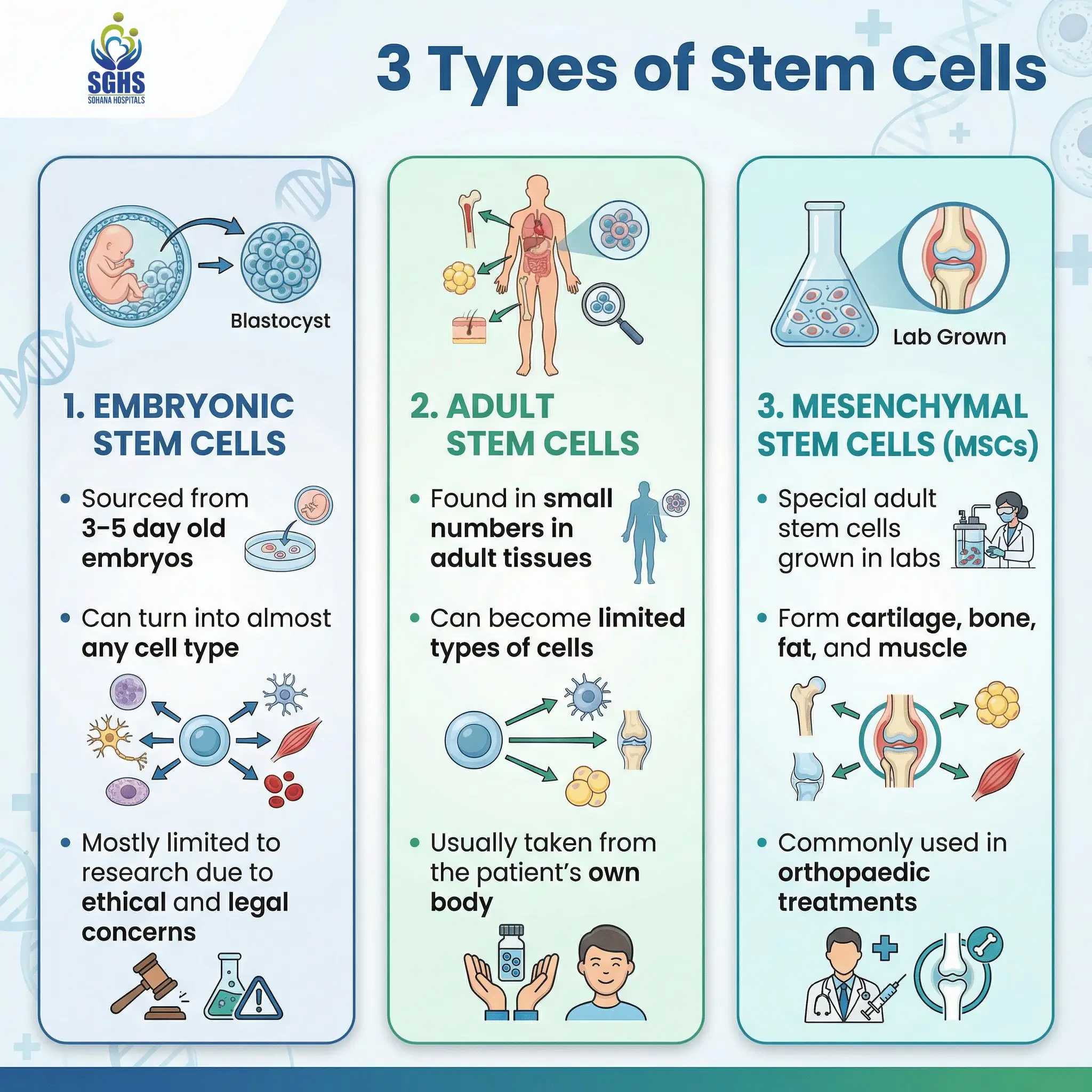
Embryonic Stem Cells
They are sourced from 3 to 5-day-old human embryos. They can replicate into more embryonic stem cells, or into several different types of specialised stem cells. While they have immense possibilities for tissue regeneration and repair, their use is restricted to research due to ethical and legal reasons.
Adult Stem Cells
Found in small numbers in adult tissues, they can transform into limited types of cells. Considered less effective than embryonic stem cells, they are sourced from the patients themselves.
Mesenchymal Stem Cells
These lab-grown special adult stem cells are converted to a particular type of tissue called mesodermal tissues. These typically include cartilage, muscle, fat, and bone, which are highly beneficial for orthopaedic patients.
What Makes Stem Cells So Special?
Stem cells stand out from other human body cells in three key aspects:
- They have the capacity to divide and replenish themselves over a prolonged time
- They lack specialisation, so they cannot perform particular functions in the body
- They can develop into specialised types like muscle, blood, or nerve cells
It can be of immense benefit for patients with damaged joint cartilage, irrespective of the reason behind the damage – advancing age or injury. Osteoarthritis patients can now avail themselves of the breakthrough stem cell therapy at Sohana Hospital to get freedom from knee issues and regain movement.
How Stem Cells and MSCs Promote Cartilage Regeneration
MSCs can effectively regenerate cartilage since they hold the ability to differentiate into chondrocytes – the cartilage-forming cells. This way, they can treat conditions such as osteoarthritis, in which cartilage wear down is a prominent concern.
By injecting MSCs into the deteriorating joints, stem cells stimulate natural repair of cartilage and minimise the need for invasive procedures. Patients report not just pain relief but also enhanced long-term improvement in joint function along with a shorter recovery period.
Stem Cell Therapy for Knees
Which knee conditions can be treated with stem cell therapy? Let’s have a look:
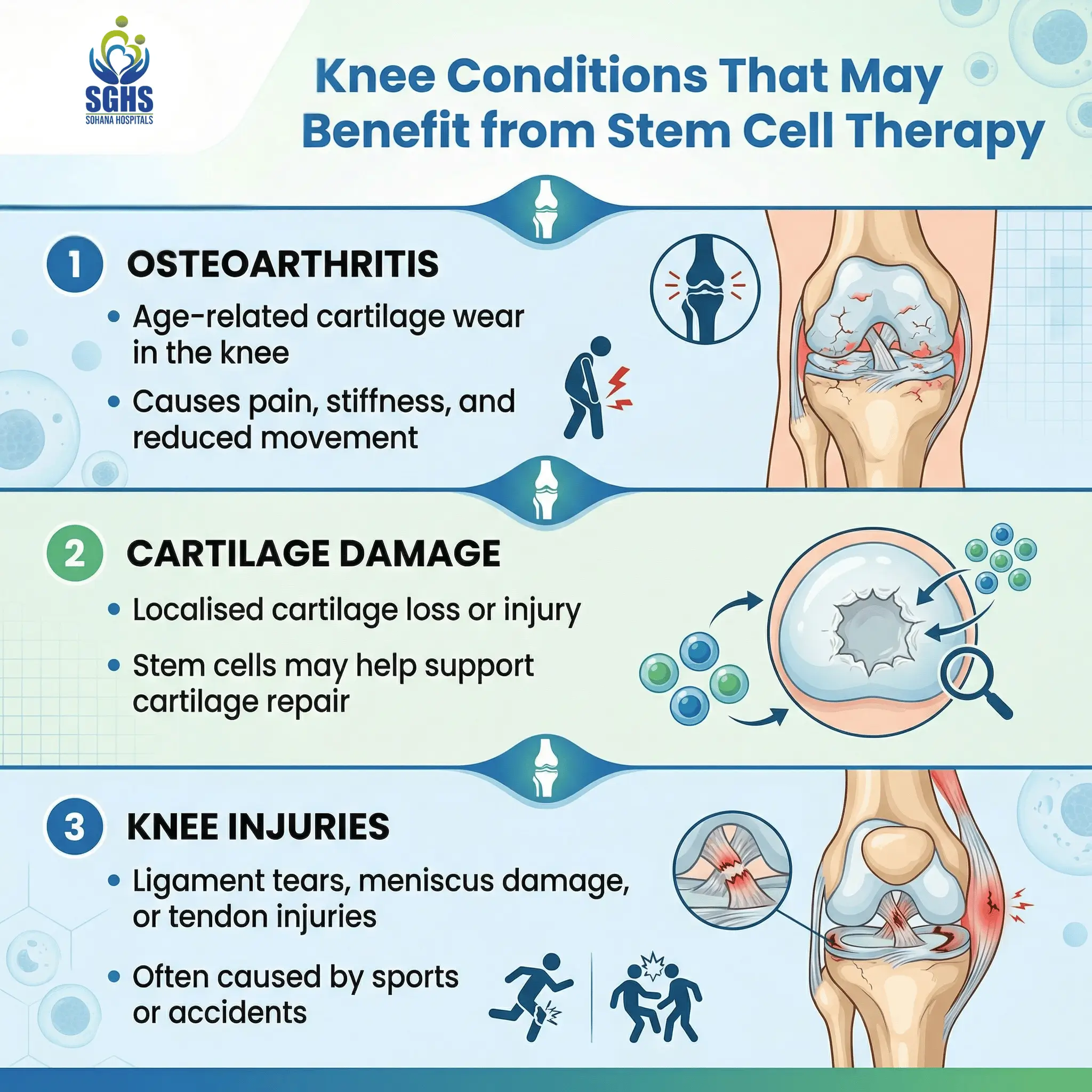
Osteoarthritis
Osteoarthritis causes age-related wearing out of cartilage in the knee joint. This leads to pain and stiffness, affecting movement and flexibility.
Cartilage Damage
Patients with cartilage damage due to degenerative joint and bone disorders can benefit from stem cell therapy. It is being seen as a promising treatment approach for rheumatoid arthritis patients as well.
Knee Injuries
Patients with torn ligaments, meniscus damage, and tendon injuries due to sports injuries or any other reason can also benefit from stem cell therapy.
Benefits of Stem Cell Therapy at Sohana Hospital
Sohana Hospital aims at harnessing the natural potential of MSCs to rebuild cartilage tissue, thus enhancing joint function and minimising discomfort.
We use Ciplostem – a revolutionary allogeneic mesenchymal stromal cell (MSC) therapy, which holds the approval of the DCGI (Drug Controller General of India). It underscores the efficacy and safety of stem cell therapy at Sohana Hospital.
We have world-renowned orthopaedic experts with years of experience. The team is led by Dr. Gagandeep Singh Sachdeva, Chief Robotic Joint Replacement Surgeon and CEO, who has 25+ years of experience and performed 30,000+ successful knee surgeries. He is an internationally trusted name in the field of orthopaedics.
When you get stem cell therapy from such highly skilled experts, the prospects of success are much higher.
Here we present a list of Stem Cell Therapy Benefits at Sohana Hospital:
- No hospital stay
- Save and retain your natural knee
- Non-invasive alternative to TKR (total knee replacement)
- More natural regeneration of cartilage
- No need for artificial metal implants
- More flexibility in joint movement
- Live an active lifestyle and play sports once again
- Reduced risk of complications
Who is Eligible for Stem Cell Therapy?
Dealing with joint pain due to osteoarthritis, ligament injury, tendonitis, torn tendon, cartilage defect, meniscus or labral injury, you may be fit for stem cell therapy at Sohana Hospital.
Another category of patients who can benefit from stem cell therapy is those looking to restore joint cartilage and delay aggravation of arthritis. People of any age can undergo this revolutionary procedure.
At Sohana Hospital, we conduct a thorough assessment to see if you are a suitable candidate for stem cell therapy. This assessment includes a physical examination, checking your medical history, and reviewing imaging tests like X-rays.
Why Choose Sohana Hospital for Your Treatment?
Sohana Hospital, known for pioneering the introduction of innovative healthcare technologies to North India, now also provides the path-breaking stem cell therapy. It is a much-awaited development in the field of orthopaedics, particularly for patients suffering from knee osteoarthritis.
At Sohana Hospital, we specialise in using Mesenchymal Stem Cells (MSCs) to promote cartilage regeneration and repair. It is a lucrative alternative for those looking to avoid or delay conventional surgical methods. For knee patients, it may mean avoiding the need for knee replacement.
The aim is to ensure that you get the most advanced and effective treatment according to your unique condition. We are committed to providing personalised care and achieving the best possible outcomes for our patients.
FAQs – Stem Cell Therapy
1. What is stem cell therapy for joint repair, and how does it work?
At Sohana Hospital, stem cell therapy for joints uses mesenchymal stem cells to repair damaged cartilage and tissues in your joints. These cells are injected into the affected joint via an intra-articular injection. The therapy helps reduce inflammation and swelling, supports cartilage repair, provides pain relief and improves joint function.
2. Who is a good candidate for stem cell therapy for joint pain?
Stem cell therapy may be suitable for people with early to moderate joint damage, cartilage wear, or sports injuries who want to delay or avoid surgery. At Sohana Hospital, the best knee doctors in Chandigarh perform a detailed joint evaluation to decide if this treatment is right for you.
3. Is stem cell therapy for joints safe, and how long does it take to recover?
Stem cell therapy is generally safe when performed by trained specialists. At Sohana Hospital, we have the best knee doctors, who are experts in performing all kinds of non-invasive treatments like stem cell therapy, minimally invasive treatments like arthroscopy, and advanced robotic knee replacements.
Recovery with stem cell therapy is typically fast. Most patients return to daily activities within a few days, with further improvement over the following weeks.