
Nearly 61 out of every 100 Indians get less than 7 hours of sleep a day[1]. The effects of sleep disorders show on your overall health, and the brain is among the most-significantly affected organs. What’s more, a lot of people fail to realise that the root cause of their health issues stems from something they often ignore – a lack of adequate sleep.
So, how much sleep do you need? Ideally, adults need 7-8 hours of quality sleep. However, given the demands of the modern lifestyle and work pressure, sleep is getting seriously compromised.
Talking about brain and mental health – sleep disorders have been taking a toll on not just mood, memory, and decision-making, but also long-term brain health.
In this blog, we are going to shed light on how sleep impacts brain health. We will also have a look at practical tips to get better sleep. Armed with this information, you can take steps to get enough sleep, safeguard your mental well-being, and enhance your efficiency.
What are Sleep Disorders and Why are They Important?
The term “sleep disorders” refers to the conditions that affect sleep in any way:
- Inability to fall asleep
- Disturbed sleep cycle
- Lack of deep and restorative sleep
The result? Both – the duration and quality of sleep you get each night – are seriously impacted. While some sleep disorders are mild and temporary, others continue in the long run and require continuous care.
What are the Types of Sleep Disorders?
Insomnia
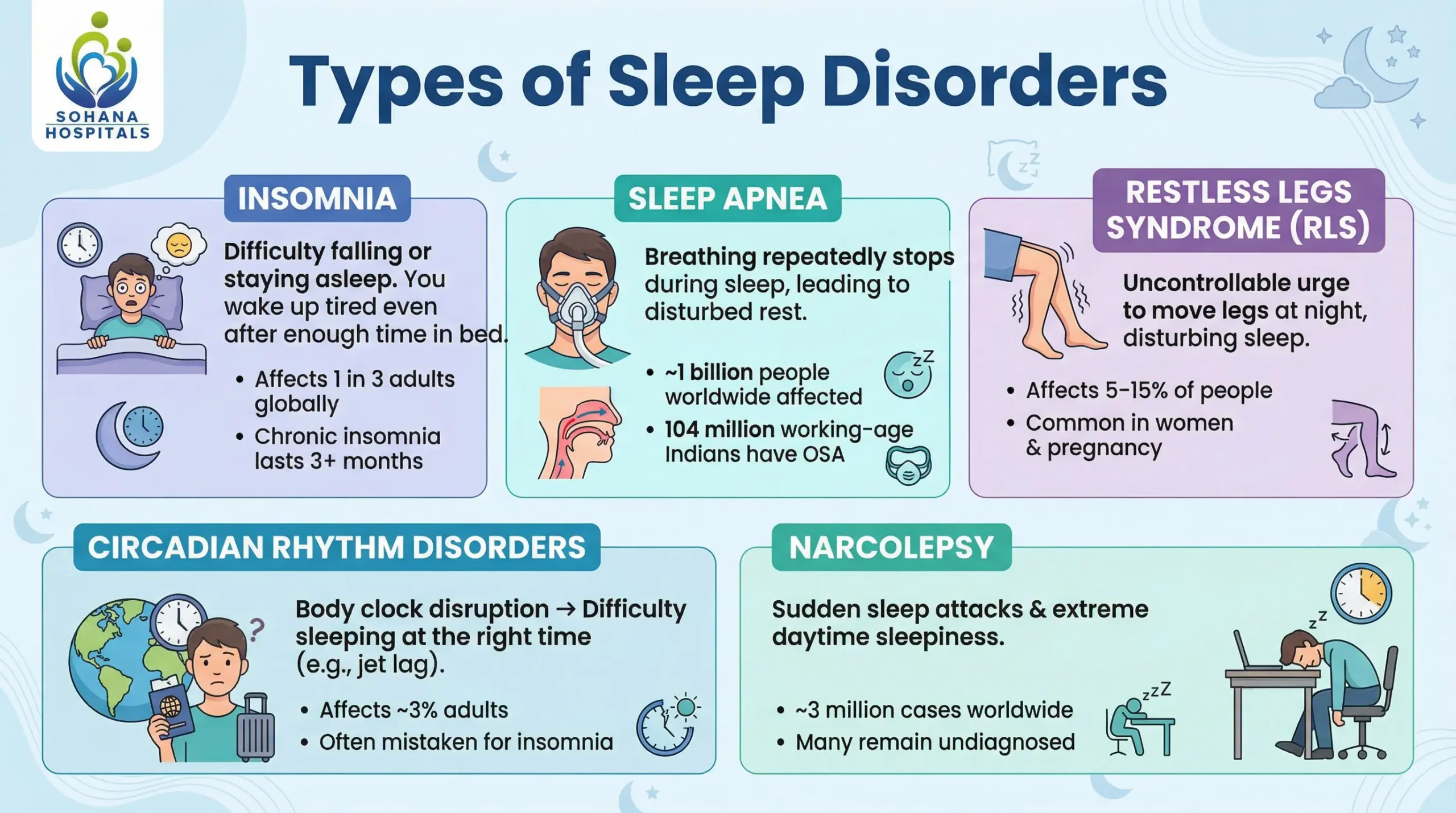
Those with insomnia find it hard to fall asleep or stay consistently asleep. They often wake up earlier or lack a refreshing feeling even if they have spent adequate time in bed. It can be a serious problem for many.
Nearly 1 in every 3 adults[2] globally exhibits symptoms of clinical insomnia, and approximately 1 in 5 individuals has insomnia disorder (as per November 2021 data). These numbers are two times of what they were before COVID, meaning that the pandemic escalated the issue in the global population.
Chronic insomnia affects about 10% of adults and lasts for a minimum of 3 months.
Sleep Apnea
Sleep apnea is a condition in which breathing stops repeatedly (due to a blocked airway) while a person is asleep. When this happens, sleep gets frequently interrupted, and the individual does not get healthy sleep.
Almost 1 billion people across the world[3] suffer from obstructive sleep apnea. Talking in the Indian context, nearly 104 million working-age Indians[4] have OSA. Out of these affected people, the severity ranges from moderate-to-severe in 47 million people.
The condition can lead to severe consequences over time.
Restless Legs Syndrome
Restless legs syndrome (RLS) or Willis-Ekbom Disease is a neurological sleep issue that gives rise to an uncontrollable urge to move one’s legs, particularly at night. It disturbs the body’s ability to rest and sleep, leading to tiredness during the day.
The disorder affects nearly 5 – 15%[5] of the populace. Those with a family history of the disease may experience the problem at a younger age (less than 45 years). It is more common among women, and affects pregnant women more – as 11 – 29% of pregnant women have it.
Circadian Rhythm Disorders
Circadian rhythm is the body’s natural, automatic clock. It plays a vital role in controlling body processes, including the regulation of the sleep-wake cycle. Circadian rhythm sleep disorders (CRSD) upset the sleeping and waking time of the affected person. It means the person may not be able to sleep at the right time and lacks quality sleep. A good example (although a temporary one) would be jet lag.
According to studies, CRSD affects nearly 3% of the adult population[6]. However, they are frequently mistaken for insomnia cases. In fact, almost 10% of grown-up and 16% of teenage sleep disorder patients may actually be suffering from CRSD. If not treated, the condition may lead to serious complications – medical, social, and psychological.
Narcolepsy
Narcolepsy is a sleep disorder that makes you feel excessively sleepy during the day. You may have sudden sleep attacks. You fall asleep instantly – at any time and in the midst of any activity. The brain loses its ability to control sleep and waking timings. There may also be symptoms like sudden weakness in muscles, hallucinations, and sleep paralysis – affecting daily life, work, and relationships.
As per estimates, nearly 3 million[7] globally have narcolepsy sleep disorder. And almost half the narcolepsy patients remain undiagnosed. Symptoms often start occurring in the age bracket of 10 – 30 years, although a person of any age can get affected. Narcolepsy can be managed with the right treatment and care.
How Sleep Disorders Alter Brain Function
The human brain depends on good sleep for revived energy and can perform important tasks with optimal efficiency only after a full night’s rest. Sleep disorders disrupt this process, making the brain struggle to function well.
- The brain is unable to clear waste proteins and repair cells.
- Brain pathways that promote attention and learning become weak.
- Emotions may get disturbed, leading to behavioural changes, anxiety, and depression.
- Decision–making ability may also suffer.
How Sleep Impacts Memory and Focus
When sleep suffers, so does brain health and memory.
- It is during sleep that the brain consolidates vital memories.
- Lack of proper sleep adversely affects attention span and concentration.
- Creativity and problem-solving abilities also take a dip.
How are Sleep, Mood & Mental Health Related?
Inadequate or poor sleep quality can have serious consequences for mental health:
- Heightened sensitivity to stress
- More prone to anxiety and depression
- Intense, automatic, and often uncontrollable responses to emotions (e.g., anger, panic, or shutting down)
- Diminished ability to recover from challenges and hardships (compromised resilience)
Poor Sleep, Brain Fog, and Cognitive Decline
A common consequence of poor sleep is – brain fog. Since the brain is unable to recharge, sleep disorders result in brain fog.
What happens when someone is affected by brain fog?
- Thinking abilities become slower
- Problem with logical reasoning and decisions
- Difficulty recalling simple information
- Mental exhaustion and fatigue
- Lacking enthusiasm and motivation
What Happens When Sleep Disorders Go Untreated?
If sleep disorders are not treated in a timely manner, they can have long-lasting effects on brain health and overall well-being:
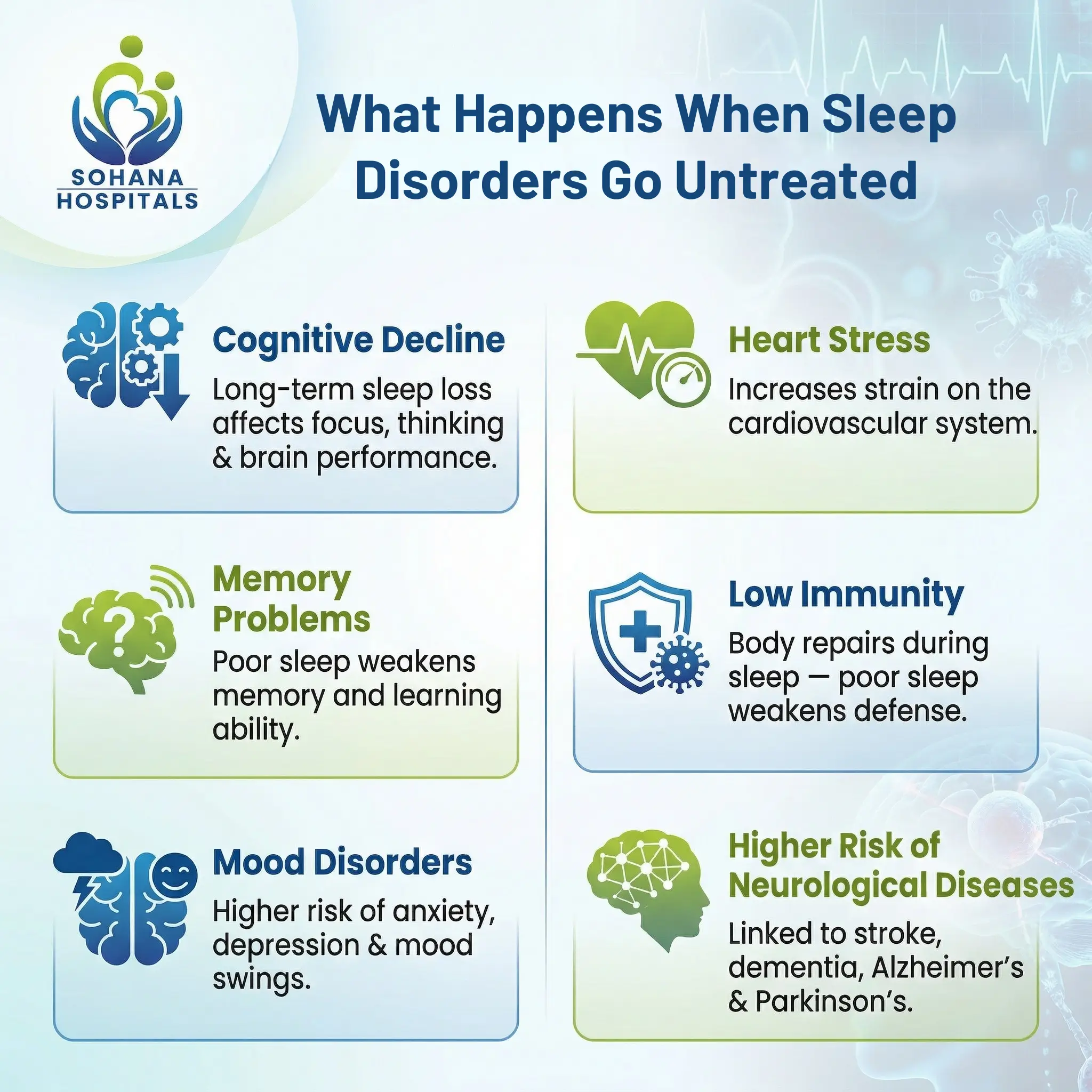
- Chronic sleep deprivation may lead to cognitive issues in the long run.
- Memory problems also arise.
- There may be mood swings, anxiety, and depression.
- Sleep issues put additional stress on the heart.
- Since the body repairs itself during sleep, poor sleep is also associated with lower immunity.
- Research indicates sleep disturbances can lead to several neurological conditions, including stroke, cognitive aging, dementia, Alzheimer’s, and Parkinson’s disease.
How to Improve Sleep: Practical Tips
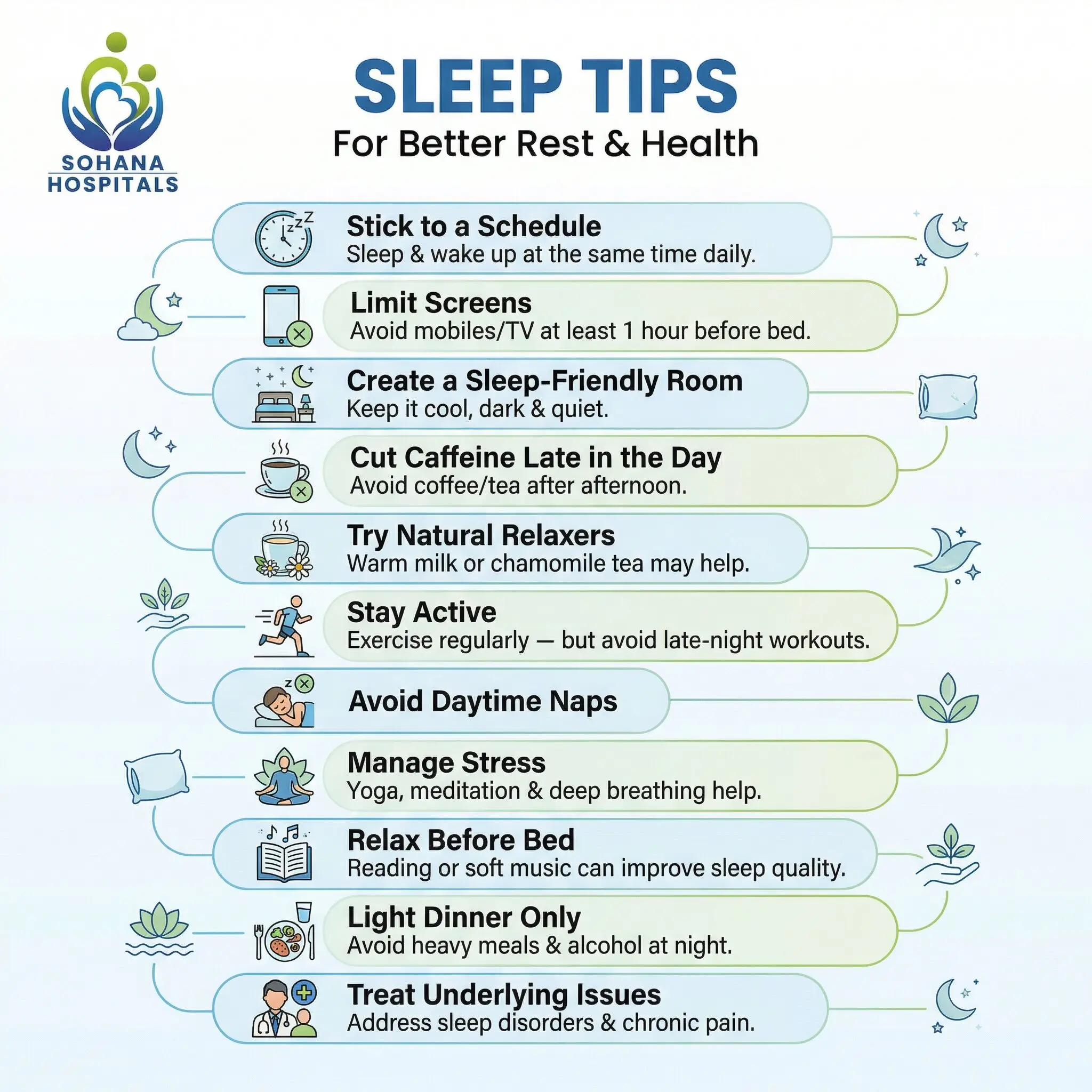
- Go to bed and wake up at the same time every day.
- Avoid using screens at least 1 hour before bedtime.
- Create a peaceful, cool, and dark sleep environment.
- Limit coffee, tea, and energy drinks to the first half of the day.
- Warm milk and chamomile tea may help improve sleep.
- Exercise and stay physically active during the day.
- Avoid sleeping during the day.
- Manage stress by staying organised and setting priorities.
- Practice yoga, meditation, and deep breathing to relax the mind.
- Reading and listening to soft music have also been seen to promote better sleep.
- Avoid heavy meals and alcohol in the evening. Eat 3 hours before bedtime.
- Treat underlying sleep disorders and any chronic pain that disrupts sleep.
When to Consult a Doctor for Sleep Issues
Almost everyone has a sleepless night once in a while. However, it would be advisable to visit a trusted healthcare provider if you:
- Constantly struggle to fall asleep
- Wake up frequently at night
- Snore loudly or feel choked during sleep
- Have headaches in the morning
- Feel sleepy during the daytime
- Face focus and memory issues
- Feel irritable, and mood worsens
- Have to depend on caffeine to stay awake
Think you have a sleep disorder? Looking for sleep disorder doctors? Visit Sohana Hospital, Mohali – a super speciality hospital in the heart of Punjab. The hospital boasts a dedicated department for treating sleep disorders and expert sleep medicine specialists with specialised training in neurology, pulmonology, psychiatry, and internal medicine. These compassionate experts are skilled in diagnosing and treating conditions like insomnia, sleep apnea, etc., and aim to help you get better sleep.
FAQs – Sleep and Mental Health
Minimum amount of sleep needed for brain function?
Most adults require 7-8 hours of quality sleep for good brain health.
Do sleep disorders develop slowly or suddenly?
Stress, health problems, and changes in lifestyle may result in sudden sleep issues. However, they may also develop gradually over time.
Is napping good for people with sleep disorders?
While short naps may help to ease exhaustion and boost efficiency, taking naps frequently can cause problems with nighttime sleep.
Which age groups are more prone to sleep disorders?
They can affect adults of any age, but the risk is higher after the age of 45.
Which part of the brain controls sleep?
The hypothalamus is the main brain structure that controls sleep and wakefulness.
Does dehydration disturb sleep?
A lack of adequate hydration can cause cramps and discomfort, which may interrupt sleep.
Can vitamins enhance the quality of sleep?
Vitamins alone cannot cure sleep disorders, although they may help a little.
Is it normal to wake up for a short time while sleeping?
It is normal, but if you wake up repeatedly, it may indicate an underlying problem.
Does poor sleep affect hunger?
Hunger hormones may be affected due to poor sleep. This may result in cravings and overeating.
What do you do before going to sleep?
To get better sleep, you should turn off your screens at least 1 hour before going to bed, and try relaxation techniques, such as yoga, meditation, deep breathing, reading, or listening to soothing music.
Which doctor to consult for sleep disorder?
At Sohana Hospital, highly experienced somnologists or sleep medicine specialists help treat various sleep disorders, to help you get quality sleep.
Reference Source:
- https://www.ijsm.in/abstractArticleContentBrowse/IJSM/16708/JPJ/fullText#:~:text=Chronic%20sleep%20deprivation%20is%20common%20in%20the%20modern%20society.%20People,apnea%20being%20the%20two%20most%20giant%20condition.2%E2%80%9312
- https://www.sciencedirect.com/science/article/pii/S1389945721004196?via%3Dihub
- https://www.sciencedirect.com/science/article/abs/pii/S1087079223000850#:~:text=one%20billion%20adults%20suffer%20from%20the%20disease
- https://www.sciencedirect.com/science/article/abs/pii/S1087079223000850#:~:text=approximately%20104%20million%20Indians%20of%20working%20age%20suffer%20from%20OSA%2C%20of%20whom%2047%20million%20have%20moderate%2Dto%2Dsevere%20OSA
- https://www.ncbi.nlm.nih.gov/books/NBK430878/#:~:text=5%25%20to%2015,women%20are%20affected.
- https://pmc.ncbi.nlm.nih.gov/articles/PMC4212693/#:~:text=Survey%20studies%201,and%20social%20consequences.
- https://narcolepsynetwork.org/about-narcolepsy/narcolepsy-fast-facts/#:~:text=3%20million%20worldwide,narcolepsy%20are%20undiagnosed.