

A brain stroke is a medical emergency that can ruin a person’s life within minutes. Most people fail to get timely treatment for their loved ones because they are unaware of the early warning signs of a brain stroke or mistake them for fatigue, stress, or other minor health issues.
Having said that, it is essential to know that brain stroke is an escalating condition in India and the world, with the burden rising steadily over the past years. Presently, stroke is the fourth major cause of mortality (1) and the fifth major reason for disability in India.
Knowing the early signs of a stroke can help save precious lives and prevent long-term disability. In this blog, we are going to shed light on what signs you should watch out for – along with other must-know information about stroke.
What is a Brain Stroke?
A brain stroke or a brain attack is a neurological condition that suddenly strikes the entire brain or a part of it, resulting in sudden loss of function. It is caused when the blood supply to the brain being abruptly interrupted. The underlying reason could be an artery getting blocked or a blood vessel getting ruptured.
The brain requires a continuous flow of oxygen and essential nutrients to function properly. When a stroke hits, the brain gets deprived of the essential oxygen supply, resulting in death of brain cells – within minutes. The brain stroke victim may suffer irreversible brain damage affecting – speech, mobility, memory, and even consciousness. That’s why it is a medical emergency requiring prompt intervention.
Brain Stroke Statistics in India: A Glimpse
Here we present some worth-knowing brain stroke data. This will help you gauge the gravity of the alarming emergency situation called stroke.
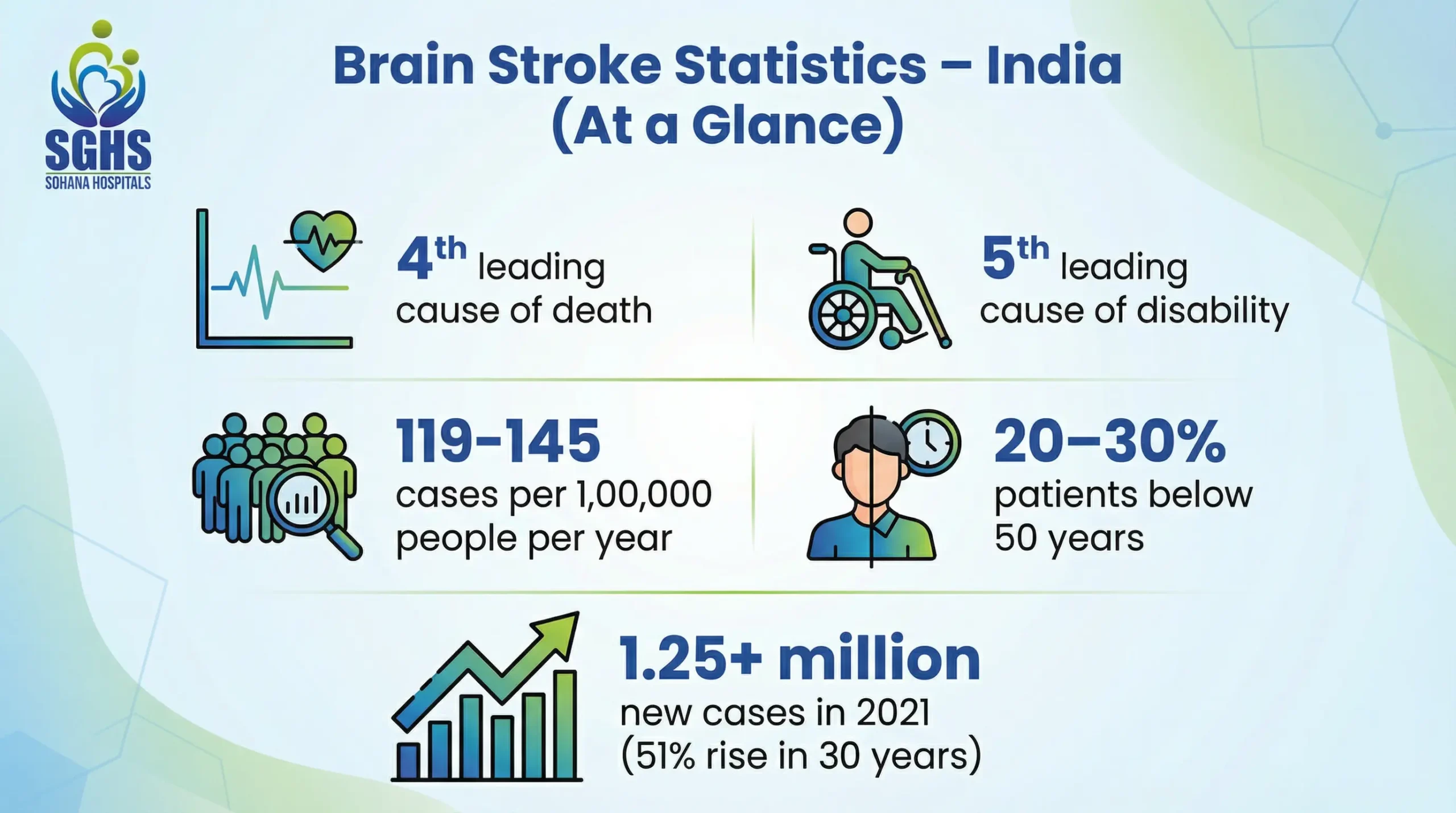
- Stroke is the 4th leading cause of death
- It is the 5th predominant cause of disability
- Stroke incidence in India lies between 119 and 145 per 1,00,000 population every year
- 20–30% of stroke victims are below 50
- In 2021, India recorded more than 1.25 million new cases of stroke – a substantial rise of 51% over 3 decades
Types of Brain Stroke
There are mainly 3 types of brain stroke:
| Stroke Type | Explanation |
| Ischaemic Stroke | – Caused by a clot or blockage in a brain artery – Most common type responsible for 80% cases |
| Haemorrhagic Stroke | – Caused by the rupture of a blood vessel, causing bleeding in the brain – Underlying reason is often uncontrolled high BP |
| Transient Ischaemic Attack (TIA) or Mini-stroke | – A temporary blockage that does not lead to permanent damage – May be a critical warning sign for future strokes |
The first two types can prove fatal and require prompt medical attention. The right and immediate treatment within the initial 4.5 hours can make a significantly better recovery possible.
Early Brain Stroke Symptoms – Not To Be Ignored
Stroke symptoms usually appear suddenly and worsen quickly. Recognising these initial signs of stroke can save lives and prevent disabilities. The symptoms often occur all of a sudden and may vary depending on the part of the brain affected.
However, there are some key signs that everyone should know:
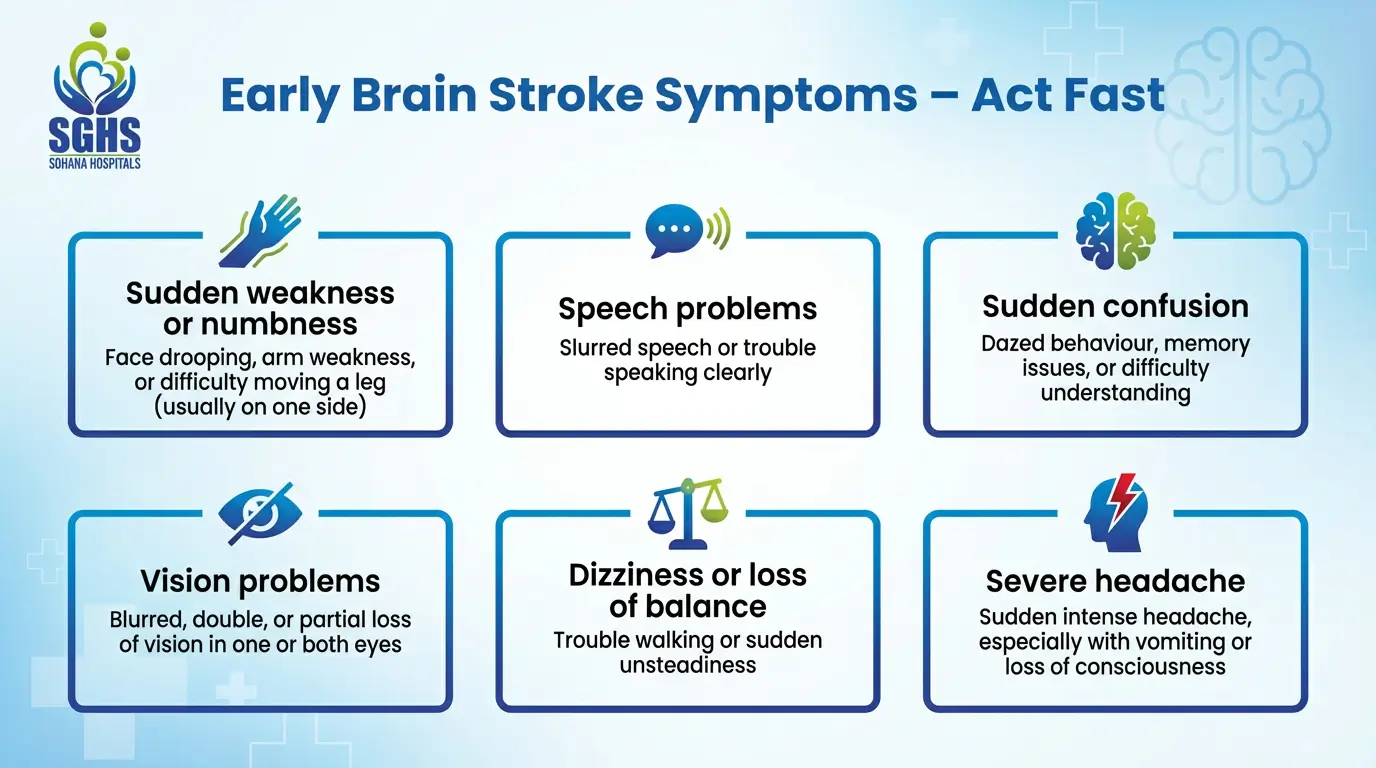
1. Sudden Weakness or Numbness
A sudden feeling of weakness, numbness, or paralysis – especially on one side of the body – is often a major warning sign. Affected body parts typically include:
- Face (drooping)
- Arm (hard to lift)
- Leg (difficulty moving)
2. Difficulty Speaking or Slurred Speech
If you notice the following speech issues in someone, it could indicate a stroke:
- Slurred words
- Inability to speak clearly
3. Sudden Confusion
A stroke can cause sudden confusion and can be a telltale sign:
- sudden confusion (victim may seem dazed)
- memory problems (may appear forgetful)
- Trouble understanding simple sentences or instructions
4. Vision Problems
Sudden trouble seeing (one or both eyes) is another important sign. This may include:
- Blurred vision
- Partial loss of vision
- Double vision
5. Dizziness or Loss of Balance
Many brain stroke victims experience:
- Dizziness
- Feeling unsteady
- Trouble walking
These can be early signs of stroke, especially if the occurrence is sudden and without reason.
6. Severe Headache
A sudden, intense headache – especially when accompanied by vomiting, dizziness, or loss of consciousness may indicate a hemorrhagic stroke. It must not be ignored.
Stroke signs appear quickly, with no prior indication or warning. The sooner you get emergency care for your loved one, the higher their prospects of complete recovery and return to normal life.
The FAST Stroke Test: A Simple Way to Identify Stroke
Doctors recommend using the FAST test to quickly recognise a stroke. It is something everyone should know.
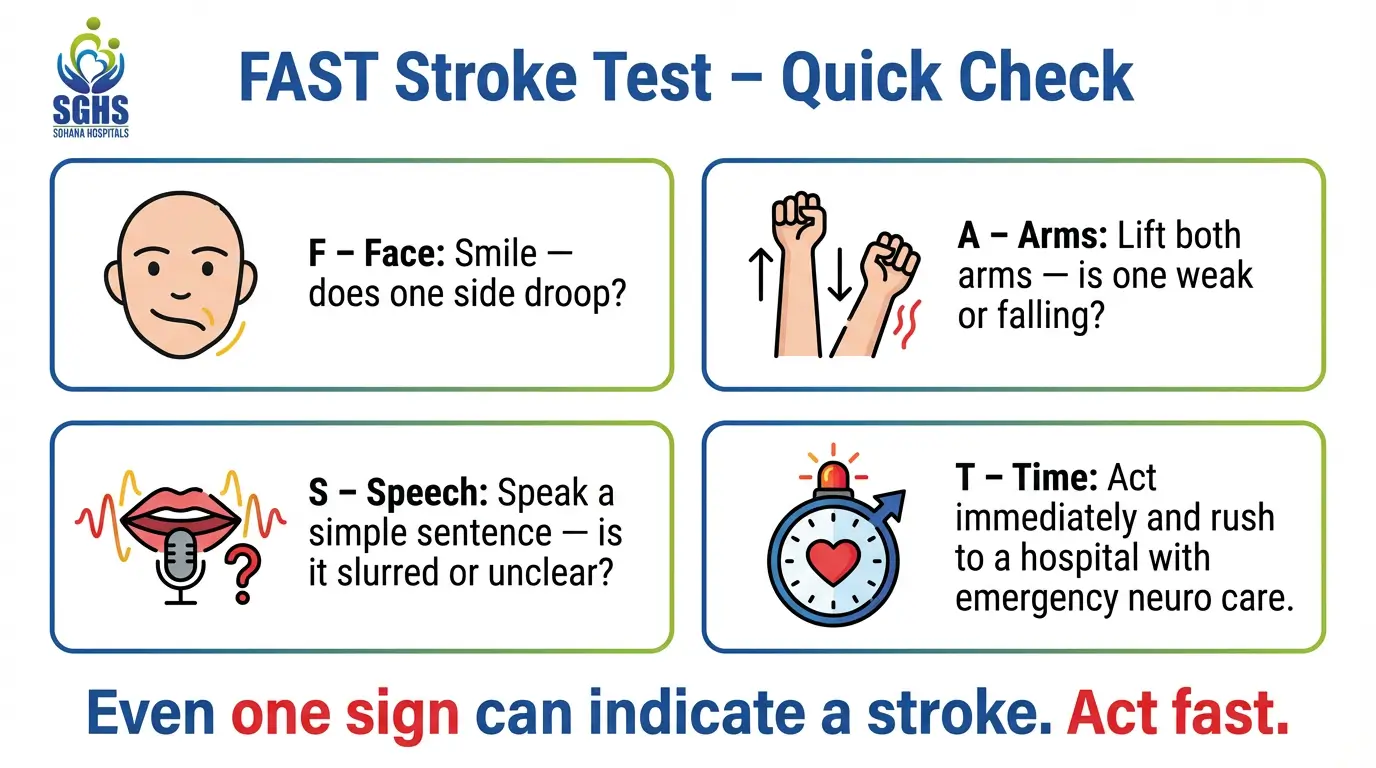
Visual Representation of FAST Stroke Test
F – Face: Ask the person to smile. Does one side of their face droop?
A – Arms: Ask the person to lift both arms together. Are they unable to lift one arm?
S – Speech: Ask them to speak a simple line. Is speech slurred, unclear, or absent?
T – Time: Time saved is brain saved. In case of a stroke, immediately rush to a hospital that offers emergency neuro care.
Only one detectable sign? It could still point to a brain stroke!
Who Is at Higher Risk of Brain Stroke?
While stroke can affect anyone, certain factors increase the risk:
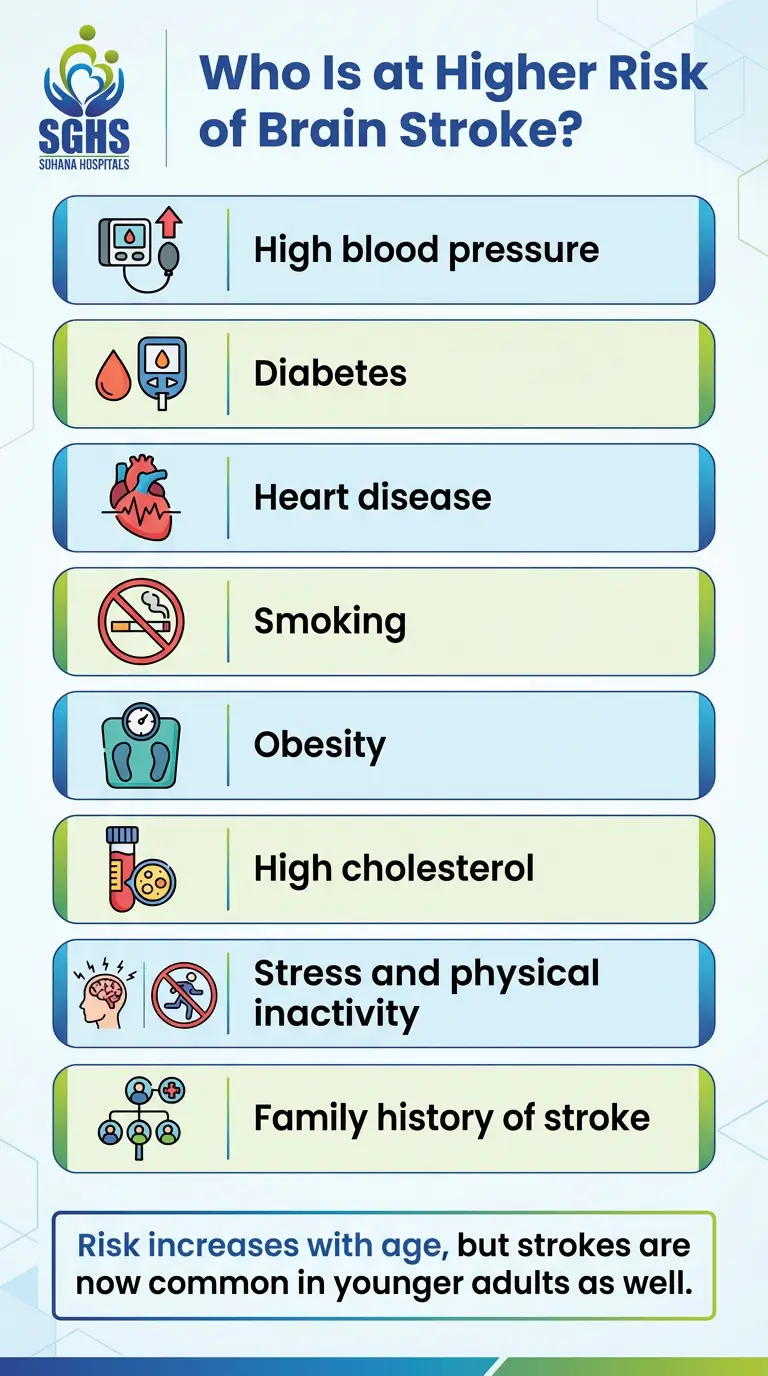
- High blood pressure
- Diabetes
- Heart disease
- Smoking
- Obesity
- High cholesterol
- Stress and lack of physical activity
- Family history of stroke
Older adults are at higher risk, but strokes are becoming increasingly common in younger people (2), too.
Why is Immediate Treatment Critical?
Brain cells begin to die within minutes of a stroke, and this damage is irreversible. Delayed treatment can lead to diverse lifelong disabilities:
- Permanent paralysis
- Speech difficulties (even total loss of speech)
- Memory loss
- Vision problems
- Death
Prompt medical care can significantly control brain damage and improve recovery outcomes.
Stroke Diagnosis and Treatment
State-of-the-art super-speciality hospitals like Sohana Hospital, Mohali, have all the necessary facilities for proper diagnosis and treatment of stroke. These typically include:
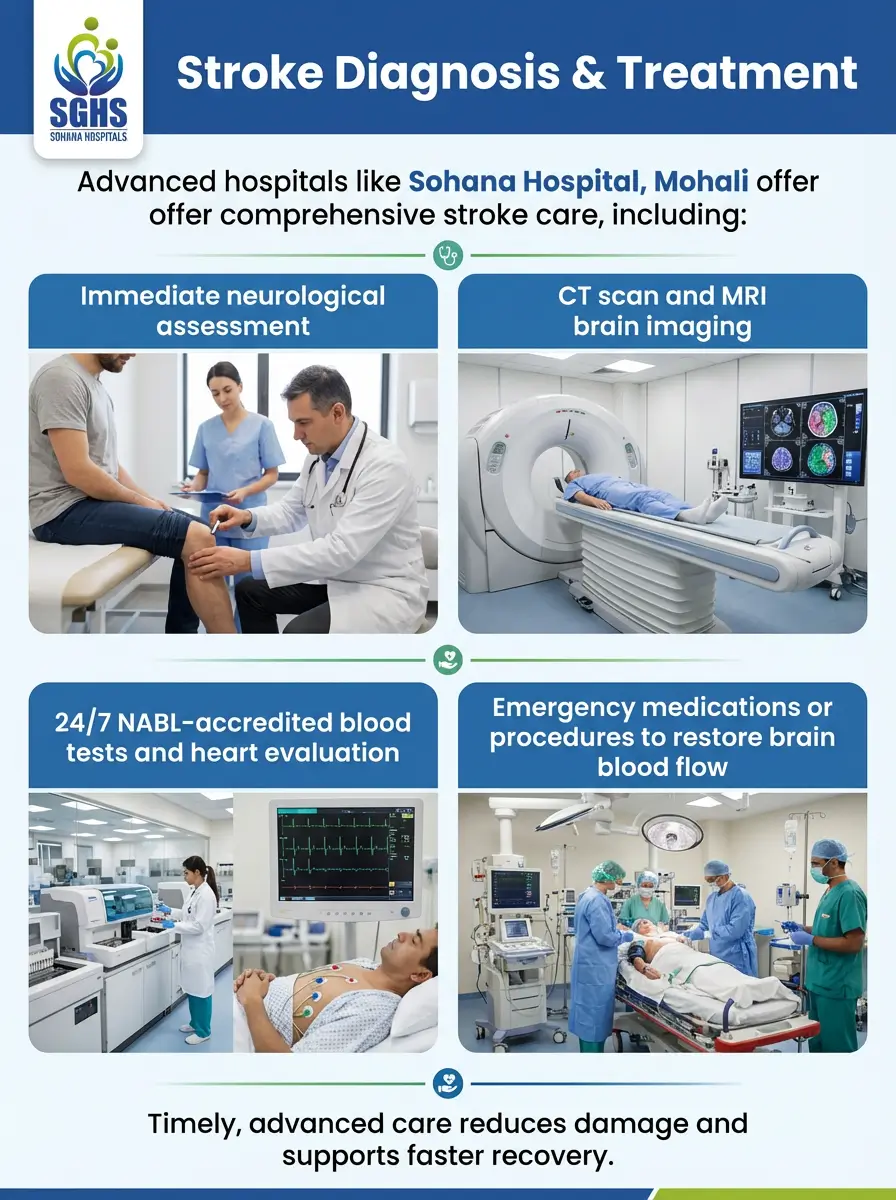
- Immediate neurological assessment
- Advanced brain imaging tests such as CT scan and MRI
- NABL-accredited blood tests and heart evaluation amenities (24X7)
- Emergency medications or procedures to restore blood flow to the brain
Advanced stroke care can help limit damage and promote faster rehabilitation.
Stroke Care at Sohana Hospital
Sohana Hospital, Mohali, is a multi-super speciality hospital where patients have access to:
- Highly experienced neurologists
- 24X7 availability of medical staff for emergency & critical support
- Advanced diagnostic imaging
- Prompt emergency care for stroke patients
- Clot-dissolving thrombolysis injection
- Clot-busting surgery in acute stroke patients within the stipulated time
- Comprehensive post-stroke rehabilitation support
At Sohana Hospital, we understand the value of each life and are always ready to deal with any unforeseen medical emergencies, including brain stroke – without wasting a minute. The hospital, with its 200-bedded ICU and world-class infrastructure focuses on early detection, rapid treatment, and long-term recovery.
When to See a Doctor
You should seek immediate medical help if you or someone around you experiences:
- Sudden weakness or numbness in limbs
- Speech or vision problems
- Sudden dizziness or severe headache
- Sudden inability to maintain balance
These signs must not be taken lightly. Don’t expect such symptoms to improve or go away on their own. Stroke has become a grave public health issue, ruining an increasing number of lives each year.
Final Thoughts
A stroke can hit anybody without warning. But knowing the early signs can make a profound difference. Acting quickly can save the life of your loved one(s) and prevent long-term complications. Awareness, timely action, and expert medical care are the keys to ensuring better outcomes.
If you notice stroke symptoms in anybody around you, immediately contact emergency care services at Sohana Hospital and get treated by the best neurologists in Punjab. It is a race against time, and Sohana Hospital is always ready.
FAQs on Brain Stroke Symptoms
1. What are the early stroke symptoms?
Early brain stroke symptoms typically include one or more of the following: face drooping, weakness in one arm or leg, unclear speech, vision problems, dizziness, confusion, and severe headache. It is a serious condition that calls for immediate medical help to prevent permanent brain damage.
2. What are cerebral attack symptoms?
Cerebral attack symptoms (or brain attack symptoms) include sudden numbness on one side of the body, trouble speaking or understanding even simple instructions, loss of balance, and sudden vision changes. These signs must not be overlooked. Emergency treatment is necessary to save your loved one’s life from permanent disability or death.
3. What are cerebral stroke symptoms?
Cerebral stroke symptoms can include drooping face, difficulty lifting an arm or moving a leg, unclear speech, confusion, vision loss, and sudden, severe headache. Symptoms may worsen quickly, so it is essential that the person experiencing the signs be taken to the hospital without delay.
Reference Source:
- https://www.nature.com/articles/s41598-024-72551-4#:~:text=In%20India%2C%20the,100%2C000%20population%20annually%2C
- https://pmc.ncbi.nlm.nih.gov/articles/PMC8954312/#:~:text=An%20absolute%20increase%20in%20stroke%20deaths%20by%2036.7%25%20%5B95%25%20UI%2C%2026.3%E2%80%9348.5%5D%20among%20younger%20adults%20was%20observed%20in%20developing%20countries%2C