
Do you know Vitamin D is one of the most significant micronutrients needed for good bone health? Many clinical studies and research indicate that a deficiency of Vitamin D can result in joint pain and inflammation.
Since Vitamin D is essential to bone health and bone building, a lack of it has an adverse impact on the bones. That is why, this knowledge is often a part of school syllabus so that we may take steps to get adequate Vitamin D well in time.
In this blog, we are going to learn more about the significance of Vitamin D, how it becomes a prominent reason for joint pain, and how to overcome its deficiency.
What is the Significance of Vitamin D for Health?
Also known as sunshine vitamin, Vitamin D is a necessary fat-soluble vitamin. It is Vitamin D that allows for absorption of Calcium and Phosphorus in your body, and thereby supports bone and joint health. In simple words, in the absence of sufficient Vitamin D, your body is unable to absorb Calcium and Phosphorus properly.
Vitamin D is also valuable to manage different autoimmune conditions, such as rheumatoid arthritis, systemic lupus erythematosus (SLE), Type 1 diabetes, ankylosing spondylitis, psoriatic arthritis (PsA), Sjogren’s Syndrome, and multiple sclerosis.
A deficiency of Vitamin D can also result in softening of bones (osteomalacia) in grown-up people. Children may get afflicted by rickets due to Vitamin D deficiency.
Another prominent condition associated with low levels of Vitamin D is osteoporosis.
| 👉 Did You Know? Nearly 490 million Indians are deficient in vitamin D – even though the country receives ample sunshine! |
Reasons for Vitamin D Deficiency
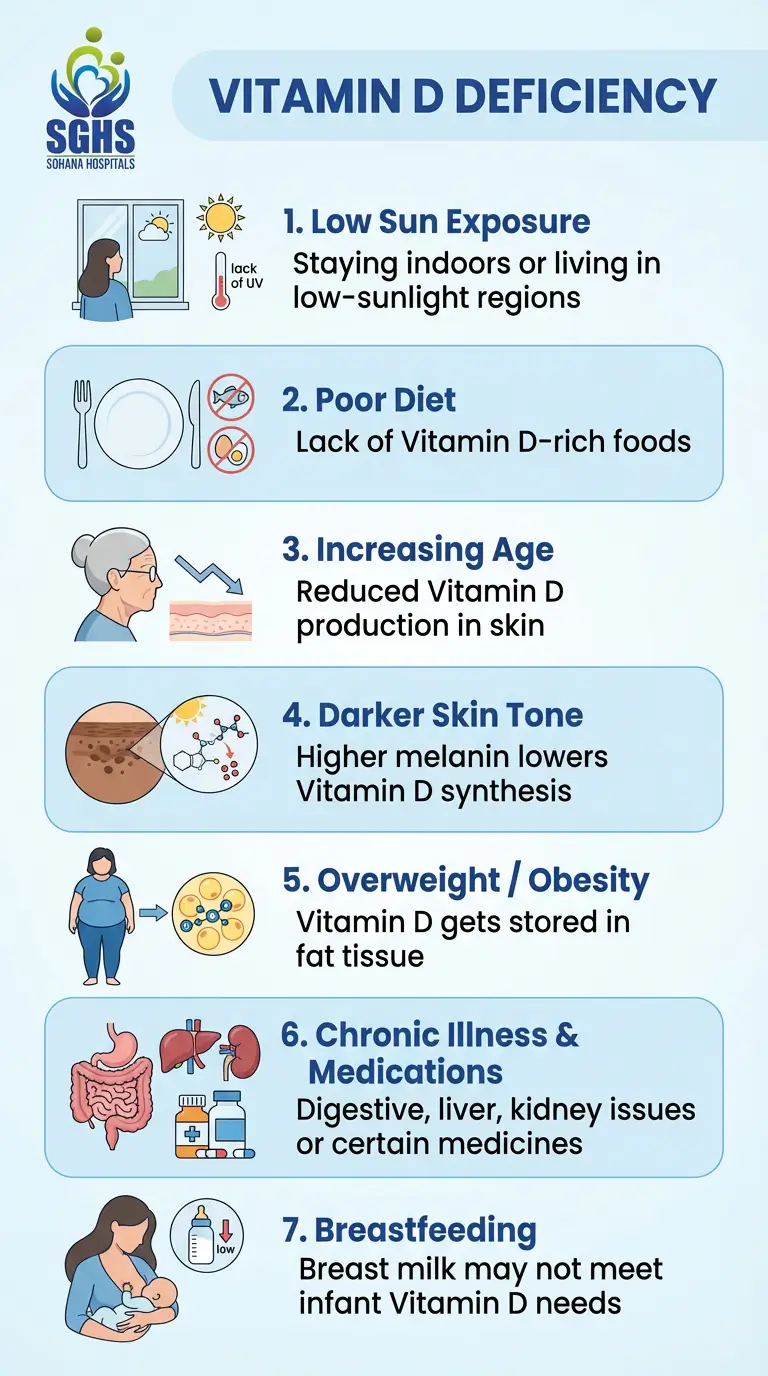
Not getting enough sun exposure
Presently, most people – young, old, and even children, tend to stay indoors. This limits our exposure to natural sunlight. Also, those living in areas that get low sunlight for reasons like prolonged winters or being located far away from the equator, do not get adequate Vitamin D.
Poor Diet
Not incorporating food items rich in Vitamin D (e.g., milk, cheese, fortified tofu, eggs, oily fish, mushrooms, etc.) in your diet, is another reason for low levels of Vitamin D in your body.
Age
As age increases, skin tends to produce less Vitamin D from sunlight.
Darker Skin Complexion
The darker the skin tone (more melanin in skin), the lesser the production of Vitamin D from sunlight.
Overweight
Being obese affects utilisation of Vitamin D in the body. Since Vitamin D is fat-soluble, it may stay hidden in fat tissue.
Chronic Health Issues & Medications
Cystic fibrosis, celiac disease, Crohn’s disease, kidney disease, and liver disease can result in Vitamin D deficiency.
Medications that can interfere with Vitamin D absorption include certain steroids, laxatives, cholesterol-reducing medications, and drugs for seizure control.
Breastfeeding
Breast milk may not have sufficient Vitamin D for babies.
Researches that Link Vitamin D with Joint Pain
Medical studies reveal that poor levels of Vitamin D can predict knee and hip pain in senior patients over a period of 2-5 years.
Rheumatoid arthritis (RA) patients have been seen to be Vitamin D deficient.
Some studies also indicate that taking supplements of the vitamin may give relief from chronic joint pain.
*Note: For the best joint pain treatment and management of Vitamin D deficiency, consult expert rheumatology specialists in Mohali at Sohana Hospital.
Which Other Vitamins Can Help Reduce Joint Pain?
Calcium and Vitamin K promote strong bones.
Omega-3 fatty acids and probiotics may help control inflammation in joints.
Note: It is important to note that supplements cannot replace medicationsin RA or other autoimmune diseases.
Which are Vitamin D Rich Foods
Recommended Dietary Allowance of Vitamin D varies from person to person depending on their age and other factors. Adults are supposed to get 600-800 IU of Vitamin D per day. Babies, children, and teenagers should intake 400-600 IU of Vitamin D daily.
So, which food items to consume to get adequate doses of Vitamin D?
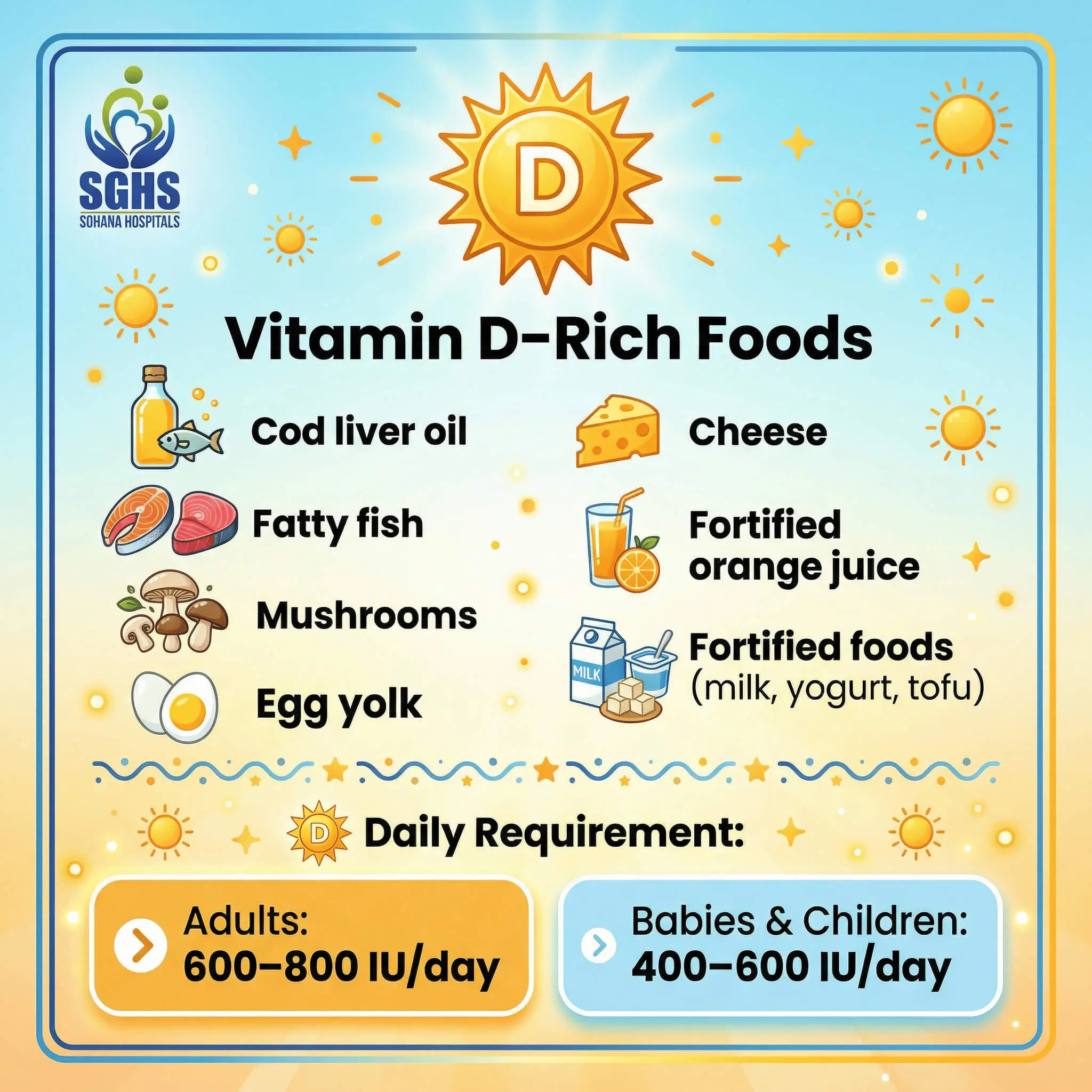
- Cod liver oil
- Fatty fish
- Mushrooms
- Egg yolks
- Cheese
- Fortified orange juice
- Fortified food items like yogurt, cow milk, tofu
How to Prevent Vitamin D Deficiency?
Sunlight
Get enough exposure to sunlight. This helps you get Vitamin D naturally.
Vitamin D-Rich Foods
Include in your diet foods like fatty fish, cheese, mushrooms, egg yolks, and fortified items.
What are Other Ways To Prevent Joint Pain?
Medications
Over-the-counter pain relief medicines like aspirin, ibuprofen, or acetaminophen may help you get short-term relief from joint pain.
Physiotherapy
Opt for muscle-strengthening exercises and other physiotherapist-advised exercises. You can also try heat and cold therapy.
Home Remedies
- Ice packs may help reduce inflammation
- Joint braces may give support to aching joints
- Yoga and other light exercises may prove effective during initial stages of joint pain
For personalised treatment, consult an Orthopaedist in Mohali at Sohana Hospital.
Conclusion
Low levels of Vitamin D are seen to be associated with many joint conditions. These typically include Rheumatoid Arthritis (RA), Systemic Lupus Erythematosus (SLE), Psoriatic Arthritis, Ankylosing Spondylitis, Sjogren’s Syndrome, and Systemic Sclerosis.
Patients may have to deal with increased joint pain, impacting their quality of life. Research points to a key role of Vitamin D in regulating the immune system and controlling inflammation.
Make sure you get adequate sun exposure, consume a diet rich in Vitamin D, and get advice from a trusted medical professional for joint pain treatment.
Any queries? Contact Rheumatology and Orthopaedics experts at Sohana Hospital, Mohali.
FAQs on Link Between Vitamin D and Joint Pain
1. How does Vitamin D affect joint health?
Vitamin D supports absorption of Calcium and Phosphorus, which are necessary for bone and joint health.
2. Can Vitamin D deficiency cause joint pain?
Yes. Poor levels of Vitamin D may result in stiffness, pain, and inflammation in joints. It may also lead to conditions like osteomalacia and osteoporosis.
3. What Happens If Vitamin D Is Low?
A person deficient in Vitamin D may suffer a diminished bone density, which may lead to osteoporosis and fractures. Severe lack of Vitamin D can cause children to have rickets, while adults may be at risk of osteomalacia – leading to fragile bones, muscle weakness, and pain in bones.
4. What are low Vitamin D symptoms?
Those with a lack of Vitamin D may experience tiredness, joint or bone pain, muscle weakness, mood changes, slow healing of wounds, respiratory problems, and frequent infections.
5. How to increase Vitamin D?
Get enough sunlight, consume Vitamin D-rich foods like egg yolks, mushrooms, fish, or take supplements as per advice of your healthcare provider.
6. Which are Vitamin D foods for vegetarians?
In vegetables, you can consume mushrooms, as they contain reasonable levels of vitamin D (especially if they’ve been exposed to UV light). Apart from this, you can also consume fortified items such as cereals and juices, etc.
7. What is the best time to take Vitamin D?
You can take Vitamin D at any time of the day. Just make sure you take it with a meal or snack that has healthy fats. This will enhance the absorption of the vitamin for maximum benefit.
8. Can too much Vitamin D be harmful?
Yes. Excessive Vitamin D in the body can result in toxicity (causing signs like nausea, vomiting, loss of appetite, weakness, constipation, etc.), kidney damage, and hypercalcemia7.
9. Which foods are best for joint pain relief?
Leafy green vegetables, fatty fish, nuts, and fortified products can reduce inflammation and give relief from joint pain.
10. Should I consult a doctor for joint pain?
Yes. If joint pain continues for more than a few days, you may need evaluation by an experienced orthopaedist or rheumatologist in Mohali at Sohana Hospital.
11. Are Vitamin D supplements helpful in rheumatoid arthritis?
Research has found low Vitamin D in rheumatoid arthritis patients. However, you should consult your doctor before you start any supplements.
12. Can Vitamin D deficiency cause joint pain in children?
Yes. Deficiency of Vitamin D in children can result in rickets, which may cause pain in bones and joints.
Reference Source:
- https://www.mdpi.com/2218-273X/13/4/709#:~:text=It%20has%20been%20shown%20to,context%20of%20autoimmune%20rheumatic%20disorders.
- https://www.medicalnewstoday.com/articles/321923#vitamin-d-overview:~:text=This%20is%20called%20osteomalacia%20in%20adults%20and%20rickets%20in%20children.
- https://journals.lww.com/indjem/fulltext/2025/01000/prevention_and_treatment_of_vitamin_d_deficiency.3.aspx#:~:text=almost%20490%20million%20people%20deficient%20in%20vitamin%20D
- https://www.sciencedirect.com/science/article/abs/pii/S0960076019302092
- https://ods.od.nih.gov/factsheets/VitaminD-HealthProfessional/#:~:text=Recommended%20Intakes-,The%20Food%20and%20Nutrition%20Board%20at%20the%20National%20Academies%20of%20Sciences,400%E2%80%93600%20IU)%20for%20infants%2C%20children%2C%20and%20adolescents%2C%20depending%20on%20age.,-Intake%20recommendations%20for
- https://www.healthline.com/nutrition/vitamin-d-foods-for-vegetarians#fortified-foods:~:text=5.-,Fortified%20foods,-Although%20some%20foods
- https://medlineplus.gov/vitaminddeficiency.html#:~:text=of%20blood%20calcium%20(-,hypercalcemia,-)%20can%20cause%20confusion