
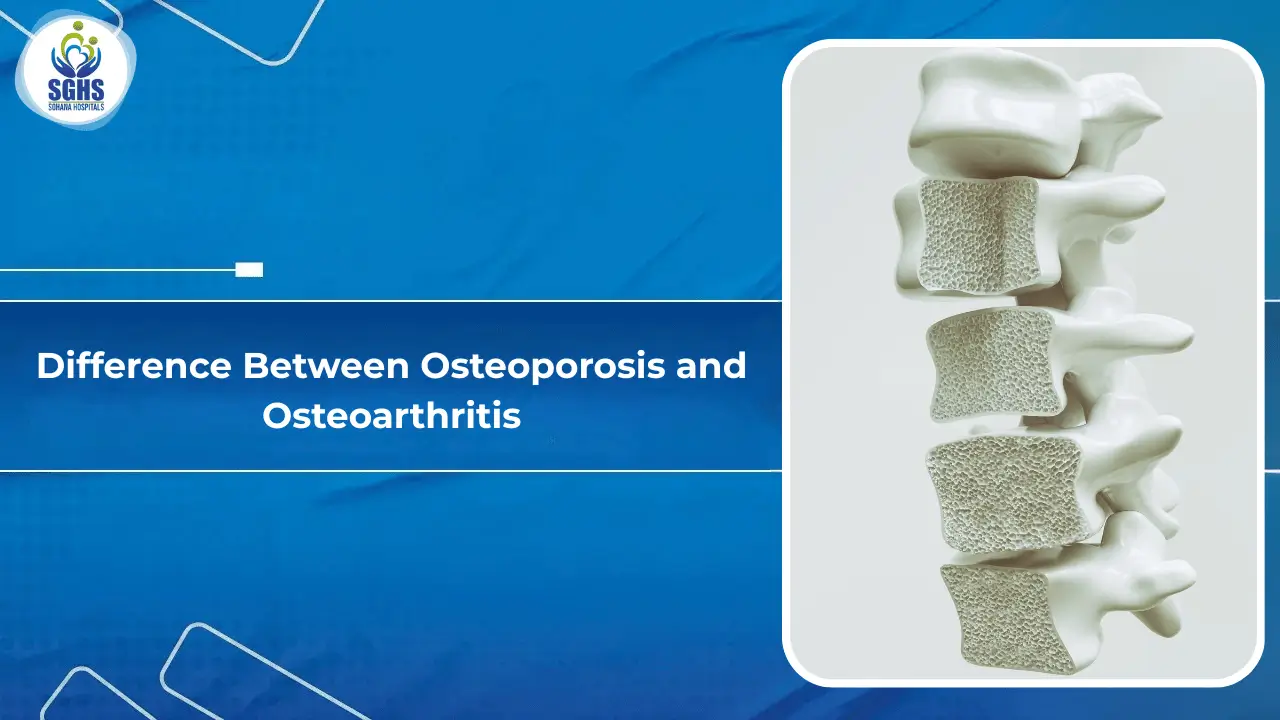
Osteoporosis and osteoarthritis are two common conditions associated with advancing age. While both are bone and joint conditions, they affect the body differently. So, how do they differ? What are the symptoms, causes, and treatment options? And how to safeguard yourself from both?
Osteoporosis vs Osteoarthritis: The Basics
What is Osteoporosis?
Osteoporosis makes the bones lose strength and turns them delicate and easily breakable. This puts them at high risk of breaking. It happens when there is a significant loss of bone mass and degradation of bone tissue. The underlying cause may be the body’s inability to make adequate new bone, or when old bone deteriorates at a rate faster than it is produced.
Contributing factors include hormonal changes, calcium or vitamin D deficiency, age, and lifestyle factors. While it may not directly result in joint pain, it may cause fractures, especially in the wrists, hips, and spine.
Osteoporosis currently affects approximately 23 crore Indians(1) aged over 50.
What is Osteoarthritis?
Osteoarthritis is a degenerative disease affecting the joints, not directly the bones. It is associated with wearing out of the cartilage – the smooth and slippery tissue that acts as a shock absorber, cushioning the bones so that they do not rub against each other. The condition may gradually result in painful and swollen joints, so that movement becomes restricted.
The major reason behind osteoarthritis is the deterioration of joint cartilage over the years. Contributing factors include aging, excessive use of joints, past joint injuries, and family history. It may result in pain, swelling, stiffness in joints, affecting mobility.
Osteoarthritis currently affects nearly 62.35 million Indian adults(2).
Symptoms
What are Osteoporosis Symptoms?
Osteoporosis may not have any noticeable signs and symptoms until one day you get a broken bone. This is what makes it a dangerous condition. Here are some warning signs of osteoporosis:
- A fracture, even at slight collision
- Losing height over time
- Back ache
- Stooped posture because of bone loss
What are Osteoarthritis Symptoms?
Osteoarthritis often develops slowly and starts causing discomfort and pain without an injury. Here are some common symptoms of osteoarthritis:
- Joint pain with or after movement
- Stiffness after periods of rest and in the morning
- Swollen or tender joints
- Decreased flexibility and range of motion
- Bone spurs around affected joints
Causes
What Causes Osteoporosis?
Here is a list of common risk factors for osteoporosis:
- Age over 50
- Being a woman (especially post menopause)
- Family History
- A thin body frame (due to less bone mass)
- Lower levels of hormones (estrogen in women, testosterone in men)
- Calcium and vitamin D deficiency
- A sedentary lifestyle
- Excessive alcohol consumption
- Use of tobacco
- Medical Conditions (e.g., rheumatoid arthritis, celiac disease, kidney disease, thyroid, etc.)
- Overuse of blood thinners, thyroid hormone, diuretics, and anticonvulsants
What Causes Osteoarthritis?
Primary risk factors for osteoarthritis include:
- Age over 55
- Joint injury in the past
- Obesity (speeds up cartilage wear)
- Family history
- Being a woman
- Repetitive stress on a particular joint
- Metabolic conditions (e.g., diabetes, high cholesterol, etc.)
Distribution in the Body
Which Body Parts Does Osteoporosis Affect?
While osteoporosis can occur in just any bone in the body, it is the spine, hips, and wrists that often get fractured. Vertebrae in the spine get fractured, there may be changes in posture (may become stooped), a loss of height, and a chronic backache.
Which Body Parts Does Osteoarthritis Affect?
Although osteoarthritis can afflict any joint in the body, the most commonly affected joints are the weight-bearing joints (the knees, hips, and spine). Hands, fingers, and other joints that have had injuries in the past or have been overused may also be at a higher risk.
Treatment Approaches
What is Osteoporosis Treatment?
Osteoporosis treatment aims at managing the condition and promoting bone health.
Expert osteoporosis experts at Sohana Hospital work on the following strategies to help you deal with osteoporosis and lead an active life:
- Suggesting the right lifestyle modifications
- What to include in your diet to make it balanced and get adequate calcium and vitamin D
- The right exercises (weight-bearing and muscle-strengthening exercises)
- Medications to slow down bone loss and enhance bone density
- Strategies to safeguard you from tripping and falling
What is Osteoarthritis Treatment?
Osteoarthritis treatment at Sohana Hospital focuses on giving you relief from pain, enhancing joint function, and maintaining movement and flexibility in the affected joints.
Based on your individual symptoms, you may be recommended one or more of the following:
- Osteoarthritis medication
- Physical therapy and exercises
- Tips to manage weight
- Supportive devices
- Joint replacement surgery (in advanced cases)
At a Glance: Osteoporosis vs Osteoarthritis
Let’s have a quick look at the key differences between osteoporosis and osteoarthritis:
| Feature | Osteoporosis | Osteoarthritis |
| What it is | A bone condition (makes bones weak, porous & brittle) | A joint condition (Causes protective cartilage to wear out) |
| Main symptom | A silent disease (often no symptoms until a fracture) | A painful disease (main symptom – pain – increases with movement) |
| Most affected bones/joints | Bones in hips, spine & wrist | Joints in knees, hips, hands & spine |
| Diagnostic tools | DEXA scan | Physical checkup & X-rays |
| Treatment goal | Slow down bone loss & prevent fractures | Pain management & function improvement |
| Role of Surgery | Repair fractures | Replace affected joints |
| More About Diagnostic Tests – DEXA & Physical checkup + X-rays – DEXA scan – A DEXA/ DXA scan or dual-energy X-ray absorptiometry is a quick and painless imaging test used to check your bone health. They measure the mineral content and strength of your bones. These scans are performed by passing X-rays through your body – typically the hips and the spine. They help diagnose conditions such as bone thinning, osteoporosis, osteopenia, etc. – X-ray & physical examination – In order to assess your bone health, the doctor will review your medical history and ask if you’ve been experiencing joint pain. Some other points of investigation might include family history, pain duration, and joint stiffness etc. A physical examination includes checking for signs of swelling and tenderness while also assessing the range of movement in the joint. An X-ray is the most common kind of imaging test to identify changes in bone density and structure, such as reduced space between joints, bone spurs, and cysts. |
How to Prevent Osteoporosis and Osteoarthritis
The good news? You can take measures to stay safe from osteoporosis and osteoarthritis and/or slow down their progression.
Here are some healthy habits to keep bones and joints strong:
- Eat a balanced diet with regular intake of calcium and vitamin D
- Maintain a healthy weight
- Exercise regularly (weight-bearing and resistance workouts for strong bones and joints)
- Limit alcohol consumption
- Quit smoking
- Supplements or medications (with doctor’s advice)
When to Visit a Doctor
Although osteoporosis and osteoarthritis are different conditions, an individual may be afflicted by both simultaneously.
If you have been experiencing any of the above-mentioned symptoms of osteoporosis or osteoarthritis, such as persistent joint pain, backache, or stiff joints, you must consult a trusted orthopaedic/rheumatology expert. Also, if you fall in the high-risk category for developing osteoporosis or osteoarthritis, stay in constant touch with your healthcare provider.
Since both conditions can only be treated and managed, but not cured, early diagnosis and proper treatment are essential. At Sohana Hospital, highly experienced rheumatologists, joint specialists, and the best orthopaedic doctors in Chandigarh utilise the most advanced diagnostic tools to evaluate your condition and provide personalised treatment according to your specific bone condition and stage.
So, whether you are experiencing the initial signs of joint discomfort or intend to stay ahead of bone conditions, the right preventive strategies given by expert bone specialists at Sohana Hospital can help preserve joint movement, flexibility, and comfort for years to come.
Be aware, be active, and beat osteoporosis and osteoarthritis with Sohana Hospital.
Reference Source:
- https://pmc.ncbi.nlm.nih.gov/articles/PMC10721571/#:~:text=23%20crore%20Indians%20over%20the%20age%20of%2050%C2%A0years%20in%202015%20had%20osteoporosis.
- https://pubmed.ncbi.nlm.nih.gov/35598766/#:~:text=Around%2023.46%20million%20individuals%20in%20India%20had%20OA%20in%201990%3B%20this%20increased%20to%2062.35%20million%20in%202019.