
हिंदी में पढ़ें: क्या वजन घटाने से घुटने का दर्द कम हो सकता है?
Did your orthopaedic doctor ask you to reduce your weight? And you are wondering if weight loss can actually help control knee pain? If so, this blog is for you.
| Did you know? Nearly 28.7%[1] of Indians suffer from knee osteoarthritis! And obesity is a major risk factor. |
Weight & Knee Connection
Before we begin, let’s have a look at some facts:
- When you walk on a level surface, the pressure on your knees is roughly 1.5 times your body weight. It means if you weigh 80 kg, your knees bear 120 kg at each step.
- While walking up a slope or climbing up or down the stairs, the force on your knees is 2-3 times your body weight.
- When you squat to pick up something or tie your shoelaces, the force on your knees can be 4-5 times your body weight!
That information reveals a lot about the link between weight and knees.
| Did you know? A high BMI (Body Mass Index) in young people (as early as 15 years) is linked with a higher risk of osteoarthritis at 53 years.[2] |
How Does Excess Weight Harm Knees?
Excess weight increases your osteoarthritis risk in two ways:
- Excess weight means extra load on your knees, and hence more wear-and-tear (cartilage breaking down), leading to osteoarthritis
- Extra body weight may also alter a person’s gait, putting even more stress on the knee joint
- Obesity is also linked with inflammation in your body, as fat cells produce inflammation-causing proteins that contribute to osteoarthritis, resulting in knee pain
Also Read: Osteoarthritis: Symptoms, Types, Causes, Risk Factors, Stages, Treatment
Will Shedding a Few Kgs Help?
Research reveals that overweight individuals can lower their symptoms of knee arthritis by losing at least 20% of their weight.[3]
A study was conducted by the University of California, San Francisco (UCSF). MRIs of the participants were compared at the beginning of the study and after 4 years. Here are the key findings[4]:
- Participants with 5% – 10% weight loss had lower rates of cartilage degeneration than those who did not reduce weight.
- People who lost substantial weight depicted maximum benefits – they saved more healthy cartilage and had less meniscal damage.
So, yes. If you lose even a few kgs, it can help reduce the force on your knees and protect them.
Also Read: What Causes Knee Pain at a Young Age?
| Did you know? Weight management means maintaining your weight on a steady basis, not oscillating between weight loss and weight gain. |
What are the Best Ways to Lose Weight?
Setting out on a weight loss journey may seem challenging, but small steps can yield significant results. Just stay motivated and be consistent.
Here are some practical steps to lose weight and control knee pain:
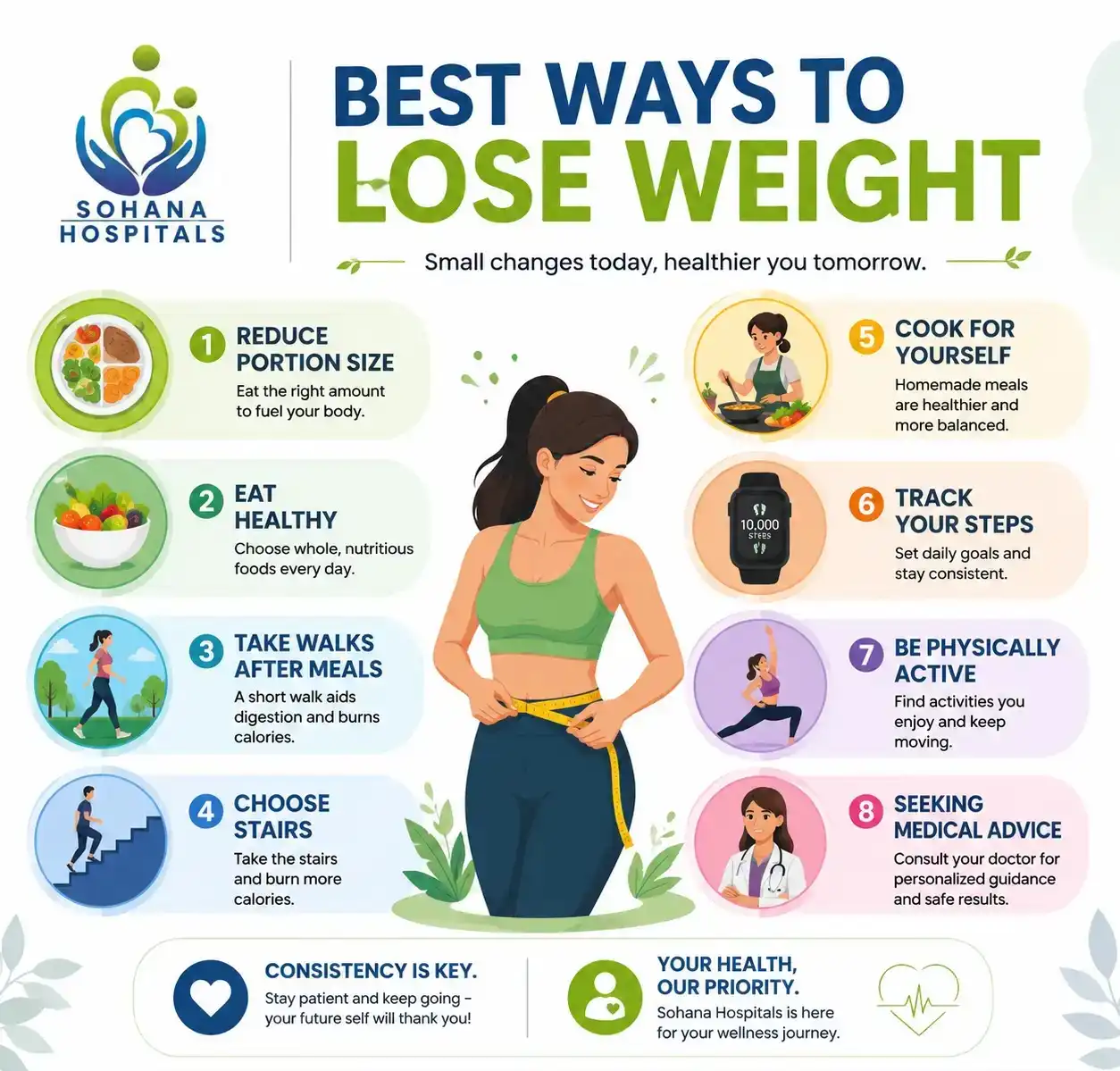
Reduce Portion Size
Take smaller meals to control calorie intake. It can help lower the risk of metabolic syndrome and slow down OA progression.
Eat Healthy
Eat an anti-inflammatory diet, with plenty of fresh fruits and vegetables, other fiber-rich foods, and healthy oils. These fibre-rich food items provide you with essential vitamins and minerals, and also make you feel fuller without excess calories.
Also Read: Which Food Is Good For Knee Pain?
Take Walks After Meals
Post-meal walks can help improve digestion and promote weight loss. Aim for 1,000 to 2,000 steps at a light-to-moderate pace – 10 to 15 minutes after finishing your meal.
Choose Stairs
Avoid lifts and escalators and opt for stairs. It can help burn calories and boost heart health.
Also Read: How To Avoid Knee Pain In Old Age
Cook for Yourself
Preparing your own food allows you to choose healthier ingredients and control meal size. Outside food you order is often loaded with unhealthy salts, sugars, and carbs.
Track Your Steps
Use a fitness tracker or a pedometer to track your daily activity levels. This is a small step that can help you stay motivated and accomplish your weight loss goals.
Be Physically Active
Go for walking, cycling, yoga, swimming, or some other low-impact activity for just 5 to 10 minutes (in the beginning). Exercise may help you not only reduce weight but also slow down arthritis progression by improving strength, flexibility, and overall joint health.
Also Read: Do Home Remedies Help Treat Knee Pain?
Seeking Medical Advice
Lifestyle changes may significantly help you lose weight and control knee pain. Still, it is important to consult an orthopaedic specialist to get medical guidance. They will give you personalised advice on a comprehensive approach to pain management.
Sohana Hospital, Mohali, has the best knee pain doctors, who discuss your medical history, conduct a physical examination, and accordingly devise a plan for you. This plan includes everything from lifestyle changes, the right exercises for you, pain-relief medicines, and informing you about other suitable treatment options.
Also Read: Knee Osteoarthritis Treatment Without Surgery: Is it Possible?
Conclusion
Being overweight and knee pain are interrelated. But the good news is that losing even a few kgs can help reduce the risk of further knee damage, osteoarthritis, and control knee pain.
By sticking to a healthy lifestyle and shedding weight through a combination of exercise and a balanced diet, you can look forward to managing knee pain, delaying surgery, and improving overall quality of life.
It is advisable to seek medical guidance for a personalised approach to effectively manage knee pain and promote better joint health in the long term.
Remember, every step towards weight loss takes you closer to a relatively pain-free life and better movement.
Maintain a healthy weight, keep knee pain away!
Reference Source
- https://pmc.ncbi.nlm.nih.gov/articles/PMC5017174/#:~:text=Overall%20prevalence%20of%20knee%20OA%20was%20found%20to%20be%2028.7%25.%20The%20associated%20factors%20were%20found%20to%20be%20female%20gender%20(prevalence%20of%2031.6%25)%20(P%20%3D%200.007)%2C%20obesity%20(P%20%3D%200.04)%2C%20age%20(P%20%3D%200.001)%20and%20sedentary%20work%20(P%20%3D%200.001).
- https://www.jpmer.com/abstractArticleContentBrowse/JPMER/23123/JPJ/fullText#:~:text=It%20is%20a,being%20constantly%20overweight.
- https://newsinhealth.nih.gov/2018/09/weight-loss-helps-knee-arthritis
- https://www.arthritis.org/news/study-confirms-losing-weight-may-save-knees#:~:text=Researchers%20compared%20the,less%20menisci%20damage.