
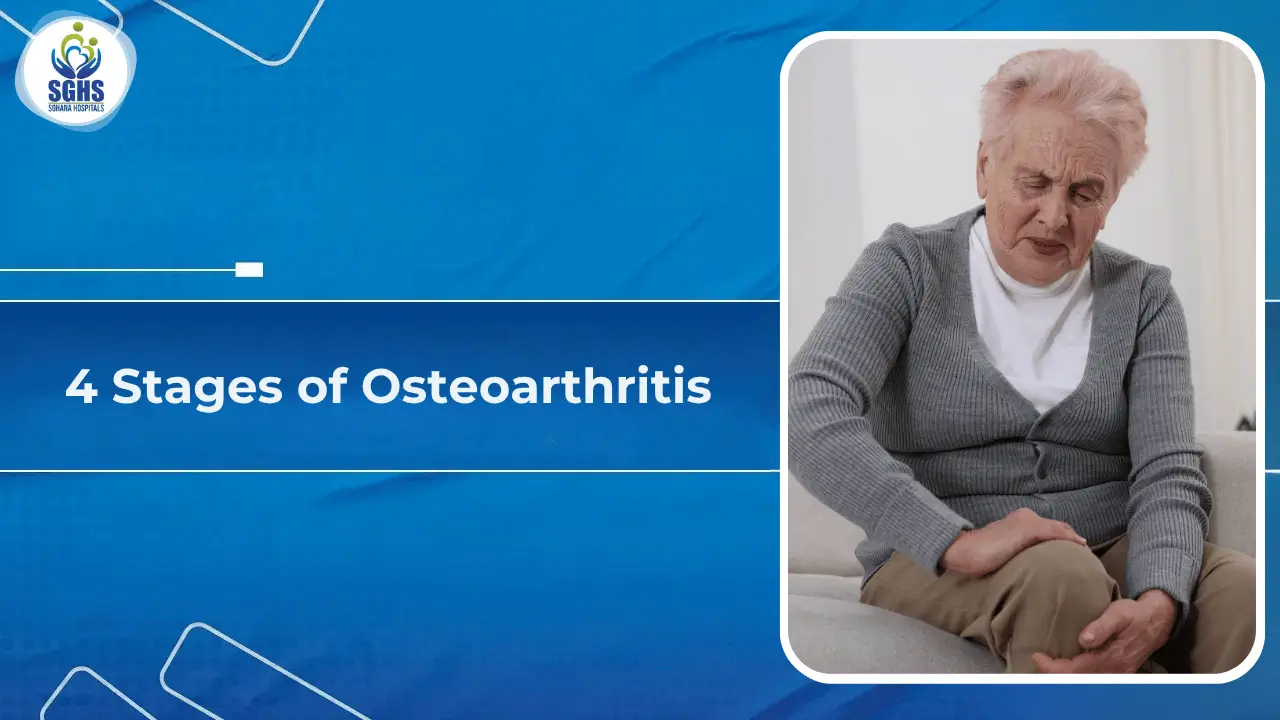
Knee osteoarthritis (OA) has become a very common problem today. And the most effective treatment at the advanced stage of OA, when pain and disability become severe, is knee replacement surgery. While knee replacement is one of the most successful medical procedures, most people would like to avoid it.
The key lies in understanding the 4 stages of osteoarthritis. This knowledge will enable you to take the right steps at the right time, to keep your knees healthier for longer. In this blog, we are going to explore osteoarthritis stages.
🚨News Alert🚨
To understand the gravity of the situation, it is important to know the Osteoarthritis (OA) Statistics in India[1]:
👉 OA is the 2nd most common joint disease
👉 Affects nearly 22% to 39% of the Indian population
👉 Women are at a higher risk than men
👉 Prevalence rises rapidly with age
👉 Almost 45% of women aged above 65 years have osteoarthritis symptoms
👉 Tests show the problem in 70% of individuals aged 65+
👉 Knee OA is a prominent cause of impaired movement, especially in females
Understanding Knee Anatomy
Before we delve into the stages of knee degeneration due to osteoarthritis, it is vital to know a little about the structure of your knee.
The knee joint is located in the middle of your leg. It is the biggest joint in your body. It works like a door hinge, allowing you to walk, bend your legs, straighten them, run, jump, and maintain your balance.
Here is an overview of the parts of the knee:
| Part of the Knee | Explanation |
| Bones | Femur (or thigh) bone, tibia (or shin) bone, and patella (or kneecap) |
| Cartilage | Tough, flexible connective tissue, working as a shock absorber to protect the knees |
| Ligaments | Bands of tissue connecting the thigh bone to the lower leg bones |
| Muscles | Soft elastic tissue that supports movement |
| Nerves | Wire-like parts that transmit signals from the brain to the knees and vice versa, allowing you to feel sensations and move your muscles |
What Is Knee Osteoarthritis (OA)?
Knee Osteoarthritis (OA) is a condition that causes degeneration of the knee joint. The main reason is damaged cartilage. The cartilage is responsible for smooth, frictionless knee mobility. It is the cartilage that many people refer to as ‘gap’. Healthy knees have an adequate gap between bones.
When it gets damaged, the bones tend to rub against each other. The result is osteoarthritis – pain, inflammation, stiffness, swelling, and in severe cases, deformity in the knee joint.
Stages of Knee Osteoarthritis
There are 4 main stages in the progression of osteoarthritis, from early to advanced. Each stage needs a different treatment strategy to bring relief from symptoms and enhance the quality of life. Let’s have a look:
Pre-Osteoarthritis
- The knee joint seems normal and healthy
- No clear symptoms
- Cells may have started getting damaged
- May suggest the onset of OA
- May occur due to joint overuse or past knee injuries
Diagnosis
Normal imaging tests may not reveal anything
Treatment
Pre-OA treatment varies from person to person and depends on several factors. Your doctor may advise some supplements, lifestyle modifications, and exercises. Avoiding overuse and injury to your knees may slow down OA progression.
Stage 1: Early Osteoarthritis
- X-rays show very slight changes
- Cartilage has started wearing out
- The space between the bones in the knee has just started to reduce
Symptoms
- Some people may have a little pain on the inner side of their knee while climbing stairs, hiking, running, jumping, and other high-impact activities
- Some others may not notice any signs
Diagnosis
- Physical examination
- X-rays
- Laboratory tests
- MRI
- Cartilage mapping (to measure cartilage size on both sides of the knee)
Treatment
You may be advised to undergo physiotherapy and do other exercises. Also, you may need to make changes to your lifestyle, include supplements in your diet, or take medicines like NSAIDs (Non-Steroidal Anti-Inflammatory Drugs).
Stage 2: Mild Osteoarthritis
- Cartilage has started breaking down
- The gap between bones may have reduced a little
Symptoms
- Pain during and after activity
- Difficulty bending or straightening the knee
- Movement starts getting affected
Diagnosis
- Physical examination
- X-rays
- Laboratory tests
- MRI
- Cartilage mapping (to measure cartilage size on both sides of the knee)
Treatment
- Pain-relieving medications
- Weight loss and other lifestyle changes
- Low-impact exercises
- Strength training
- Supplements
- Wearing braces, wraps, shoe inserts, or knee support
- Hyaluronic injections
- PRP injections
- Corticosteroid injections
- Stem cell therapy
- Arthroscopy
Stage 3: Moderate Osteoarthritis
- Noticeable cartilage damage
- The gap between bones becomes visibly narrower
- Increased friction between bones
- Bones start rubbing against each other (kissing of bones)
- Bone spurs may develop
Symptoms
- Frequent pain while walking, climbing stairs, and performing other activities
- Swelling and inflammation around the knees
- Stiffness in joints, especially in the morning or after periods of rest
- Impaired mobility
Diagnosis
- Physical examination and symptom check
- Imaging tests (X-rays, MRI)
- Laboratory tests
- Cartilage mapping (to measure cartilage size on both sides of the knee)
- Arthroscopy for precise diagnosis
Treatment
- Over-the-counter pain medications (e.g., NSAIDs)
- Prescription painkillers
- Hyaluronic injections
- PRP injections
- Corticosteroid injections
- Weight loss and exercise
- Stem cell therapy
- Arthroscopy
Stage 4: Severe Osteoarthritis
- Cartilage may have almost completely worn out
- Negligible or no gap between bones
- One bone starts putting pressure on the other bone
- Bone spurs may increase in number and size
- Loose bodies may come up in the knees
Symptoms
- Severe pain while using the joints
- Increased swelling, inflammation, and stiffness around the knees
- Knees may get deformed
- Altered gait (waddling walk)
- Routine activities may feel challenging or impossible
- Normal life gets seriously disrupted
Diagnosis
- Physical examination and symptom analysis
- Imaging tests (X-rays, MRI, CT scan)
- Laboratory tests
Treatment
- Non-invasive treatments no longer prove effective
- Bone realignment (osteotomy)
- Traditional knee replacement surgery
- Robotic knee replacement surgery
👉 Read more: Osteoarthritis vs. Rheumatoid Arthritis: Symptoms, Causes & Treatment
Conclusion
Osteoarthritis is a condition that affects a significant percentage of Indians, especially older adults and women. Knee OA is a primary cause of impaired mobility in women. In the prevailing scenario, it is crucial not to ignore the early signs and symptoms of the condition. The reason is that in the early stages, specifically stages 1, 2, and 3, you can avail yourself of several non-invasive and minimally invasive treatment options, including stem cell therapy, knee injections, and arthroscopy.
However, once the damage becomes severe and you reach the advanced stage of osteoarthritis, it disrupts your daily life to the extent that even simple tasks may seem impossible. Some people may not be able to walk at all and become bedridden. At this stage, pain and disability become severe, and knee replacement is usually the most effective treatment. This emphasises the significance of timely care and treatment.
If you or a loved one is dealing with knee pain, consult the best orthopaedic doctors in Chandigarh – only at Sohana Hospital. The leading healthcare facility also has some of the most trusted rheumatology experts to deal with rheumatology-induced knee problems. The multidisciplinary team of doctors comes together to provide the best treatment for your knee condition.
The super-speciality hospital has advanced diagnostics and cutting-edge treatments under one roof. World-class infrastructure, coupled with compassionate patient-centric care and affordable pricing, is what sets Sohana Hospital apart. It is the most trusted choice of knee patients from India and abroad.
Do not ignore knee pain – Get timely care and stay active all your life!
Reference Source: