
Immunising your baby through vaccinations is one of the most essential ways you can safeguard your infant against serious diseases. The immunisation programme in India is directed by the National Programme on Immunisation (NPI) as well as paediatricians and ensures that protection is provided at the appropriate time, throughout these years when children are most vulnerable.
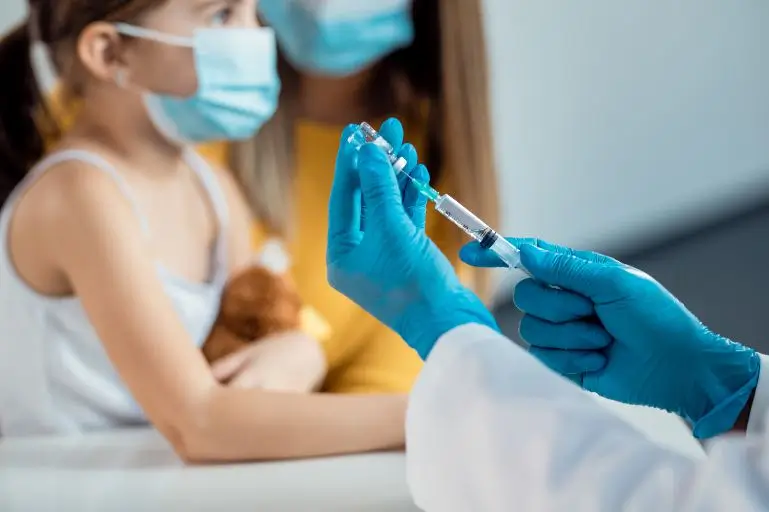
The vaccination schedule for the years 2026–2027 will follow recommendations made by both The Government of India and respective paediatric organisations; attention will be directed primarily to providing vaccines during the first year, a time when an infant’s immune system is still developing. In this article, we will discuss in detail the vaccines required for infants in detail, as backed by the best Child Specialist in Mohali.
Why are vaccines important?
Vaccines should be given early when babies are at risk of developing infections such as pneumonia, polio, hepatitis and measles. By providing vaccines for the first few months of life and building immunity to severe illness and complications, children can expect to receive additional vaccinations (booster doses) during their later childhood years.
Vaccinations at Birth (0 – 7 Days)
According to a Child Specialist in Mohali, at birth, your baby is given their first set of necessary vaccines:
• BCG for Tuberculosis
• OPV (Oral Polio Vaccine) zero dose
• Hepatitis B first dose
These vaccines offer immediate protection from serious disease.
Vaccinations at 6 Weeks (1.5 – 2 months)
These are the 1st doses of:
• DTP (Diphtheria, Tetanus, Pertussis)
• IPV (Polio Injection)
• Hib (Haemophilus influenzae type b)
• Hepatitis B (2nd dose)
• Rotavirus
• PCV (Pneumococcal)
These vaccines will protect your child from several serious diseases, such as pneumonia and meningitis.
Vaccinations at 10 Weeks Old (2.5 Months)
These are the 2nd doses of:
• DTP
• IPV
• Hib
• Rotavirus
• PCV
This is the time to improve the immune response from the 6-week-old vaccines.
Vaccinations at 14 Weeks Old (3.5 Months)
These are all 3rd doses:
• DTP
• IPV
• Hib
• Rotavirus
• PCV
These vaccines give the child a strong immune system against early childhood infections.
Six Months:
As per the best child hospital in Mohali, Hepatitis B Vaccine: May be needed if an additional dose has been required previously.
Influenza Vaccine: May be given annually starting from 6 months of age. The flu shot is important for infants as they are at high risk of being sick with the flu and may develop serious illnesses from the flu.
Nine Months:
MMR (Measles/Mumps/Rubella) Vaccine: 1st dose of MMR vaccine required by 9 months of age.
Typhoid Conjugate Vaccine: Required for children to be vaccinated against typhoid.
The above two vaccinations protect children from viral infections that can result in significant complications later in life.
Twelve Months:
Hepatitis A Vaccine: The 1st dose of the hepatitis A vaccine is given at age 1 year.
The hepatitis A vaccine protects against liver infections caused by eating unsafe food or drinking unsafe water.
Fifteen Months:
MMR Vaccine: 2nd dose of MMR given at 15 months of age.
Varicella Vaccine and (Chickenpox) Vaccine: 1st dose of varicella vaccine given at 15 months of age.
PCV Booster: if your child received a pneumococcal conjugate vaccine at age 6 months, he/she will need a booster dose at 15 months of age.
The above vaccines help ensure that your child continues to be protected as he/she grows up.
Sohana Hospital Mohali, is the best choice for parents considering the Best Paediatrician in Mohali, thanks to its advanced technology and North India’s most trusted and experienced obstetricians. Book your appointment today!