
Knee replacement is becoming an increasingly common and successful procedure all over the world. The reasons are not hard to understand. With rising longevity, people want to lead an active life well into their seventies, eighties, and even nineties. And knee replacement surgery allows them to do so.
However, there are also people who continue to avoid surgery due to various reasons, with a lack of knowledge being the predominant one. This delay may entail a huge cost, which is hard to comprehend initially. You only become aware of it once it happens to you.
In this blog, we are going to delve into the complications of delaying knee replacement for too long. The aim is to equip you with adequate knowledge so that you can make an informed decision.
Stages of Knee Damage
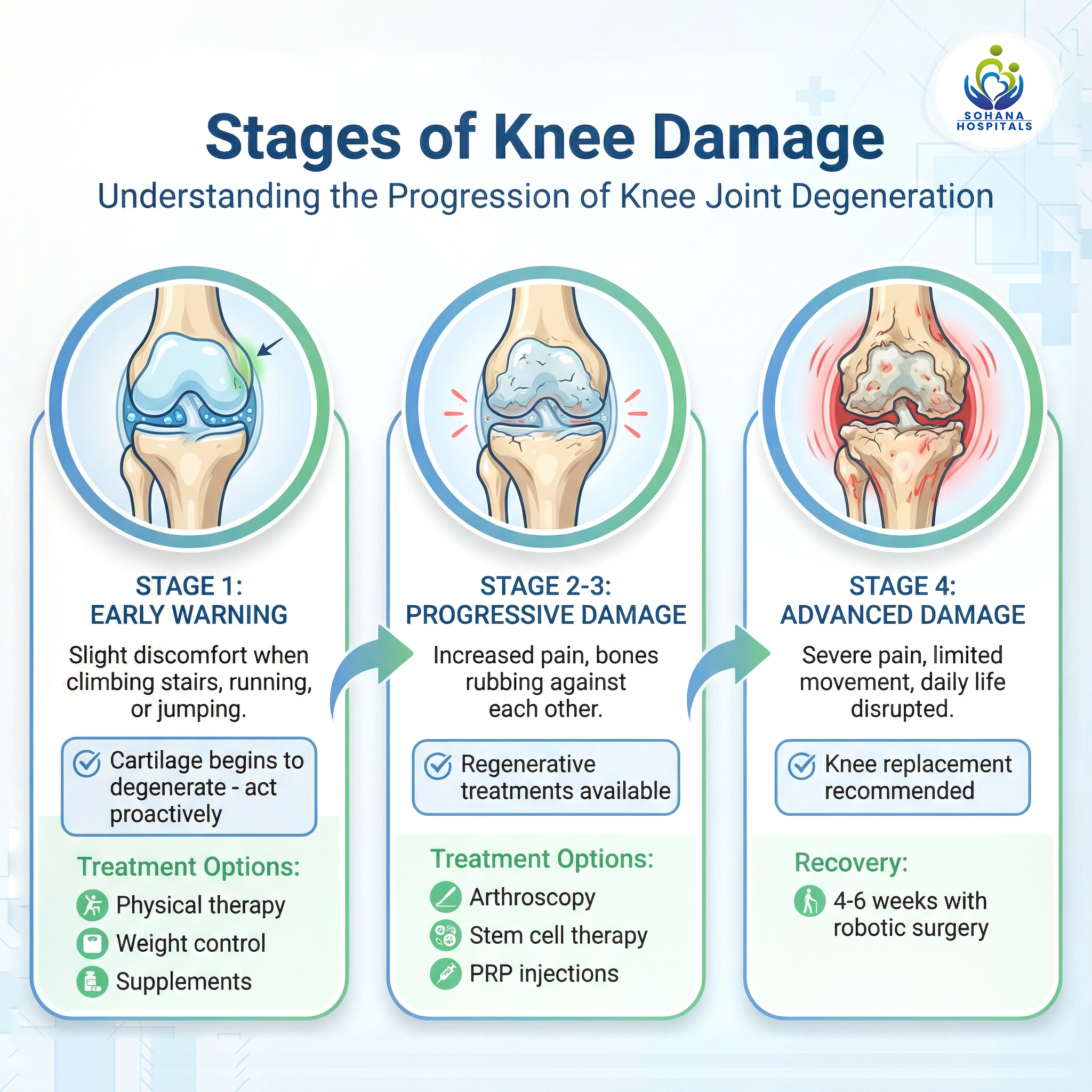
Before we dive straight into the repercussions of avoiding knee surgery, let us first have a look at the four main stages of knee damage.
Stage 1
It is the time when you just start experiencing slight discomfort while climbing stairs, trekking, running, jumping, etc. It is an indication that the cartilage in your knees has begun degenerating.
In common language, the gap between knee bones is still there, but it is at a point where it will start reducing. The discomfort is easy to ignore.
However, acting proactively at this stage and visiting an orthopaedic specialist can significantly slow down the progress of osteoarthritis – the age-related wear and tear of cartilage, leading to friction between bones, and hence, pain.
Treatment at stage 1 may include:
- Physical therapy and exercises
- Weight control
- Anti-inflammatory diet
- Posture correction
- Dietary supplements
Following your orthopaedist’s advice at this time can help delay or even prevent knee surgery.
Stages 2 & 3
The gap between the knee bones (cartilage) has reduced to a point where the bones start rubbing against each other. There is an increase in pain.
At this stage, you still can avail yourself of various cartilage regenerative treatment options and delay or avoid surgery. What are these treatments?
- Arthroscopy
- Stem cell therapy
- PRP injections
- Hyaluronic injections
These minimally invasive modes of treatment coupled with lifestyle modifications can offer –
- Significant pain relief
- Reduced swelling and inflammation
- Improved joint function and movement
Stage 4
This is the time when knee replacement is inevitable. Why? By now, severe pain is there, and it is always present; movement is hard, and normal life gets disrupted.
However, with advanced robotic knee replacement surgery, you can look forward to recovering in just 4-6 weeks and reverting to a normal, active life again.
After this stage, complications tend to set in – inside your knee joint and hence surgery too. Though knee replacement is still possible, recovery may take longer!
Consequences of Delayed Knee Surgery
Deformed joints
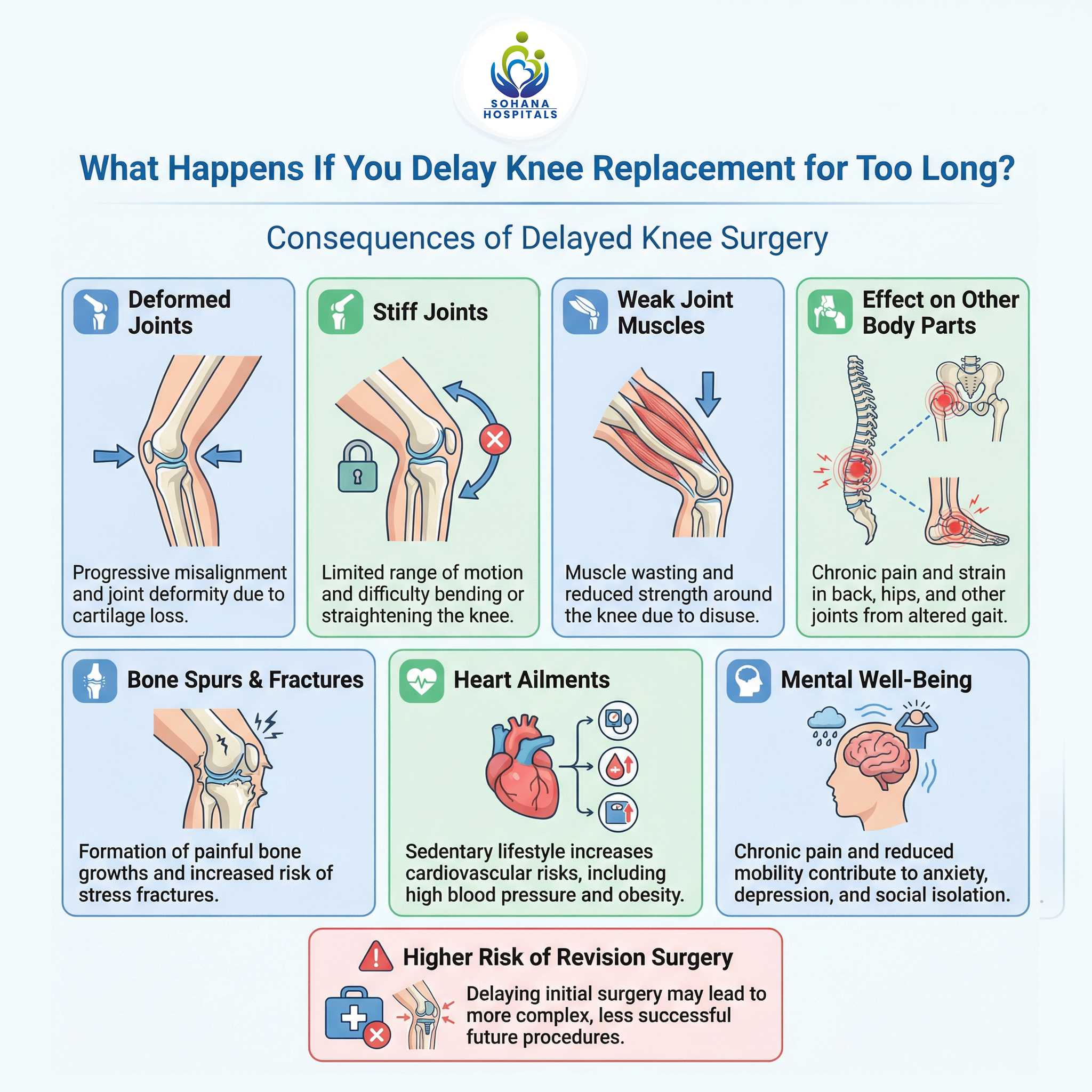
Worsening arthritis often leads to deformed joints. One bone exerts pressure on the other bone. It may give rise to bowed legs or knock knees. Gait may become waddling – the patient may no longer be able to walk straight. Getting a joint replacement at this stage is generally more complicated.
Stiff Joints
With the passage of time, you start moving less. This reduction in movement may result in soft tissues around the knee joint contracting. The result? Your knees may feel very stiff and painful.
Weak Joint Muscles
Once it begins, there’s no stopping arthritis – unless you get treatment. As the disease advances, muscles around the knees become weak. Apart from other complications like severe pain, increased risk of tripping and falling, and inability to move, this translates into a much slower recovery post surgery. Regaining original strength may be an uphill task.
Effect on Other Body Parts
With compounding knee joint issues, other body parts also have to bear the brunt. This happens because patients tend to limp or shift their body weight. Many knee patients complain of backaches. The same is true of hips and feet. New conditions like hip bursitis and plantar fasciitis may also crop up.
As knee damage continues to advance, bones may develop growths (bone spurs or osteophytes), and legs may suffer fractures (micro fractures and stress fractures), making knee replacement surgery highly complicated.
Heart Ailments
With mobility taking a dip, patients may be prone to increased blood pressure, cholesterol levels, and blood sugar, along with weight gain. All these co-morbidities heighten the risk of heart problems, sleep issues, and diabetes.
Mental Well-Being
Persistent, unbearable pain coupled with loss of freedom and social isolation (due to inability to move) may also affect a patient’s mental well-being. Such patients are often seen to be affected by anxiety and depression.
Higher Risk of Revision Surgery
Research indicates that delayed knee replacement surgeries are often linked with a higher probability of requiring a revision surgery just a few months later. That means another surgery, extra financial burden, and most of all – overly prolonged recovery.
Delayed Knee Replacement Surgery – What Does It Imply?
Here’s a quick glance at why you should not delay knee surgery:
- Duration of recovery
- Speed of recovery
- Complications involved
- Magnitude of tissue trauma
- Additional implants
- Higher morbidity
- Cost of implants
- Surgical cost
These factors can make delayed surgery more challenging and recovery extremely slower and longer.
Sohana Hospital – Best Doctors + Advanced Technology
A stitch in time saves nine – goes an ancient saying. The same holds true for knee replacement surgery. It is advisable to consult a trusted knee specialist as soon as you start facing any knee troubles. The longer the delay, the more the complications.
Delaying knee surgery means life may gradually turn into a persistent struggle with loss of independence. However, if you are already late, here is a ray of hope.
Sohana Hospital has treated several such patients who had reached advanced stages of knee deterioration. Globally renowned for conducting successful surgeries even in complicated and revision cases, the hospital has been giving the gift of pain-free mobility to people of all ages, stages, and backgrounds.
Highly experienced knee surgeons utilise cutting-edge technologies to revive mobility in patients going through various stages of knee degeneration. If you or a loved one is struggling with knee issues, get in touch with the best knee doctors in Chandigarh – at Sohana Hospital.
Get timely treatment for your knees, stay independent all your life!