
*हिंदी में पढ़ें: खेलों में होने वाली चोटें: कारण, लक्षण और बेहतर उपचार विकल्प
Who can get a sports injury? Well, just anybody! Not only professional athletes, gym lovers, and joggers, but also children playing outdoor games and working professionals maintaining an active lifestyle can sustain sports injuries.
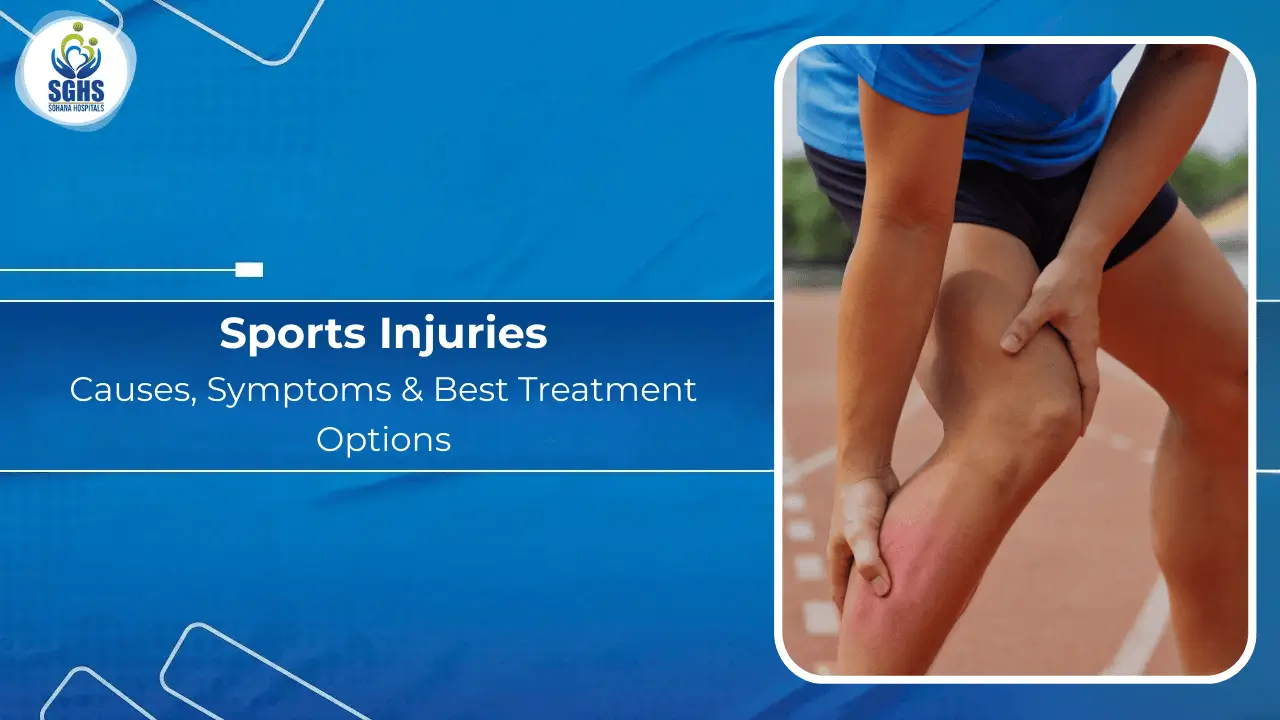
A simple twist, fall, overuse, or sudden impact can lead to a sports injury. And you may end up having pain, swelling, stiffness, or restricted movement.
Common sports injuries include muscle strains, ligament tears, sprains, tendon injuries, cartilage damage, fractures, knee injuries, shoulder injuries, and ankle problems.
Even if it seems to be a simple and minor injury, timely and proper sports injury treatment is essential. Why? To ensure you do not face any long-term complications, chronic pain, or permanent damage.
Get the right medical care, recover fully, and get back to sports and normal activities again.
Early Diagnosis Makes All the Difference
What should you do when you feel you have a sports injury? The first step should be getting an accurate diagnosis. Ignoring pain and other symptoms or not taking rest can worsen the problem.
Approach a trusted healthcare provider for a detailed clinical examination. If they recommend imaging tests, get them done. It will help identify the exact cause, nature, and severity of the injury.
At Sohana Hospital, Mohali, skilled orthopaedic experts use advanced diagnostics to identify the problem. This allows treatment to begin quickly. Early diagnosis helps prevent unnecessary complications.
Non-Surgical Treatment for Sports Injuries
Not all sports injuries require surgery. Many sports injuries respond very well to conservative treatment.
RICE
The first line of treatment may be RICE – rest, ice therapy, compression, and elevation.
Rest
- Take rest and avoid moving the injured part
- Refrain from putting weight on the injured part
Ice
- Apply ice (wrapped in a damp cloth) for 20 minutes (reduces pain, swelling, and bleeding)
- Repeat every 2 hours for the initial 48-72 hours
Compression
- Use a firm bandage to control swelling and bleeding
- The bandage should not be too tight
Elevation
- Raise the injured part to a higher level to stop bleeding and heal swelling
- You can use a pillow & do it for as long as you can
Pain Medications
Medications help control pain, swelling, and inflammation. Your doctor may prescribe pain killers, anti-inflammatory medicines, or muscle relaxants depending on the severity and type of your injury.
*Note: Always take pain-relief medicines only under medical guidance. Also, stick to the prescribed dosage and duration.
Protective Support
Seen somebody wearing a shoulder sling? Protective supports such as knee braces, ankle supports, shoulder stabilisers, wrist splints, and compression sleeves help give support to the injured area. This assists with improving stability and alignment while reducing swelling to speed up recovery.
*Note: Your healthcare provider or physiotherapist will recommend the right type of support based on your injury and activity level.
Physiotherapy
Physiotherapy plays a key role in recovery. Getting personalised physiotherapy can improve strength, flexibility, balance, coordination, and joint stability. It helps reduce pain and restore normal function.
At Sohana Hospital, experienced physiotherapists provide tailored rehabilitation support based on your age, fitness level, injury type, and recovery goals. With this, you make steady progress and return to normal activity sooner.
Minimally Invasive Sports Injury Treatment
Regenerative Therapies
In some cases, you may be advised targeted orthobiologic injections – to reduce pain and inflammation and promote quicker recovery. These may include stem cell therapy, platelet-rich plasma (PRP), hyaluronic injections, etc.
These treatments can be especially useful for tendon injuries, early cartilage damage, and chronic sports-related pain.
Here’s why regenerative therapies are gaining popularity for sports injuries:
- Non-surgical and painless procedure
- Controls joint pain & swelling
- Reverses joint damage
- Restores normal joint function
- No hospital stay
- Faster recovery
Arthroscopy
When joint injuries such as ligament tears, meniscus damage, cartilage injuries, or shoulder instability do not respond to other treatments, you can opt for arthroscopy.
Arthroscopy is a minimally invasive procedure in which a tiny camera and specialised instruments are inserted through small pencil-sized incisions – to diagnose and repair internal joint problems.
Arthroscopy offers several advantages over traditional surgery:
- Smaller scars
- Less pain
- Less blood loss
- Faster healing
- Shorter hospital stay
- Quicker return to daily activities and sports
Sohana Hospital provides advanced arthroscopic treatment for knee, shoulder, and other sports-related joint injuries. With arthroscopy, you regain mobility sooner. This means minimal disruption to your routine.
Surgical Treatment for Complex or Severe Injuries
Certain injuries, such as fractures, complete ligament ruptures, severe joint damage, or repeated dislocations, may require surgical intervention. Modern orthopaedic surgical techniques focus on restoring stability, alignment, and function while minimising tissue damage.
Sohana Hospital has the best surgical options – conventional as well as robotic. Highly experienced orthopaedic surgeons, modular operation theatres, stringent infection-control protocols, and personalised post-operative rehabilitation programs – ensure faster recovery and long-term joint health.
Why Choose Sohana Hospital for Sports Injury Treatment?
Sohana Hospital provides complete sports injury care under one roof – from accurate diagnosis to diverse treatment options including arthroscopy, surgery, and rehabilitation. Skilled specialists prioritise personalised treatment planning for every patient, so that you have a safe, speedy, and smooth recovery.
If you are experiencing persistent pain, swelling, or restricted movement after a sports injury, do not delay visiting a sports injury specialist. Timely diagnosis and treatment can make a huge difference in your recovery prospects and your future ability to participate in sports.
At Sohana Hospital, a multidisciplinary team of orthopaedic specialists and surgeons, physiotherapists, sports rehabilitation experts, and pain management professionals work in coordination to provide quick and reliable sports injury treatment to patients.
Remember, proper treatment today ensures a healthier, more active tomorrow.