

You wake up with heavy pounding in your head. Despite severe pain, the mind starts contemplating where you went wrong. Prolonged screen time? Inadequate water? Or something more profound, like a migraine?
If you have ever had such an experience trying to figure out if it is merely a headache or something more grave, you are not alone. A huge proportion of the adult population, particularly working professionals, has frequent headaches. But it can be a riddle trying to understand the difference between migraine and headache – until you have the right knowledge.
In this blog, we are going to see what a migraine is, what a headache is, how the two differ, what the reasons behind them are, and how to manage them, or possibly prevent attacks in the future.
What is the Migraine Problem?
A migraine is much more than an excruciating headache. It is a complicated neurological condition. Those with migraine typically report severe, pulsating pain (generally on one side) accompanied by other signs like blurry vision, nausea, vomiting, bright lines or dots in their field of vision, and extreme noise or light sensitivity.
Migraine symptoms often strike in stages:
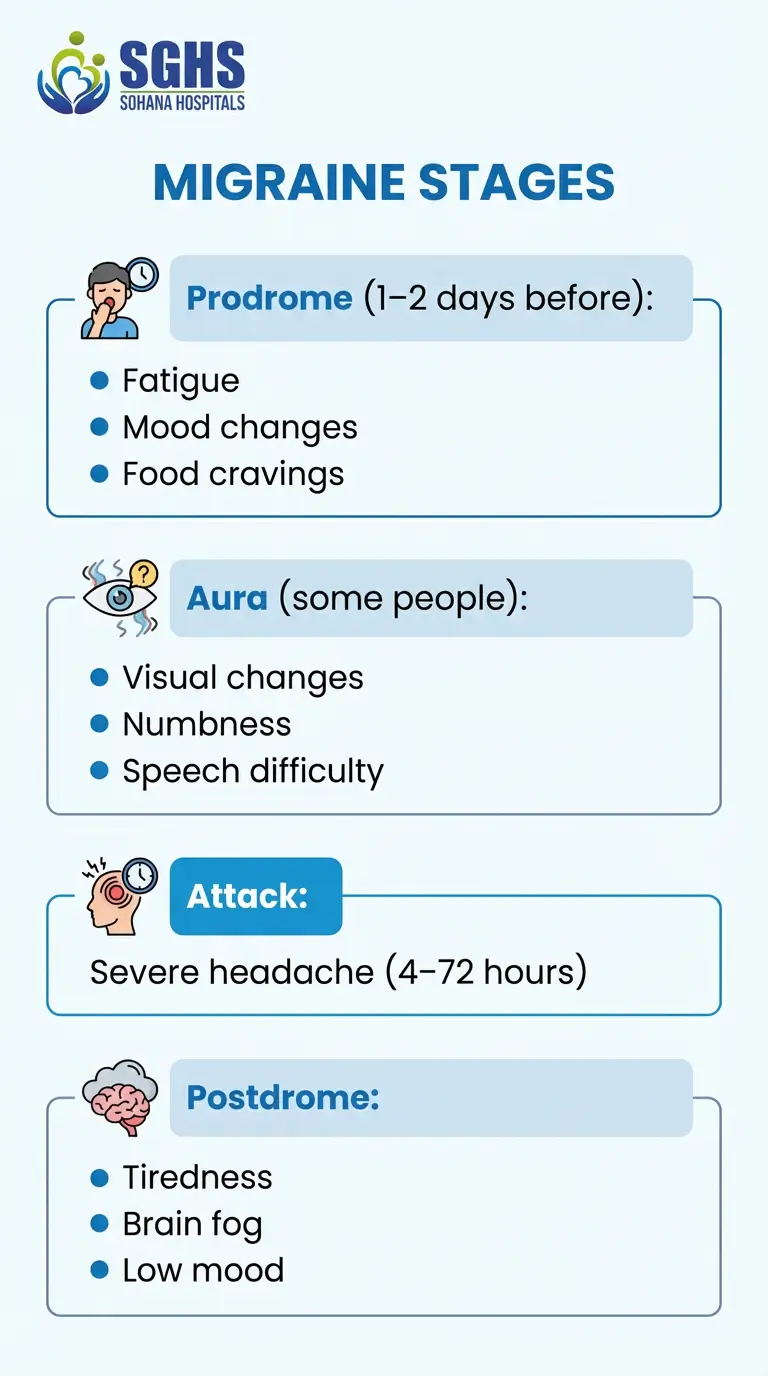
- Prodrome: Exhaustion, mood changes, food cravings 1-2 days in advance
- Aura: Numbness, disturbances in vision, speech issues (not in all patients)
- Attack: The real migraine headache (that may persist for 4-72 hours)
- Postdrome: Tiredness, brain fog, and bad mood after the migraine pain has gone
Wondering what a migraine is? We are sure these insights into the multi-phase nature of migraines may help you distinguish them from ordinary headaches.
What is a Headache?
A headache is a general name given to the pain in your head, scalp, and/or neck. Most headaches are not generally associated with nausea, visual auras, or sensitivity to noise or light.
Headaches can be of different kinds, such as:
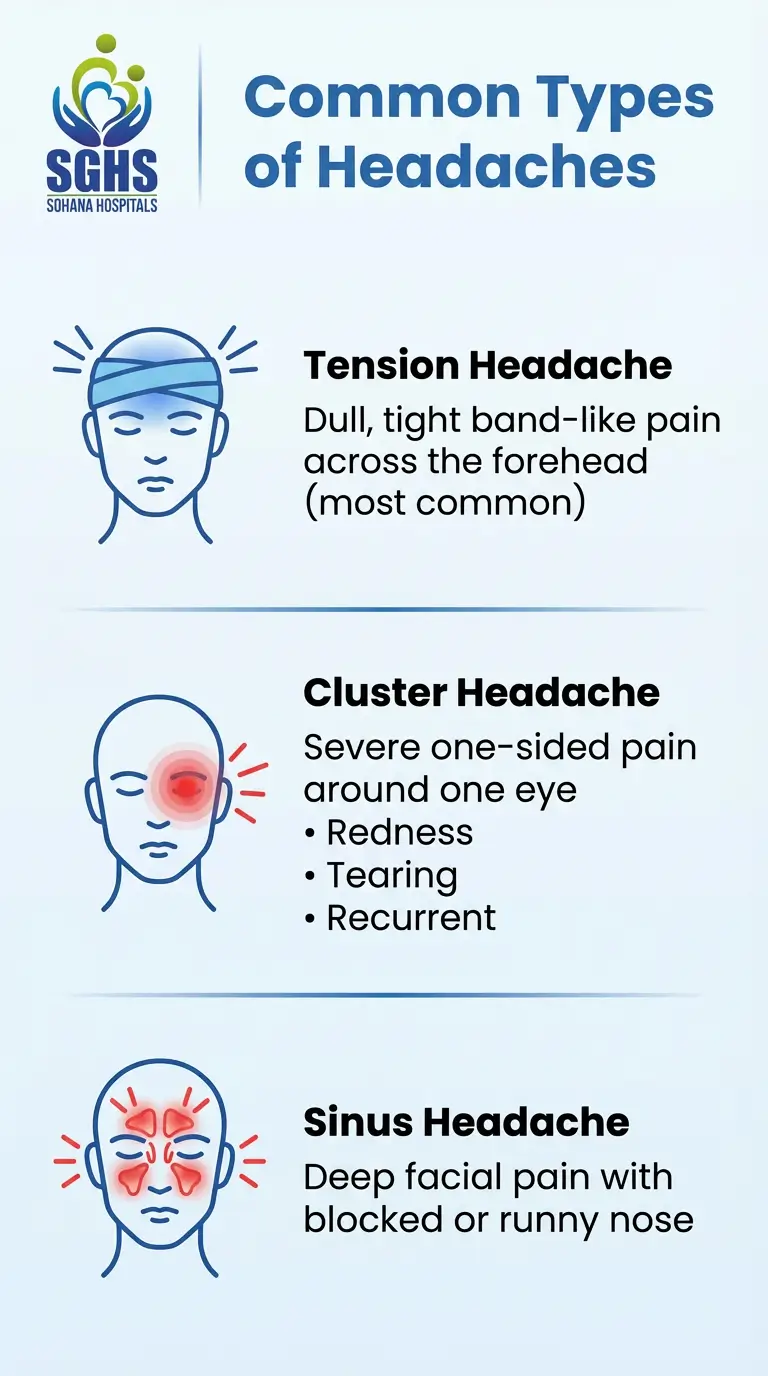
- Tension Headaches: A dull, pressure-like pain on both sides, may seem like a pain band across the forehead (the most common type)
- Cluster Headaches: Very painful with sharp, piercing pain on one side of the head and around one eye, eye redness, tearing, and restlessness (keeps returning)
- Sinus Headaches: Deep pain due to sinus allergies or infections, typically accompanied by a runny or stuffy nose
Difference Between Headache And Migraine
Let us have a quick glance at the comparison between the two conditions. This will further help you make out the difference between the two:
| Feature | Migraine | Headache |
| Kind of Pain | Pulsating, throbbing | Dull, pressure-sensation |
| Part of Head Affected | Generally one side | Both sides or in the entire head |
| Pain Duration | 4 – 72 hours | Half-an-hour to a few hours |
| Intensity | Moderate to severe; debilitating | Mild to moderate; manageable |
| Reasons | Stress, hormonal changes, specific food items | Posture, dehydration, digital strain, weather changes |
| Other Symptoms | Nausea, vomiting, sensitivity to light and/or noise, aura | None or very mild |
🔵Although headaches do cause discomfort, they generally do not seriously interfere with routine activities as migraines do.
🔵Also, there is a difference in duration. Headaches typically resolve within a few hours, while migraines can continue for days.
🔵Another distinguishing feature is that a migraine often begins with some signal, such as a flashing light in your visual field or a light aura.
Once you know the difference between a migraine and a headache, it becomes easier for you to get the right treatment, and avoid unnecessary discomfort.
What Causes Migraines and Headaches?
What are ‘causes’? And what are ‘triggers’? Are the two same or different? The answer is ‘causes’ and ‘triggers’ are two different things.
While the term ‘triggers’ refers to temporary, external reasons that can result in an episode, the word ‘causes’ implies underlying biological, neurological, or environmental factors.
Migraine Triggers
The precise cause is not yet completely known. However, it is believed that heredity and anomalous brain activity are key influences. Have a look at some common migraine triggers:
- Modifications in sleep cycle
- Hormonal changes (particularly in females)
- Stress
- External factors like loud noise, strong smell, and bright lights
- Changes in weather and altitude
- Excessive caffeine intake
- Specific food products (e.g., red wine, alcohol, cheese, artificial sweeteners, processed meat)
Got some clues about the reasons behind migraine attacks? It is a chain reaction – your brain becomes excessively sensitive, which results in activation of nerves and changes in blood vessels.
Headache Triggers
Headaches are generally a result of external or lifestyle factors. Here are some common headache triggers:
- Hunger
- Dehydration
- Bad posture or tension in the neck
- Not getting enough sleep
- Too much intake of alcohol or caffeine
- Digital strain
- Dental problems
- Anxiety or emotional stress
- Physical or mental stress
Why do some people have headaches almost every day? It could be due to overuse of certain medications or chronic conditions.
When to Seek Professional Help?
Some headaches could be a serious issue. Watch out for the below symptoms that demand immediate medical intervention:
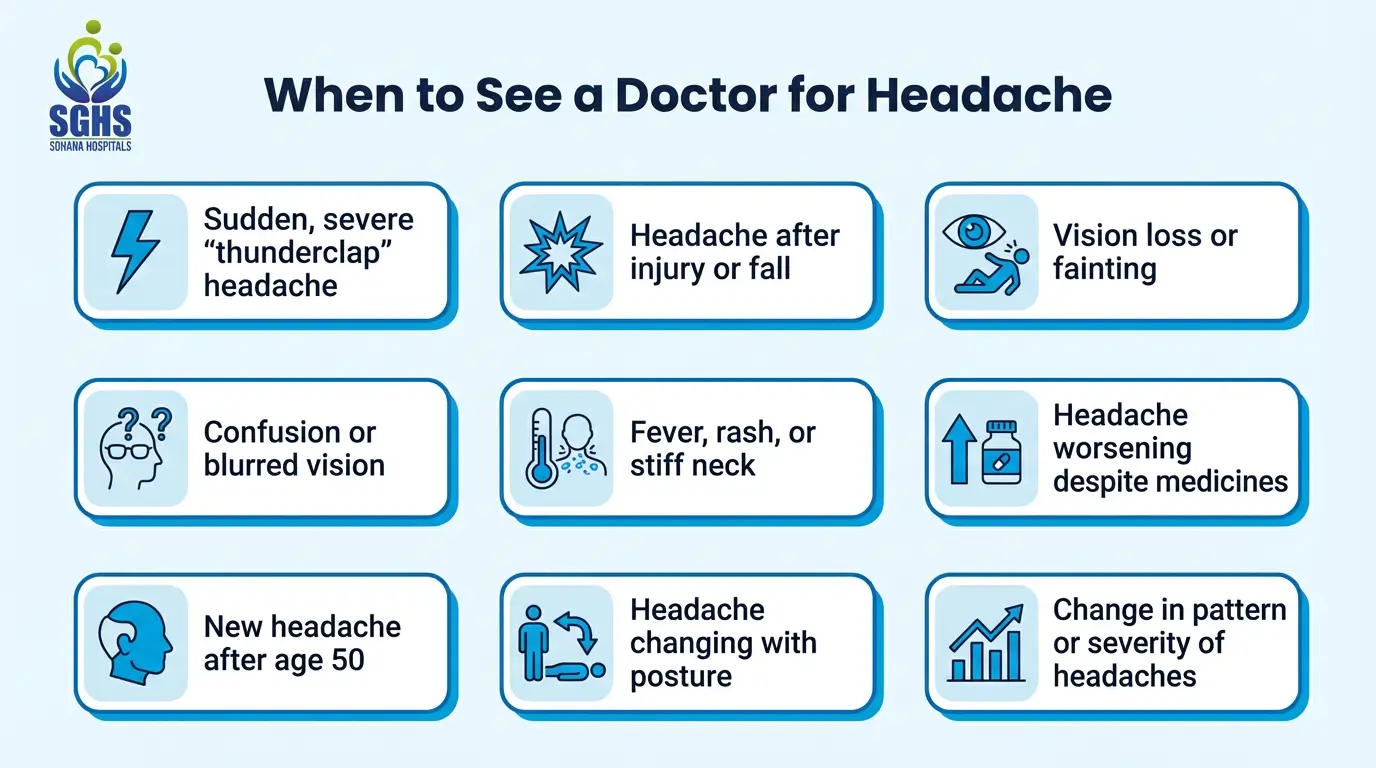
- Abrupt, severe “thunderclap” headache
- Headache after a fall or head injury
- Loss of consciousness or vision loss
- Blurry vision or confusion
- Rash, fever, stiffness in neck
- A headache that intensifies despite medication
- Headache onset post 50 years of age
- If posture brings changes in a headache
- Changes in type and character of headaches
If you have been struggling with a constant or unusual headache, seek the advice of a specialist. You can get in touch with specialists at Sohana Hospital, Mohali. A multi-super speciality facility, it has all kinds of specialists from general physicians to expert neurologists who analyse the reason for your headache or migraine, and provide personalised treatment.
Practical Tips to Prevent Migraines and Headaches
Making a few simple modifications to your lifestyle can go a long way in lowering the frequency of migraines and headaches, or even preventing them:
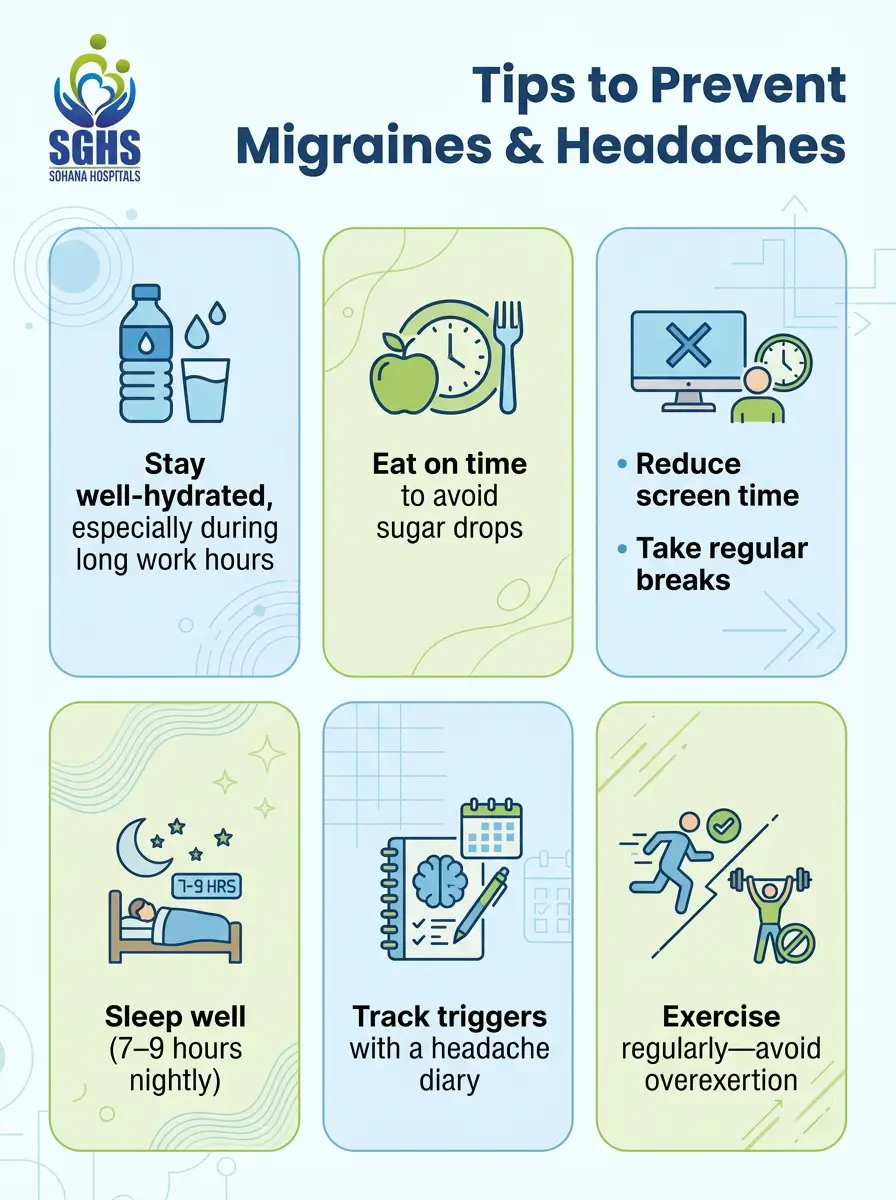
- Drink adequate water, more so during long work hours
- Maintain proper food timings to prevent sugar crashes
- Limit screen time and take frequent breaks to avoid digital strain
- Get enough sleep (7-9 hours/night)
- Maintain a headache journal to track triggers
- Exercise on a regular basis but avoid over exerting yourself
Do you have tension headaches and migraines simultaneously? Incorporate the above-mentioned practical ways into your lifestyle, and see how your life changes for the better.
What are Treatment Options for Migraines and Headaches?
Let us see how we can solve the problem of migraines and headaches.
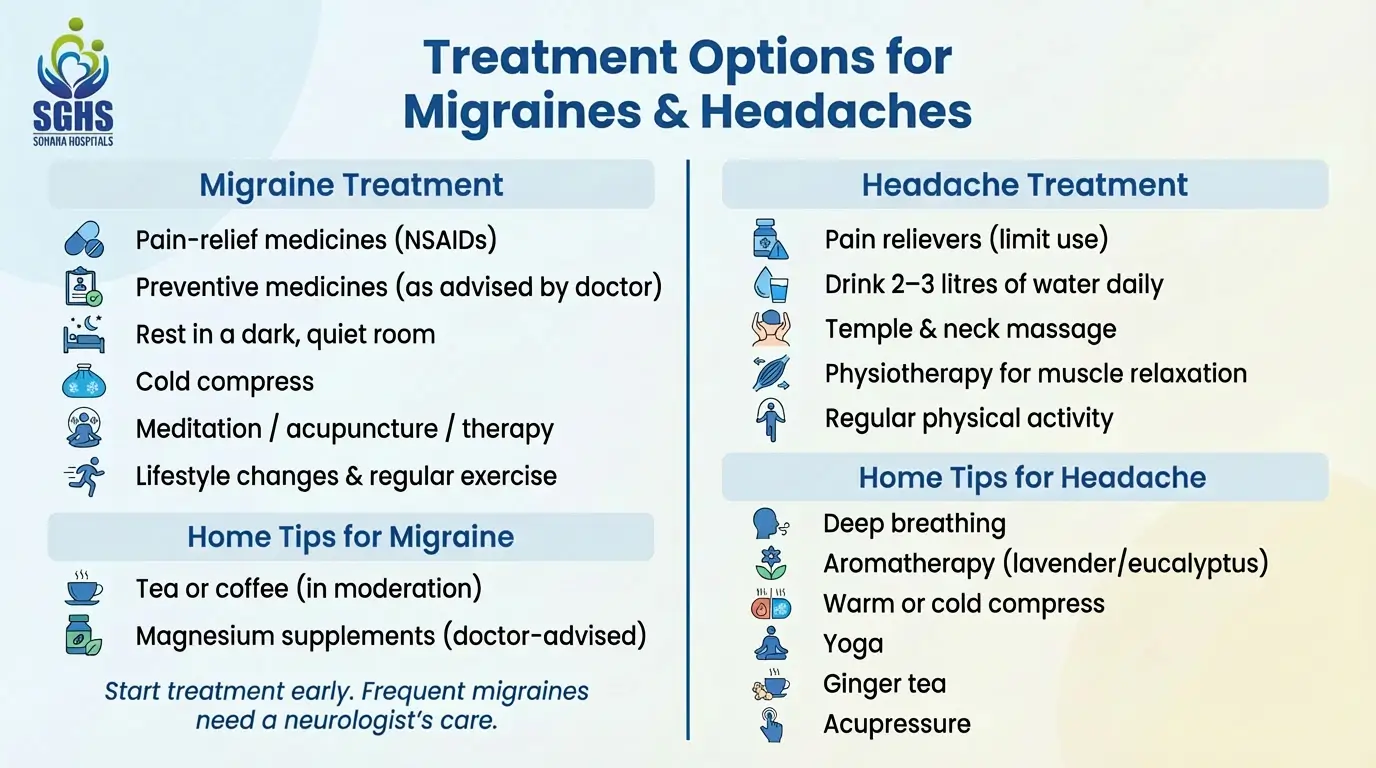
Migraine Treatment
- Medications for pain relief (e.g., NSAIDs – nonsteroidal anti-inflammatory drugs)
- Preventive medications (e.g., beta blockers, anticonvulsants, antidepressants)
- Rest in a dark and quiet room
- Cold compresses
- Meditation, acupuncture, cognitive therapy
- Lifestyle changes (e.g. regular exercise)
Home Remedies for Migraine Relief:
- Have a cup of tea or coffee (but be cautious – since excessive intake may worsen the condition)
- Take magnesium supplements (as per doctor’s advice)
Note:
- Use these remedies as soon as you have an indication of a migraine.
- If you experience frequent migraines, it would be better to consult a trusted neurologist for a tailored migraine treatment plan.
Headache Treatment
- Pain reliever medicines like ibuprofen (not more than 2-3 times a week)
- Aim for 2-3 litres of water everyday
- Massage your temples and neck
- Physical therapy for relaxing muscles
- Regular physical activity
Home Remedies for Headache Relief:
- Breathing exercises
- Aromatherapy with eucalyptus or lavender oils
- Warm or cold compresses
- Yoga
- Ginger tea
- Acupressure
Final Thoughts
A ‘not-so-severe’ headache might just be your body’s way of signalling a need for water, while a migraine is often your brain’s cry for more attention.
Knowing the difference between a migraine and a headache equips you to take the right action. Whether the underlying cause is stress, hormonal changes, specific food items, sleep disturbance, or some other factor, knowledge enables you to take charge of things before they go out of hand.
Still have any doubts or queries? Consult the best neurologists in Chandigarh at Sohana Hospital. Equipped with the most advanced diagnostics and cutting-edge treatment options tailored to your unique condition, the hospital is known the world over for its holistic, patient-centric, and ethical approach.
If headaches or migraine attacks are giving you a tough time, do not delay. Seek expert advice to be in the pink of health and spirits.
FAQs
1. What is a migraine attack?
If you have episodes of severe headache (on one side) along with symptoms like nausea, light sensitivity, and tiredness, it is quite likely a migraine attack. Its duration ranges between a few hours to several days. Migraine attacks may occur repeatedly.
2. Can a headache turn into a migraine?
No. A headache does not generally convert into a migraine. However, a mild migraine may start like a normal headache and then worsen. It usually happens if you do not pay attention to early warning signs like light or noise sensitivity.
3. Is migraine hereditary?
Yes. Migraines may run in families. You are more susceptible to it if one or both of your parents have had migraines. Genetics is a key influence.
4. Can weather changes cause headaches?
Yes. Changes in temperature, barometric pressure, or humidity levels can trigger a headache or even a migraine, more so in sensitive people.
5. Can hormonal changes cause a headache?
Yes. This generally happens in women. Periods, pregnancy, and menopause are often associated with hormonal fluctuations, which is why they are prominent reasons behind headaches in females.
6. How to know if you have a migraine?
If your headache is one-sided, throbbing, and you also experience nausea, vomiting, or sensitivity to light and sound, it may be a migraine. Migraine often continues for hours or even days and can disrupt daily activities.
7. How to detect migraine?
If you have repeated headache episodes with similar patterns and symptoms like nausea, light sensitivity, or visual disturbances, it could be a migraine. A neurologist may also ask about your triggers and family history to confirm it.
8. What to do when you have a migraine headache?
Rest in a quiet, dark room, and avoid screens and loud noise. Drink water, take medication prescribed by your doctor, and try to relax. You can also try yoga, meditation, and breathing exercises.
9. What are migraine problem symptoms?
Migraine problem symptoms include strong pulsing headache, nausea, vomiting, blurred vision, and sensitivity to light or sound. Some people also experience fatigue or irritability before or after a migraine attack.
10. Where do migraines hurt?
Migraines usually affect one side of the head – mostly around the forehead, temples, or behind one eye. Some individuals also have pain at the back of the head and neck.
11. Is migraine dangerous?
Migraine is usually not dangerous. However, it can adversely affect your quality of life if not treated. Medical attention should be sought if you experience very severe or unusual headaches. This is necessary to rule out serious problems.
12. What if I have a forehead and back of head headache?
It could be due to migraine, tension, stress, or poor posture. If it keeps coming back or is very painful, you must seek medical advice.