
Knee pain, stiffness, and difficulty in walking are becoming increasingly common these days. Not only senior citizens but people in their 30s and 40s are also experiencing knee issues.
Many people wonder: “Will I need knee replacement surgery?” Some think: “Can I avoid knee replacement with exercise?”
The good news? In many cases, regular exercise can help delay or even prevent knee replacement, especially if you start exercising well in time.
Why Do Knees Deteriorate?
Before we delve into how exercising can help keep knees healthy and avoid the need for knee replacement surgery, let us have a look at the common reasons behind knee problems:
- Osteoarthritis (wear and tear of cartilage)
- Weak muscles around the knee
- Excess body weight (as it puts added pressure on knee joints)
- Poor body posture and inactive lifestyle (lacking physical activity)
- Old knee injuries (that occurred in the past)
When the muscles supporting your knee become weak, it puts extra stress on the knee joints. This results in pain and damage to your knees.
How Exercise Protects Your Knee
Who wants to get knee replacement surgery? Probably, nobody! It is just that by the time we pay attention, the damage has already happened.
So, what should you do to keep your knees in good health? Take steps to maintain the flexibility, strength, and general health of the knee joint. Exercises can play a vital role here. With the right exercises, you can manage symptoms of osteoarthritis, minimise pain, and enhance joint function.
What benefits do the right, regular exercises offer?
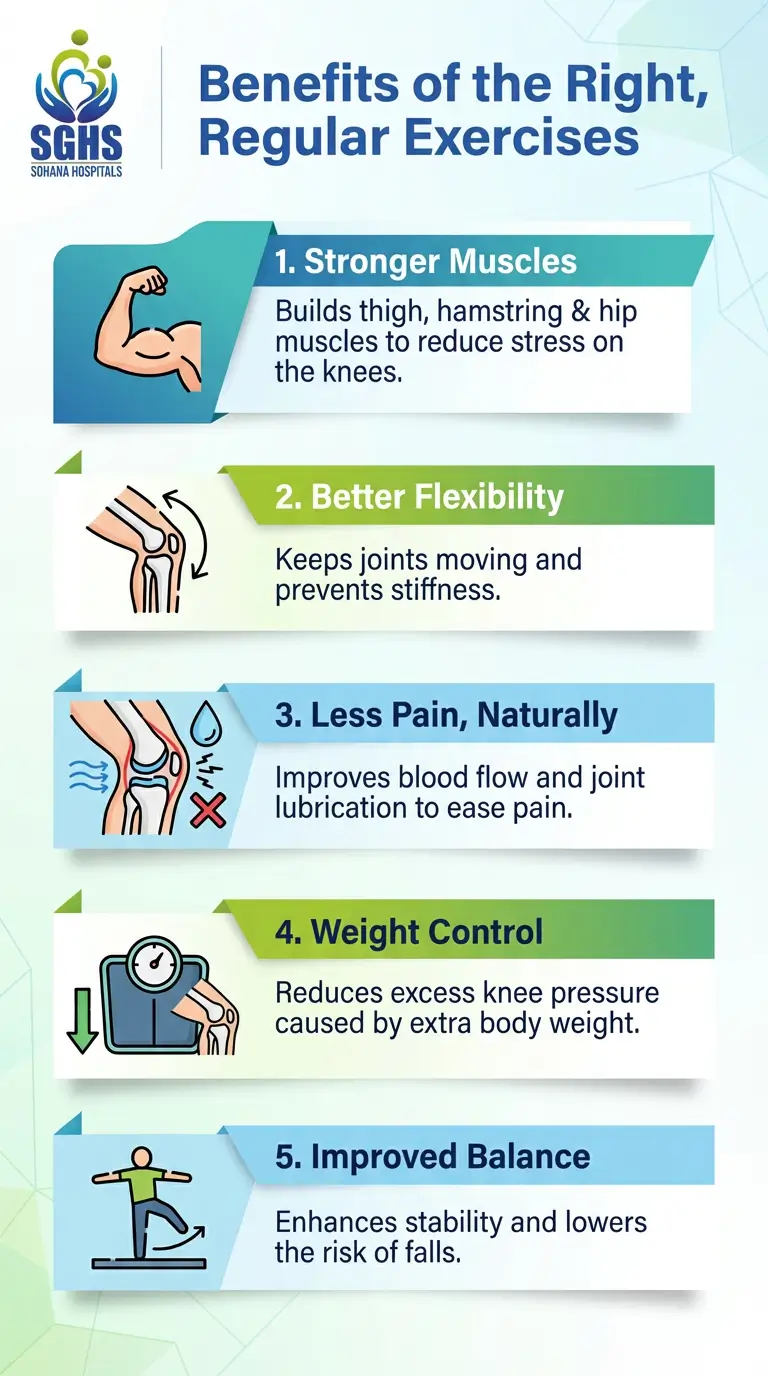
Strengthening of Muscles
Exercises – when done consistently – help strengthen thigh (quadriceps), hamstring, and hip muscles. Strong muscles have a better ability to absorb shock. This reduces pressure on the knee joint, thereby promoting knee health.
Improvement in Flexibility
If you stretch regularly, it keeps joints moving and reduces stiffness. Stretching is especially advised in the morning or after sitting for long hours.
Natural Reduction in Pain
Exercises involve movement. This improves blood circulation and joint lubrication, thereby helping reduce inflammation and pain – without over-dependence on medicines.
Help Control Weight
Did you know? Every extra kilogram of body weight increases knee pressure by nearly 4 times. Exercising can help you maintain a healthy weight and reduce the load on your knees.
Better Balance and Stability
Exercising promotes movement and better balance, lowering the risk of falls and injuries.
Best Exercises for Knee Health
Normally, what happens is that people start exercising when they start facing knee issues. These issues typically include knee pain, stiffness, and difficulty climbing stairs, sitting cross-legged, among others.
What’s more, in a race against time, most people opt for high-impact exercises. This does more harm than good. So, what to do?
Always consult a doctor or physiotherapist before starting any exercise routine. Here are some exercises recommended for those desiring healthy knees:
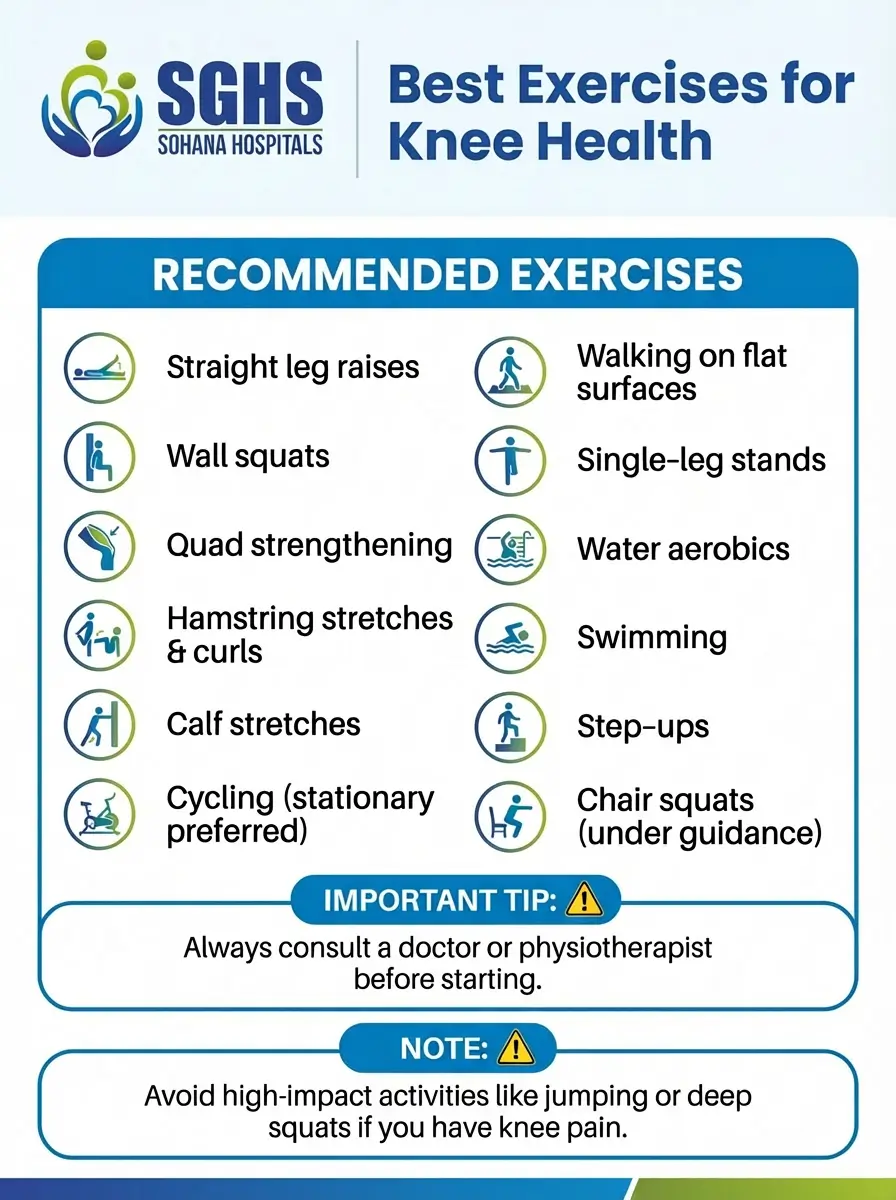
- Straight leg raises
- Wall squats
- Quad strengthening exercises
- Hamstring stretches and curls
- Calf stretches
- Cycling (preferably stationary)
- Walking on flat surface
- Single-leg stands
- Water aerobics
- Swimming
- Step-ups
- Chair squats (under guidance)
Note: Avoid high-impact activities like jumping or deep squats if you already have knee pain.
How to Maintain Knee Health?
Maintain a healthy weight: It helps avoid extra pressure on knees and reduces osteoarthritis risk.
Listen to your body: An exercise causing knee pain? Discontinue and consult with a healthcare professional.
Stay mobile: Choose physical activity over a sedentary lifestyle. Perform doctor-advised exercises. This way, you can keep your knees in good condition and potentially prevent the need for a knee replacement.
Can Exercise Completely Avoid Knee Replacement?
While timely knee care and exercises may help keep your knee joints healthy, exercise cannot repair already damaged cartilage, as happens in cases of advanced arthritis.
The crux is that in early to moderate knee problems, regular exercise can considerably slow down progression of disease, alleviate pain, and enhance mobility – potentially postponing knee replacement surgery for years.
Many patients start walking, climbing stairs, and performing daily activities confidently through consistent physiotherapy and lifestyle modifications.
When Should You See a Doctor?
Do not ignore these warning signs:
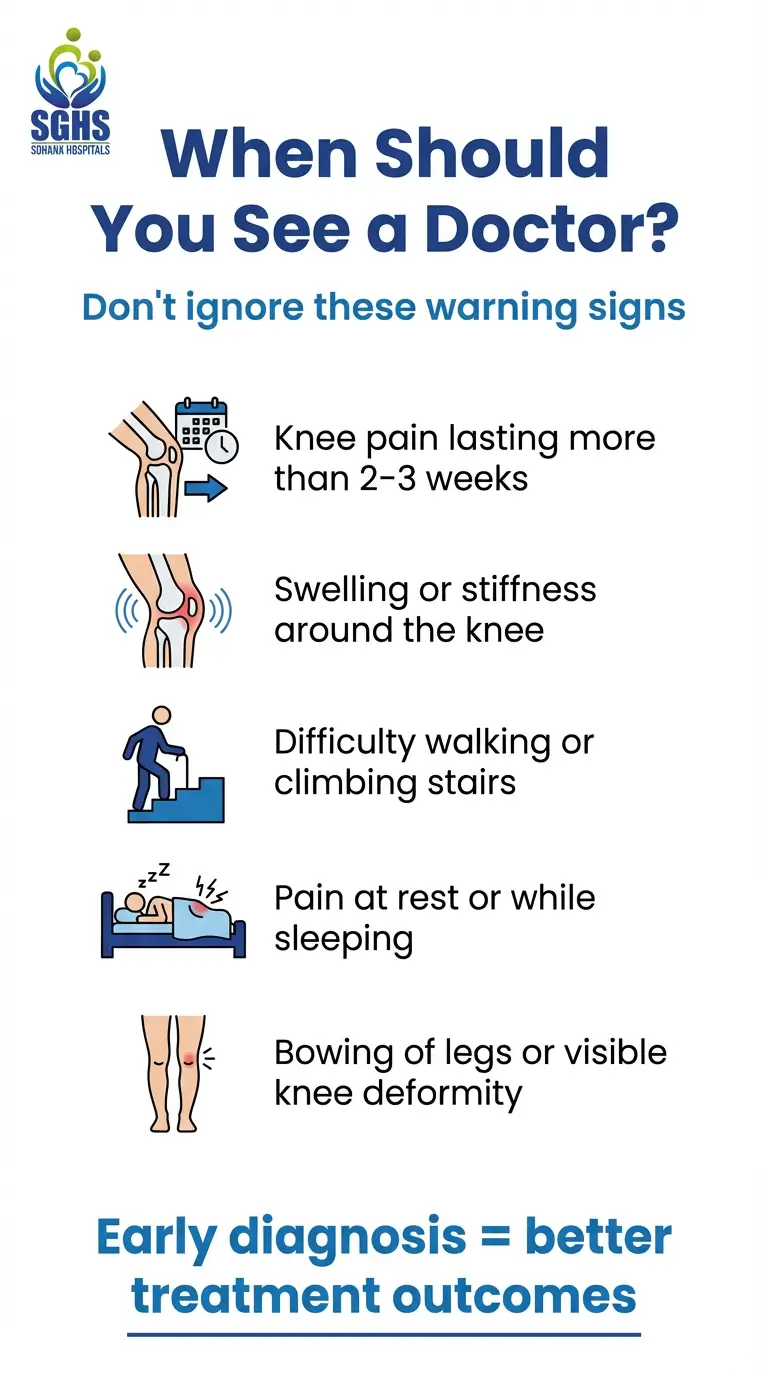
- Persistent knee pain for more than 2–3 weeks
- Swelling and stiffness
- Difficulty walking or climbing stairs
- Pain even while resting and sleeping
- Bowing of legs or deformity
Early evaluation from a trusted knee specialist can help prevent permanent damage.
Conclusion
Knees are one of the most prominent joints of our body on which our mobility and freedom hugely depend.
The right exercises can prove effective in preventing or delaying knee replacement when done consistently. Combine your exercise regimen with proper diet, weight management, supportive footwear, and regular medical checkups for long-term knee health.
Experiencing knee pain? Consult the best knee doctor in Mohali at Sohana Hospital. Our expert orthopaedists utilise cutting-edge diagnostics and treatment options to ensure a pain-free life for knee patients.
Get a personalised treatment and exercise plan – at Sohana Hospital, keep your knees healthy and pain-free.