
*हिंदी में पढ़ें: कम उम्र में घुटनों में दर्द क्यों होता है?
Knee pain and sore joints are often labelled as old-age problems, but here’s a lesser-known fact – young people can get knee pain too. However, while the symptoms may feel similar, it is important to understand the underlying causes of knee pain in young adults.
Determining the root cause is also crucial in order to determine the most appropriate treatment plan. In this blog, we are going to discuss all about the common causes, risk factors, and prevention tips for knee pain in young adults.
Causes of Knee Pain in Young Adults
Youngsters typically experience knee pain symptoms due to overexertion, poor posture, or strenuous physical activities. Some common causes include:
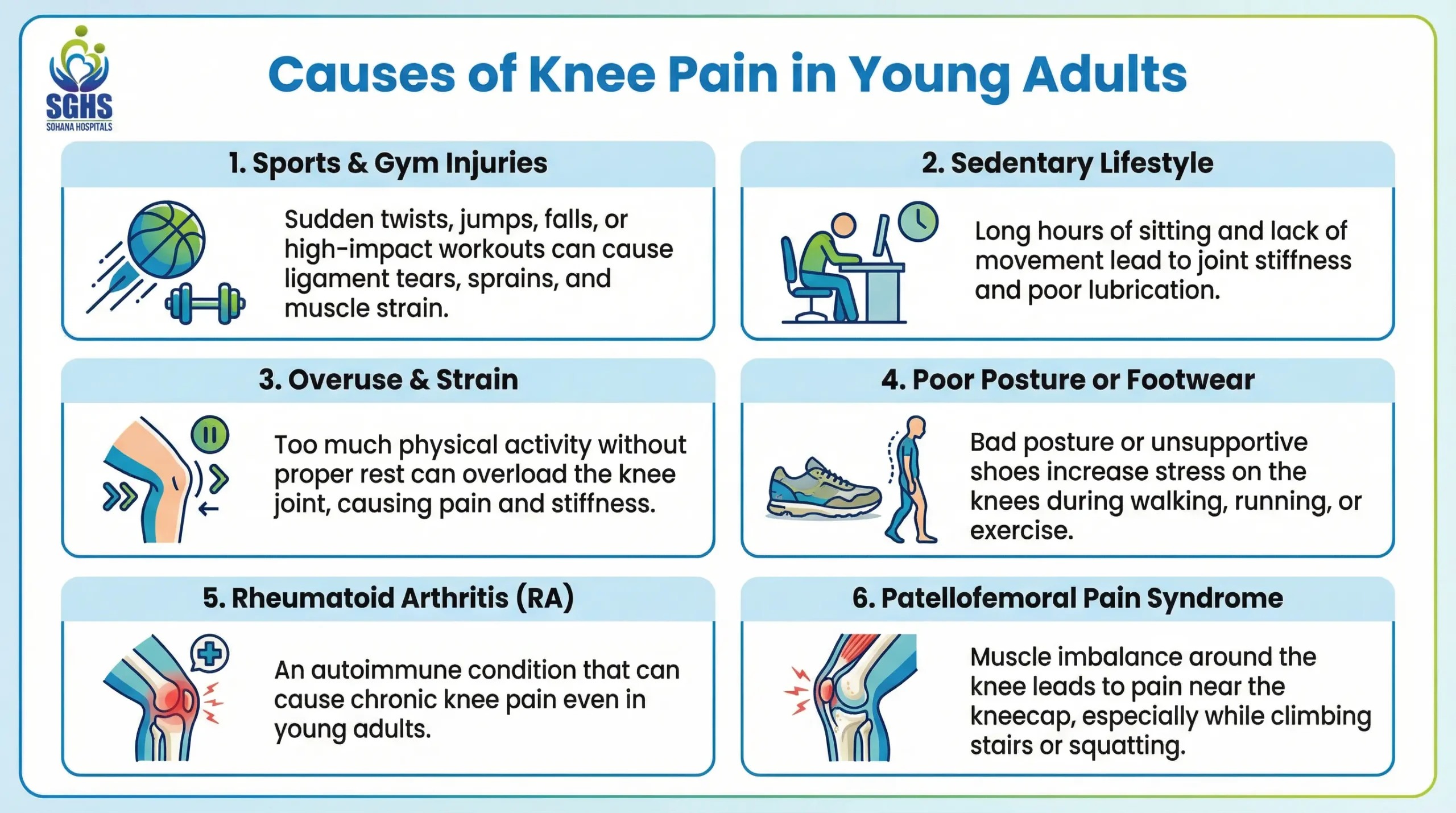
Gym or sports injuries
Many young people often experience intense knee pain after sudden twists, jerks, falls, repetitive pressure, jumping exercises, or sports activities. High-impact workout sessions or contact sports pose a great risk of joint overuse and very often lead to injuries such as ligament tears, sprains, and muscle pulls.
Sedentary lifestyle
If your daily routine lacks physical activity, regular walks, exercises, or even minimal movement, you may be prone to knee pain regardless of your age. Long hours of sitting or a general lack of movement can lead to joint stiffness and poor lubrication.
Overuse & strain
As the saying goes, “too much of anything is good for nothing”. We know a sedentary lifestyle and lack of movement can cause knee pain – meaning your joints require regular movement and exercise for proper lubrication. But did you know that overuse or strain caused to the knee joint due to too much physical activity can also lead to pain and stiffness?
This is why it is essential to strike a balance between movement and rest to ensure your joints remain in the pink of health.
Bad posture or improper footwear
Wearing shoes that don’t support your foot and body weight can lead to increased pressure on the knee joint during physical activities such as walking, running, exercising, or playing a sport. Additionally, standing or sitting in a bad posture can cause direct strain on the knee joint, eventually leading to knee pain.
Some rare causes include:
Rheumatoid arthritis
While not a common or widely known cause, chronic knee pain in young adults can also be due to autoimmune conditions such as rheumatoid arthritis (RA). The onset age for RA can be anywhere between 16 to 25 years of age. In 2019, the global incidence of RA among adolescents and young adults was recorded at 5.41 per 100,000 population.
Patellofemoral syndrome
This is a common cause of knee pain in young adults. It usually occurs as a result of an imbalance in muscles that are meant to support and help your knee joint move. Overly tight muscles, tendons, or weak thigh muscles can alter your knee joint functioning, causing stress and pressure.
This leads to pain around the kneecap and at the front of the knee. This may cause pain and stiffness while kneeling, sitting cross-legged, climbing stairs, or squatting.
Common Risk Factors for Knee Pain in Young Adults
Here are some common factors that place you at a higher risk of experiencing regular knee pain:
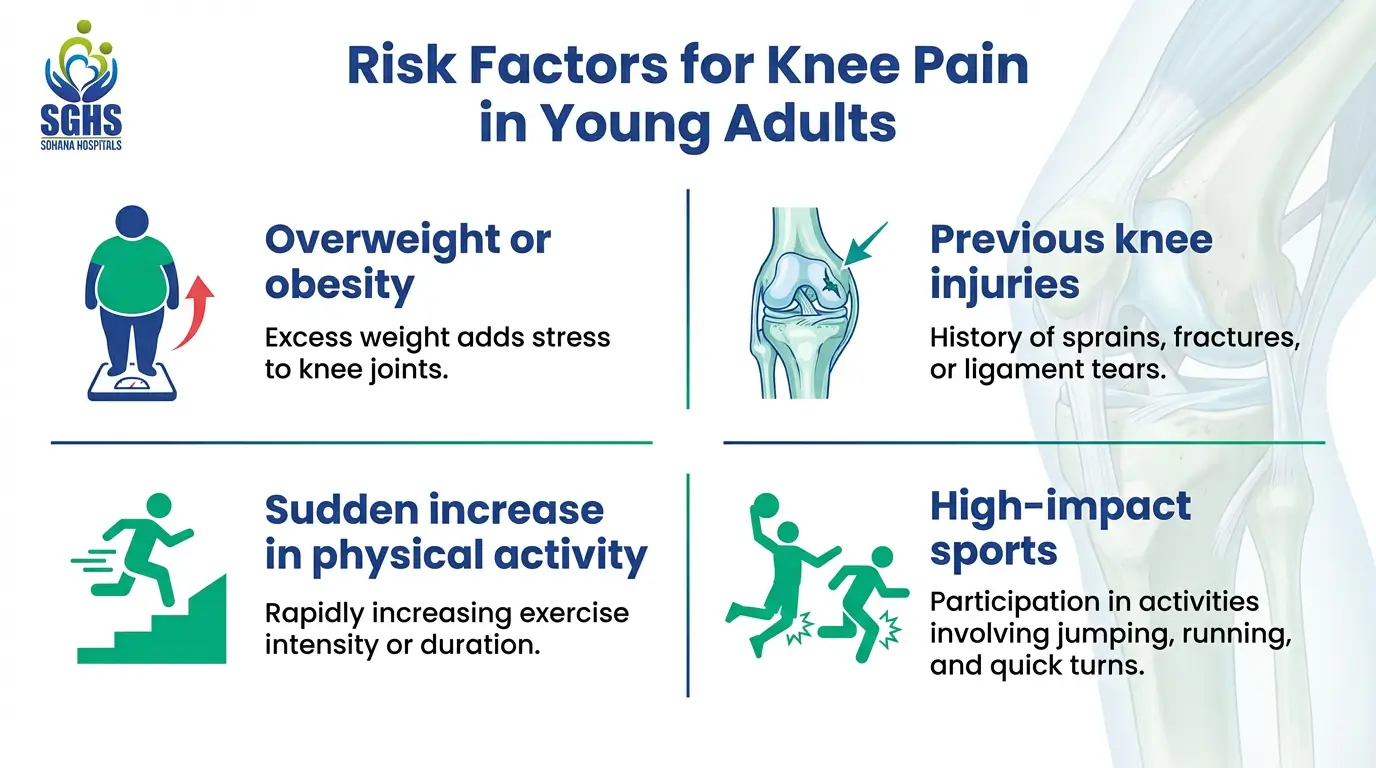
- Being overweight or obese
- Suddenly increased physical activity levels
- Old injuries
- High-impact sports
Symptoms & Signs of Knee Pain
Knee pain can occur suddenly or develop gradually. Identifying early signs can help prevent continued pain and joint damage. Watch out for these warning signs:
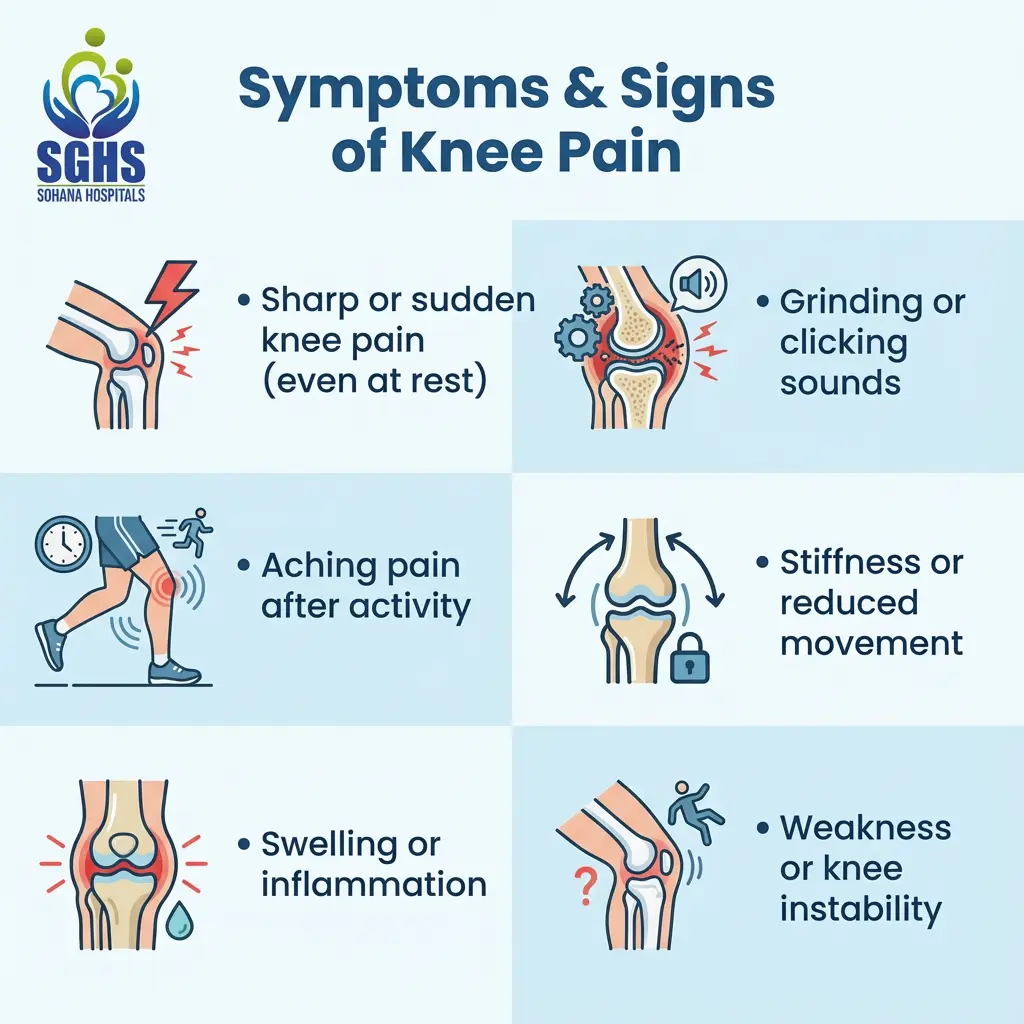
Sharp or sudden intense knee pain while sleeping
This is a common complaint among young adults with knee pain. If you experience this symptom persistently, consult an orthopaedic specialist before the pain gets worse.
Aching pain after physical activity
If you experience discomfort while performing regular physical activities such as climbing stairs, running, bending, or long periods of standing, it may be more than just regular fatigue.
Swelling or inflammation
You might notice visible swelling or puffiness around the knee joint due to stress on the joint and internal irritation.
Grinding or clicking sensations
Another symptom is a feeling of a popping or grinding sensation while moving the knee.
Stiffness or reduced range of movement
There may be some stiffness in the knee joint. You may also experience a decrease in flexibility – difficulty bending or straightening the knee, especially after a period of rest.
Weakness or instability
You may experience a loss of balance or feel as if the knee might give way as you walk or engage in any physical activity.
Prevention Tips for Knee Pain
Here are some tips you can keep in mind in order to avoid knee pain at a young age:
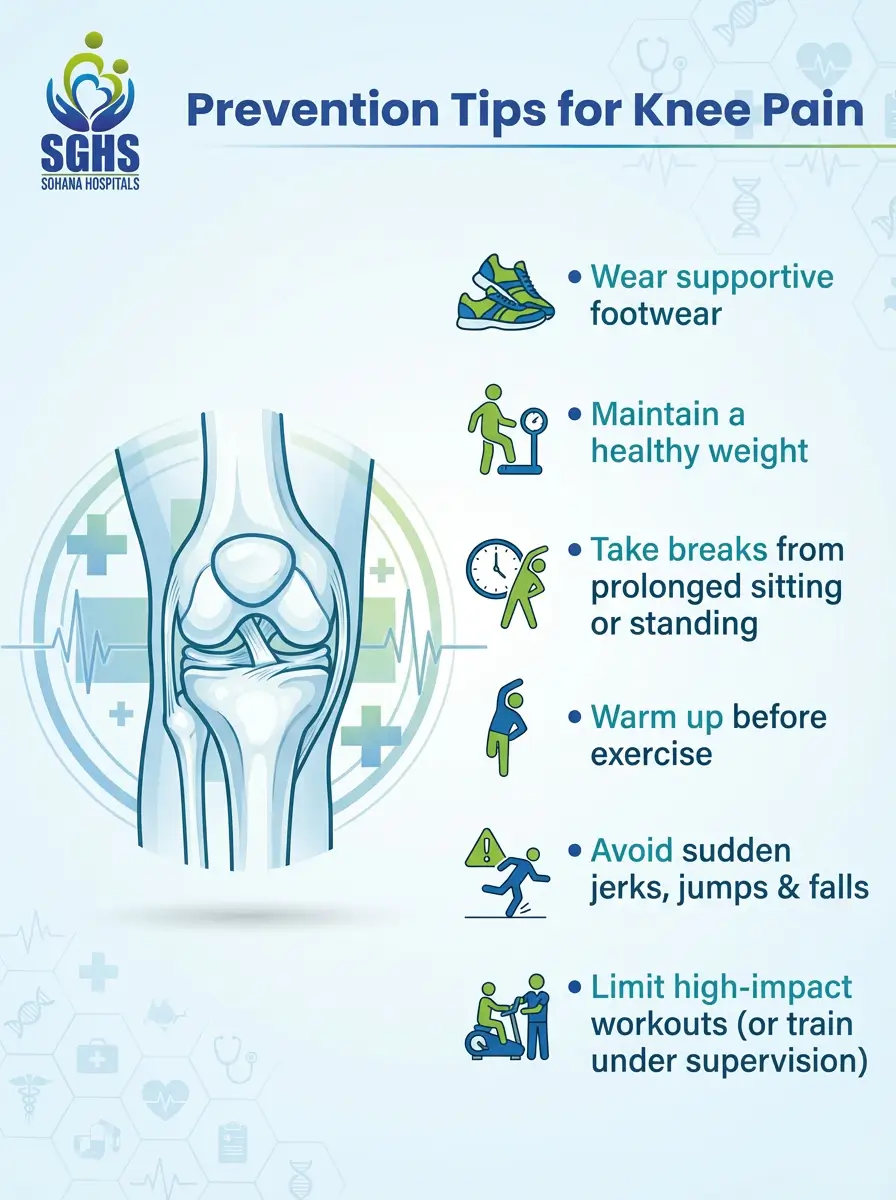
- Wear supportive footwear
- Maintain a healthy body weight
- Take regular breaks from prolonged standing or sitting
- Always warm up before exercise
- Avoid sudden jerks, jumps, and falls
- Avoid high-impact workouts (or perform under supervision)
Treatment Options for Knee Pain in Young Adults
Here are some common treatment options:
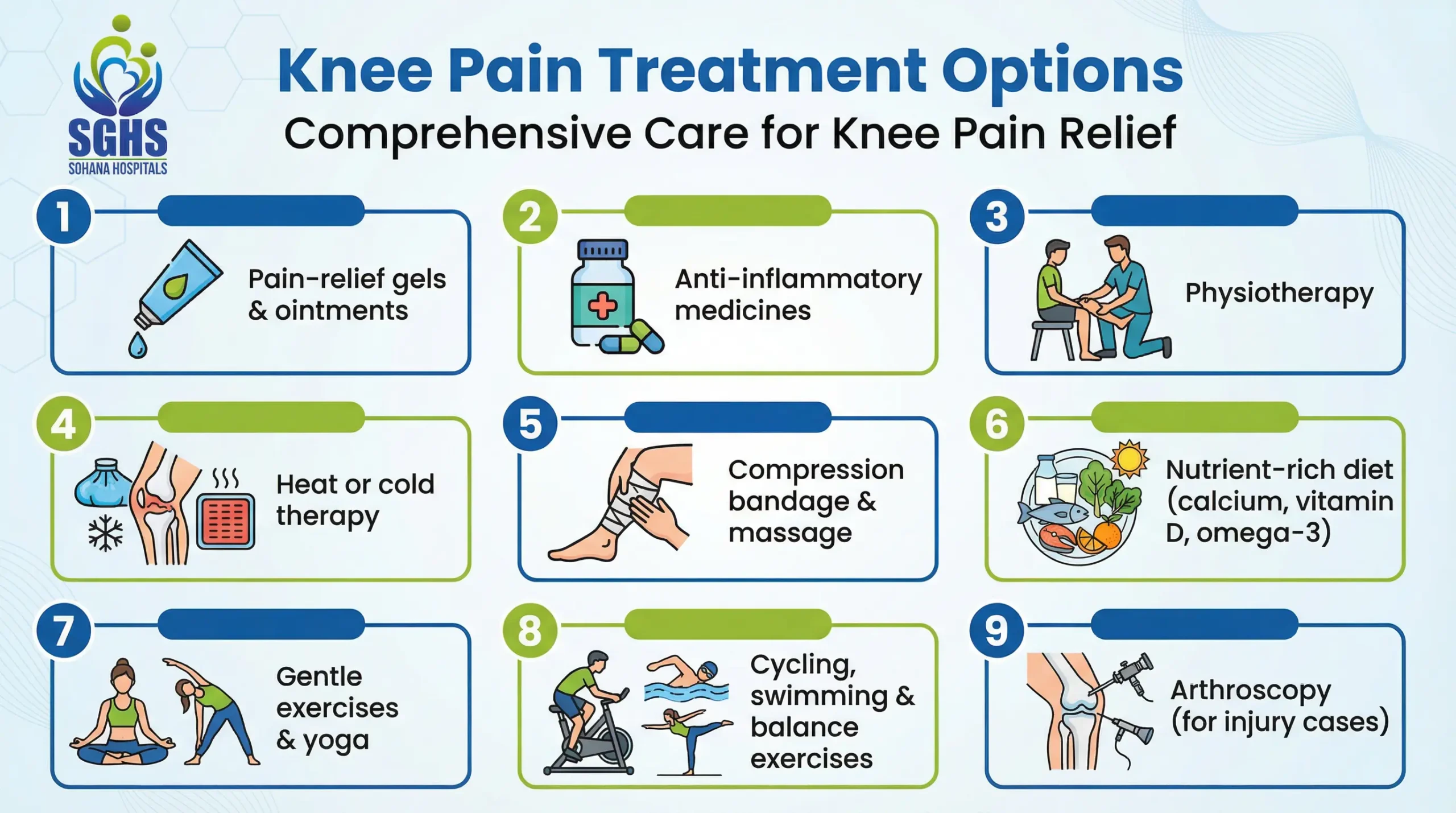
Visual Representation: Treatment Options for Knee Pain in Young Adults
- Pain relief gels or ointments
- Anti-inflammatory medication
- Physiotherapy
- Heat/cold therapy
- Compression bandage
- Massages
- Nutrient-rich diet (calcium, omega-3 fatty acids, turmeric, ginger, fibre, vitamin D)
- Gentle exercises
- Yoga
- Cycling
- Swimming
- Balance exercises
- Arthroscopy in case of injuries
When to Visit a Doctor?
If you experience any of the above-mentioned signs and symptoms, or identify with any of the risk factors, you must consult a knee specialist today. Sohana Hospital boasts some of the best orthopedic doctors for knee pain treatment – whatever kind it may be.
From preventive screening tests to complex surgical interventions – we do it all! Backed with world-class diagnostic facilities, most advanced treatment options, and modular OTs, Sohana Hospital stands as a leading centre of orthopaedic excellence.
If you experience knee pain, stiffness, or discomfort, we are here to help you live your best pain-free life, regardless of your age!
Reference Source: