
Knee pain is a rising problem across the globe, and in India too. While the significance of physiotherapy, medications, and surgery cannot be overstated, diet also has a crucial role to play in improving inflammation, maintaining cartilage health, and enhancing joint function.
In this blog, we are going to learn about the best foods for knee pain and the value of good nutrition for lasting joint fitness.
The Role of Diet in Managing Knee Pain
We all know diet is important for health. Let us see why diet can be a vital factor in dealing with knee pain. Here are some common causes of knee joint pain:
- Osteoarthritis
- Rheumatoid arthritis
- Overuse
- Injuries
- Being overweight
- Age-related wear and tear of cartilage
Chronic inflammation is a common aspect associated with most of these conditions. Inflammation further leads to stiffness and pain in the knee joint and results in joint degeneration.
Here’s how a good diet can help:
- Lowers inflammation and swelling
- Nourishes the cartilage and supports bone repair
- Helps control weight
- Improves blood circulation
- Enhances joint lubrication
So, how can the right food be helpful? Well, consuming healthy food is an effective natural strategy that can support medical treatment.
Food for Knee Pain Relief
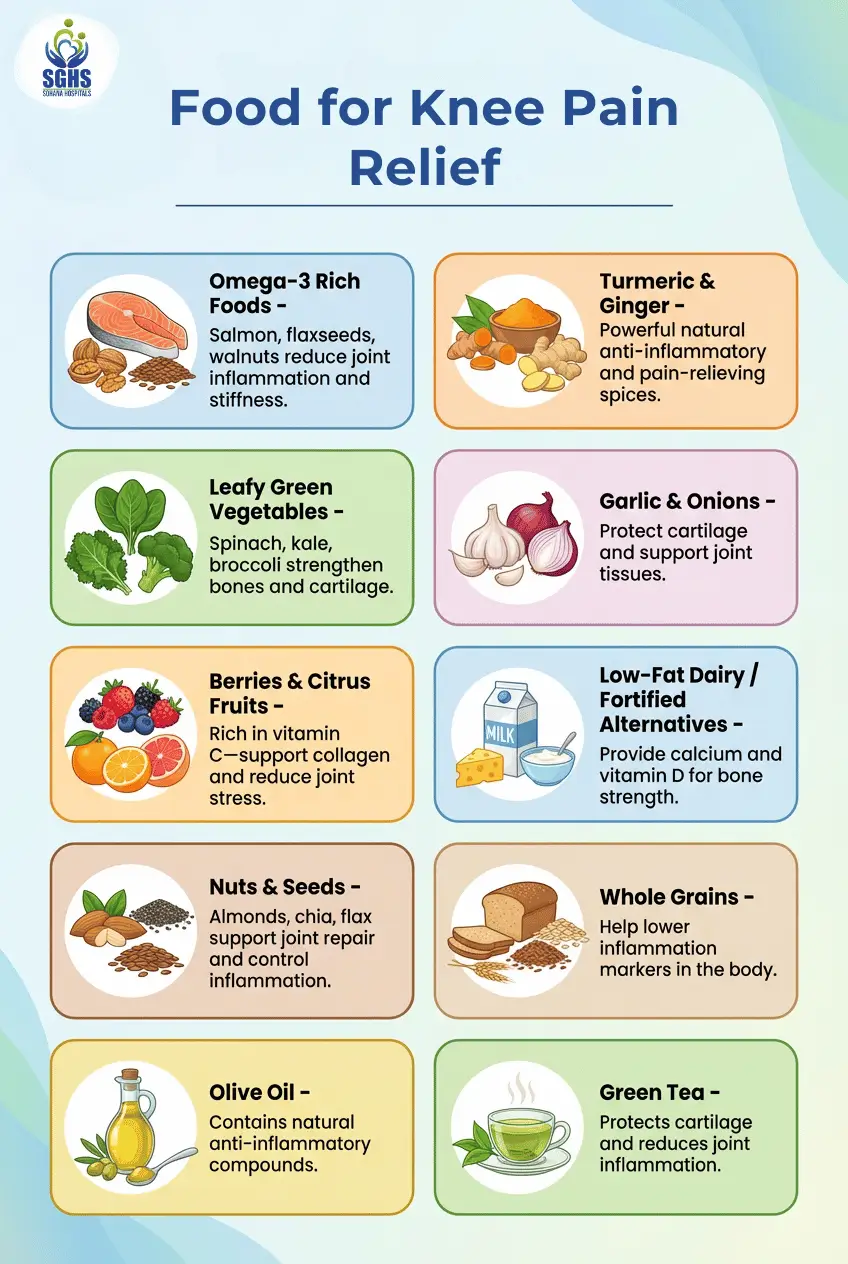
1. Omega-3 Rich Food Items
Fish like salmon, mackerel, oysters, sardines, and tuna are rich sources of omega-3 fatty acids. Vegetarians can consume seaweed and algae, chia seeds, hemp seeds, flax seeds, walnuts, kidney beans, soybean oil, etc.
These nutrients help lower inflammation and stiffness in joints. Omega-3 fatty acids also help block enzymes responsible for inflammation, and may slow down the breakdown of cartilage.
2. Leafy Green Vegetables
Green vegetables like spinach, fenugreek, chaulai, kale, broccoli, and other vegetables from the cabbage family are loaded with calcium, vitamin C, antioxidants, and vitamin K, all of which keep bones and cartilage healthy.
3. Berries and Citrus Fruits
Fruits such as blueberries, raspberries, strawberries, oranges, kinnows, and grapefruits contain good amounts of vitamin C and flavonoids. These nutrients help lower oxidative stress in the joints and boost the production of collagen.
4. Nuts and Seeds
Walnuts, almonds, chia seeds, and flaxseeds are rich not only in Omega-3 but also in magnesium and protein. These nutrients have been seen to help control inflammation and support joint repair.
5. Olive Oil
Extra-virgin olive oil has oleocanthal – a compound that is known to have anti-inflammatory effects. It works just like some pain medications. Using olive oil instead of less healthy oils also helps limit the consumption of saturated fats found in these oils.
6. Turmeric and Ginger
Turmeric contains curcumin, and ginger has gingerol. This is the reason these spices have traditionally been used as powerful anti-inflammatory medicines. They also have antioxidant properties. They can significantly reduce knee pain and stiffness in arthritis patients. In fact, they may actually work as effectively as some NSAIDs (Non-steroidal Anti-Inflammatory Drugs).
If you use turmeric along with black pepper and a healthy source of fat, it will enhance absorption and be more beneficial.
7. Garlic and Onions
These food items, commonly found in most Indian kitchens, contain sulfur compounds that may reduce enzymes that damage cartilage. They also contain antioxidants that safeguard joint tissues.
8. Low-Fat Dairy
Milk, cheese, and curd – particularly low-fat options – are good sources of calcium and vitamin D, which are vital for bone strength. For vegans and those with dairy intolerance, fortified plant-based milks (e.g., soy milk) can be good alternatives.
9. Whole Grains
Consume whole wheat, brown rice, oats, and quinoa over refined carbohydrates in your everyday diet. Whole grains have high fiber content. This helps control levels of C-reactive protein (CRP), which is a marker of inflammation.
10. Green Tea
Green tea is a rich source of EGCG (epigallocatechin gallate) – a polyphenol that lowers inflammation and prevents cartilage from breaking down.
Foods That Aggravate Knee Joint Pain: What Not to Eat
Now that you know what to include in your meals for healthy knees, you should also know what to avoid or altogether eliminate from your diet – if you have chronic knee issues. Below is a list of food items that increase inflammation and contribute to knee pain:
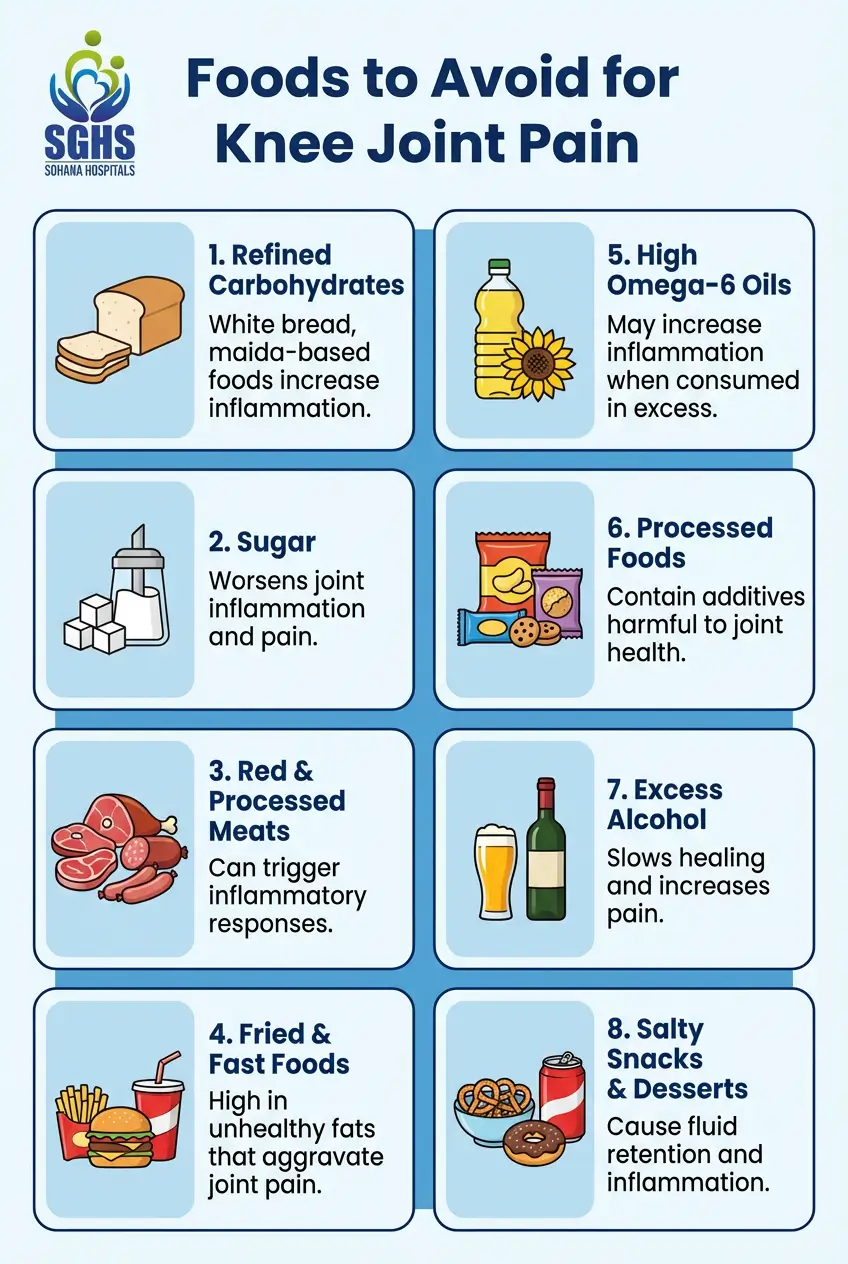
- Refined carbohydrates
- Sugar
- Red and processed meats
- Fried and fast foods
- Vegetable oils with high Omega-6
- Processed food items
- Excessive alcohol
- Salted snacks
- Desserts
Nutrients that Promote Joint and Cartilage Health – At a Glance
Include the following nutrients in your diet. These are essential to joint function and repair:
| Nutrient | Function | Prominent Sources |
| Vitamin C | Boosts collagen production | Citrus fruits, berries, kiwi, bell peppers, broccoli, tomatoes |
| Vitamin D | Essential for absorption of calcium | Sunlight, mushrooms, fish, fortified food products |
| Calcium | Necessary for strong bones | Milk, cheese, green leafy vegetables, tofu |
| Vitamin K | Promotes bone metabolism | Green leafy vegetables such as spinach, fenugreek, kale |
| Omega-3 Fatty Acids | Control inflammation | Fatty fish, flax seeds, chia seeds, walnuts |
| Protein | Help repair tissues | Legumes, dairy, lean meats |
When to See a Doctor
You may be very particular about your diet. Still, expert evaluation by the best knee doctor in Punjab may be essential if:
- You have severe knee pain
- Your knee pain continues to worsen
- There is sudden redness, swelling, inflammation, or warmth
- Knees feel unstable or locked
- Symptoms do not improve despite healthy diet and lifestyle changes
At Sohana Hospital, our knee doctors work in collaboration with dieticians and nutritionists to devise a personalised and holistic treatment plan for you. It is based on your dietary habits and proven interventions. The aim is to help you lead a pain-free life while enjoying good mobility.
Conclusion
To manage knee pain effectively and achieve better mobility, you need to follow a comprehensive strategy. Nutrition plays a key role here.
However, we often tend to overlook the significance of a healthy diet in dealing with knee joint pain. Making anti-inflammatory food items a part of your regular diet and staying away from unhealthy foods in the long run can play a key role in improving knee joint function and reducing pain – the natural way.
At Sohana Hospital, we thoroughly understand that each patient’s condition is unique. If you are looking for the best knee pain treatment in Mohali, Chandigarh, our team of orthopaedic experts, physiotherapists, and nutritionists is here to give personalised advice and care. The aim is to address the underlying cause – not just the symptoms.
Stick to joint-healthy food choices and get professional medical guidance when needed. Sohana Hospital is with you at every step of your mobility journey.
FAQs – Knee Pain and Diet
1: Can diet reduce knee pain in osteoarthritis patients?
Yes. An anti-inflammatory diet can help reduce swelling and stiffness in osteoarthritis patients. Foods rich in omega-3, antioxidants, and vitamins support cartilage health and improve joint movement. But yes, you need to follow the recommended diet consistently.
2: What foods should I eat daily for strong knees and joints?
Include leafy green vegetables, fruits rich in vitamin C, nuts, seeds, whole grains, and low-fat dairy in your diet. These food items provide calcium, protein, and antioxidants that improve bone strength and promote joint repair.
3: How long does it take for diet changes to show improvement in knee pain?
You may notice reduced stiffness and better mobility within 3–6 weeks of following the right diet. However, results may vary from person to person depending on the cause of knee pain, your body weight, and activity levels.
4: Is weight loss through diet helpful for knee joint pain relief?
Yes. Losing even a little weight reduces pressure on the knee joints and helps slow down cartilage damage. Eating a balanced diet and doing gentle doctor-prescribed exercises can significantly reduce knee pain and make pain-free movement possible.
5: When should I consult a knee doctor instead of relying on diet alone?
If your knee pain is severe, persistent, or is affecting daily activities even though you eat healthy food, you should consult a knee specialist. They can identify the underlying cause and suggest appropriate treatment.